
Child Development: 4 Powerful Truths to Help Kids Thrive
A grounded look at early childhood development windows, how bright neurodivergent girls express frustration, and why uneven growth is not a parental failure.
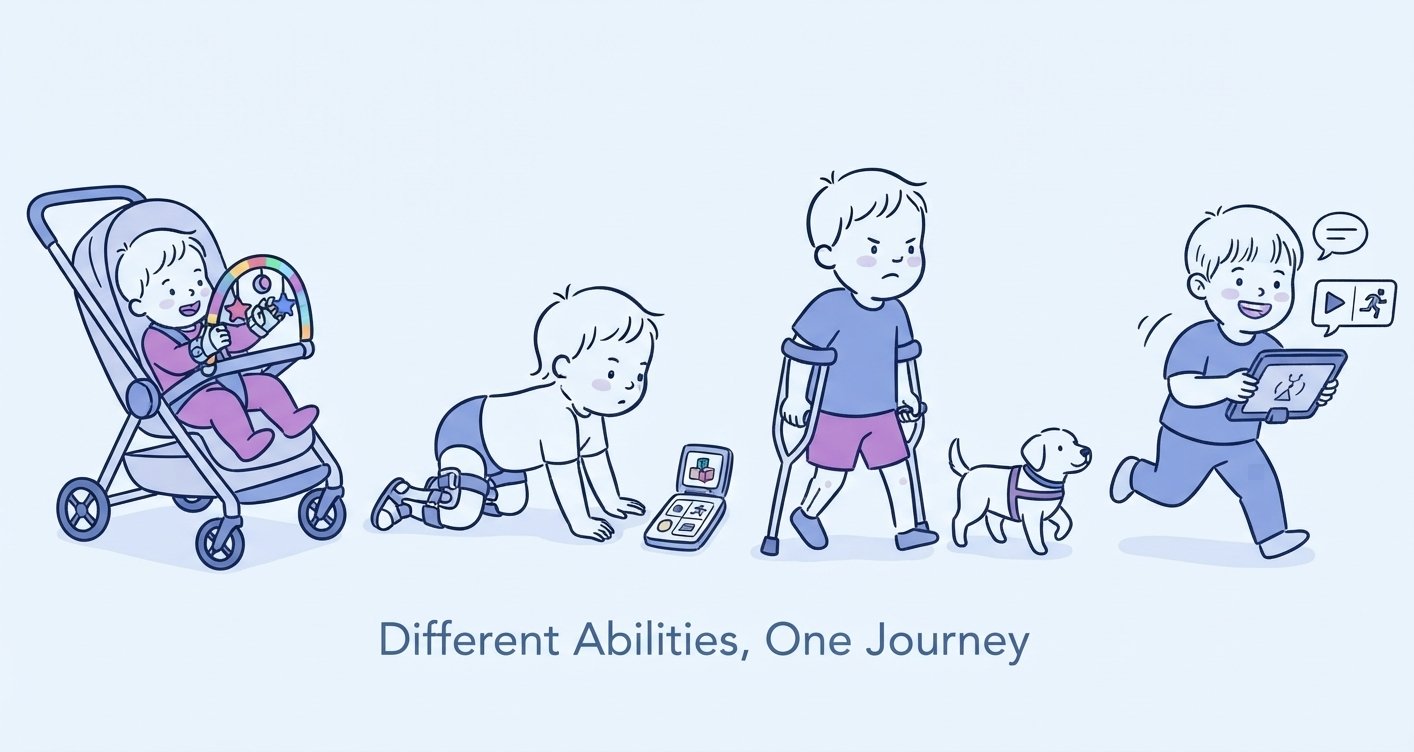
Parents search for answers on child development late in the evening because something did not feel right during the day. Maybe afternoon pickup was an emotional storm, maybe another child seems miles ahead in pencil control, or maybe you are wondering why simple home routines collapse into tears.
Authentic child development does not climb a tidy, linear ladder. As documented in global early years research from the World Health Organization (WHO), children leap forward in one domain, pause in another, and slip backward when their systems are tired or overloaded. Truly understanding early child development means stepping back from competitive milestone race tracks so you can support your child right where they are standing today.
When my daughter was a toddler, I was lecturing in early child development and early education at university, standing in lecture theatres teaching play pedagogies and socio-emotional trajectories. When she was six, I embarked on my PhD in early childhood education, and I spent years working directly on the floor as a childcare educator.
Yet the most humbling lessons did not happen in lecture halls or academic journals; they happened right in our living room. I was diagnosed with ADHD in my forties, and my daughter received her ADHD diagnosis in her twenties. For years, we both navigated sensory overload, intense masking, and emotional burnout without knowing what was causing it. We simply assumed we were failing to try hard enough.
I still look at a photograph of her when she was twelve months old, clenching her teeth tight in frustration. At the time, I thought it was just a funny face. By age two, when she could not accomplish something her mind pictured, she would pull her own hair in distress. Her internal engine never rested, she ran on non-stop energy, and her body fought sleep every single night without an off switch.
Today she is twenty-three, bright, capable, and a high achiever. That lived journey, combined with years of doctoral research, taught me what traditional child development textbooks rarely cover: when an active, capable child pushes back or melts down, it is not poor behaviour. It is a tired nervous system running low on brakes.
Dewi Griffith, PhD, Founder
The Four Foundations of Early Child Development How interconnected areas of child development support one another
Physical and Motor Control
Core strength and shoulder balance come first in physical child development. A child needs a stable trunk before tiny finger joints can hold a pencil comfortably without cramping.
Language and Understanding
In linguistic child development, hearing and processing language comes before speaking. Children build vocabulary by listening to real conversation throughout everyday routines.
Emotional Regulation
Young children cannot regulate their nervous systems on their own. Emotional child development relies on calm adults to absorb the impact of big rooms, sudden changes, and overwhelming sensory input.
Executive Function
Remembering two instructions, putting the brakes on an impulse, and switching between tasks are sophisticated mental capacities that take years of healthy child development to mature.
Child Development Milestones: Wide Windows vs Red Flags Milestones are broad approximations, not rigid deadlines
During early childhood, little bodies usually pour their energy into one major developmental job at a time. Longitudinal findings from the Australian Institute of Family Studies (AIFS) highlight that variations in child development timelines—across speech, motor milestones, and social readiness—are entirely natural across early cohorts. A toddler mastering gross motor movement might speak fewer words for several weeks. Keeping an eye on healthy child development ranges gives you peace of mind while helping you spot genuine delays early.
| Age Range | Typical Emerging Child Development Skills | When to Check with a Professional |
|---|---|---|
| 18 to 24 Months |
Uses single spoken words Copies common actions like wiping surfaces Squats down to play and stands back up without falling |
No communicative pointing or waving Does not react consistently when called by name Loses spoken words or physical balance they previously had |
| 2 to 3 Years |
Combines two or three words into ideas Carries out simple two step tasks around the house Plays alongside other children comfortably |
Speech is unintelligible to parents and familiar carers Persistent difficulty walking, running, or climbing stairs Shows no interest in shared attention or connecting with people |
| 4 to 5 Years |
Speaks in descriptive sentences and asks questions Holds drawing tools using fingers instead of a closed fist Takes turns during games with gentle reminders |
Cannot follow basic daily directions Frequent, inconsolable distress over ordinary transitions Severe trouble coordinating hands for everyday dressing tasks |
Early Signs We Mistake for Quirks How neurodivergent child development communicates before school age
When an active girl runs on high drive from babyhood, that constant motion is not disobedience. In neurodivergent child development, physical movement is an involuntary effort by her nervous system to feel anchored in space.
Jaw Clenching and Teeth Grinding
The jaw joint contains deep physical sensory receptors. Clenching or grinding teeth during moments of frustration pushes strong feedback into the head to counter an internal sensory storm.
Hair Pulling and Self Directed Distress
Toddlers possess very little internal brake power. When a girl pulls her own hair when frustrated, she is searching for a sharp physical sensation to reset an overwhelming surge of feelings.
Craving Deep Pressure Hugs
Many busy girls crave tight swaddles, heavy blankets, or being squished under cushions. Deep pressure signals the body to trigger its parasympathetic calming response.
Bedtime Without an Off Switch
A quiet, dim room can feel like sensory deprivation to an active brain. Rather than relaxing, the nervous system produces adrenaline to stay alert, turning bedtime into an hours long struggle.
Why High Achieving Girls Are Missed High capability often conceals the daily battle
A persistent misconception in child development is that a child who excels cannot have ADHD or autism. Bright girls learn to mask their difficulties early. They rely on quick memory, strong verbal skills, and high internal standards to keep up appearances.
On the outside, they seem completely in control. On the inside, their daily engine is running on sheer urgency and adrenaline:
| What Appears on the Surface | What Is Happening Neurologically |
|---|---|
| Last minute scrambles: Rushing to prepare at the final second and rushing out the door. | The brain struggles with initiation due to low baseline dopamine. It requires adrenaline and urgency to force the brain into gear. |
| Sudden tears or stubbornness: Freezing or crying over a simple task like putting shoes on. | Executive overload. As research from the Harvard Center on the Developing Child details, what feels like one instruction to an adult is actually five complex steps to a tired nervous system. |
| Non stop physical movement: Refusing to sit still at the dinner table or bedtime. | Sensory seeking. Movement is the fuel her brain uses to stay alert and engaged with the room. |
Affirming Play: Meeting Your Child Where She Is Play is regulation, not just recreation
Modern research into neurodiversity-affirming child development shows that play is the native language of early childhood. For autistic children and children with ADHD, play is also their primary way to recover from sensory overload.
Repetitive and Sorting Play
Lining up figures, sorting items by colour, or watching wheels turn creates order and predictability. It helps a child calm her sensory system and should be respected rather than redirected.
Joining Her Space
Rather than demanding that a child follow adult rules of play, sit down beside her and join what she is already doing. Entering her world builds genuine trust without forcing her to mask.
What You Can Do at Home Sensible shifts that support healthy child development without pressure
Stop Blaming Her Character
Difficulty transitioning, waking up, or winding down is neurological, not a moral flaw. Your daughter is not giving you a hard time; she is having a hard time inside her body.
Provide Heavy Work Before Bed
Before expecting sleep, give her deep physical input. Carrying baskets, pushing against cushions, and firm tuck ins ground her nervous system far better than a warm bath.
Do Not Fear the Meltdown
When frustration peaks and she clenches her teeth or pulls her hair, do not lecture. Lower your voice, offer a firm hand on her back or a tight hug, and lend her your calm first.
Protect Her Self Worth
The greatest danger for a bright neurodivergent girl is growing up believing she is broken. Talk openly about how different brains need different tools to get moving.
Understanding Neurodivergence in Girls Masking, gender differences, and broad child development windows
Signs of ADHD in Young Girls
How hyper-focus, emotional sensitivity, and sensory overwhelm present quietly in young girls.
Autism in Girls: Closing the Gender Gap
Why girls are diagnosed years later than boys and how to recognize quiet masking early.
Child Development Milestones by Age
A realistic look at early childhood development milestone ranges without the panic or comparison.
The Nervous System, Sleep & Big Feelings The neurobiology behind meltdowns, sensory seeking, and sleep battles
Polyvagal Theory & Meltdowns
Why children explode or shut down, and how co-regulation restores nervous system safety.
Sensory Seeking & Proprioception
Why toddlers crash, jump, and push, and how heavy work calms an overloaded motor system.
Toddler Sleep Resistance & ADHD
Why busy brains cannot turn off at bedtime and 5 realistic shifts to calm nighttime battles.
Toddler Hair Pulling & Frustration
What happens when tiny hands clench down hard and how to scaffold impulse control safely.
Play, Attachment & Relationship-Based Approaches Reconnecting with your child through child-led play and sensory autonomy
DIR Floortime Play at Home
How to follow your child’s lead on the rug to open circles of communication without pressure.
Autism & Attachment Myths
Debunking the ‘refrigerator mother’ myth and understanding how autistic children truly bond.
Reggio Emilia Approach at Home
Using the environment as the third teacher to nurture curiosity, autonomy, and quiet focus.
Foundational Learning for Neurodivergent Minds Motor skills, language, and math tailored for different neurological operating systems
Fine Motor Skills for Neurodivergent Preschool
Addressing joint hypermobility, pencil grip fatigue, and low-demand mark-making.
Neurodivergent Early Literacy Foundations
Supporting gestalt language processors, hyperlexia, and low-demand storytelling at home.
Early Math & Number Sense for Neurodivergent Learners
Why abstract worksheets cause cognitive overload and how tangible, spatial math works.
Observation & Early Childhood Practice How educators observe and document child development without high-pressure testing
Download the Free Calm Observation Tracker
A simple record sheet to note down your child’s sensory patterns, transition triggers, and moments of brilliance. Helpful to take along to your next appointment with a paediatrician, speech therapist, or occupational therapist.
Download the Free Observation TrackerLooking for quiet, calming, Montessori-inspired story tracing and printable activities?
Explore QuietSprout Story Tracing BundlesThis page is for educational and parental support based on lived experience and early childhood practice. It is not medical or diagnostic advice. If you have concerns about your child’s wellbeing or child development pathway, please consult a qualified paediatrician, psychologist, or occupational therapist.