
The Reggio Emilia Approach at Home: Bringing the Third Teacher to Everyday Spaces
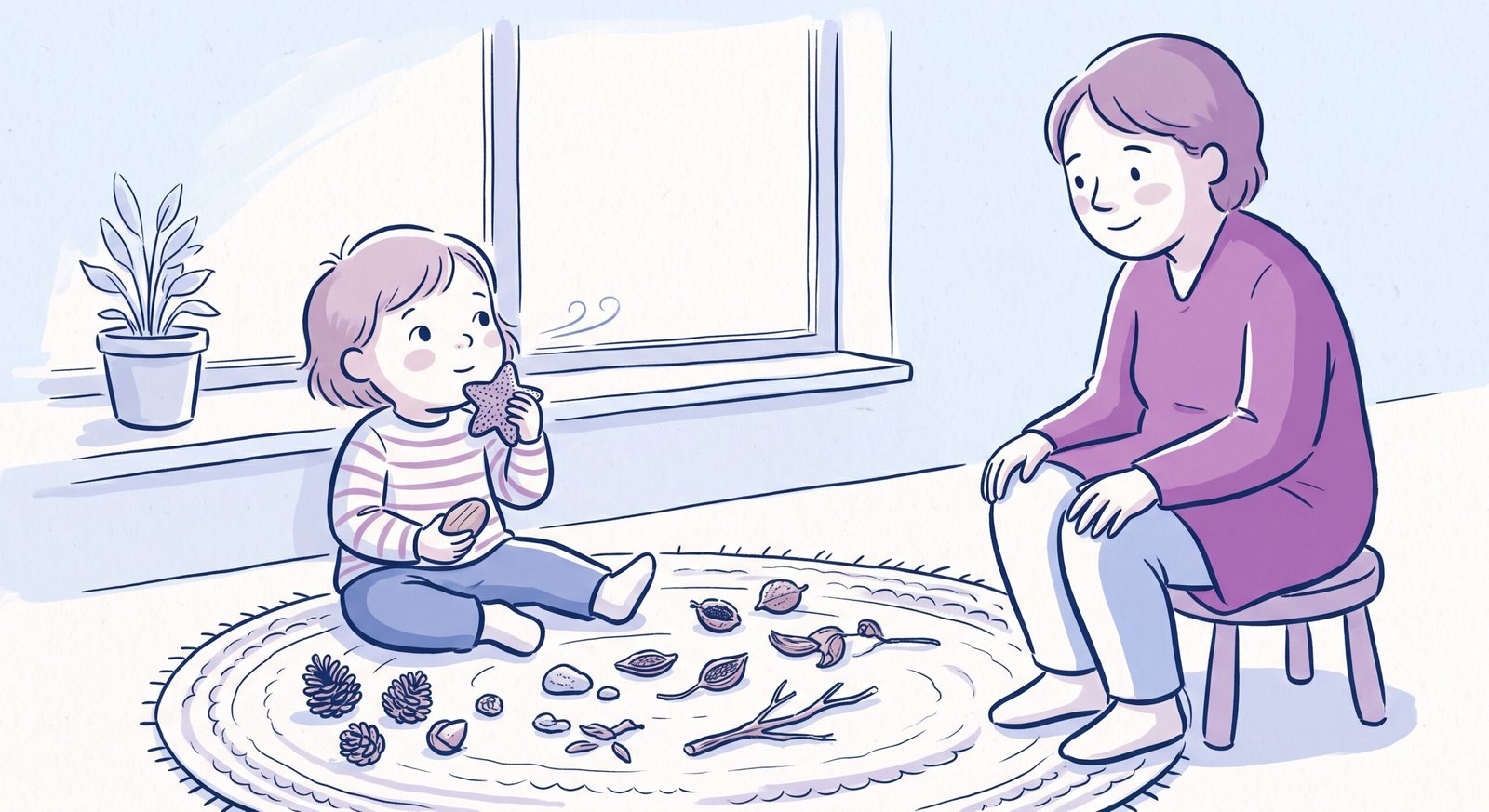
The first time I saw the phrase “the environment is the third teacher,” it sounded like the sort of glossy educational philosophy that only works in sunlit Italian classrooms with bespoke timber furniture. Then I watched what happened in our own living room when we decided to try the Reggio Emilia approach at home. We swapped a deep plastic toy bin for three low, shallow baskets filled with pine cones, cardboard rolls, and smooth river stones. The play changed almost immediately, moving from dumping out thirty plastic parts and walking away, to sitting quietly on the rug for forty minutes figuring out how to balance a stone on top of a tube.
That shift sits right at the heart of the Reggio Emilia philosophy. Developed in post-war northern Italy by educator Loris Malaguzzi and local families, this educational model is built on a straightforward premise, children are capable, resourceful researchers from birth, and our domestic spaces can either support that natural curiosity or quietly get in its way.[1] Using the Reggio Emilia approach at home does not require turning your lounge into a private preschool, it just takes a few small, intentional adjustments to how materials are stored, displayed, and explored.
What the Reggio Emilia approach at home actually means in practice
At its core, adopting the Reggio Emilia approach at home is less about a rigid checklist of toys and more about how we view young children. Malaguzzi famously wrote about “the hundred languages of children,” the idea that kids think, test ideas, and communicate through endless different expressive media, drawing, clay, light, shadow, dance, construction, and dramatic play.[2] Conventional schooling often narrows that down to just two languages, speaking and counting, while overlooking the rest.
When you bring the Reggio Emilia approach at home into daily family routines, your role changes too. Instead of directing every step or constantly thinking up new crafts, you step into the role of co-researcher. You observe what your child is trying to work out, ask questions that keep their curiosity moving, and let the space do much of the inviting on its own.[3]
- The Hundred Languages, recognizing that building, mark-making, sculpting, and shadow play are all forms of serious thinking
- The Third Teacher, setting up spaces with low shelves, natural light, and visible choices so children can work independently
- The Parent as Co-Researcher, listening and wondering alongside your child rather than jumping straight to the right answer
Practical room setups for the Reggio Emilia approach at home
None of this requires specialised equipment or expensive educational purchases. The original Italian schools were built with salvaged bricks and community donations, as documented by Reggio Children, so your kitchen recycling bin and garden cuttings are genuinely more than enough to get started.[1]
- Setting up low open shelves with shallow baskets, keeping materials visible so children can select and return items themselves
- Adding loose parts to play areas, river stones, cardboard tubes, metal jar lids, timber offcuts, and pine cones
- Placing an unbreakable acrylic mirror at floor level next to building blocks to explore angles, reflections, and scale
- Creating invitations to play before wake-up, such as three pine cones, a pencil, and clean paper set on a low table
- Involving children in real kitchen tasks, using measuring cups, child-safe whisks, and cloth napkins during meal prep
- Taking unhurried outdoor walks with a collecting basket, letting your child examine a single trail of ants without rushing
Setting up an invitation to play, or what educators call a provocation, turned out to be one of the easiest changes in our house. Placing a torch next to a basket of translucent scarves and building blocks on a low table invites immediate, focused exploration in the morning before breakfast, without needing a single instruction from an adult.
For toddlers and preschoolers still exploring with their hands, loose parts also feed straight into fine motor development. Handling varied natural textures, pinching thin cards, and balancing irregular stones all challenge the fingers in ways uniform plastic toys simply cannot replicate.
Documenting learning in the Reggio Emilia approach at home
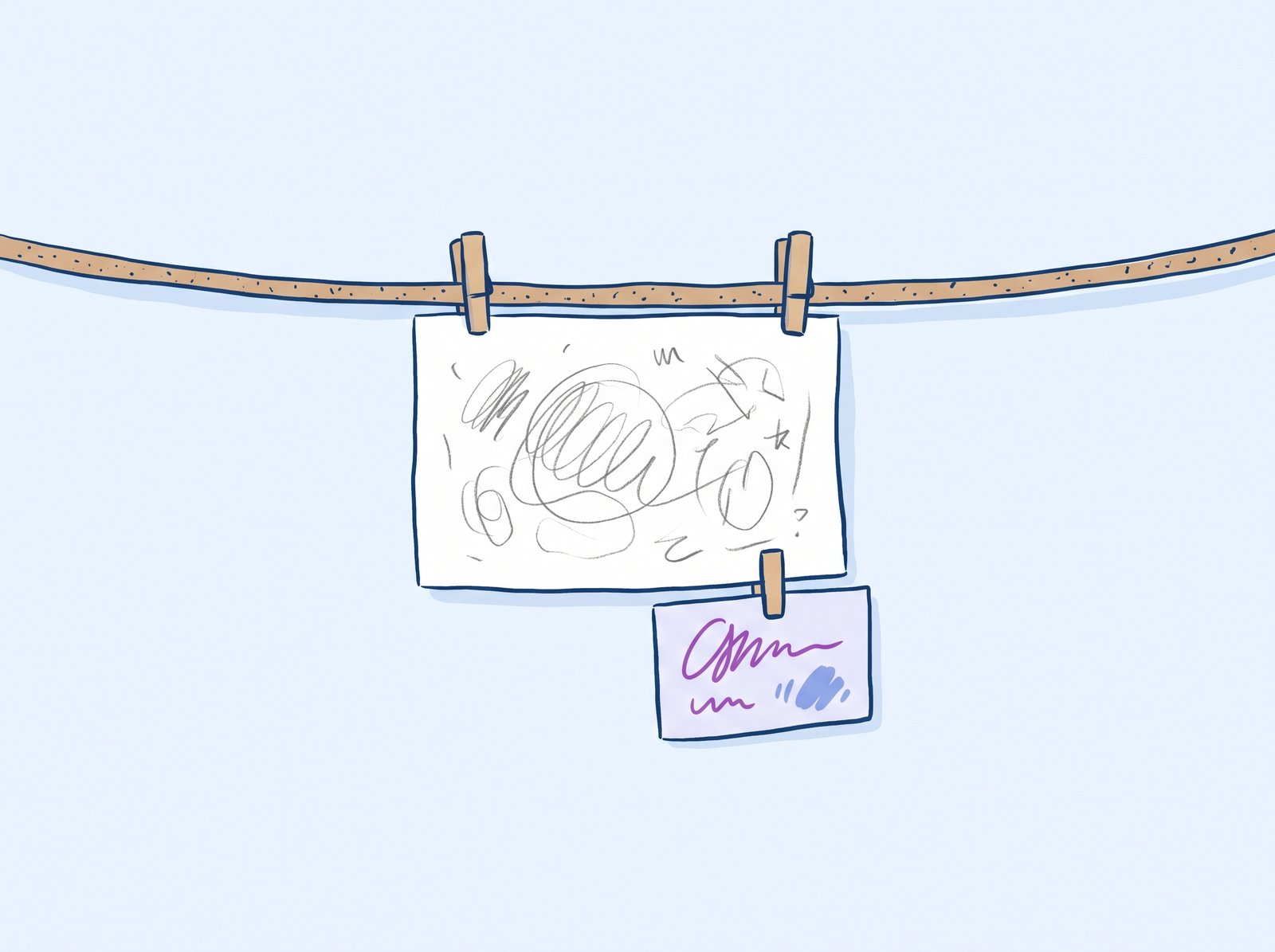
One of the most practical Reggio habits for parents is documentation. As researched extensively by Project Zero at Harvard Graduate School of Education, documentation means recording the actual process of learning as it happens rather than simply displaying finished art on the fridge.[4]
When using the Reggio Emilia approach at home, take a quick photo on your phone while your child is completely absorbed in balancing a tower. When they tell you an elaborate story about why the puddle on the path disappeared in the afternoon sun, write down their exact words word-for-word on a small card and pin it beside their drawing. It signals to a child that their thoughts, questions, and ongoing efforts have genuine value, while giving you an honest record of how their thinking develops over time.
Comparing Montessori and the Reggio Emilia approach at home
Parents looking into child-centred philosophies often find themselves weighing the Reggio Emilia approach at home against Montessori. Both emerged in Italy, both reject rigid rows of desks, and both value child independence, but their day-to-day feel at home is quite distinct.
- Curriculum style, Montessori uses a structured sequence of specific tasks, while Reggio follows emergent projects driven by what the child asks about
- Play materials, Montessori relies on self-correcting didactic tools with one intended use, whereas Reggio uses open-ended loose parts with endless possibilities
- The adult role, a Montessori guide introduces precise tool handling and steps back, while a Reggio parent investigates alongside the child as a collaborative partner
- The home setting, Montessori emphasizes child-sized practical life tools for chores, while Reggio looks like an open studio filled with light, natural items, and works in progress
Neither is inherently better than the other, and many families naturally borrow elements from both, using Montessori’s child-height kitchen setup for morning snacks and Reggio’s loose parts and documentation in the playroom.
Where this fits with everything else in this series
Creating an intentional space using the Reggio Emilia approach at home works hand-in-hand with the foundational fine motor habits we cover throughout this site. The delicate work of pinching small river stones and sorting seeds builds directly on the grips explored in our guide to pincer grasp activities, which in turn supports the muscular control outlined in hand strength activities for kids. Once hands are steady and fingers are strong, that natural coordination carries straight into how to hold a pencil correctly and the drawing practice covered in our original look at pencil control activities.
Ready for Calm, Intentional Mark-Making?
When open-ended building and finger play are thriving, our story-based tracing workbooks give young children a meaningful, child-led way to bring those fine motor skills onto paper.
Explore the Printable Tracing PacksSafety notes when using loose parts
Loose parts offer unmatched opportunities for open-ended problem solving, but supervising their size is essential, particularly for toddlers. According to official child safety guidelines from Product Safety Australia, any item smaller than 31 millimetres across or roughly the size of a standard film canister poses a genuine choking hazard for children under 3 years old. Keep smaller beads, dried pulses, and tiny buttons set aside until your child is well past the oral exploration stage, opting instead for large pine cones, thick timber offcuts, and broad fabric scraps.
References
- Barazzoni, R. (2000). Brick by brick: The history of the “XXV Aprile” People’s School of Villa Cella. Reggio Children.
- Malaguzzi, L. (1993). For an education based on relationships. Young Children, 49(1), 9–12.
- Rinaldi, C. (2006). In dialogue with Reggio Emilia: Listening, researching and learning. Routledge.
- Krechevsky, M., Mardell, B., Rivard, M., & Wilson, D. (2013). Visible learners: Promoting Reggio-inspired approaches in all schools. Jossey-Bass / Project Zero.