
Alexithymia ADHD in Women: 3 Powerful Breakthroughs for Emotional Overload
Understanding the deep link between alexithymia ADHD challenges and neurodivergent emotion regulation is often the key to resolving years of self-doubt, especially for mothers who feel their feelings intensely but cannot put them into words.
- The Lecture Hall Jolt: A Sudden Recognition
- What Alexithymia Actually Is (The Gap Between Feeling and Knowing)
- Why Alexithymia ADHD in Women Is Frequently Overlooked
- The Eighth Sense: Interoception Deficits and Alexithymia ADHD
- How the Physical Environment Masks Emotional Literacy
- 3 Powerful Breakthrough Steps for Managing Alexithymia ADHD
- Translating This into Neurodivergent Parenting and Classrooms
- How This Fits Our Neurodivergent Learning Approach
- Academic References & Related Guides
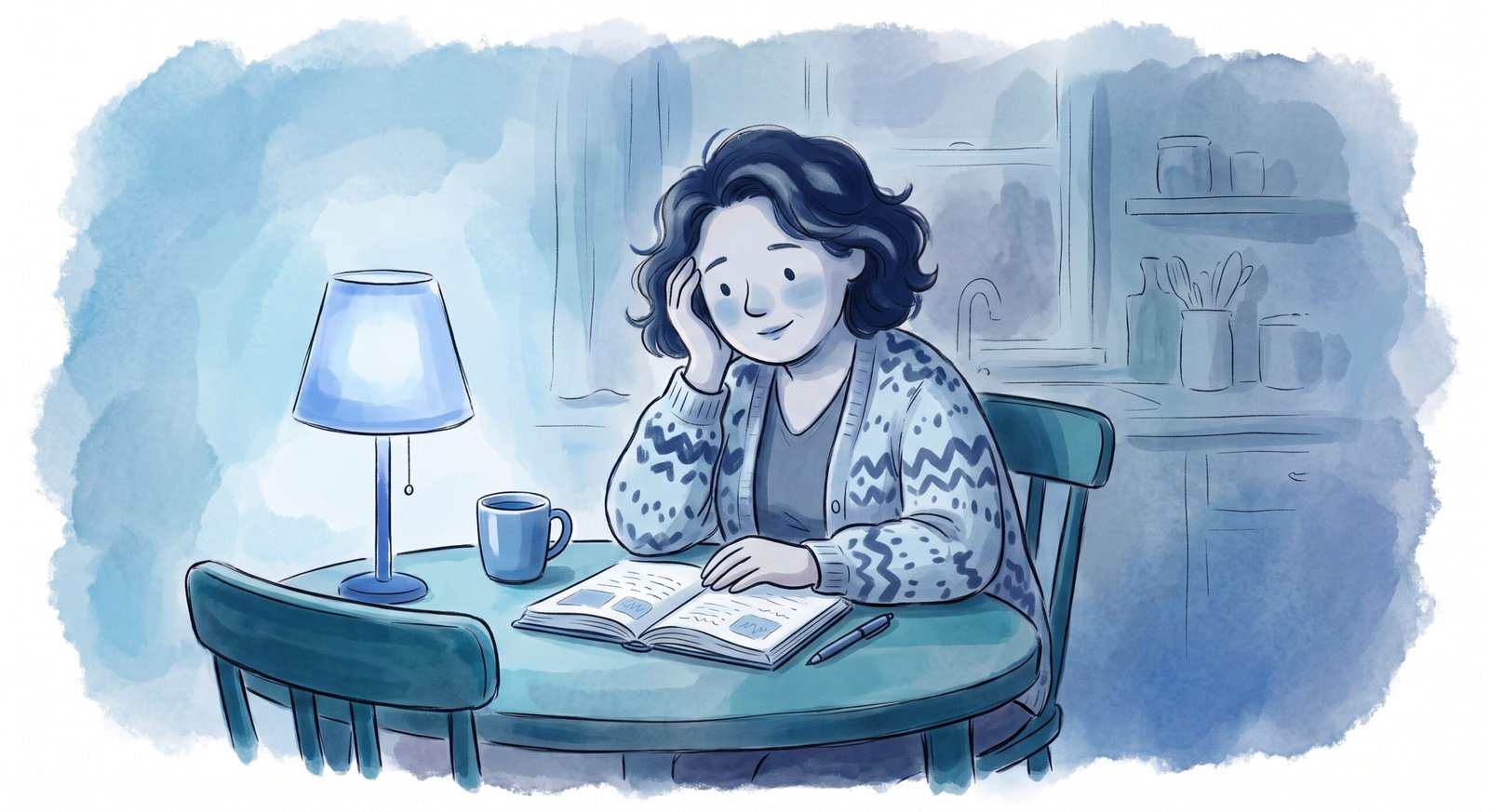
The Lecture Hall Jolt: A Sudden Recognition
The phrase alexithymia ADHD was never something I had consciously linked together in my own mind, despite years of working in developmental research and living with a diagnosed ADHD brain. That changed during an advanced postgraduate professional development unit on neurodiversity, specifically during a session on supporting fathers of autistic children.
I was taking standard notes—the kind of practical observations you make when coursework is academically useful but not directly about you. Then the lecturer introduced a term that stopped my pen on the page: alexithymia. Coined in the 1970s from Greek roots meaning “no words for feelings,” he explained it as an emotional communication barrier commonly seen in men who had been socialised from an early age to suppress vulnerable emotional expression.
That cultural explanation made total sense. But what caught me off guard was the sudden, somatic jolt of recognition that followed. It had nothing to do with the fathers being discussed in the slides and everything to do with me, sitting in that lecture theatre as an ADHD mother raising two young girls, Zara and Bella, in suburban Melbourne.
I have lived with ADHD for my entire adult life. Yet what I had privately dismissed as being “hopeless at understanding my own moods until they explode” had an established neurobiological name.
It was not a personal defect, a maternal failure, or a lack of emotional intelligence. In clinical literature, the overlap between alexithymia ADHD profiles is well documented. Neurodivergent brains process interoceptive and affective signals through distinct sensory pathways that delay real-time emotional labelling.[1], [2]
You can read more about how our lived family experiences reshaped our educational framework on our how this began reflection page.
For years, I had observed a confusing pattern in my own behaviour. I could walk around for hours feeling strangely exhausted, physically tense, or snappy with the girls, completely unable to identify what was wrong. If someone asked me gently, “How are you feeling right now?”, my mind would go blank. I felt an internal fog. Half an hour later, that fog would break into tears over a spilt glass of milk or an irritable reaction to a ringing telephone.
Discovering that this pattern is a recognised outcome of an alexithymia ADHD cognitive profile lifted an enormous weight of shame. I was not ignoring my feelings; my brain was simply waiting for the somatic signal to translate into linguistic thought.
What Alexithymia Actually Is (The Gap Between Feeling and Knowing)
The most frequent misunderstanding surrounding an alexithymia ADHD profile is the assumption that the person is emotionally cold, robotic, or devoid of feeling. Nothing could be further from clinical reality.
Alexithymia is not the absence of emotion. In fact, people with ADHD frequently experience emotional hyper-reactivity and intense physiological surges due to low dopamine and differences in limbic system gating. The emotion is very much alive in the body—the heart races, the stomach tightens, the skin flushes, and cortisol levels climb.
What is missing, delayed, or occluded is the cognitive bridge between that physiological arousal and the conscious language required to identify it in the moment.[3] It is not a gap between feeling and unfeeling; it is a profound gap between feeling and knowing.
| Toronto Alexithymia Domain | What It Means Clinically | How Alexithymia ADHD Manifests in Daily Life |
|---|---|---|
| 1. Difficulty Identifying Feelings (DIF) | Struggling to separate emotional states from somatic, physical sensations. | Confusing emotional dread with physical hunger, nausea, or simple bodily fatigue. |
| 2. Difficulty Describing Feelings (DDF) | Inability to communicate internal emotional nuances to others. | Defaulting to blunt, non-specific words like “bad,” “weird,” “fine,” or freezing entirely when questioned. |
| 3. Externally Oriented Thinking (EOT) | A preference for pragmatic, factual details over internal introspection. | Obsessing over practical to-do lists, room organisation, or chronological events while ignoring personal burnout. |
In diagnostic settings, clinicians evaluate these traits using the Toronto Alexithymia Scale (TAS-20).[4] For individuals with an alexithymia ADHD combination, the Externally Oriented Thinking subscale is particularly telling. Many neurodivergent mothers become hyper-focused on organising schedules, managing children’s sensory needs, and ticking off domestic duties because practical tasks provide concrete, logical feedback that internal emotional states completely lack.
Why Alexithymia ADHD in Women Is Frequently Overlooked
While research has historically focused on alexithymia in men or within autistic populations, clinical evidence confirms that alexithymia ADHD co-occurrences are widespread among women.[5] Yet, women are the least likely to receive timely identification.
From early childhood, girls are socialised to act as emotional caretakers. We are taught to read the room, smooth over interpersonal conflicts, anticipate other people’s distress, and display warm, compliant facial expressions.
An ADHD woman often learns to construct an elaborate external mask of emotional fluency. We learn what empathetic words to say when a friend is crying. We learn to nod attentively at the school gate. We learn the social scripts of emotional literacy so well that therapists and family members assume our internal emotional self-awareness is equally sophisticated.
Because female ADHD is still underdiagnosed in childhood, many mothers reach their thirties or forties carrying an unrecognised alexithymia ADHD profile. We compensate by running on adrenaline until chronic exhaustion or physical illness forces a stop.
When an ADHD mother experiences an emotional explosion, she often blames herself for poor self-control. But that outburst is not poor self-control; it is the natural consequence of walking around for four hours in an unregulated emotional state that she literally did not have the cognitive data to detect.
The Eighth Sense: Interoception Deficits and Alexithymia ADHD
To understand why an alexithymia ADHD brain struggles to identify emotions, we must look at the body’s eighth sensory system: interoception.
Interoception is the internal neurological sense that allows us to perceive what is happening inside our organs and tissues. It registers whether your bladder is full, your stomach is empty, your heart is beating fast, or your muscles are trembling from fatigue. It is the neurological foundation upon which emotional literacy is constructed.[6]
Every human emotion has a distinct physical signature. Anxiety feels like a fluttering heart and a hollow stomach. Anger feels like heat rising in the face and clenching hands. Sadness feels like a heavy weight pressing behind the sternum.
In neurodivergent individuals, interoceptive processing is frequently dampened or distorted. An adult with an alexithymia ADHD profile might not notice they are hungry until their hands start shaking from low blood sugar. They might not notice they are cold until their teeth chatter.
If your brain cannot accurately detect the physical sensations of an elevated heart rate or a tense gut, it has zero raw data to feed into the linguistic centres of the brain. You cannot name an emotion when you cannot feel the somatic cue that creates it.
- Dampened Interoceptive Signaling Low interoceptive awareness means physical warnings of emotional stress go unnoticed until somatic pressure reaches a critical tipping point.
- Cognitive Processing Lag The executive functioning differences in ADHD create a processing delay between sensory arrival in the amygdala and conscious verbalisation in the prefrontal cortex.
- Sensory Flooding Competition External sensory overload—such as loud background noise or bright lights—drowns out subtle internal body cues, accelerating the disconnect in an alexithymia ADHD profile.
Groundbreaking research by Bornemann and Singer demonstrated that interoceptive accuracy is not a permanent deficit. Through structured, body-based contemplative practices, adults can rebuild their capacity to detect internal heartbeats and physical signals, which leads directly to measurable reductions in alexithymia scores over time.[7]
How the Physical Environment Masks Emotional Literacy
We cannot examine an alexithymia ADHD profile in a vacuum. How an adult or child processes feelings is directly mediated by the physical environment they inhabit.
When an ADHD mother is standing in an echoing kitchen where the extractor fan is roaring, fluorescent lights are humming, the television is blaring in the lounge, and two children are shouting over a toy, her sensory processing channels are completely overwhelmed.
In our comprehensive guide to the sensory environment in early childhood, we explored how acoustic reverberation and visual clutter drain cognitive capacity. When your sensory bandwidth is maxed out just trying to filter out room noise, your brain shuts down non-essential internal monitoring.
Under intense sensory load, interoception fails completely. An alexithymia ADHD mother in a chaotic sensory environment cannot possibly tell you if she is sad, frustrated, or anxious; she is in pure survival mode. The room itself steals the capacity needed for emotional reflection.
3 Powerful Breakthrough Steps for Managing Alexithymia ADHD
If asking yourself “How do I feel right now?” leads to a cognitive dead end, traditional emotional advice is useless.
Here are the 3 powerful breakthrough strategies we use to manage an alexithymia ADHD profile at home and in professional early childhood environments:
1. Narrative Over Interrogation (The Chronological Timeline)
When you notice the warning markers of dysregulation—snapping at family members, walking in circles, or feeling a sense of impending dread—stop asking yourself for emotional labels. Asking “Why am I angry?” demands an immediate index search that your brain cannot execute.
Instead, switch to plain narrative chronology. Ask yourself: “What actually happened in the last ninety minutes?”
- When did I last eat a meal containing protein and drink a glass of water?
- How many high-friction transitions or unexpected changes have occurred since breakfast?
- How noisy has the room been over the past hour?
- Did a specific conversation leave an unresolved demand on my working memory?
When you lay out the factual events in a linear sequence, the emotional reality becomes obvious. You do not need to pull the word “overstimulated” out of thin air; the timeline clearly proves your nervous system is simply out of gas.
2. Somatic Anchors and Heavy Proprioceptive Reset
Because an alexithymia ADHD profile involves a delay between the body and language, you cannot think your way into emotional regulation. You must move your way through it.
When you feel the internal fog of alexithymia setting in, bypass your linguistic brain entirely and provide intense proprioceptive feedback to your joints and muscles:
- Press your bare feet firmly into cold timber floorboards and push down with your leg muscles.
- Wrap yourself in a heavy knit blanket or place a weighted lap pad over your thighs for ten minutes.
- Place both hands flat against a door frame and execute a sustained, ten-second isometric wall push.
Proprioceptive input travels through fast, myelinated neural pathways that bypass emotional analysis, grounding the autonomic nervous system. For an itemised library of body-based strategies, explore our guide on sensory seeking and proprioception in early childhood.
3. The Low-Demand Capacity Drop
The greatest enemy of an alexithymia ADHD caregiver is the pressure to maintain rigid, unwavering consistency on days when internal capacity has collapsed.
As we established in our guide to spiky profiles in neurodivergent learners, human capacity fluctuates wildly from day to day based on sensory fatigue and neurological load. When an alexithymic parent cannot pinpoint their feelings, it is a flashing red signal that capacity is depleted.
Give yourself unconditional permission to drop non-essential demands immediately:
- Serve sandwiches or scrambled eggs for dinner on paper plates.
- Cancel non-essential social commitments or after-school errands.
- Turn off all overhead lighting and transition the family to soft floor lamps.
- Put on an audiobook for the children while you rest quietly on the sofa.
Dropping demands is not quitting; it is an intelligent, preventative accommodation that prevents an alexithymia ADHD episode from spiralling into a full-scale emotional crisis.
Translating This into Neurodivergent Parenting and Classrooms
Understanding how alexithymia ADHD functions radically transforms how we support our children during moments of high emotional distress.
Much of contemporary early childhood literature promotes the phrase “Name it to tame it.” Educators and parents are encouraged to kneel in front of a screaming, dysregulated four-year-old and ask: “Can you use your words? Tell me how you are feeling inside. Are you mad or sad?”
If that child has an alexithymia ADHD profile or an autistic sensory system, that well-meaning question is psychological torture. During an emotional meltdown, the prefrontal cortex goes offline. The child is experiencing an intense, terrifying physical storm—racing pulse, ringing ears, adrenaline surges—and the adult is demanding they access sophisticated linguistic files to produce an abstract label.
- Silence Over Interrogation During Meltdowns When a child is flooded, stop asking questions. Do not ask how they feel, do not ask what happened, and do not explain consequences. Offer your calm, grounded physical presence.
- Co-Regulation Before Communication Sit on the floor nearby. Match their breathing pace and slowly deepen your own. Offer a soft blanket, a firm hand squeeze, or quiet space. This is the heart of our foundational model for regulation before learning.
- Narrate the Story Hours Later Only when the child’s nervous system is fully settled and their sensory cup is restored should you revisit the moment—and do so through narrative: “Earlier today, the building blocks fell down, the room was really loud, and your body felt like a volcano. That was so hard.”
When early childhood educators understand that an alexithymia ADHD profile makes verbal retrieval impossible during dysregulation, classrooms transform. Teachers stop writing incident reports about “defiant refusal to talk” and start designing environments that support nervous system recovery first.
To implement this across whole group settings without burning out staff, read our guide on supporting diverse learners without writing separate individual plans.
How This Fits Our Neurodivergent Learning Approach
In many educational frameworks, emotional literacy is taught as a curriculum benchmark that children should hit by a certain age. When a neurodivergent child or parent fails to demonstrate neat emotional self-awareness, they are marked down as emotionally immature.
In our neurodivergent learning approach, we recognise that internal interoception, sensory filtering, and executive processing vary widely across individuals.
This deep dive into alexithymia ADHD reality directly reinforces our core design principles:
Principle 1: Regulation Before Learning. You cannot access language, emotional labelling, or cognitive reflection while the autonomic nervous system is in a state of sensory or interoceptive defence. Settle the physiological body first; words come last.
Principle 2: Development Does Not Follow a Straight Line. A mother or child can possess brilliant analytical vocabulary while experiencing profound delays in processing basic emotional cues. We honour these uneven, spiky profiles rather than forcing artificial consistency.
Principle 5: Adult Energy Is Part of the Equation. Neurodivergent caregivers cannot offer what they do not have. By giving parents the language to understand their own alexithymia ADHD barriers, we dismantle shame and protect the adult reserves that keep families intact.
Start with Our Free Low Frustration Sampler
Designed with minimal visual noise and low cognitive load to support peaceful learning moments on low-capacity days.
Download Free SamplerAcademic References & Empirical Research
- Kinnaird, E., Stewart, C., & Tchanturia, K. (2019). Investigating alexithymia in autism: A systematic review and meta-analysis. European Psychiatry, 55, 80-89.
- Edel, M. A., et al. (2010). Alexithymia, emotion processing and empathy in adults with ADHD. Journal of Attention Disorders, 14(3), 231-239.
- Nemiah, J. C., & Sifneos, P. E. (1970). Affect and fantasy in patients with psychosomatic disorders. In O. W. Hill (Ed.), Modern Trends in Psychosomatic Medicine (Vol. 2, pp. 26-34). Butterworths.
- Bagby, R. M., Parker, J. D., & Taylor, G. J. (1994). The twenty-item Toronto Alexithymia Scale—I. Item selection and cross-validation of the factor structure. Journal of Psychosomatic Research, 38(1), 23-32.
- Donfrancesco, R., et al. (2013). Alexithymia in children with ADHD: A controlled study. Attention Deficit and Hyperactivity Disorders, 5(4), 381-387.
- Murphy, J., Brewer, R., Catmur, C., & Bird, G. (2017). Interoception and psychopathology: A review of results, open questions, and clinical implications. Clinical Psychology Review, 55, 45-55.
- Bornemann, B., & Singer, T. (2017). Taking time to feel our body: Steady increases in heartbeat perception accuracy and decreases in alexithymia over 9 months of contemplative mental training. Psychophysiology, 54(3), 469-482.
- Porges, S. W. (2011). The Polyvagal Theory: Neurophysiological Foundations of Emotions, Attachment, Communication, and Self-Regulation. W. W. Norton & Company.
- Dunn, W. (2007). Living Sensationally: Understanding Your Senses. Jessica Kingsley Publishers.
Connected Guides on EarlyChildhoodEduNet
- Read our master framework on Learning Design for Neurodivergent Early Childhood.
- Discover why somatic regulation must come first in our guide to Regulation Before Learning.
- Understand uneven developmental progression in Spiky Profiles in ADHD and Autism.
- Examine how the physical environment impacts emotional thresholds in our Sensory Environment Early Childhood Guide.
- Learn how to handle evening emotional overload in Toddler Sleep Resistance and ADHD Routines.
- Explore body-based co-regulation in our Polyvagal Theory in Early Childhood Guide.