
Self-Dressing Skills: 4 Brilliant Ways to Build Morning Independence
In our household, mastering self-dressing skills was never an isolated fine motor drill. It was a messy, real-life morning dance in our Melbourne hallway where two young sisters learned that four small hands could conquer stubborn winter coats, tangled laces, and sticky zipper tracks far better than two adult hands in a rush.
Understanding how self-dressing skills develop reveals that getting ready for preschool is not just a morning chore; it is an intricate neurological symphony of bilateral coordination, sensory tolerance, and postural control.
Some of the most profound motor learning in our home never looked like a structured educational activity at all. It looked like two little girls, roughly two and four years old at the time, sitting crumpled on the cold wooden floorboards of our hallway, working out winter shoes between them because getting out the front door on schedule meant their four clumsy hands had to beat my two tired ones.
Bella, older by a couple of years and fiercely determined, would kneel on the floor and pull Zara’s laces snug while Zara held her foot as still as an energetic two-year-old could manage, which is to say, barely still at all. Then, with an earnest nod of agreement, they would swap roles. Zara would attempt the exact same job on Bella’s sneaker with noticeably less precision, a wobbling pincer grip, and an enormous amount of toddler enthusiasm.
I had not planned that hallway moment as a pedagogical triumph. It emerged purely out of the chaotic rush of early mornings, when I was frantic, searching under sofas for my own car keys, and two small sisters were left alone with a shared task for ninety seconds.
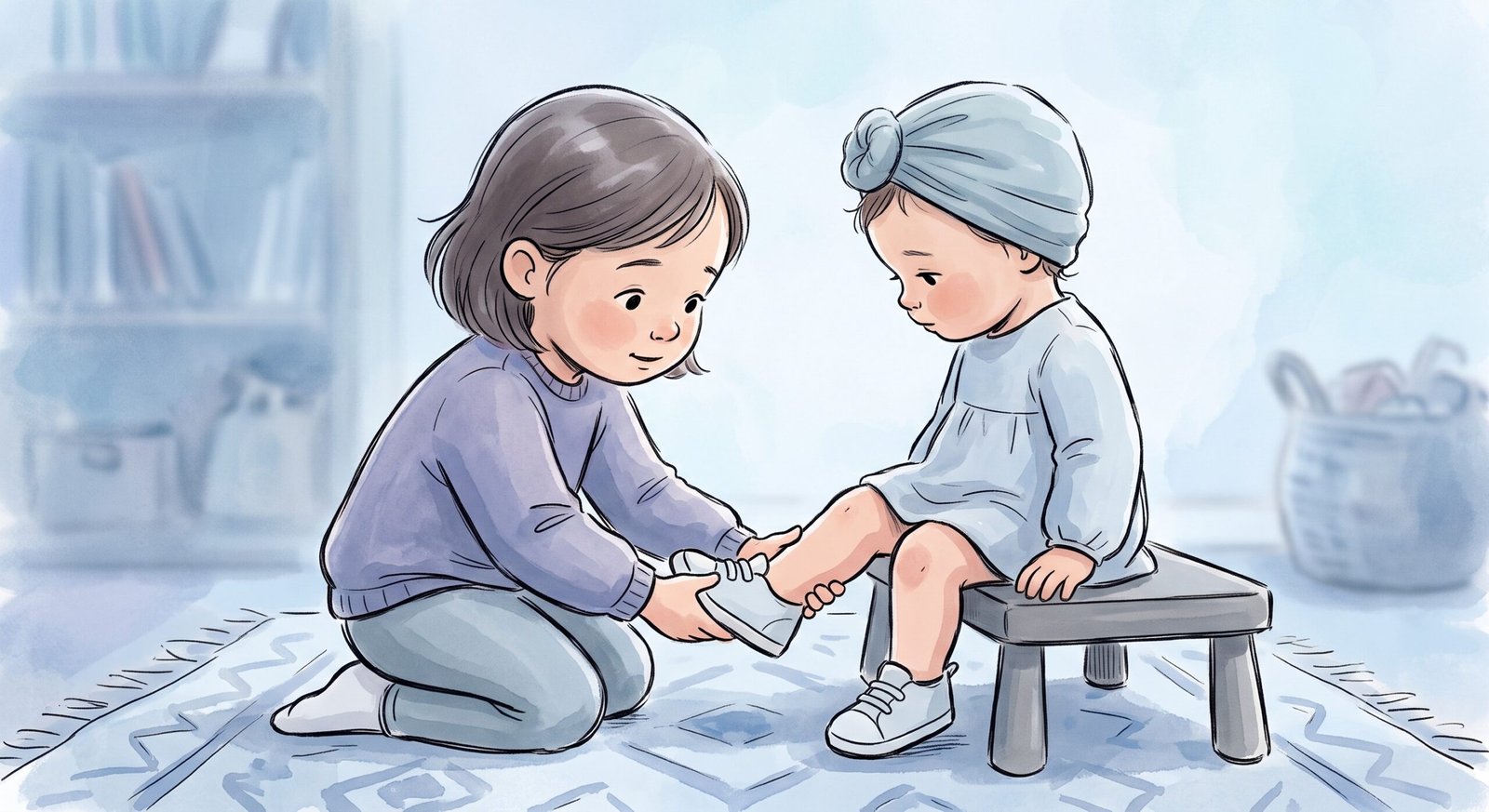
Looking back across years of early childhood research and lived experience, that hallway floor did more for their developing self-dressing skills than any therapeutic gadget or preschool tracing sheet ever could. When children practice self-dressing skills in an authentic context, it has a concrete purpose that matters deeply to them: escaping outside into the morning sunshine to run through the autumn leaves.
In this comprehensive developmental guide:
Why Self-Dressing Skills Get Overlooked in Early Childhood
In contemporary early learning discussions, self-care routines rarely receive the enthusiastic attention poured into early numeracy, emergent literacy, or creative loose-parts play. We celebrate when a toddler holds a pencil or uses scissors, yet we view a child pulling on a pair of gumboots as mere domestic routine.
Part of this neglect stems from visibility. Nurturing daily self-dressing skills produces nothing tangible to display on the kitchen refrigerator. There is no finished artwork, no numbered worksheet, and no colourful construction model to photograph for relatives. There is simply a child standing by the front door wearing their own jacket, an achievement that is easy to take for granted once mastered, and tempting to rush past while still developing.
Paediatric occupational therapists view early self-dressing skills not as incidental domestic chores, but as premier benchmarks of functional developmental competence. Mastering daily fasteners draws on the identical neurological infrastructure that enables writing, spatial reasoning, and social autonomy.
When a young child struggles to acquire foundational self-dressing skills, the emotional ripple effect extends far beyond the bedroom. It shows up in preschool bathrooms when a four-year-old cannot unbutton their trousers independently, resulting in avoidable toileting accidents. It appears on chilly kindergarten playgrounds when a child stands shivering at the door, dependent on busy educators to zip up their winter coat.
Nurturing confident self-dressing skills is an act of empowerment. As research from Harvard’s Center on the Developing Child proves, early mastery over daily self-care builds the neural architecture required for self-efficacy. When children gain dominion over their clothing, their internal working model shifts from passive dependence to capable agency.
What Is Actually Happening: The Hidden Motor Complexities
To an adult, threading a plastic button through a slit in fabric feels completely automatic. Our brains have relegated the action to muscle memory. For a toddler or preschooler developing self-dressing skills, however, fastening a single button requires synchronising multiple distinct neurological and physical domains:
| Motor & Sensory Domain | Physical Function Required | What It Looks Like in Self-Dressing Skills |
|---|---|---|
| Bilateral Coordination | Using both hands together, performing different yet complementary movements simultaneously. | One hand anchors the coat hem while the dominant hand threads the zipper pin into the small retaining slider box. |
| In-Hand Manipulation | Shifting, rotating, and adjusting an object within the palm and fingertips without dropping it. | Rotating a button flat between index finger and thumb to slide its edge through a fabric buttonhole. |
| Pincer Grasp & Hand Strength | Isolating the thumb and index pad while generating sustained intrinsic muscular force. | Pinching a slippery metallic zipper tab and pulling upward against the friction of thick winter fleece. |
| Motor Planning (Praxis) | Conceiving, organizing, and executing a sequence of non-habitual physical actions. | Figuring out how to turn a backward shirt around, insert the head, and locate the correct armholes without getting tangled. |
| Spatial & Body Awareness | Knowing where limbs and clothing are in space without looking constantly at every seam. | Pulling a jacket over the shoulders and reaching the second arm behind the back into an unseen sleeve. |
When you look at this table, morning resistance ceases to look like willful defiance. Developing robust self-dressing skills demands immense biological effort. If a child’s intrinsic hand muscles fatigue easily, or their sensory system feels overwhelmed by early morning transitions, the cognitive energy required to manage fasteners evaporates instantly.
As we explore in our work on hand strength activities for kids and our foundational guide to pincer grasp activities, these delicate motor mechanics require steady, low-pressure development long before adult-level efficiency emerges.
A Grounded Roadmap: Milestone Expectations from Ages 1 to 6
Every child navigates developmental milestones on their own organic timeline. Biological variations, neurodivergent traits, and opportunities for hands-on practice all shape when these skills crystallize. Having a realistic developmental benchmark prevents parents from expecting high-level dexterity from hands whose palm arches are still forming:
The Infant and Toddler Stage
At this stage, dressing is largely a collaborative dance. The toddler begins participating by extending an arm into an outstretched sleeve, lifting their foot toward a shoe, or pushing their feet through trouser cuffs.
- Typical Accomplishments: Pulling off loose socks, pushing hats off the head, finding armholes with physical guidance.
- Motor Focus: Early gross motor coordination, basic body awareness, and understanding simple directional cues.
The Independent Toddler
Children learn to take clothes off long before they can put them on. Undressing requires gross motor pulling, which develops earlier than the delicate alignment needed for dressing.
- Typical Accomplishments: Pushing down elastic-waist pants, removing an unfastened coat, unzipping large jackets with large pull rings, taking off loose shoes.
- Motor Focus: Grasping large fabric folds, pulling downward, and celebrating early autonomy.
The Preschool Explorer
Three-year-olds display fierce determination to dress themselves, even when clothes end up backward or shoes land on the wrong feet.
- Typical Accomplishments: Putting on shirts (often backward), stepping into slip-on shoes, unbuttoning large buttons (2.5 cm or larger), pulling up pre-fastened zippers.
- Motor Focus: Initial bilateral hand cooperation, thumb-to-finger pincer grips, and rudimentary in-hand manipulation.
The Capable Pre-K Learner
At four, fine motor coordination sharpens considerably. The thumb and index fingers separate from the ring and pinky fingers, enabling precision grasping.
- Typical Accomplishments: Fastening large front buttons reliably, snapping press-studs, connecting front zippers if an adult holds the base pin, putting on socks with heel alignment.
- Motor Focus: Symmetrical bilateral coordination, finger isolation, and improved visual-motor planning.
The School-Ready Child
Entering formal schooling demands independent self-care. Five- and six-year-olds typically manage standard school uniforms without adult assistance.
- Typical Accomplishments: Starting and pulling zippers completely independently, fastening standard shirt buttons, managing belt buckles, beginning to attempt shoelace knots.
- Motor Focus: Advanced finger dexterity, dynamic tripod grips, and sustained motor sequencing under time constraints.
Notice how late shoelace tying appears on this sequence. Tying a bow requires sixteen distinct micro-movements, spatial cross-over planning, and sustained finger tension. That is why simple strategies like the sibling shoe-tightening game Bella and Zara invented worked so brilliantly: it built functional momentum for their emerging self-dressing skills without demanding premature mastery of complex knots.
Zippers or Buttons First? Anatomy of the Fastener Sequence
Parents frequently ask which fastener should be introduced first when supporting self-dressing skills in young children. Clinical insights shared by the American Occupational Therapy Association (AOTA) outline a clear physiological hierarchy based on hand mechanics:
Zippers Almost Always Precede Buttons: Pulling a pre-connected zipper asks a child to use a simple cylindrical or lateral key pinch: grab the metal slider and pull in a single linear plane. There is minimal rotation or folding required.
By contrast, fastening a button demands a multi-step mechanical sequence:
- Stabilization: One hand grasps the edge of the fabric containing the buttonhole, spreading the slit open with the index finger and thumb.
- Orientation: The other hand grasps the button by its rim using a precise pincer grasp, rotating it perpendicular to the fabric slit.
- Insertion: The button is pushed half-way through the slit until its leading edge protrudes through the opposite side.
- Regrasp and Pull: The hand holding the buttonhole must release the fabric, reach across, pinch the protruding edge of the button, and pull it fully through while the other hand pushes the fabric back.
This sequence involves hand dominance switching, tactile feedback, and asymmetric bilateral coordination. Expecting a three-year-old to manage tiny shirt buttons before they can comfortably zip a jacket creates needless morning friction and slows down their self-dressing skills.
4 Brilliant Ways: How to Build Self-Dressing Skills in Daily Life
Rather than turning the morning rush into a battleground, educators and parents can integrate these four brilliant, evidence-based strategies to advance self-dressing skills naturally:
1. Practice Fasteners Off the Body First
Attempting to button a shirt while wearing it is visually and spatially disorienting. The child is looking down from an awkward vertical angle, their chin is pressed to their chest, and gravity pulls the fabric sideways.
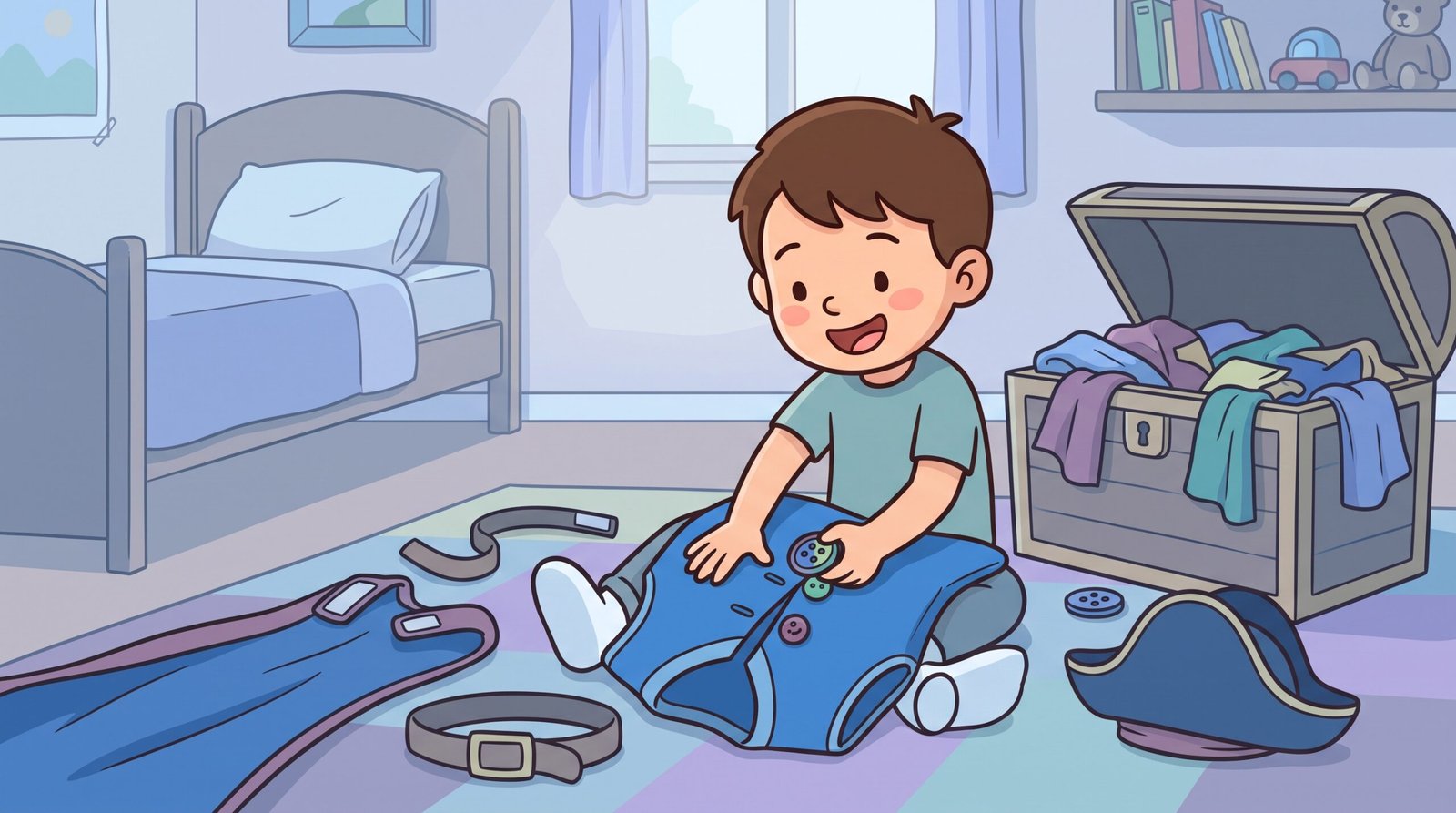
- What to do: Lay jackets, cardigans, and sleeping bags flat across the kitchen table or floor. Let your child practice zipping and buttoning while looking down from a clear, stable vantage point.
- Why it works: Removing body positioning, balance, and visual distortion isolates the fine motor problem. Practicing on flat planes accelerates self-dressing skills by allowing fingers to master the sequence without visual strain.
2. Use Oversized Adult Clothing and Playful Costumes
Small, stiff buttons on children’s clothing are designed for aesthetics rather than developing motor capability.
- What to do: Create a dress-up box filled with oversized adult cardigans with large wooden buttons, heavy winter coats with chunky plastic zippers, and loose flannel shirts, similar to the natural play provocations in our practical life activities preschool at home guide.
- Why it works: Oversized garments offer loose, forgiving fabric and large contact areas. A child can make minor motor errors without jamming the track, building self-dressing skills through successful repetition without performance anxiety.
3. Dropping Tokens Through Slotted Lids
The specific in-hand manipulation required to orient a button closely mirrors sliding flat objects through narrow openings.
- What to do: Cut narrow slits of varying sizes into the plastic lids of clean yogurt tubs or cardboard containers. Provide an assortment of large buttons, milk bottle caps, and cardboard discs for your child to pinch, rotate, and post through the slots.
- Why it works: This builds deep intrinsic hand strength and fingertip precision, providing the underlying muscle tone required for advanced self-dressing skills, reflecting the sensory principles in our low-cost sensory classroom setup guide.
4. Implement the “Last Inch” Success Technique (Backward Chaining)
When a task feels impossibly long, children shut down before beginning. Backward chaining is an established occupational therapy tool where the adult completes 90% of the task, leaving the final triumphant step for the child.
- What to do: For zippers, connect the retaining pin at the bottom and pull the slide up to chest height. Invite your child to take the tab and pull it the final two inches to the collar. For socks, slide the heel on completely and let them pull the cuff up their calf.
- Why it works: The child experiences the dopamine surge of completing the goal every single time. Backward chaining cements confident self-dressing skills by ensuring every practice session concludes with success rather than frustration.
Sensory Roadblocks: Seams, Tags, and Proprioceptive Overload
In neurodivergent children, including those with ADHD or autistic sensory profiles, dressing resistance often has nothing to do with motor incompetence. It is driven by tactile defensiveness and sensory modulation differences that stall emerging self-dressing skills.
A synthetic clothing tag rubbing against the cervical spine can register in a sensitive nervous system as sharp physical irritation. Stiff denim seams running across knee joints, tight sock seams pressing into toe knuckles, or the heavy weight of a stiff winter coat can trigger acute physiological distress.
When a sensory-sensitive child screams about putting on shoes, they are not staging a power struggle. Their nervous system is sounding an alarm in response to unbearable sensory input. Demanding motor precision while a child is in tactile agony is counterproductive.
Consider these grounded sensory accommodations to smooth the dressing journey:
- Seamless or Turned-Inside-Out Socks: Invert standard socks so the rough seam sits outward, away from sensitive toes, or invest in bamboo seamless options.
- Tagless and Washed Cotton: Slice off woven manufacturer tags completely with seam rippers, and wash stiff new clothes multiple times with mild detergent before wearing.
- Proprioceptive Warm-Ups: Before asking a child to navigate tight sleeves, offer deep pressure input: firm hugs, animal walks, or carrying a laundry basket, drawing on ideas from our pocket heavy work cards to ground their nervous system.
Task Initiation and Morning Freezes in Neurodivergent Homes
Even when motor strength and sensory comfort are present, neurodivergent children often hit an invisible wall right at the beginning of the dressing routine. Task initiation—the executive function capability required to launch from a restful state into active motor sequencing—can completely freeze, directly impeding everyday self-dressing skills.
As I know intimately from raising a daughter with ADHD and navigating my own late-diagnosed ADHD, standing in front of an unzipped coat with a parent shouting time warnings creates instant cognitive paralysis. The brain looks at the jacket and perceives a mountain of complex, overwhelming steps.
This is precisely where our proven ADHD start together task trick changes everything. Instead of repeating verbal reminders across the hallway, sit down on the floor beside your child. Pick up one shoe, slip it onto their toes, and let them pull the heel up. By providing co-regulation and sharing the physical burden of the first few seconds, you dissolve the initiation barrier without triggering a morning meltdown.
Pairing this gentle presence with visual routine cards for ADHD kids eliminates the auditory fatigue of repeated spoken prompts, allowing visual predictable cues to guide the sequence.
The Peer Scaffolding Effect: Why Sibling Modeling Works
Reflecting on those early Melbourne mornings when Bella and Zara tackled their shoes together, I realized how much developmental magic lived in that peer relationship.
When an adult demonstrates how to tie a shoe or thread a button, the demonstration can inadvertently highlight incompetence. Our hands are large, our fingers move with effortless speed, and our posture is towering. To a preschooler developing self-dressing skills, an adult’s effortless dexterity feels unattainable.
Watching Bella fumble, adjust, pull, and finally secure a lace gave Zara a realistic, accessible developmental target. Bella’s hands were only slightly larger than hers. The gaps, the corrections, and the bickering were all part of authentic sociocultural scaffolding.
Furthermore, that informal sibling pact provided dozens of hours of incidental repetition across the year. No therapeutic program could have achieved that volume of practice without triggering intense resistance. It worked because it was wrapped in sisterhood, autonomy, and the shared desire to get outside and play. Supporting self-dressing skills through peer collaboration transforms frustration into shared accomplishment.
When to Seek Occupational Therapy Guidance
While developmental timelines vary widely, persistent challenges across self-care activities warrant an objective look. If you observe the following patterns, consulting with a paediatric occupational therapist or family GP can provide clarity:
- A five-year-old who cannot manipulate large buttons, snaps, or pull down elastic trousers independently despite consistent opportunities, showing delayed self-dressing skills.
- Severe, enduring distress or meltdowns triggered by common clothing textures, seams, or changes in temperature, pointing toward sensory modulation differences.
- Dressing difficulties co-occurring with broader fine motor challenges, such as trouble handling eating utensils, using blunt scissors, or an inability to stabilize paper with their non-dominant hand.
- Extreme clumsiness, poor balance when lifting feet into pants, or frequent falls during basic dressing movements, which may indicate dyspraxia or vestibular challenges.
Under Australia’s early years framework administered by ACECQA, supporting physical wellbeing and bodily agency is recognized as a cornerstone of childhood development. Early intervention is not about finding fault with your child; it is about uncovering supportive accommodations that dismantle unnecessary barriers. Every small victory on the hallway floor builds a resilient foundation for the wider world ahead.
Free Printable: The Morning Self-Dressing Routine Chart
A calm, visual morning routine printable designed to help young children track their dressing steps independently using low-stress picture cues.
Download the Free 3-Page Sampler- Build foundational pincer strength in Pincer Grasp Activities: Fine Motor Fun for Toddlers →
- Strengthen palm and finger arches using Hand Strength Activities for Kids: Simple Everyday Games →
- Prepare little hands for preschool in Scissor Skills by Age: Developmental Stages and Safe Activities →
- Support dynamic finger grips with our guide on How to Hold a Pencil Correctly: Gentle Guidance for Beginners →
- Calm morning task freeze using the ADHD Start Together Task Trick: 4 Powerful Ways to Help Your Child Begin →
- Organize daily transitions with Visual Routine Cards for ADHD Kids: Calming Home Schedules →
References & Readings That Guided Me
- Case-Smith, J., & O’Brien, J. C. (2015). Occupational Therapy for Children and Adolescents (7th ed.). Mosby Elsevier. [Comprehensive developmental framework detailing bilateral coordination, in-hand manipulation, and the motor milestones of self-care independence].
- Exner, C. E. (2005). Development of hand skills. In J. Case-Smith (Ed.), Occupational Therapy for Children (pp. 304–355). Elsevier. [Detailed clinical analysis of in-hand manipulation, finger isolation, and translation movements essential for managing fasteners].
- Dunn, W. (2007). Supporting children to participate successfully in everyday life by using sensory processing knowledge. Infants & Young Children, 20(2), 84–101. [Pedagogical foundation on how tactile defensiveness and sensory thresholds impact morning dressing routines].
- Australian Government Department of Education. (2022). Belonging, Being and Becoming: The Early Years Learning Framework for Australia (V2.0). [National learning guidelines prioritizing physical wellbeing, sensory agency, and emerging personal autonomy in daily self-care].
Questions parents often ask
Large buttons are usually manageable by around four, though most children need help starting a zipper until closer to five or six, a timeline Mama OT’s Christie Kiley lays out clearly in her writing on this exact question. In our house, shoelaces were the last piece to click, well after buttons and zips were sorted.
Zippers are generally easier to start with, since once the two sides are hooked together, a child only needs to pull, a point The Inspired Treehouse makes in their guidance on teaching these skills. Practising the zip pull on a jacket laid flat, before ever trying it while wearing the jacket, made a noticeable difference for us too.
By around three, most children can undress with little help and attempt shoes, even landing on the wrong feet. Full independent dressing, fasteners included, usually comes together by five or six, which tracked closely with what I watched happen with both of my girls.
Everyday moments tend to beat dedicated practice, and Focus Therapy’s occupational therapy writing on dressing skills makes the same point. In our case, it wasn’t planned at all, it was two sisters on the hallway floor most mornings working out shoes together because getting out the door meant four hands beat my two.