
Hand Strength Activities for Kids: 4 Practical Ways We Built Grip and Control
In our house, figuring out hand strength activities for kids came from an honest mistake: I spent weeks trying to correct my four-year-old’s pencil grip before realising her fingers simply weren’t strong enough to hold it yet. Hand control doesn’t start at the fingertips. It grows through stable shoulders, steady wrists, and ordinary everyday tasks.
Focusing on hand strength activities for kids changed how we did our afternoons: before little fingers can hold a pencil comfortably, bigger muscles in the arms, shoulders, and palms need to do the groundwork.
Zara was nearly four before I worked out our daily table battles weren’t about her pencil grip at all.
I had spent weeks trying every trick I knew: the alligator mouth cue, snapping crayons in half, and sliding foam grips onto pencils. Those things had worked fine for her older sister. With Zara, none of it stuck.
Her fingers would find a decent tripod grasp for about four seconds, and then slide straight back into a tight fist. She pressed so hard that crayon tips snapped clean off, or she would drop the pencil after a minute or two, shake her hand, and tell me it hurt.
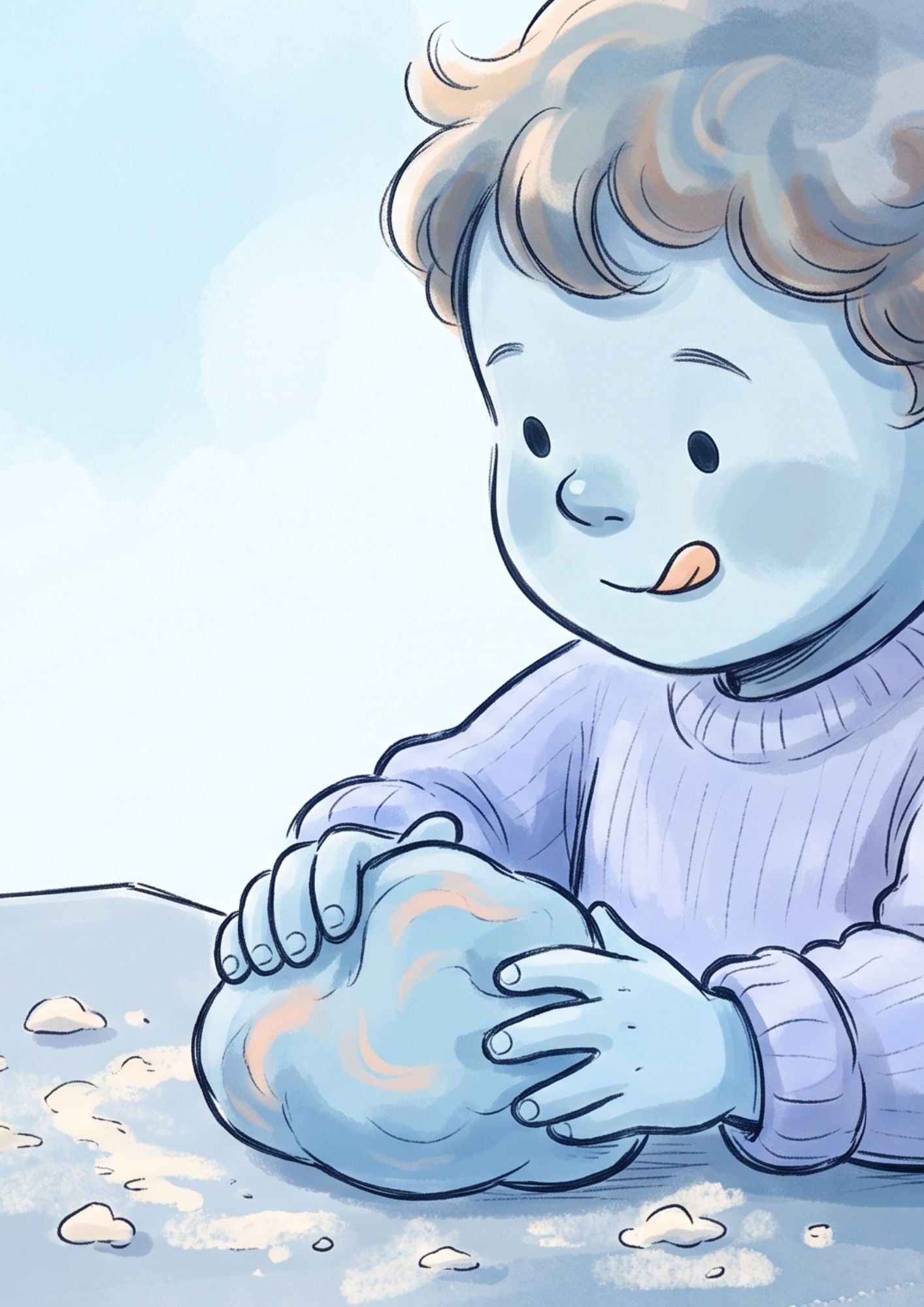
I was sitting on the kitchen floor with her one afternoon, completely stumped, until an occupational therapist friend popped over and asked: “Can she twist the lid off a tub of playdough on her own yet?”
She couldn’t. Not even close.
I’d been treating a grip habit that wasn’t a habit at all. It was an endurance problem sitting one layer down. When you bring sensible hand strength activities for kids into normal routines, children get the physical backing they need to hold tools without sore palms or tears.
In this guide:
Why Strength Comes Before Grip
Child development follows a straightforward biological path: proximal to distal.
Muscles close to the centre of the body develop and steady themselves before smaller muscles further out. The trunk and shoulders stabilise before the elbows; the forearms and wrists firm up before the tiny intrinsic muscles inside the palm and fingers can work properly.
Clinical guidance from the American Occupational Therapy Association (AOTA) makes this clear: trying to train neat finger movement without shoulder and core stability is like trying to write on a wobbly table.
In her work on in-hand manipulation, paediatric occupational therapist Charlotte Exner showed that small adjustments—like turning a pencil around to use an eraser—depend heavily on wrist stability and palm arches that develop through rough-and-tumble gross motor play.
If a child lacks the shoulder strength to steady their arm, or the wrist control to hold their hand slightly tilted back while drawing, the fingers have to compensate. They clamp into a fist just to keep the pencil still, which leads to sore hands and task avoidance.
Once you see this, the fix changes. Instead of hovering over a four-year-old and constantly fixing their fingers, we need everyday hand strength activities for kids that work the whole arm from the shoulder blades down.
Signs It Is a Strength Issue, Not Stubbornness
It is easy to misread weak hands as lack of interest or poor concentration. Here is what we noticed at our kitchen table, and what was actually going on underneath:
| What You See at the Table | What It Is Easy to Assume | What the Muscles Are Doing |
|---|---|---|
| Grip Collapses into a Fist Holds the pencil right for a few seconds, then slips back. |
They aren’t listening or trying hard enough. | The tiny palm muscles are tiring out, so the larger forearm muscles take over with a fist. |
| Heavy Pencil Pressure Snapping crayons or tearing the paper. |
Rushing or pressing out of frustration. | Poor feedback from the joints: locking fingers tight to stop the pencil wobbling. |
| Trouble Opening Lunchboxes Struggles with containers, zip-lock bags, or drink bottles. |
Helplessness or wanting mum to do it. | Weakness in the thumb muscle and wrist rotation needed to twist and pull. |
| Tiring After Two Minutes Shakes hand, rubs palm, or leaves the table. |
Boredom or avoiding learning tasks. | Genuine muscle fatigue in palms that haven’t built stamina yet. |
| Avoiding Playground Ropes Steers clear of monkey bars, climbing nets, and ladders. |
Being cautious or shy outdoors. | Weak grip and shoulder stability make holding their own body weight feel uncomfortable. |
If a few of those sound familiar, leaning into simple hand strength activities for kids will do far more good than reminding them how to hold their pencil every thirty seconds.
The Three Types of Movement Hands Need
Paediatric OTs generally split upper body strengthening into three groups. Thinking about them this way helped me stop buying random gadgets and look at what we actually had around the house:
1. Weight-Bearing (Shoulders and Wrists)
Any time a child pushes their weight through flat hands, they switch on the muscles around their shoulder blades and steady their wrists. This gives the fingers a stable base to move from.
Animal walks (bear crawls, crab walks), crawling through cubbies, and wheelbarrow walks are brilliant for this. They don’t look like handwriting practice, but they are some of the most effective hand strength activities for kids you can do.
2. Pushing, Pulling, and Heavy Work (Joint Feedback)
Moving heavy things wakes up the proprioceptive system. Pulling a trolley, tug-of-war with a bath towel, or kneading thick dough gives the palms deep input.
This helps children learn how much pressure to use so they stop snapping crayons, matching the practical ideas in our pocket heavy work cards.
3. Squeezing and Pinching (Palm and Finger Muscles)
This is what most of us think of: firm dough, spray bottles, pegging clothes, and kitchen tongs.
These movements build up the thumb mound and open up the space between the thumb and pointer finger. Squeezing works best when a child is already doing the weight-bearing and climbing mentioned above.
Correcting the Grip vs Building the Strength
Here is the difference between fixing a child’s pencil hold and giving their hands the strength to hold it on their own:
| Part of the Day | Just Correcting the Grip (Worksheets) | Building the Muscle First (Everyday Play) |
|---|---|---|
| Where the Work Happens | Focuses on three fingers while the wrist and shoulder stay weak. | Strengthens the whole arm: shoulders, forearms, wrists, and fingers together. |
| How It Feels for the Child | Tiring: constant reminders make them feel like they are getting it wrong. | Encouraging: feels like normal rough-and-tumble play or helping in the kitchen. |
| Stamina | Short bursts: hands cramp up quickly because the base isn’t there. | Longer stretches: conditioned palms can hold a pencil without soreness. |
| Where It Helps | Mostly just tracing and colouring sheets. | Carries into opening lunchboxes, using scissors, buttoning coats, and climbing. |
4 Practical Hand Strength Activities for Kids We Used at Home
You don’t need therapy kits or specialty toys. These 4 simple hand strength activities for kids use things already sitting in the kitchen or laundry:
1. Firm Bread Dough and Squeezing Labs
Soft, fluffy playdough doesn’t offer enough pushback to build real muscle. Dense materials work much better.
- What we did: Made a batch of plain salt dough, mixed a little firmer than usual. Zara flattened it with the heel of her hand, squeezed it through her fingers, and rolled thick snakes.
- Why it works: Working against firm dough builds the arches of the palm and conditions the thumb. It is one of the most reliable hand strength activities for kids because the resistance is immediate and satisfying.
2. Spray Bottle Window Washing
Pumping a trigger spray bottle works the pointer finger while holding the wrist in the exact tilted-back position needed for writing.
- What we did: Filled a regular spray bottle with tap water. Zara went outside to spray chalk marks off brick pavers, water the ferns, or “clean” the back sliding door.
- Why it works: Pulling the trigger exercises the wrist extensors. Those are the same muscles that stop a pencil hand from dragging flat across the page.
3. Wheelbarrow Walks and Bear Crawls
Bearing weight through flat palms steadies the shoulders and wrists so the fingers can relax.
- What we did: Held Zara by her knees (holding hips is easier; ankles are harder) while she walked her hands across the living room rug. We also did bear crawls to the bathroom at bath time.
- Why it works: Pushing through hands switches on joint receptors and builds shoulder stability, which stops kids slumping over their drawings later on.
4. Pegging Clothes and Kitchen Tongs
Spring-loaded wooden pegs give little fingers real mechanical resistance.
- What we did: Clipped wooden pegs around the rim of an ice cream container or shoebox. Zara had to pinch and pull each one off with her thumb and pointer finger to drop it inside.
- Why it works: Opening a spring peg builds the pincer grip against real pushback, preparing fingers for scissors and zips, which we cover in our guide to pincer grasp activities.
How to Fold Strength Play into the Day Without Extra Chores
I want to be clear about something: sitting a preschooler down for twenty minutes of “fine motor exercises” didn’t work for us.
When I tried turning it into a scheduled session, it became another thing to argue about. What actually worked was finding jobs already happening around the house and letting Zara take over:
- At Bath Time: Hand over the wet face washer and let them wring it out over the bath. Twisting with both hands works the wrists and forearms without feeling like practice.
- Making Dinner: Let them tear lettuce into a salad bowl, mash bananas with a fork, or use a manual citrus squeezer. These give real resistance and make children feel genuinely helpful, just like our practical life activities preschool at home.
- On Laundry Day: Ask them to push the full washing basket along the floorboards to the machine. That sustained push works the core and shoulders naturally.
The hardest part for me was being patient. Watching a three-year-old wring a face washer takes a few minutes; doing it yourself takes two seconds. But that slow space is where the hand strength actually builds.
Touchscreens and Modern Hands
It is easy to blame screens for weak hand development, but the physical reality is simple enough.
Using a tablet only asks for a soft, flat-finger tap or swipe across smooth glass.
That light movement doesn’t build palm arches, wrist control, or thumb strength. It doesn’t replace the heavy work of climbing trees, kneading dough, digging in the garden, or carrying buckets of sand.
Research from Harvard’s Center on the Developing Child shows that hands-on physical movement is essential for sensory processing and motor control. If screens are part of your week, make sure there is plenty of tactile, heavy play to balance them out.
It isn’t about banning screens; it’s about making sure little hands still get to push, pull, tear, and squeeze real things every single day.
How Strength Connects to Scissors, Zips, and Pencils
Hand strength is the common foundation running under early childhood skills:
With writing, as we share in how to hold a pencil correctly, a relaxed grip is impossible if the space between the thumb and pointer finger collapses from tiredness.
With scissors, working through the stages in scissor skills by age depends on hands being strong enough to open and close blades without the wrist flopping downwards.
And with self-care, as seen in buttoning, zipping, and self-dressing skills, children can’t line up a zip pin or push a button through stiff fabric without good pinch strength.
Once hand muscles are steady, writing stops feeling like hard work. That is why our tracing bundles use story prompts rather than plain lines, giving children an interesting reason to put pencil to paper once their hands are ready for it.
When It Is Worth Checking in with an OT
Children develop at different rates, and wide variations are completely normal. But talking to your GP, maternal child health nurse, or a paediatric occupational therapist makes sense if you notice:
- A child older than four whose hand joints seem unusually floppy, with fingers bending backwards during simple tasks.
- Trouble pressing hard enough to leave a mark on paper or squeeze water from an ordinary sponge.
- Hands trembling when trying to pick up or hold light objects.
- Avoiding cutting, drawing, and craft altogether, accompanied by deep frustration or distress.
Information from the Royal Children’s Hospital Melbourne shows that early checks give practical, everyday ideas to help children build confidence comfortably.
Under Australia’s early years framework from ACECQA, supporting physical wellbeing and bodily independence is part of early learning.
Building strong hands takes time. Notice the small wins along the way—the jar lid that opens, the face washer wrung out, the peg squeezed open—knowing that every bit of resistance helps your child feel capable and independent.
Free Printable: Hand Strength Checklist
A simple one-page checklist of everyday weight-bearing, squeezing, and heavy-work ideas you can do at home without buying special equipment.
Download the Free 3-Page Sampler- Learn scissor progression in Scissor Skills by Age: Developmental Stages and Safe Activities →
- Help with pencil hold in How to Hold a Pencil Correctly: Gentle Guidance for Beginners →
- Practise finger control with Pincer Grasp Activities: 4 Brilliant Ways to Master the Tiny Grip →
- Build morning dressing habits in Buttoning, Zipping, and Self-Dressing Skills: 4 Brilliant Ways to Build Independence →
- Try pre-writing ideas in Fine Motor Skills Pencil Control Activities Without Worksheets →
- Ease morning friction using the ADHD Start Together Task Trick: 4 Powerful Ways to Help Your Child Begin →
References & Readings That Guided Me
- Case-Smith, J., & O’Brien, J. C. (2015). Occupational Therapy for Children and Adolescents (7th ed.). Elsevier Mosby. [Proximal-to-distal motor development and upper extremity stability].
- Exner, C. E. (1990). In-hand manipulation skills. In A. Henderson & C. Pehoski (Eds.), Hand Function in the Child: Foundations for Remediation (pp. 238–265). Mosby. [How wrist stability and palm arch strength support fine motor control].
- American Occupational Therapy Association (AOTA). (2020). Occupational therapy practice framework: Domain and process (4th ed.). American Journal of Occupational Therapy, 74(Suppl. 2). [Standards for motor milestones, hand strengthening, and daily self-care].
- Australian Government Department of Education. (2022). Belonging, Being and Becoming: The Early Years Learning Framework for Australia (V2.0). [Early learning outcomes prioritising fine motor agency and holistic wellbeing].
Questions parents often ask
Occupational therapists generally group these into three categories, weight-bearing play like wheelbarrow walks, pushing and pulling tasks like kneading dough, and squeezing activities like playdough or a spray bottle. In our house the ones that actually stuck were the ones folded into routines we were already doing, wringing out a washcloth at bath time, a garlic press loaded with playdough at the kitchen counter, rather than a separate practice session.
A few signs to watch for: a pencil grip that looks correct for a few seconds before collapsing back into a fist, trouble opening jars, or a hand that tires after a minute or two of writing. This lines up with what occupational therapy sources like The Inspired Treehouse describe as early red flags, and it’s exactly what I missed with my youngest before an OT friend asked the right question.
Generally yes. Child development follows what’s called a proximal-to-distal pattern, meaning strength closer to the body, shoulders and core, tends to mature before the small muscles in the hand are ready for precise control, a principle Case-Smith and O’Brien cover in their occupational therapy textbook. In practice, that matched what I saw, no amount of grip correction helped until the underlying strength caught up.
Playdough, a spray bottle filled with water, clothespins clipped around a bowl, a garlic press, and a wet washcloth to wring out all work well, and they’re the same categories referenced by occupational therapy resources like The Inspired Treehouse. None of it needed buying, it was mostly things already sitting in our kitchen drawer.