
Executive Function Early Literacy Neurodivergent Support at Home
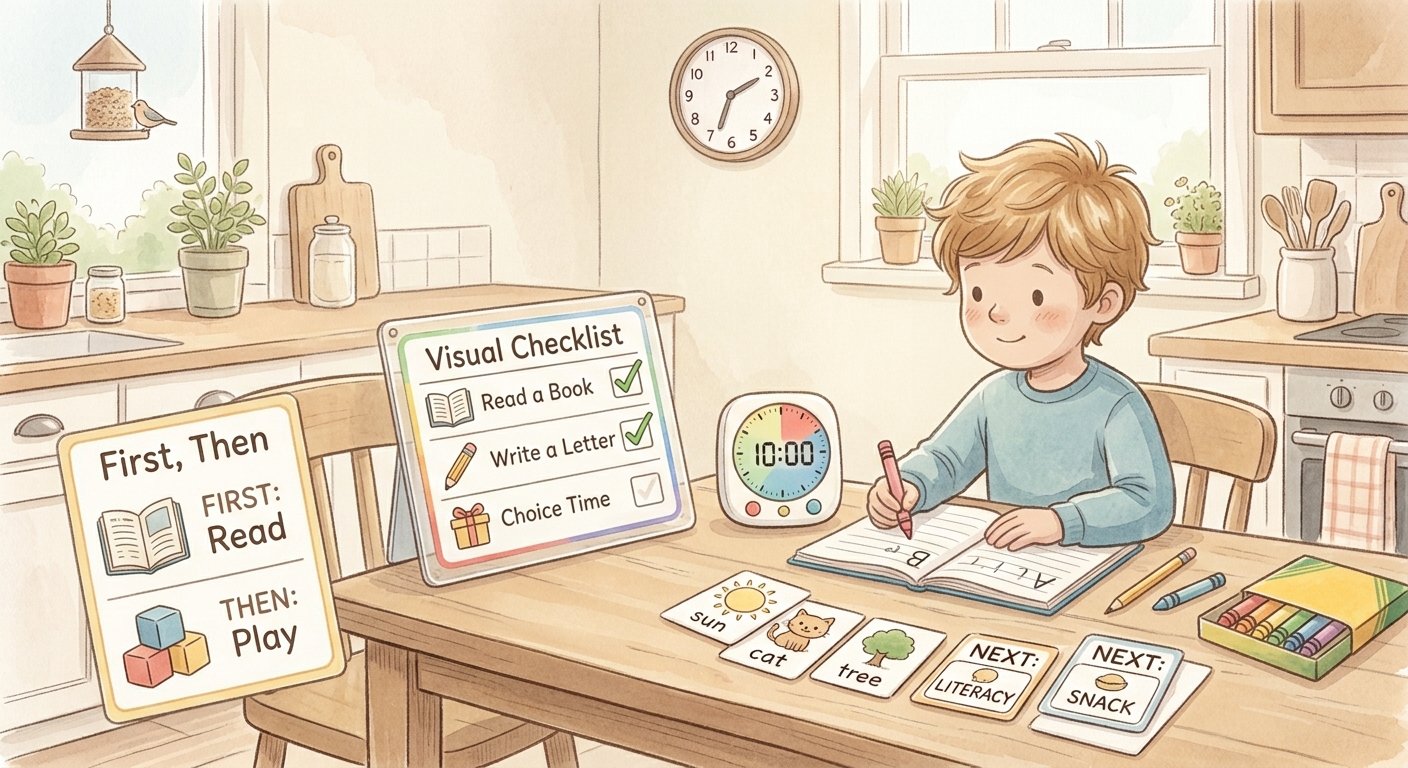
Executive function early literacy neurodivergent support often begins in a moment that feels small but carries deep meaning. It is early evening. Your child is sitting at the table with a book in front of them. The room is quiet. You are standing nearby, watching them trace the cover with their finger. They want to begin reading. They are thinking about beginning. They are trying to begin. Yet their body stays still. Their eyes move but their hands do not. You can feel the pause. You can feel the effort. You can feel the weight of beginning.
This pause is not laziness. It is not avoidance. It is not defiance. It is executive function. Understood explains that executive function skills help children start tasks, shift between ideas, manage emotions, and stay focused. When these skills feel uneven, beginning a literacy task can feel heavy. Many neurodivergent children experience this pause. It is a moment of overwhelm, not a moment of refusal.
Why Executive Function Shapes Early Literacy
Executive function is a group of cognitive skills that help children plan, begin, and complete tasks. These skills include working memory, cognitive flexibility, and emotional regulation. When these skills feel uneven, literacy tasks can feel overwhelming. Reading requires holding information in mind. Writing requires shifting between ideas. Both require emotional steadiness.
Working memory helps children remember what they just read. Cognitive flexibility helps them shift between letters, sounds, and ideas. Emotional regulation helps them stay calm when the task feels challenging. The National Autistic Society notes that many neurodivergent children experience difficulty with these skills. This makes literacy tasks feel heavier at the beginning.
A Narrative Moment Many Parents Recognise
I want to return to the moment at the table. Your child looks at the book. They breathe slowly. They touch the cover again. They want to begin. You sit beside them. You breathe with them. You say, we will begin together. Their shoulders soften. Their breath steadies. Their eyes settle. You open the book slowly. You read the first sentence. They lean closer. They listen. They smile.
Then they pause again. Their eyes move away. Their hands become still. Their breath changes. You recognise the pause. You say, I see you are thinking. I am here. They nod. They return to the page. This is executive function early literacy neurodivergent support. It is gentle. It is slow. It is connected.
What Gentle Executive Function Support Looks Like
Executive function early literacy neurodivergent support is not about pushing children to begin. It is not about strict routines. It is not about long reading sessions. It is about helping children feel emotionally ready. It is about reducing cognitive load. It is about creating calm.
The routine begins with connection. You sit beside your child. You breathe slowly. You speak softly. You help them feel safe. When children feel safe, executive function becomes steadier.
A Step by Step Executive Function Early Literacy Routine
Begin by sitting beside your child. Do not place the book in front of them yet. Simply sit with them. Breathe slowly. Let your calm become their calm.
Say, we are getting ready to read. We are not starting yet. This helps children transition into the task without pressure. Many neurodivergent children need time to shift from one state to another.
Offer a sensory anchor. Say, would you like to hold your soft toy while we get ready. They nod. They hold the toy. Their breath slows. Their shoulders soften.
Place the book beside you. Do not open it yet. Say, the book is here. We will open it soon. This reduces cognitive load by giving children time to adjust.
When your child feels calm, open the book slowly. Show the first page. Do not begin reading yet. Simply show the page. Say, this is the beginning of the story.
Begin reading only when your child feels ready. Read slowly. Pause often. Watch their face. Watch their breath. Watch their hands. Follow their state rather than the book’s pace.
Nine Powerful Ways to Support Executive Function
1. Begin with connection
Sit beside your child. Breathe slowly. Help them feel safe before introducing the book.
2. Use sensory grounding
Offer a soft toy or gentle fidget. Sensory grounding helps children regulate before beginning.
3. Reduce cognitive load
Begin with familiar books. Use short reading moments. Keep the environment simple.
4. Validate the pause
Say, I see you are thinking. I am here. Validation helps children feel understood.
5. Use visual cues
Show the book before reading. Show the first page before beginning. Visual cues help children feel prepared.
6. Use shared reading
Read together. Let your child listen first. Shared reading reduces pressure.
7. Support emotional regulation
Use slow breathing. Use gentle voice. Emotional regulation strengthens executive function.
8. Celebrate small beginnings
Celebrate when your child begins. Celebrate when they turn a page. Celebrate when they listen.
9. Use predictable routines
Predictable routines help children feel safe. Safety strengthens executive function.
How Executive Function Support Builds Literacy Skills
Executive function early literacy neurodivergent support strengthens emotional readiness. It strengthens cognitive flexibility. It strengthens working memory. When children feel calm, they learn more easily.
These routines also support task initiation. Understood explains that task initiation is the ability to begin a task without feeling overwhelmed. When parents model gentle beginnings, children learn to begin tasks more easily.