
Neurodivergent Learning Design: 3 Pillars for Calmer Early Childhood Rooms
In everyday practice, neurodivergent learning design is an intentional way of shaping rooms, daily rhythms, and adult relationships so that developing nervous systems feel physically safe. Rather than demanding behavioural compliance from exhausted children, this approach adjusts sensory load and adult co-regulation so learning is more likely to follow.
If you are an educator standing in a noisy room wondering why traditional teaching tools fail your most sensitive children, or an exhausted parent sitting on the floorboards after another difficult transition, this approach offers a kinder, more sustainable way forward.
- Why Traditional Early Childhood Systems Fall Short
- The Three Pillars of Neurodivergent Learning Design
- Pillar 1: Regulation and Behaviour (The Autonomic Nervous System)
- Pillar 2: Sensory Environment (The Active Third Teacher)
- Pillar 3: Spiky Profiles and Capacity (Honouring Uneven Growth)
- How to Implement This Design in Real Early Childhood Settings
- Putting the Pillars to Work in Learning
- Neurodivergent Learning Design FAQs
- References
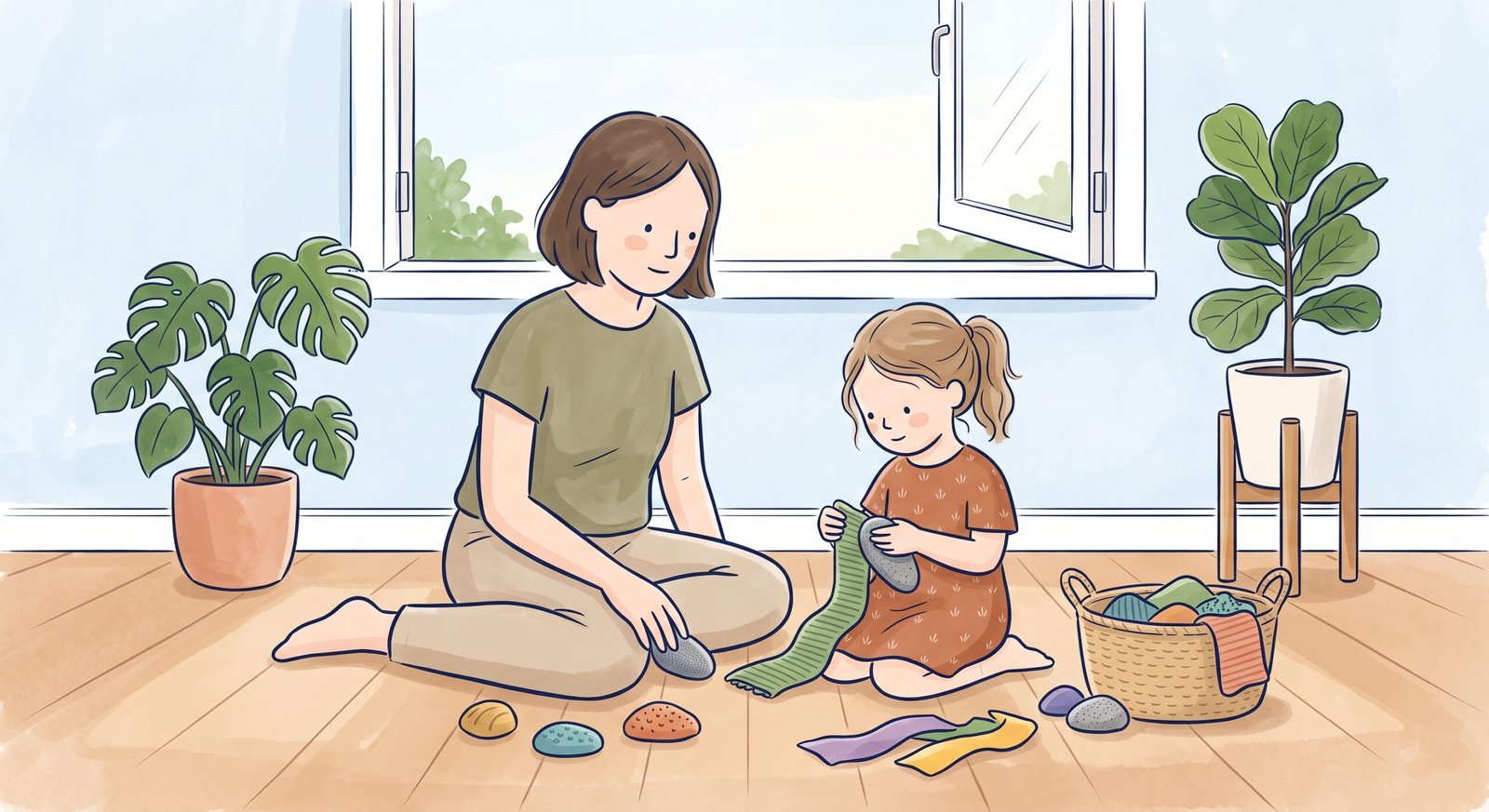
Why Traditional Early Childhood Systems Fall Short
For generations, mainstream early childhood education has been built on an unspoken premise. It assumes that if adults provide clear instructions, consistent rewards, and firm boundaries, every young child will gradually learn to sit still, wait their turn, and manage their feelings.
When a child cannot meet those expectations, traditional systems treat the struggle as an intentional behavioural choice. We see the immediate introduction of reward stickers, colour-coded clip charts, verbal warnings, and loss of playtime.
When you live with neurodivergence every day, you see that, in my experience, those traditional tools often do not build self-regulation. They mostly measure compliance, and for some children they add to exhaustion. I unpack why in ADHD behaviour strategies.
Consider what can happen in a busy early childhood room. Twenty or more children may be together in a brightly lit space with hard floors, humming fluorescent tubes, and dozens of competing voices.
They may be asked to sit upright on a crowded carpet mat, follow multi-step spoken instructions, share popular toys, and move between activities at the sound of a chime.
Many children can manage this kind of environment. They filter out the background chatter and recover quickly from minor disruptions. Others, like the children I describe in classroom noise and sensory overload, find it much harder.
For some autistic children, children with ADHD, or children with sensory processing differences, the same room can take enormous effort. In my experience, by mid-morning some of these children have little left, and when an educator asks them to pack away their wooden blocks, the child may dissolve into tears or bolt for the doorway.
In many settings, that moment is labelled non-compliance or task refusal. In this approach, we ask first whether it could be overload, before assuming it is defiance. The child may not be choosing to give the adult a hard time; the physical and social demands of the room may have exceeded what they can manage at that moment.
Belonging is one of the three ideas in the title of Australia’s Early Years Learning Framework (V2.0), Belonging, Being and Becoming.[1] Neurodivergent learning design is one way I try to make belonging a physical reality in the room, not only a policy statement. Belonging matters just as much for children learning in more than one language, which I explore in EAL identity and belonging.
The Three Pillars of Neurodivergent Learning Design
Rather than reacting to distress after it happens, neurodivergent learning design organises early childhood environments around three interconnected pillars:
| Pillar Dimension | What Traditional Systems Do | What Neurodivergent Learning Design Builds |
|---|---|---|
| Pillar 1: Regulation and Behaviour | Often relies on external rewards, token economies, time-out chairs, and compliance charts. | Prioritises adult co-regulation, a sense of safety, and low-demand routines. |
| Pillar 2: Sensory Environment | Can involve crowded wall displays, harsh overhead lighting, and open floor runways. | Uses spatial zoning, domestic textiles for acoustic dampening, indirect amber lighting, and low-traffic calm corners. |
| Pillar 3: Spiky Profiles and Capacity | Often measures children against age-based milestone checklists and expects consistent performance from day to day. | Honours asynchronous development, accommodates fluctuating daily energy tanks, and protects adult caregiver reserves. |
These three pillars do not operate in isolation. In my experience, when the physical room (Pillar 2) is calm, a child’s sensory battery may stay charged longer. That preserved energy can support emotional regulation (Pillar 1), which may help reduce the severe midweek capacity drops (Pillar 3) that contribute to caregiver exhaustion.
This is my working model, built from practice and the sources below. It is not a tested intervention.
Pillar 1: Regulation and Behaviour (The Autonomic Nervous System)
The first pillar is shifting how we perceive and respond to emotional storms.
Polyvagal theory, developed by Stephen Porges, proposes that the autonomic nervous system continually scans for safety through a process he calls neuroception.[2] The theory is popular in trauma-informed practice but contested: Grossman (2023) argues that its basic premises do not hold up, and Neuhuber and Berthoud (2022) check it against what is known about the vagus nerve.[10][11]
I use it here as one lens for describing what I observe, not as established physiology. Through that lens, a child who feels unsafe, whether from sensory saturation, social misunderstanding, or physical exhaustion, may find it much harder to listen and reason, and may move towards fight, flight, or shutdown. I go into this lens, and its limits, in polyvagal theory and early childhood meltdowns.
In my experience, lecturing or reasoning with a child in that state rarely works, and punishment tends to make things worse. The child may not be able to take in your words at that moment. That’s why I put regulation before learning.
Pillar 1 Knowledge Hub: Regulation and Behaviour
Explore why traditional behavioural interventions may not suit many ADHD and autistic children, and how to build co-regulation into daily routines.
Go to the Regulation and Behaviour Hub →
- Coregulation Strategies in Early Childhood → Four simple calming steps, short scripts and age by age expectations.
- Child Meltdown Co-Regulation → How a calm adult can help a distressed child.
- Fight, Flight and Freeze in Children → How to notice signs of overload before behaviour escalates.
- ADHD Behaviour Strategies → Why reward charts and token systems often fall flat.
- Regulation Before Learning → Why a settled body comes before any new skill.
- Polyvagal Theory and Early Childhood Meltdowns → A popular lens on meltdowns, and where it’s debated.
- Daily Routine for Neurodivergent Children → Low demand daily rhythms that ease transitions.
- Helping an ADHD Child Who Won’t Start Tasks → and the Start Together Task Trick → Gentle ways past the stuck moment.
- Visual Routine Cards →, First Then Reset Mats → and Pocket Heavy Work Cards → Free printable tools for calmer days.
Stuart Shanker distinguishes self-regulation from self-control.[3] As I understand his argument, self-control is about suppressing behaviour through conscious effort, while self-regulation is about reducing the stressors that make that effort so hard.
In my experience, when an adult loans their own calm breathing, softens their vocal tone, and sits quietly beside a distressed child without demanding immediate answers, the child can often borrow that steadiness and recover more quickly. For relationship based play that builds this kind of trust, see DIR Floortime at home and autism and attachment myths.
Pillar 2: Sensory Environment (The Active Third Teacher)
The second pillar addresses the physical geography where learning happens. In the Reggio Emilia tradition, the physical room is often celebrated as the third teacher. In my framework, I view the room as an active participant that can either help settle a child or add to sensory overwhelm.
Architect Magda Mostafa has proposed design guidelines for autistic users. Her 2008 paper offers an early framework for matching design to sensory needs, and reports a small trial of two of her ideas in a school.[4]
She describes them as ideas for further testing, so I can’t tell you they are proven. The clear sensory zones I describe come from what I have found helpful in practice, not from her paper.
Long, unbroken floor runways between doors and tables can invite young children to run, and when acoustic bounce is high, children may raise their voices to be heard, which can push the noise level higher still.
Pillar 2 Knowledge Hub: Sensory Environment
Transform your early childhood room into a calm, biologically supportive space using practical layout shifts, acoustic softening, and glare reduction on a real-world budget.
Go to the Sensory Environment Hub →
- Sensory Environment in Early Childhood → Setting up a calmer room, step by step.
- Low Cost Sensory Classroom Setup → Budget friendly zoning and layout changes.
- Fluorescent Lighting and ADHD → What we know about flicker and glare, and 4 safe ways to soften a room.
- Classroom Noise and Sensory Overload → Practical ways to soften a loud room.
- Calm Corner Design in Early Childhood → An opt-in space for recovery, with an adult nearby.
- Sensory Micro Transitions in Preschool → Small movement ideas that soften changes between activities.
- Sensory Seeking and Proprioception → and Low Mess Sensory Bins → For children who need more input, not less.
In a study of classroom design, Peter Barrett and colleagues analysed 153 classrooms in 27 schools (3,766 pupils) and found that seven design features, including light, temperature and air quality, together accounted for 16 percent of the variation in pupils’ academic progress.[5]
This is an association, in primary schools in England rather than early childhood rooms, and it does not show that changing any one feature will produce a particular gain. In my own practice, turning off some harsh overhead fluorescent banks, softening glary windows with blinds or sheer curtains that meet fire safety rules, and anchoring activity tables along walls rather than floating them in open space has helped rooms feel calmer and more secure.
Pillar 3: Spiky Profiles and Capacity (Honouring Uneven Growth)
The third pillar challenges the expectation of daily consistency. You’ll find the full hub at spiky profiles in neurodivergent kids.
Age-based milestone checklists can suggest that development moves up a smooth, linear staircase, with gross motor skills, fine motor precision, expressive language, and emotional regulation advancing together at the same age.
When a child writes a neat sentence on Tuesday but collapses into tears over their pencil on Thursday, educators and parents can assume the child is choosing when to cooperate. Why your child can do it some days and not others looks at why that’s rarely the case.
Many neurodivergent children develop unevenly. Linda Silverman, a scholar of giftedness, has described uneven, asynchronous development in visual-spatial learners.[6] In my experience, many neurodivergent children show a similar spiky profile, with peaks of sophisticated language, spatial reasoning, or scientific curiosity alongside valleys of motor fatigue, sensory sensitivity, and executive function difficulty.
Pillar 3 Knowledge Hub: Spiky Profiles and Capacity
Understand why children can perform a task one day and struggle the next, critique rigid age-based checklists, and build sustainable models to protect caregiver energy.
Go to Spiky Profiles in Neurodivergent Kids →
- Spiky Profiles in Neurodivergent Kids → Why energy and ability swing from day to day.
- Why Your Child Can Do It Some Days and Not Others → Fluctuating energy, tiredness and the after-school masking crash.
- Why Milestones Don’t Fit Neurodivergent Children → A capacity based alternative to checklists, alongside child development milestones.
- Signs of ADHD in Girls → and Autism in Girls → Why so many girls are missed.
- Parent and Teacher Burnout in Neurodivergent Care → Looking after the adults, too.
Clinical psychologist Russell Barkley argues that ADHD is less a problem of knowing what to do than of doing what you know at the point of performance.[7] Knowing a skill is different from being able to use it when you are tired, overloaded, or dysregulated.
Researchers who study co-regulation make the same point: to help a child calm down, the caregiver first needs to notice and manage their own stress.[8] I find that we cannot sustain children with spiky profiles if the parents and teachers supporting them are running on empty. As a parent with ADHD myself, I write about that side in being a parent with ADHD and alexithymia in ADHD mothers.
Protecting adult capacity, by cutting demands where we can and leaning on community support, is a core part of this framework.
How to Implement This Design in Real Early Childhood Settings
Bringing neurodivergent learning design into your home or classroom does not require expensive commercial purchases, major renovations, or complicated behavioural charts. You can begin transforming your setting this week through these four grounded steps:
1. Audit Your Physical Space from Floor Level: Sit directly on the floor in the centre of your room. Close your eyes and listen. Notice the acoustic echo when someone speaks or moves a chair. Open your eyes and look up at the ceiling.
Are fluorescent tubes buzzing or shining directly into your seated line of sight? Try turning off some of the overhead banks, adding two or three warm table lamps, and laying thick rugs around busy building areas. In a service, check each change against your fire, electrical and supervision requirements first, and keep lamp cords out of reach.
2. Shift from Demanding Language to Connection First: When a child resists a transition, stop issuing repeated verbal warnings. Move physically closer, get down to their eye level, soften your face, and validate their experience: “Your body is having so much fun with those blocks. It feels really hard to stop right now. I’m going to sit right beside you while we put three blocks in the basket together.”
For more on easing those moments, see coregulation strategies in early childhood and sensory micro transitions.
3. Check the Biological Fuel Gauge: Before you evaluate a child’s focus or emotional regulation, check their basic physiological needs. When did they last drink cold water? Have they eaten protein recently? Have they been forced to sit still for longer than their motor system can tolerate?
In my experience, offering a crunchy snack, a glass of water through a straw, or a chance to carry something heavy across the room is often the quickest thing to try, and it can make a noticeable difference. I do not have a study to cite for this. If big movement helps your child, animal walks for gross motor play has easy ideas.
4. Separate Intellectual Thinking from Fine-Motor Output: If a child has brilliant oral ideas but freezes when handed a pencil, do not force them to spend all their energy on handwriting.
Scribe their words onto paper for them, let them speak into an iPad dictation app, or allow them to demonstrate understanding through building with clay. Let their thinking shine without penalising their tired hands. I share more ways to do this in fine motor skills for neurodivergent preschoolers.
Ross Greene’s phrase, kids do well if they can,[9] captures how I think about this. When a child struggles with a task, a room, or an emotional transition, they are not failing.
They may be showing that the demands around them are more than they can manage right now. This framework gives me a way to rebuild those demands, so that more children feel safe, understood, and capable.
Putting the Pillars to Work in Learning
The three pillars aren’t only about behaviour and rooms. They shape how children learn to read, count and write too. When a child feels safe, the space is calm and the demands match their capacity on the day, learning has room to happen. These guides show the pillars at work in everyday learning:
Learning, Planning and Partnering With Families
- Neurodivergent Early Literacy Foundations → Building reading and writing on a regulated base.
- Neurodivergent Literacy Task Initiation → and Executive Function and Early Literacy → Gentle ways into tasks that feel hard to start.
- Gentle Phonics for Neurodivergent Preschoolers → and Sensory Friendly Literacy → Calmer, lower pressure literacy.
- Multilingual Neurodivergent Literacy → Supporting children who are neurodivergent and learning in more than one language.
- Early Maths and Number Sense for Neurodivergent Children → Number learning that meets children where they are.
- How to Stop Writing a Separate Plan for Every Kid → and Assessment Strategies in Early Childhood → Inclusive planning without drowning in paperwork.
- How to Connect With Parents Without Endless Meetings → Getting home and the room on the same page.
Neurodivergent Learning Design FAQs
What is neurodivergent learning design?
It’s my name for a simple way of setting up rooms, routines and relationships so that neurodivergent children, such as autistic children and children with ADHD, feel safe enough to learn. Instead of pushing for compliance, it adjusts sensory load, daily demands and adult support, built around three pillars: regulation, the sensory environment, and capacity.
Is neurodivergent learning design evidence based?
It’s an organising framework I built from practice and research, not a tested program. Some parts draw on research, like studies linking classroom design to learning and work on co-regulation, while other parts come from experience. I say clearly on the page which is which.
How is this different from behaviour charts and rewards?
Behaviour charts focus on getting the behaviour you want. This approach asks why a child is struggling first, then changes the room, the demands or the adult support so the child can cope. It follows Ross Greene’s idea that kids do well if they can.
Can parents use this at home, not just in classrooms?
Yes. The same three pillars work at home: stay close and calm during big feelings, make the space a little less loud and bright, and expect your child’s capacity to change from day to day. Small changes, like a lamp instead of a ceiling light, can help.
Does this fit with the Early Years Learning Framework?
It sits comfortably alongside it. The EYLF V2.0 puts belonging, secure relationships and inclusion at the centre of early learning, and this framework is one practical way to make those ideas real for neurodivergent children.
Try the Free Story-Based Tracing Pages
A free three-page sampler designed with low visual clutter, based on my practice.
Download the Free SamplerThe three pillars are my own organising model, built from my practice and the sources below. They are not a tested intervention. Research: Barrett and colleagues found an association between classroom design and pupils’ progress in primary school classrooms in England, Mostafa proposes design guidelines for autistic users, and Rosanbalm and Murray describe how co-regulation works.
Contested: polyvagal theory is widely used but disputed. Experience: the four starting steps and the examples come from my own practice. Last reviewed: 25 October 2026.
References
- Australian Government Department of Education. (2022). Belonging, Being and Becoming: The Early Years Learning Framework for Australia (V2.0). [Australia’s national early years learning framework]. Available via ACECQA.
- Porges, S. W. (2011). The Polyvagal Theory: Neurophysiological Foundations of Emotions, Attachment, Communication, and Self-Regulation. W. W. Norton & Company. [Porges’s account of polyvagal theory, a contested model].
- Shanker, S. (2016). Self-Reg: How to Help Your Child (and You) Break the Stress Cycle and Successfully Engage with Life. Penguin Random House. [Identifying biological and hidden environmental stressors affecting child and adult self-regulation].
- Mostafa, M. (2008). An architecture for autism: Concepts of design intervention for the autistic user. International Journal of Architectural Research, 2(1), 189-211. [Preliminary design framework for autistic users, with a school intervention testing two proposed guidelines].
- Barrett, P., Davies, F., Zhang, Y., & Barrett, L. (2015). The impact of classroom design on pupils’ learning: Final results of a holistic, multi-level analysis. Building and Environment, 89, 118-133. [Multi-level analysis of 153 classrooms in 27 primary schools in England; association between design features and pupils’ academic progress].
- Silverman, L. K. (2002). Upside-Down Brilliance: The Visual-Spatial Learner. DeLeon Publishing. [Account of asynchronous development in visual-spatial learners].
- Barkley, R. A. (2012). Executive Functions: What They Are, How They Work, and Why They Evolved. Guilford Press. [Barkley’s account of executive functions and ADHD].
- Rosanbalm, K. D., & Murray, D. W. (2017). Caregiver Co-regulation Across Development: A Practice Brief. OPRE Brief #2017-80. Office of Planning, Research, and Evaluation, US Department of Health and Human Services. Read the brief.
- Greene, R. W. (2014). Lost at School: Why Our Kids with Behavioral Challenges Are Falling Through the Cracks and How We Can Help Them. Scribner. [The “kids do well if they can” approach].
- Grossman, P. (2023). Fundamental challenges and likely refutations of the five basic premises of the polyvagal theory. Biological Psychology, 180, Article 108589. https://doi.org/10.1016/j.biopsycho.2023.108589
- Neuhuber, W. L., & Berthoud, H.-R. (2022). Functional anatomy of the vagus system: How does the polyvagal theory comply? Biological Psychology, 174, Article 108425. https://doi.org/10.1016/j.biopsycho.2022.108425