
Visual Routine Cards for ADHD Kids: How to Ease the Morning Rush Without the Battles
When a neurodivergent child freezes on the way to the bathroom, refuses to put their shoes on, or unravels before breakfast, it is rarely defiance. Introducing gentle visual routine cards for ADHD kids eases working memory load, lowers demand anxiety, and restores calm to your morning.
Table of Contents
- Why Spoken Instructions Stop Working Before Breakfast
- What Makes a Visual Schedule Actually Work for Neurodivergent Children
- The Complete 8-Card Printable Layout
- How to Set Up Your Routine Cards at Home Safely
- Everyday Hazards to Avoid When Setting Up Visuals
- Moving Through the Morning Step by Step
- The Importance of a Clear Finish Line
- What Happened on My Own Floorboards
- Download Your Free Visual Routine Cards for ADHD Kids
- References & Research Foundations
- Safety & Editorial Disclaimer
Why Spoken Instructions Stop Working Before Breakfast Auditory overload, demand anxiety, and why verbal prompts stall
Most morning friction starts with simple spoken reminders that slowly get louder as the clock ticks closer to leaving the house. A parent calls from the kitchen: “Find your socks, put your shoes on, and get your bag.” To an adult, that sounds like a helpful prompt. To a child with ADHD or an autistic nervous system, it can sound like loud white noise.
Processing verbal language requires enormous mental bandwidth. When a child has just woken up, their brain is already working overtime to filter sensory inputs: the buzz of overhead lights, the cold floor against bare feet, and the physical shift from rest to movement. Layering multi-step verbal demands on top of that load triggers a freeze state before the day has even begun.
Verbal Prompts (High Friction)
Relies on fleeting auditory working memory, increases perceived pressure, and often triggers fight-or-flight freeze states in an overwhelmed nervous system.
Visual Anchors (Low Friction)
Externalises memory onto an unchanging, stable physical cue. Removes conversational demand, lowers arousal, and fosters independent motor initiation.
Working Memory Load in an Overstimulated Brain
Working memory acts like a mental workbench. For neurodivergent children, that workbench is often narrow. When you hand them four instructions at once, the first step pushes the fourth step off the edge. Your child might walk toward their bedroom with every intention of finding their socks, catch sight of a toy on the rug, and forget why they entered the room in the first place.
When Polite Reminders Feel Like an Attack
Children experiencing demand anxiety perceive spoken requests through their autonomic nervous system. Even a gentle question such as “Have you brushed your teeth yet, mate?” can register as an urgent demand. If their nervous system is already operating near capacity, this perceived pressure trips a fight, flight, or freeze response. The door-slamming, floor-flopping, or running away is the body attempting to protect itself from sensory and cognitive overload.
Task Freeze Versus Willful Defiance
There is a vast difference between a child who chooses not to listen and a child whose motor planning has stalled. Task freeze happens when the nervous system does not know how to initiate the physical sequence required for an action. Standing over them and repeating the instruction only deepens the freeze. What they need in that moment is not a firmer tone, but a clear, unchanging visual anchor.
What Makes a Visual Schedule Actually Work for Neurodivergent Children Low arousal artwork, emotional safety, and realistic sequences
Many families have tried visual schedules in the past only to abandon them after three days. When designing effective visual routine cards for ADHD kids, the goal is not to police behaviour, but to remove unnecessary sensory friction from everyday tasks.
| Traditional Visual Schedules | Visual Routine Cards for ADHD Kids | Developmental & Sensory Impact |
|---|---|---|
| Loud, primary-coloured clip art | Minimalist navy lines and soft watercolour washes | Reduces extraneous visual clutter and visual fatigue for sensory-sensitive eyes. |
| Rigid 12-step wall timelines | 3 to 4 modular cards presented at a time | Eliminates overwhelm and makes completion feel attainable to a waking brain. |
| Token boards tracking compliance | Relatable recurring character scenes | Anchors mornings in co-regulation and connection rather than behavioural grading. |
Low Visual Arousal Over Bright Cartoon Clip Art
Commercial schedules often look like miniature theme parks: bright neon backgrounds, busy cartoon clip art, and loud primary colours. While well-intentioned, these visuals add unnecessary clutter to an already overstimulated brain. Clean, minimalist illustrations drawn with simple navy contour lines and soft watercolour washes give the eyes room to rest. The image conveys the action instantly without competing for attention.
Keeping the Focus on Connection Rather Than Compliance
Visual cards work best when they belong to the child rather than serving as a policing tool for adults. When you use pictures of relatable, recurring characters doing daily tasks, the cards become familiar companions. They invite the child into a predictable rhythm rather than tracking behaviour for rewards or punishments.
Why Three to Four Steps Beat a Twelve-Step Wall Chart
A giant wall chart showing fourteen morning tasks looks daunting. It communicates one thing to an overwhelmed child: a very long road ahead. Setting out only three or four cards at a time—such as toilet, washing hands, getting dressed, and breakfast—makes the morning feel manageable. You can introduce the remaining steps later once the first sequence is complete.
How to Set Up Your Routine Cards at Home Safely Child-safe placement, tactile handling, and household safety
Setting up visual routine cards for ADHD kids safely and simply ensures they last more than a few days on the kitchen counter without creating practical friction or safety hazards in the house.
Choosing the Right Spot at Child Eye Level
Place your cards where your child naturally pauses. A low spot on the fridge, a hallway wall along the path to the bathroom, or the back of a bedroom door works well. Make sure they are low enough that your child can touch them, pick them up, and move them with their own hands.
Safe Ways to Make the Cards Tactile
Children learn through touch, so the physical feel of the cards matters:
- Print on heavy matte card: Aim for 200 to 250 gsm. Matte card prevents overhead light reflections and window glare, which tire sensitive eyes.
- Round the corners: If you laminate your cards for longevity, always snip off the sharp 90-degree plastic corners so they are rounded and smooth. Laminated corners can easily scratch little faces during a hasty morning transition.
- Skip small adhesive magnets: If you have toddlers, babies, or children who mouth objects at home, avoid small magnetic tape strips. If the adhesive backing fails, detached magnets are a severe internal hazard if swallowed. Use a low-hanging fabric pocket chart or firmly anchored wide hook-and-loop strips instead.
Leaving Space for Your Family’s Own Rhythms
Every home has its own cadence. That is why our printable includes two blank bordered frames. Use these frames to draw or write the individual micro-steps unique to your routine—whether that is morning medicine, checking the chook pen, or feeding the cat. Giving your child a hand in drawing their own card builds immediate ownership.
Child Safety & Household Hazard Notes
When setting up hands-on printables in homes with toddlers, babies, or sensory seekers who mouth objects, keep these three common safety hazards in mind:
- Swallowed Magnets: Peel-and-stick magnetic tape strips easily loosen over time. If ingested, rare-earth or small craft magnets can pinch internal tissues together, causing serious medical emergencies. Stick with soft fabric pocket charts, low timber rails, or wide Velcro strips.
- Sharp Plastic Edges: Heavy laminating pouches create rigid, razor-sharp points when cut straight across. Always use a corner rounder punch or scissors to create smooth, curved edges on every card.
- Small Parts and Choking Risks: If using physical tokens or check-off counters (such as when marking tasks or ten-frames), ensure items are larger than a standard Australian 20-cent coin or toilet paper roll. Swap small buttons or glass beads for palm-sized playdough balls, large felt discs, or simply tapping with a finger.
Moving Through the Morning Step by Step Low-demand strategies to maintain calm momentum
Having the cards on the wall is only half the picture; how you interact with them determines how calm the morning feels.
Introducing the Routine on a Quiet Afternoon
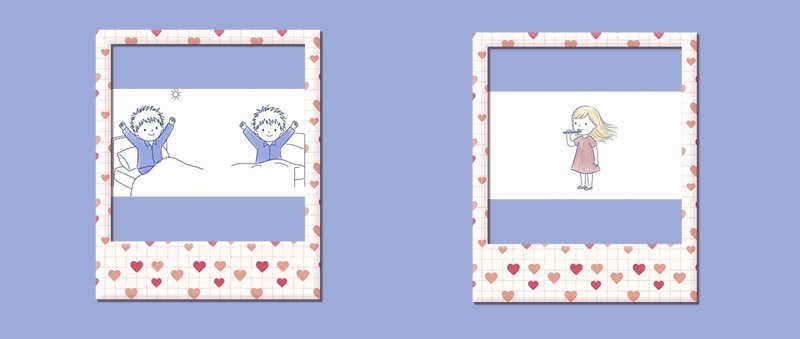
Never introduce visual routine cards for ADHD kids during a busy school morning when everyone is in a rush. Sit down on the living room rug on a relaxed weekend afternoon and look through them together like a storybook. Talk about what the spiky-haired boy is doing with his blue shoes or how the girl is washing her hands at the basin. Let them hold the cards with zero pressure to perform.
Using the Silent Point Instead of Repeating Yourself
When your child loses momentum, fight the instinct to call out from the kitchen. Walk across the room, crouch down to their eye level, and gently tap the picture together without saying a word. Visuals do the heavy lifting so your voice does not have to become another layer of morning noise.
Sitting Side by Side When Getting Dressed Stalls
If getting dressed brings on tears or resistance, lean into body doubling. Sit down on the floor right beside them. Pull your own socks on while they pull theirs on. Sharing your calm nervous system and working in parallel helps their body feel grounded enough to get moving.
The Importance of a Clear Finish Line Why ticking boxes fails and how tactile completion works
Neurodivergent brains crave completion. An open loop creates anxiety because the child cannot tell where their effort ends and rest begins.
Why Ticking a Box Does Not Work for Everyone
Ticking off a paper box or marking a chart with a dry-erase pen requires fine motor control and can feel uncomfortably like school testing. A physical, tactile shift is far more satisfying and grounding for young hands.
Turning Cards and Dropping Them in a Bowl
Give your child a tangible finish line. Let them flip the card backwards in its pocket or place it in a small timber bowl on the hallway sideboard once the job is finished. The physical act of letting go of the card and hearing it drop into the bowl signals clearly to the brain: that demand is complete, and we are ready for the next one.
What Happened on My Own Floorboards From morning shouting matches to a quiet, visual rhythm
For years, our mornings felt like an endurance sport. I was doing everything by the book: warning timers, verbal count-downs, and cheerful morning check-lists. Yet by 8:10 am, someone was under the dining table crying over socks, and my voice had gone from gentle to frustrated.
The turning point came when I stopped using my voice as the driving motor for the house. The first week we introduced tactile visual routine cards for ADHD kids low on our hallway cupboard, the tone shifted entirely. My child didn’t suddenly jump into action like a robot; rather, the panic disappeared from their eyes. When they lost their train of thought, they would walk back to the card, look at the picture of the boy putting on shoes, and their feet would start moving again.
“When a child is overwhelmed, words disappear into the static. Visuals stay still. They wait patiently without judgement, giving a tired nervous system the space it needs to reset and begin.”
Dewi Griffith, PhD, Founder
Download Your Free Visual Routine Cards for ADHD Kids
Download our calm, printable visual routine cards for ADHD kids, designed with gentle navy line art, soft watercolour washes, and zero visual clutter to support peaceful morning transitions. Includes 6 core morning steps plus 2 blank frames to customise at home.
Download Free Printable PDF (A4 Sheet)References & Research Foundations Developmental neuroscience, working memory, and visual schedule evidence
- Baddeley, A. (1992). Working memory. Science, 255(5044), 556-559.
- Bryan, L. C., & Gast, D. L. (2000). Teaching on-task and on-schedule behaviors to high-functioning children with autism via picture activity schedules. Journal of Autism and Developmental Disorders, 30(6), 553-567.
- Center on the Developing Child at Harvard University (2011). Building the Brain’s “Air Traffic Control” System: How Early Experiences Shape the Development of Executive Function. Working Paper No. 11. developingchild.harvard.edu
- Dettmer, S., Simpson, R. L., Myles, B. S., & Ganz, J. B. (2000). The use of visual schedules to improve the on-task and transition behaviors of students with autism and intellectual disabilities. Focus on Autism and Other Developmental Disabilities, 15(3), 163-169.
- Porges, S. W. (2011). The Polyvagal Theory: Neurophysiological Foundations of Emotions, Attachment, Communication, and Self-regulation. W. W. Norton & Company.
- Sweller, J. (1988). Cognitive load during problem solving: Effects on learning. Cognitive Science, 12(2), 257-285.
This resource reflects personal parenting experience alongside developmental research and is shared for educational purposes only. It does not replace individualised medical, occupational therapy, or developmental advice. When setting up routine cards, ensure materials are appropriate for your child’s age and stage: round off laminated plastic corners to prevent skin scratches, avoid loose or peeling magnetic strips around mouthing infants, and supervise children during tactile activities.