
Toddler Sleep Resistance ADHD: 5 Gentle Bedtime Shifts When Traditional Advice Fails
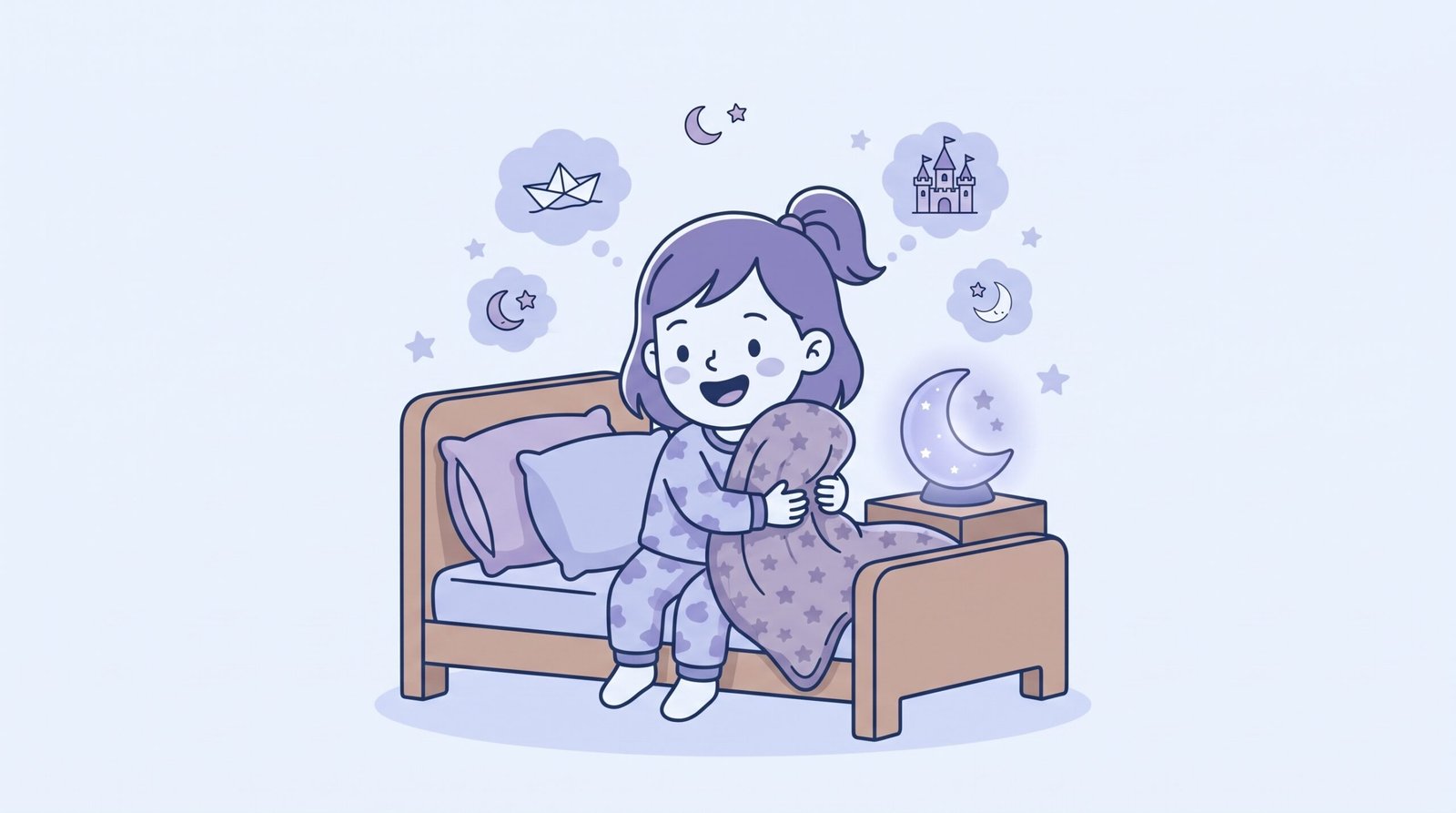
It’s twenty past eight on a Tuesday night, and I’m lying sideways across a single bed with my neck bent at an awkward angle, staring at a glow-in-the-dark star peeling off the ceiling.
Under my arm, my three year old is vibrating. Not literally, but it feels that way. Her small, warm body is humming with energy, kicking rhythmically against the wall while her fingers twist the seam of her pyjamas. She’s had the bath, the lavender lotion, the quiet story about the sleepy bear, the white noise and two sips of water. She’s exhausted. Her eyes are glazed, her talk has turned into a jumble about garbage trucks and dinosaurs, and yet everything about her seems to be saying that sleep is a trap.
Meanwhile, my own brain is unravelling. The thud, thud, thud of her foot on the wall is setting off sirens behind my eyes. The kitchen sink is still full of porridge bowls from breakfast, my nerves are raw, and the quiet I desperately need feels a million miles away.
This was back in Indonesia, years before we moved to Melbourne. My eldest was a toddler, and I had no diagnosis, no medication, no support team and no words for why simple daily rhythms felt like wading through wet cement. I didn’t find out I had ADHD until much later, as an adult. When you spend the early years of parenting undiagnosed, you don’t realise you’re running on an empty tank with a differently wired brain. You just assume you’re terrible at the thing everyone else seems to do on autopilot.
If you’ve ever sat in a dark hallway at nine o’clock at night, head in your hands, feeling like a failure because the whole world told you children fall asleep after a warm bath and a story, I want you to know you’re not alone.
Toddler sleep resistance is hard enough for any family. In a neurodivergent household, where bedtime can be a clash of two overloaded nervous systems with no support, it stops being a calm transition and turns into an endurance event.
A quick note before we go further: I hold a PhD in Early Childhood Education, so I know the developmental research reasonably well. I’m also an ADHD mum who raised two daughters, one with ADHD, without a map in those early years. This is based on my experience and understanding, not clinical advice. Every child is different, and what kept our household afloat might look very different in yours.
Toddler Sleep Resistance ADHD: What I Noticed Early
When my daughter was a baby, people told me she was just alert.
“Oh, she’s so engaged with the world,” they’d say, while she stared wide-eyed at the ceiling fan instead of drifting off in the pram. But by around eighteen months, bedtime felt like walking into a battle neither of us wanted to fight, yet neither of us could give up.
Many parenting books talk about toddlers testing boundaries at night. They say a child who gets out of bed four times is seeking control, or needs firmer limits, or just needs a gentle sleep training method to learn to self-soothe.
I tried that logic. Because of my background, I thought I could out-plan and out-structure the chaos. I made picture charts. I kept the lighting soft. I timed wake windows with obsessive precision.
None of it touched the real problem, because for her it didn’t seem to be a behaviour choice. It felt more like her body and brain simply couldn’t wind down the way the books said they should.
- The second wind: Instead of yawning and slowing down when tired, she’d hit a sudden, frantic burst of energy. She’d run into walls on purpose, and her laughter had a brittle, wild edge to it.
- Restless body: She couldn’t lie still comfortably. If I held her close, she squirmed as if her clothes were sandpaper. If I let go, she bounced off the mattress.
- Noticing every sound: A car door down the street, the fridge humming on, or a speck of lint in her sock would bring her straight back to wide awake.
- Worry at twilight: As the light faded, her anxiety rose. It was as though moving from day to night felt like stepping off a cliff into the dark.
It’s worth saying clearly: ADHD is rarely diagnosed in toddlers, and lots of toddlers who fight bedtime don’t have ADHD at all. Toddler sleep resistance is very common. I only understood my daughter’s early signs looking back, after she was diagnosed as an adult. If you’re noticing patterns like these, my posts on signs of ADHD in girls and autism in girls explain why girls so often go unnoticed.
Toddler Sleep Resistance ADHD: What Research Says
Sleep problems and ADHD often go together. A well-known meta-analysis by Samuele Cortese and colleagues, pulling together 16 studies, found that children with ADHD had more bedtime resistance, more trouble falling asleep, more night waking and more difficulty waking in the morning, according to parent reports. Objective measures also showed some differences, such as taking longer to fall asleep.[2] Those studies were mostly with school age children rather than toddlers, but they match what many families describe from much earlier.
Why might this happen? Settling to sleep asks a lot of the brain systems that manage attention, impulses and emotions, what Harvard’s Center on the Developing Child calls executive function.[1] To drift off, a child has to tune out background noise, keep their body still and quieten a busy mind. For a child who finds those things hard during the day, lying still in a quiet, dark room can feel boring, uncomfortable and overwhelming all at once. Researchers are still working out all the reasons, which likely include differences in body clock timing and in how the brain manages arousal.
So when my daughter fought sleep, she wasn’t trying to make my life hard. Lying still in the dark just felt unbearable to her body.
- Executive function: The brain skills behind focus, memory, flexible thinking and holding back impulses. Bedtime asks a lot of them.
- Proprioception: Our sense of where our body is, coming from our muscles and joints. Many busy children seem calmer after big, heavy movement. I explain more in sensory seeking toddlers and proprioception.
- Sensory sensitivity: Some children notice sounds, textures and light much more strongly than others, so a ticking clock or a scratchy label can keep them alert.
- Co-regulation: A calm, caring adult helping a child settle, which is how children slowly learn to settle themselves.[4] See coregulation strategies in early childhood.
Toddler Sleep Resistance ADHD: How Much Sleep Do Toddlers Need?
Australia’s 24-Hour Movement Guidelines recommend that toddlers aged 1 to 2 get 11 to 14 hours of good quality sleep a day, including naps, and that preschoolers aged 3 to 5 get 10 to 13 hours, with consistent sleep and wake-up times.[6]
Those numbers are a helpful guide, not a test you pass or fail. Some children sit at the lower end and are perfectly happy. What matters most is how your child copes during the day. If they’re mostly cheerful and able to play, they’re probably getting enough, even if bedtime is a struggle. The bigger picture of growth is in my post on child development milestones, and why milestones don’t always fit neurodivergent children is worth a read if your child’s path looks different.
Toddler Sleep Resistance ADHD: What Didn’t Work for Us
When you’re running on empty without help or answers, you’ll try almost anything. Looking back, a lot of the standard advice I tried made our bedtimes harder, mostly because it was designed for children who naturally wind down when things get quiet. These approaches do work for plenty of families. They just didn’t work for us.
1. A Rigid Bedtime Routine Made Toddler Sleep Resistance ADHD Worse
The internet loves a routine. Bath at 6:30, teeth at 6:45, books at 7:00, lights out at 7:15. For us, it was a disaster. My undiagnosed ADHD brain struggled to hold a strict timeline together while managing a sensory seeking toddler. If the bath ran six minutes late, I’d spiral into feeling the whole night was ruined.
It also put pressure on my daughter. She could feel the urgency rolling off me. Every step became a negotiation, because she knew where the conveyor belt was heading: the lonely, quiet dark.
2. Darkness and Silence Increased Toddler Sleep Resistance
Many sleep guides recommend blackout curtains and white noise. For us, pitch darkness was frightening. Her busy mind started inventing things in the shadows. And standard white noise, that static hiss, drove her mad. She’d sit up and tell me the sound was “itchy”.
3. Leaving Too Early Fuelled Toddler Sleep Resistance
“Drowsy but awake” works beautifully for some children. For my daughter, the moment my foot crossed the doorway, she was wide awake and panicking, and any drowsiness was gone. Pushing independent sleep before she was ready just left us both crying on either side of a closed door.
| Common Advice | What Happened for Us | What I Think Was Going On |
|---|---|---|
| Strict 15 minute steps | Clock watching, my panic, escalation. | My own ADHD struggles with timing clashed with her trouble with transitions. |
| Pitch black room | Fear, shadows, distress. | The dark felt scary and empty rather than restful. |
| Standard white noise | Agitation, complaining the noise was “itchy”. | She found the static sound irritating rather than soothing. |
| “Drowsy but awake” | Instant panic, crying at the door. | She wasn’t ready to settle without someone close. |
| Ignoring requests for water or hugs | Big meltdowns that went on and on. | Her requests were bids for connection and comfort, not manipulation. |
5 Gentle Bedtime Shifts for Toddler Sleep Resistance ADHD
Once I stopped treating bedtime as a discipline problem and started treating it as a calming transition, things slowly shifted. We still had messy nights, and evenings when sleep didn’t come until nine or ten. But the panic and anger slowly drained out of the room.
Here are the imperfect things that made a real difference for us.
1. Toddler Sleep Resistance ADHD Shift: Stay Close and Co-Regulate
I had to let go of the idea that my toddler should fall asleep alone by two or three.
Many young children, and especially busy, sensitive ones, rely on our presence to help them settle. Child psychiatrist Bruce Perry’s Neurosequential Model describes how calming the body and feeling safe with a trusted adult come before a child can use thinking skills to calm down.[5] When she was spinning out, she couldn’t calm herself through willpower. She needed to borrow my stillness.
So I stayed. I lay on the floor, or sat by the bed with my hand resting firmly on her back. That steady pressure seemed to help her body feel anchored. Yes, it took time, and yes, my evenings disappeared. But forty-five quiet minutes on the floor was far better than two hours of yelling, negotiating and guilt. My post on child meltdown co-regulation has more on staying close when things are hard.
2. Toddler Sleep Resistance ADHD Shift: Heavy Work in the Late Afternoon
After a full day of noise and people at childcare or kinder, many children come home full of fizzy, restless energy.
About an hour before we started winding down, we did “heavy work”. We piled cushions in the lounge room and she crashed into them. We did wheelbarrow walks across the rug. We pushed washing baskets full of books across the floor. My pocket heavy work cards and animal walks are full of ideas like these, and an indoor obstacle course works well on wet days.
Occupational therapists often suggest heavy work for children who seek lots of movement, and organisations like the Child Mind Institute describe it as a way many children find calming.[7] The research behind it is still limited, so think of it as something worth trying rather than a guaranteed fix. For us, it helped. It felt backwards to get her moving when I wanted her to sleep, but without that release, her limbs seemed to fizz under the sheets. Just finish the big, bouncy play well before bedtime, so there’s time to calm down after.
3. Toddler Sleep Resistance ADHD Shift: Gentle Sensory Bridges
Instead of stripping away everything, we swapped in gentle, predictable comforts:
- Quiet audio stories: Instead of silence, a familiar audiobook playing very softly. A calm, predictable voice gave her busy thoughts something gentle to hold onto. Reading together beforehand helped too, and I share ideas in ADHD reading routines and co-regulation and reading.
- A dim, warm night light: Pitch darkness felt frightening to her, so a soft, dim, warm-coloured lamp stayed on. Australia’s Sleep Health Foundation suggests keeping evening light dim, because bright light before bed can make it harder to fall asleep.[8] I talk more about soft lighting in fluorescent lighting and ADHD.
- A snug, stretchy sheet: She didn’t like heavy blankets on her feet, but loved a stretchy fitted sheet pulled snugly across her middle. It felt like a steady hug.
A safety note: Whatever you use, your child must always be able to move freely and push covers off easily, with nothing near their face. Weighted blankets aren’t recommended for young children unless an occupational therapist or doctor has advised one for your child. Screens are best switched off well before bed.
4. Toddler Sleep Resistance ADHD Shift: A Short Picture Routine
I swapped our strict timetable for a short, loose sequence: bath, pyjamas, teeth, story, cuddle. No clock times, just the same order every night. Seeing the steps as pictures helped her know what was coming, without me rushing her through a schedule.
My free visual routine cards include bedtime steps, and my post on a daily routine for neurodivergent children shows how predictable days can make evenings easier. Water play in the bath can be a calming bridge too, a bit like the ideas in sink water play.
5. Toddler Sleep Resistance ADHD Shift: Drop the Bedtime Battles
I stopped fighting over small things. If she insisted on wearing her gumboots to bed, sometimes I let her wear a clean pair until she dozed off and slipped them off later. If she wanted to sleep at the wrong end of the bed, I let her.
The goal was rest, not compliance. The more I turned sleep into a fight, the more her body seemed to link bedtime with stress. My post on regulation before learning explains why calm has to come before anything else.
Toddler Sleep Resistance ADHD When the Parent Is Undiagnosed Too
There’s a part of this people rarely talk about honestly, especially those of us who parented for years without knowing we had ADHD ourselves.
When you’re undiagnosed and unsupported, your patience and sensory bandwidth at the end of the day aren’t just low. They’re spent. You’ve pushed through the day on adrenaline, masking your disorganisation, covering for forgotten things and white-knuckling your way through. By seven o’clock, your own sensory cup is overflowing.
Then comes bedtime.
You need quiet. You need to not be touched. You need to sit on the floor and stare into space so your overloaded brain can cool down.
Instead, your daughter is touching your arm, wriggling, asking twelve questions about whether pelicans sleep with their eyes open, and kicking the wall. It can feel unbearable.
Back then, I didn’t know my own brain was overloaded. ADHD expert Russell Barkley argues that difficulty managing emotions is a core part of ADHD, not an extra.[3] But without a diagnosis, many parents just take those struggles as personal failings.
I’d feel a hot wave of rage rise in my chest, followed straight away by shame. I thought I was a cold, impatient mother. I thought I was broken, because other mums seemed to read bedtime stories with serene smiles while I felt like I was crawling out of my skin.
If you’re raising a child without support, or without a community that understands, the isolation can be suffocating.
Things began to change the day I stopped seeing my overload as a character flaw. Simply learning to notice my tipping point changed the script in my head from “Why can’t I just be patient?” to “My nervous system is overloaded, and that’s what this feeling is.”
When the heat rose in my chest, I learned to say out loud: “I’m overstimulated. This isn’t an emergency. She’s not doing this to hurt me.”
Sometimes I had to step into the hallway for three minutes. I leant my forehead on the cool wall, took five slow breaths, shook out my hands and went back in. It was messy, and nothing like the polished parenting on television. But it got us through.
If this feels familiar, you might find comfort in my posts on being a parent with ADHD, understanding my busy mind, alexithymia in ADHD mothers and parent and teacher burnout.
Toddler Sleep Resistance ADHD: When to Talk to a GP
Most toddler sleep battles ease with time, patience and a few changes. It’s worth talking to your GP, maternal and child health nurse or paediatrician if:
- Your child snores most nights, gasps or pauses in their breathing while asleep, or breathes through their mouth a lot. Sleep breathing problems can affect behaviour and attention during the day.
- Your child seems very tired, irritable or unwell during the day for weeks at a time.
- Sleep problems are seriously affecting your own health or your ability to cope.
- You’re wondering about melatonin or any sleep medicine. Please only use these with your doctor’s advice.
- You’ve noticed other signs that worry you about your child’s development or behaviour.
Asking for help is never a failure. And if you’re struggling yourself, please reach out to your GP too. Your wellbeing matters just as much.
Rethinking Toddler Sleep Resistance ADHD: What Success Looks Like
In early childhood, we talk endlessly about milestones. When do they drop the nap? When do they sleep through? When do they settle on their own?
We create tidy boxes, then carry huge guilt when our children don’t fit neatly inside them.
My daughter was never the child who got tucked in at seven, smiled, closed her eyes and drifted off. Her brain was wired to explore, to question, to look for patterns and to feel things intensely. That made bedtime an uphill climb, but it also made her the wonderfully vibrant, curious woman she is today. Her energy came and went from day to day too, which I explain in why your child can do it some days and not others.
I spent years believing that if I’d just been more patient, more organised or better at routines, bedtime would have been easy. Finding out I had ADHD gave me the grace to rewrite that story. We weren’t failing. We were two sensitive, intense people doing our best with the tools we had at the time.
A successful bedtime isn’t one where a child falls asleep in ten minutes flat. It’s one where they feel safe enough to finally close their eyes. It’s an evening where, even if it took two hours on the floor, we made it to the other side together.
Tonight, the foot tapping against the wall has finally slowed. The breath under her ribs is lengthening, shifting from the quick, shallow rhythm of an overwhelmed toddler to the slow, heavy breathing of sleep.
I carefully untangle my arm, stretch my stiff neck and step quietly out. The kitchen is still a mess, the dishes are still waiting, and the day was far from perfect. But she’s resting, she’s safe, and tomorrow we’ll meet the day as it comes.
Toddler Sleep Resistance ADHD FAQs
Is toddler sleep resistance a sign of ADHD?
Not on its own. Bedtime resistance is very common in toddlers, and most toddlers who fight sleep don’t have ADHD. ADHD is rarely diagnosed this young. Sleep problems are more common in children with ADHD, though, so if you notice other ongoing concerns, it’s worth talking to your GP or child health nurse.
How much sleep does a toddler need in Australia?
Australia’s 24-Hour Movement Guidelines recommend 11 to 14 hours of good quality sleep a day for toddlers aged 1 to 2, including naps, and 10 to 13 hours for preschoolers aged 3 to 5, with consistent sleep and wake-up times.
Why does my toddler get a second wind at bedtime?
Many overtired toddlers get a burst of wild energy instead of slowing down. Starting the wind-down a little earlier, doing big movement play in the late afternoon, and keeping the evening calm and dim can help.
Is it okay to stay with my toddler until they fall asleep?
Yes. Many children, especially sensitive or busy ones, settle much better with a calm adult nearby. Staying close is a form of co-regulation, and children gradually learn to settle on their own over time.
Should I give my toddler melatonin?
Only with your doctor’s advice. Melatonin and other sleep medicines aren’t a first step for toddlers, and your GP or paediatrician can check for other causes of sleep problems first, such as snoring or sleep breathing issues.
Need Gentle, Calming Tools for Busy Evenings?
When young minds are overflowing with energy, my free visual routine cards, heavy work cards and other calm printables can help make the end of the day a little easier.
Get the Visual Routine Cards Explore All PrintablesReferences
- Center on the Developing Child at Harvard University. (2014). Enhancing and Practicing Executive Function Skills with Children from Infancy to Adolescence. Harvard University. developingchild.harvard.edu
- Cortese, S., Faraone, S. V., Konofal, E., & Lecendreux, M. (2009). Sleep in children with attention-deficit/hyperactivity disorder: Meta-analysis of subjective and objective studies. Journal of the American Academy of Child & Adolescent Psychiatry, 48(9), 894–908.
- Barkley, R. A. (2015). Emotional dysregulation is a core component of ADHD. In R. A. Barkley (Ed.), Attention-Deficit Hyperactivity Disorder: A Handbook for Diagnosis and Treatment (4th ed.). Guilford Press.
- Rosanbalm, K. D., & Murray, D. W. (2017). Caregiver Co-regulation Across Development: A Practice Brief. OPRE Brief #2017-80. US Department of Health and Human Services. acf.gov
- Perry, B. D. (2009). Examining child maltreatment through a neurodevelopmental lens: Clinical application of the Neurosequential Model of Therapeutics. Journal of Loss and Trauma, 14(4), 240–255.
- Australian Government Department of Health and Aged Care. (2021). Australian 24-Hour Movement Guidelines for the Early Years (Birth to 5 Years). health.gov.au
- Child Mind Institute. Sensory Processing Issues Explained. childmind.org
- Sleep Health Foundation (Australia). Fact sheets on sleep, light and healthy sleep habits. sleephealthfoundation.org.au
Related topics for parents
- Toddler hair pulling and frustration
- Coregulation strategies in early childhood: 4 simple steps
- Fight, flight and freeze in children
- Polyvagal theory and early childhood meltdowns
- Calm corner design in early childhood
- DIR Floortime play at home
- Autism and attachment myths
- Visual storytelling for bedtime stories
- Mother daughter bonding activities for busy mums
- Pencil control activities for restless hands
- Hand strength activities for kids
- Reggio Emilia approach at home
- Free printables for calmer days
