
Toddler Hair Pulling & Frustration Tolerance: What Is Really Happening Behind the Clench
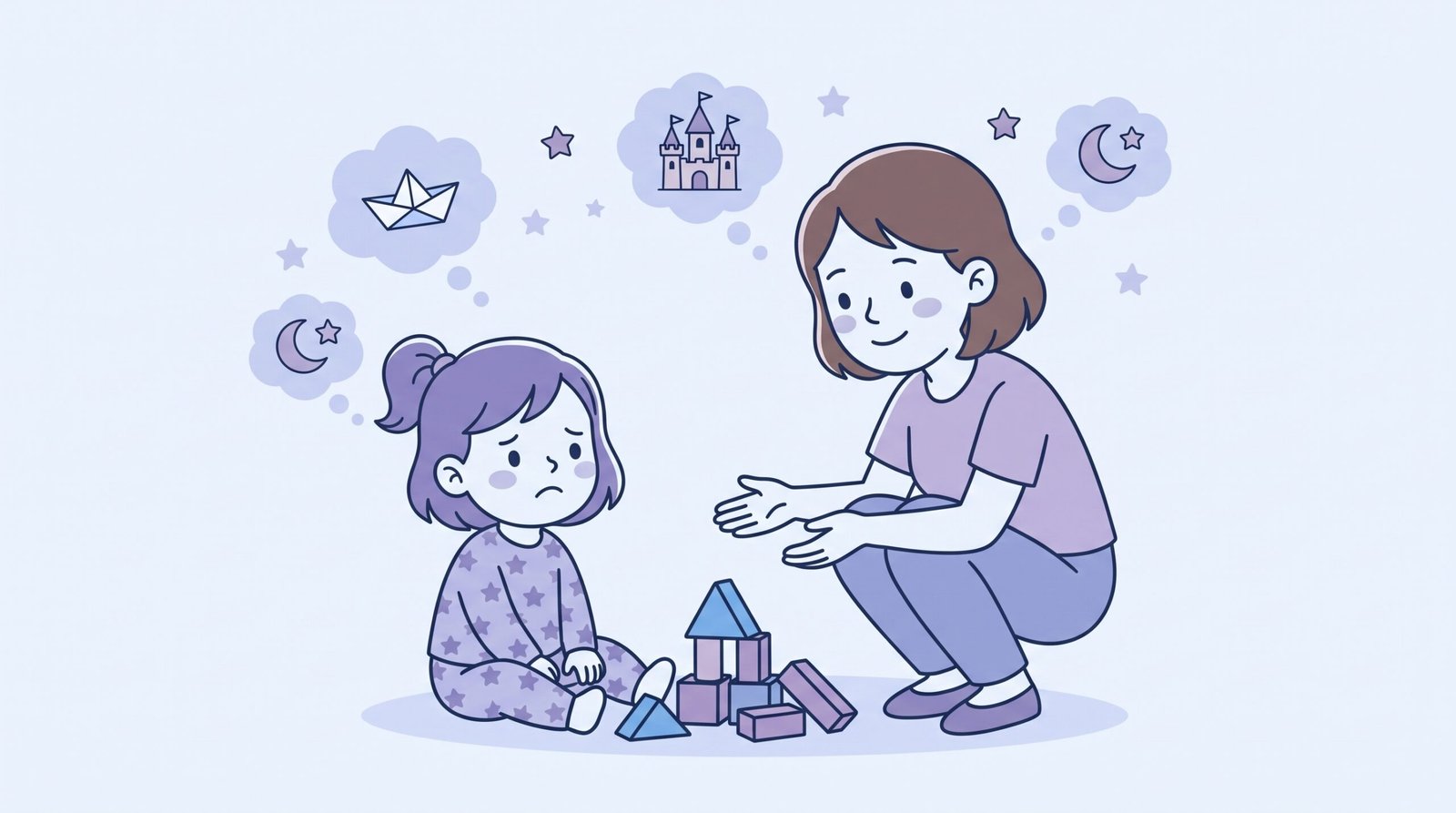
We were sitting on the foam floor mat of our local community hall playgroup, surrounded by scratched plastic dinosaurs, wooden balancing blocks with the paint chipped off, and half-assembled train tracks, when the room tilted.
One second, my daughter was happily stacking two red plastic cups. She was humming under her breath, totally absorbed in fitting the smaller rim inside the wider base. The next second, a little boy in striped overalls toddled over and reached past her shoulder to pick up a plastic tractor lying beside her knee.
There was no warning growl. There were no stomping feet, no tears, no dramatic toddler pout. Her right arm shot out like a release mechanism on a loaded spring. Her small, dimpled fingers twisted straight into the boy’s soft blond curls, clamped down into a white-knuckled fist, and yanked downward with terrifying, full-body force.
The scream that tore out of that little boy was instantaneous, shrill, and sharp enough to make the volunteer co-ordinator drop a tray of sliced oranges onto the lino. The entire room went dead silent.
My stomach dropped into the soles of my shoes. My neck and cheeks flared hot with that specific, prickling burn of playground humiliation. While I scrambled across the mat on my knees to pry her stubborn fingers loose without tearing a clump of hair from his scalp, my own brain simply flooded.
The sensory load in the hall suddenly multiplied by ten. The buzzing fluorescent batten lights overhead turned glaringly harsh, the hum of the wall urn became deafening, and every mother sitting along the perimeter benches suddenly felt like an examining jury.
My internal dialogue was a train wreck of panic and self-reproach: I work with little kids every single day. I am supposed to understand children. Why is mine the one ripping hair out by the roots?
Back then, I had no map for what was actually happening beneath the surface. I was working in childcare, completely blind to the fact that I was an undiagnosed ADHD adult trying to navigate the sensory and emotional storms of an undiagnosed ADHD toddler. My postgraduate research degrees in early childhood were still years away; I would not step into that academic research until she was six years old. In those toddler years, I was just an exhausted, deeply anxious mother, carrying a quiet dread that something was fundamentally wrong with my parenting.
When I finally managed to peel her stiff little fingers free, my daughter did not look remorseful. She did not cry, nor did she run away. She looked completely frozen, flushed, and utterly trapped in her own skin. Her chest was heaving under her cotton shirt, her pupils were dilated, and the plastic tractor was still sitting on the blue foam tile between them.
If you have ever been on either side of toddler hair pulling, you know the singular sting of it. It does not feel like a casual push or a messy spill. It feels intimate, aggressive, and socially horrifying. Much like navigating toddler sleep resistance and ADHD, it makes you worry that you are failing at basic parenting boundaries. You worry you are raising an aggressive child. You worry other parents are exchanging glances, judging your home, and mentally striking you off playdate lists.
Yet looking back now through the twin lenses of raw lived experience and subsequent child development research, the reality was entirely different. She was not executing an act of malicious violence. Her nervous system had hit an insurmountable wall, her internal alarm had sounded, and her physical body had taken charge long before her thinking brain could even join the conversation.
Understanding toddler hair pulling & frustration: what the brain is doing
When an adult watches a child grab a fistful of another person’s hair, our mature brains immediately interpret the action through an adult ethical framework. We assume intent. We see the clenching fist and think malice, spite, aggression, or bullying.
Toddlers, however, do not possess the neurological architecture required to orchestrate premeditated spite.
What we are witnessing in those volatile moments is a massive developmental mismatch between emotional arousal and impulse control.
Toddlers feel sensations, urges, and frustrations with immense biological intensity. Yet their prefrontal cortex, the command centre responsible for executive functions like working memory, self-monitoring, and cognitive flexibility, is only just beginning to lay its earliest foundations. While standard parenting charts outline neat child development milestones, emotional regulation and impulse inhibition follow a far slower, more uneven biological path.
As researchers at the Harvard Center on the Developing Child point out in their foundational work on executive function, the neural pathways that allow a human being to stop an impulse in its tracks, weigh alternative choices, and calculate social consequences take years, not months, to wire together.[1] The biological machinery required for a child to say to themselves, “I feel furious that he took that tractor, but pulling his hair will hurt him and get me into trouble, so I will use my words instead,” does not reliably exist at two or three years of age.
At this stage of development, frustration tolerance in toddlers is paper-thin. When a goal is blocked, whether because a toy was grabbed, an educator said it was pack-up time, or a shoe refused to slide onto a heel, the obstacle is not registered as a minor inconvenience. It lands in a toddler’s nervous system like an existential emergency. The amygdala perceives a threat, and within milliseconds, adrenaline and cortisol surge into the bloodstream.
To use words, negotiate, or seek an adult’s help, a child must be able to access the language centres of their brain. But the moment their autonomic nervous system shifts into fight-or-flight, the prefrontal cortex goes offline.
Language disappears. Logic vanishes into thin air.
What remains is the primal motor system. When words are unavailable, little hands step forward to do the talking, and the physical act happens before the conscious mind can even register the emotion driving it.
- Executive Function: The brain-based management system that coordinates working memory, flexible thinking, and impulse control. In toddlers, these neural pathways are under initial construction, making self-restraint biologically fragile during stress.
- Proprioceptive Feedback: Sensory input received through receptors in joints, muscles, and tendons that informs the brain about body position and physical effort. As explored in our deep-dive on the sensory-seeking toddler and proprioception, deep physical compression, heavy pushing, or resistance satisfies an acute internal appetite.
- Behavioural Inhibition: The neurological capacity to delay or halt an initial motor impulse. In children exhibiting early ADHD traits, this pause button is substantially slower, allowing impulses to convert into physical action almost instantaneously.[2]
- Co-Regulation: The shared physiological process whereby a calm, grounded adult lends their regulated nervous system to an overwhelmed child, serving as the necessary developmental bridge toward eventual self-regulation.[3]
Why low frustration tolerance in toddlers turns into physical grabbing
It is one thing to understand that frustration leads to physical discharge, but it is another to understand why toddler hair pulling becomes the default physical action. Why not stomp? Why not simply shriek or drop to the carpet?
Hair, from a toddler’s physical and developmental vantage point, represents a uniquely accessible target:
- Physical accessibility and proximity: Toddlers navigate the world at eye level with hair. When they are carried on a hip, sitting together on a rug, or leaning over a shared book, heads and ponytails are directly in their primary physical zone. Hair is soft, tempting, and easy to hook small fingers through. Unlike smooth skin, which can be slippery, or clothing, which bunches up, hair provides an instant, locked grip.
- The proprioceptive squeeze: There is a profound sensory release involved in pulling that is frequently misunderstood. When an overwhelming surge of emotional dysregulation floods a young child’s body, their muscles contract and crave a corresponding physical resistance to ground them. Clinical resources from the Child Mind Institute explain that deep pressure and proprioceptive input help organise a dysregulated central nervous system. Just as an adult might clench their jaw or grip the steering wheel until their knuckles turn white during moments of extreme stress, a dysregulated toddler clenches their fists on whatever offers counter-pressure.
- The missing brake pedal: For a child showing early neurodivergent traits, this threshold is dramatically lower. Identifying the subtle signs of ADHD in girls during early childhood often hinges on recognising this intense emotional reactivity and lack of motor inhibition. Their nervous systems register both incoming sensory data and internal frustration at a far higher baseline volume. The internal pause button is remarkably sticky. A neurotypical toddler might experience an impulse to grab and manage a split-second micro-pause, just enough time for an adult’s voice or an internal reminder to intervene. An ADHD nervous system fires straight from the spark of frustration directly into the motor wire. The hair is pulled before the child has even consciously processed that they are upset.
Living through toddler hair pulling: my messy, unmedicated reality
Knowing child development theories in the abstract did not save me from the daily, grinding exhaustion of actually living through it.
In fact, working in early childhood made the experience infinitely more isolating. I would spend my working hours setting up carefully scaffolded environments, calmly redirecting groups of ten toddlers, and reassuring worried families that biting and pushing were normal developmental phases.
Then I would collect my daughter, walk through our front door, and watch my domestic life descend into unravelling chaos. Much like the quiet camouflaging we often see when exploring autism in girls and closing the gender gap, she held herself together all day in group settings only to collapse into explosive physical releases the moment she stepped inside her safe sanctuary at home.
Because I did not know I had ADHD, I lived in a perpetual state of sensory and executive burnout. Every single day was an invisible marathon of masking, compensating for memory lapses, and trying to keep track of schedules. By late afternoon, my internal sensory bucket was overflowing.
Then, my daughter’s hair pulling would begin.
- The pre-lunch blood sugar dip (11:30 am to 12:00 pm): When the cognitive fatigue of morning play collided with a drop in glucose, her ability to tolerate even the smallest friction disappeared.
- The end-of-day sensory cliff (around 5:00 pm): The witching hour was brutal. After spending hours containing herself in daycare or playgroup, her tiny nervous system was raw. Any demand, even taking off a damp cardigan, was met with a lunging grab.
- Moments of divided attention: If I sat beside her on the rug, she was calm. But the second I stood up to answer the phone, check a bill on the counter, or stir onions on the stovetop, her anxiety spiked. She could not bridge the emotional distance between needing my presence and waiting for me to finish a task.
- High-density sensory environments: Busy shopping centres, church playgroups, or crowded family gatherings where too many voices, bright lights, and unpredictable movements overloaded her auditory processing.
And I handled it badly. I handled it with anger, panic, and deep, suffocating guilt.
One evening, after an exhausting day in the toddler room at my centre, I was bent over the back seat of our car in the supermarket car park, trying to buckle her into her five-point harness. The straps were twisted. It was raining, the wind was whipping cold against my lower back, and my mental bandwidth was at zero.
As I leaned across her to pull the buckle tongue into place, her little hands shot straight up into my scalp, grabbing a thick clump of hair near my temple, and yanked down with all her weight.
The pain was so sudden and blinding that tears sprang to my eyes. My neck snapped sideways.
Every ounce of professional composure I had cultivated during the day completely evaporated. My own overloaded nervous system snapped straight into a fight response. I violently pried her fingers off, shoved her hands back toward her chest, and yelled at the top of my lungs, “Stop it! Why do you keep hurting me? Stop hurting Mummy!”
Her little face did not register comprehension. It completely shattered. Her mouth formed a wide, trembling square, and she began to wail with a guttural, terrifying grief.
I slammed the car door shut, walked around to the driver’s side, and sat down with my hands trembling on the steering wheel, sobbing into the dashboard.
I felt like an absolute monster. The shame was suffocating. I was supposed to be a professional who understood the emotional lives of young children, yet here I was, screaming at a two-year-old in an asphalt car park in the rain. My reaction had not taught her how to manage her feelings; it had simply poured my own adult rage and dysregulation onto her flaming panic. I had terrified her, and in doing so, confirmed her deepest fear: that her big, unwieldy feelings were dangerous enough to tear apart the person she needed most.
What didn’t work for toddler hair pulling and frustration
In my desperation to make the behaviour stop, I tried every standard tip and trick found in mainstream parenting guides. Looking back, almost all of them backfired spectacularly because they were predicated on the assumption that hair pulling is a calculated, rational choice designed to assert dominance.
| Conventional Strategy | What We Experienced at Home | The Underlying Neurological Issue |
|---|---|---|
| Time-Outs / Isolation Chair | Hysterical screaming, throwing shoes, banging against the door. | Triggers separation panic; removes the co-regulatory anchor when most needed. |
| Demanding Immediate Empathy | Blank stare, repeating “I hate you”, escalated defensiveness. | Perspective-taking circuitry is neurologically immature in young toddlers. |
| Long Verbal Explanations | Glazed eyes, renewed lunging, escalation into physical kicking. | Auditory processing is offline during sympathetic fight-or-flight states. |
| Delayed Consequences | Complete bewilderment, increased generalised anxiety around parent. | Working memory cannot bridge the temporal gap between the act and the loss. |
| “Gentle Hands” Chants | Hand remains locked in a fist; hair pulled harder in frustration. | Cognitive slogans cannot override an unaddressed motor-sensory surge. |
1. The isolation time-out
Standard advice told me to put her in a designated time-out chair for two minutes to “think about what she had done.”
For my daughter, physical isolation was rocket fuel on a house fire. The moment her bottom touched that chair and I stepped back, her brain interpreted the physical distance as total abandonment. She did not sit quietly reflecting on human empathy. She went into a blind panic, screaming until she choked, kicking skirting boards, and throwing herself against the floor.
By the time the two minutes were up, she was not calmer; her nervous system was thoroughly traumatised. Isolating an already dysregulated child does not teach impulse control; it simply teaches them that their distress is intolerable to the people who love them.
2. Demanding immediate apologies and empathy
“Look at that little boy’s face. See how sad he is? How would you like it if someone pulled your hair?”
I cringe now thinking about how often I said those words. Asking a two-year-old or three-year-old to engage in counterfactual empathy right after a violent motor release is asking for a developmental impossibility. Theory of mind, the cognitive ability to step outside one’s own physical experience and accurately deduce the emotional reality of another human being, does not reliably consolidate until a child is four or five years old.
In that heightened state of sympathetic arousal, asking my daughter to reflect on the other child’s feelings did not produce genuine remorse. It simply overwhelmed her cognitive circuits further, forcing her to double down, cross her arms, and retreat into sullen defensiveness.
3. Lengthy post-incident lectures
Because I loved language and child development, my default setting was to over-explain. Once her hand was released, I would launch into five-minute monologues on why we use our words, why hair pulling hurts people, and how we need to treat our friends with kindness.
Her eyes would glaze over within ten seconds. As the American Academy of Pediatrics (AAP) points out in their clinical guidance on effective discipline, children in heightened emotional states cannot absorb verbal instruction.[4] My paragraphs of reasonable advice were just white noise washing over a shell-shocked little girl. Worse still, the sheer volume of my talking kept her nervous system on high alert, delaying her return to baseline and often triggering a secondary outburst.
What actually helped with toddler hair pulling and sensory overload
Real change did not arrive through finding the perfect consequence or discovering a magic disciplinary script. It arrived when I laid down my pride, stopped worrying about what the other mothers thought, and began treating hair pulling as a physiological warning system rather than a character flaw.
These were the messy, imperfect shifts that slowly changed the weather in our home.
1. Becoming a detective of pre-clench warning signs
Hair pulling almost never happens in a vacuum. It is rarely the first step in a behavioural breakdown; it is usually step four or five.
I had to train myself to stop looking at what her hands were doing and start paying obsessive attention to what her body was doing three minutes before the hands moved.
Australia’s Raising Children Network emphasizes that tracking environmental triggers and subtle physiological escalation cues is the bedrock of preventing aggressive outbursts in early childhood.[5]
In my daughter, the clues were unmistakable once I learned to see them:
- Her shoulders would creep subtly upward toward her earlobes, locking her neck into a defensive posture.
- The pitch and tempo of her babbling or speech would rise, becoming slightly sharper and more repetitive.
- Her breathing would shift from deep belly breaths to rapid, shallow chest expansions.
- She would begin hovering too close to other children, tracking their toy movements with an intense, unblinking stare.
- Her toes would curl tightly inside her sandals, or her free hand would begin nervously clenching and unclenching the fabric of her skirt.
The moment I spotted those indicators, I intervened immediately. I did not swoop in with a scolding voice. I casually stepped across the mat, sat my body directly between her and the other child like a gentle human buffer, and said, “I am going to sit with you for a bit.” Sometimes, I would simply lift her up without fanfare and carry her over to the window to look at cars driving through puddles outside. I did not frame it as a punishment; I framed it as a change of scenery to let her simmering nervous system discharge before the boilover occurred.
2. Using three-word anchors
When a toddler’s prefrontal cortex has shut down during a spike of frustration, you cannot speak to them in sentences. You must speak to them in telegrams.
I threw out my lectures and replaced them with minimal, three-word statements spoken in a low, flat, unhurried cadence:
- “You wanted that.”
- “Hard to wait.”
- “Hands stay safe.”
- “I am here.”
- “Big, mad feelings.”
These short phrases did not demand cognitive comprehension. They did not require her to respond, explain, or defend herself. They simply operated as verbal anchors, signalling to her primal brain that the adult in charge understood the obstacle and was not threatened by her distress. It validated her emotional reality without validating the physical harm.
3. Providing immediate proprioceptive substitution
You cannot tell a surging river to simply stop flowing; you have to dig a diversion channel.
When a young child’s nervous system has sent a powerful electrical command to their hands to clench and pull, commanding them to “put your hands down” is asking them to fight their own autonomic neurology. The motor energy has already arrived at their fingertips; it must be allowed to discharge safely.
If I caught her arm mid-swing or mid-reach, I did not slap her hand away or jerk her arm backward. I intercepted her wrist with a firm, calm grasp, slid my own open palm into her fingers, and said, “Push my hands hard. Push, push, push.”
I allowed her to brace her feet against the floor and shove her entire physical weight against my palms. By giving her muscles the intense, heavy proprioceptive resistance they were frantically seeking, her central nervous system received the grounding input it required to down-regulate. Over time, introducing calm finger games and tactile heavy work helped channel that same intensity into controlled, purposeful fine motor play.
We kept tactile alternatives positioned strategically throughout our life:
- Dense, silicone sensory squeeze toys tucked into the drink holder of her car seat.
- Textured rubber therapy rings looped through the buckle of her stroller.
- Heavy baskets of wooden blocks placed near the play mat that she was encouraged to push across the floorboards when she felt her body buzzing.
4. Radical co-regulation over demands for independence
As the developmental specialists at Zero to Three frequently highlight in their infant and toddler mental health resources, young children cannot learn independent self-regulation until they have experienced co-regulation hundreds, if not thousands, of times with a regulated caregiver.[6] Self-control is not a genetic personality switch; it is a neurological capacity built through repeated experiences of shared biological safety.
If my daughter was screaming, kicking, and trying to pull my hair, I stopped trying to force her to “calm down.”
Instead, I focused entirely on regulating the only nervous system in the room that I actually had control over: my own.
I deliberately softened my gaze. I consciously dropped my shoulders down away from my ears, unclenched my jaw, and took slow, audible breaths through my nose, making the exhale twice as long as the inhale. Toddlers possess mirror neurons that constantly read the autonomic state of their caregivers. If you are leaning over them with rigid limbs, wide eyes, and shallow breathing, their nervous system reads your body as confirmation that there is an active danger in the room.
When I could manage to stay soft, grounded, and physically immobile on the floorboards beside her, her dysregulated body would eventually borrow my physiological rhythm. The screams would turn to heavy sobs, the fists would slowly uncurl, and her head would finally slump against my chest, exhausted and safe.
Understanding the neurodivergent parent factor
We cannot talk honestly about toddler sleep resistance, biting, or hair pulling without talking about what happens to the parent whose own brain is running on an ADHD or neurodivergent operating system.
When you are an undiagnosed adult with ADHD, family life can feel like a relentless sensory assault. Resources from ADHD Australia show how emotional dysregulation and sensory sensitivity remain profound challenges for adults, yet without a formal diagnosis, parents absorb these friction points as personal inadequacies.
The unpredictable nature of toddlerhood directly clashes with an executive functioning profile that struggles with working memory, emotional filtering, and sensory modulation.
By late afternoon, you have spent hours masking at work or managing domestic administrative tasks. You are already in sensory deficit.
Then your child grabs your hair.
The sensation of having your hair pulled is not just painful; it is an acute, high-intensity tactile intrusion. It triggers an immediate, primal sensory shock. For an ADHD parent already teetering on the edge of sensory overload, that sharp physical tug can instantly flip the switch from patience to pure, unadulterated autonomic rage.
For years, I believed that this instantaneous flash of heat made me an unfit mother. I looked at other women who seemed to handle toddler outbursts with graceful equanimity, and I concluded that I lacked a basic maternal gene.
The turning point did not come from an early childhood textbook; it came years later when I was finally diagnosed with ADHD in my forties and learned how sensory defensiveness and emotional dysregulation operate in neurodivergent brains.
I realised that the blinding frustration I felt when my hair was yanked was not a moral defect. It was an involuntary sensory defence mechanism. My system was simply overloaded, perceiving the physical tug as an existential violation of my sensory boundaries.
- The physical boundary shift: If your child is in a chronic hair-pulling phase, tie your hair up securely in a high, tight bun, wear a beanie, or keep it tucked beneath a scarf. Removing the physical trigger from their visual and tactile field preserves your scalp and your emotional equilibrium.
- The strategic exit: If you feel the heat rising up behind your sternum and your vision starting to narrow, step away. As long as your child is in a physically safe space (such as a cot or a childproofed room), stepping into the adjacent hallway for ninety seconds to lean your forehead against the cold plaster is vastly better than remaining in the room and detonating.
- Radical honesty with yourself: Learn to name your sensory state without judgment. Whispering the words, “I am experiencing sensory overload; my nervous system is in fight-or-flight, and my daughter is not trying to hurt me,” acts as a cognitive breakwater against reflexive emotional outbursts.
Building frustration tolerance in toddlers over time: the long view
Building genuine frustration tolerance in early childhood is not a linear, tidy process. It is a slow, messy, iterative rewiring of the brain that unfolds over seasons, not days.
There will be weeks where your child seems to turn a corner, playing cooperatively, sharing toys, and managing transitions with remarkable grace. Then, a minor respiratory bug, a disruption to their nap schedule, a change of educator at their childcare centre, or an unannounced trip to the supermarket will strip away their fragile coping mechanisms, and the hair pulling will return with full force.
When those regressions happen, it is tempting to believe that everything you have done has failed.
It hasn’t.
Regression is an entirely normal feature of early neurological development. The brain builds its wiring in layers, testing new pathways under optimal conditions before it can sustain them under conditions of stress or exhaustion. Setting up self-directed, open-ended environments inspired by the Reggio Emilia approach at home often gives children the autonomy they need to process daily tensions through play without constant adult power struggles.
Every single time you catch an arm calmly without hitting back, every time you drop your shoulders and breathe through a playground meltdown instead of screaming, you are laying down a microscopic brick in your child’s neural foundation. You are proving to them, through tangible physiological experience, that frustration is an uncomfortable wave that can be ridden to the shore, rather than a catastrophe that destroys the world.
You are teaching them that their largest, ugliest, most chaotic impulses will not alienate them from your love or make you lose control of yourself.
My daughter is much older now. She has grown into a deeply insightful, fiercely creative, articulate human being whose intense emotional sensitivity is now her greatest superpower.
She still has an ADHD nervous system. She still feels the sting of rejection, boredom, and injustice with a depth that can take her breath away. But her hands have long since learned to remain open.
The hair pulling eventually evaporated into family history, not because of a rigid disciplinary framework or a punitive chart, but because her frontal lobe gradually grew the bridges required to pause, take a breath, and let her words catch up with her heart.
If you are reading this while sitting on a hallway floor, nursing a sore scalp, dreading the next playgroup, and wondering where you went wrong as a parent, take a slow, deep breath. Let your shoulders drop away from your ears.
You are not failing. You are not raising a broken child or an aggressive bully.
You are simply ushering a passionate, intensely wired little human through a brief chapter where her feelings are vastly larger than her physical brakes. Keep your expectations realistic, keep your words short, keep your hands gentle, and trust that the brain is quietly doing its slow, magnificent, messy work underneath the surface.
Looking for Calm, Grounding Activities for Restless Hands?
When young children carry intense physical tension, gentle, repetitive hand-control paths and quiet, story-led tracing activities provide a peaceful, low-demand way to ground their motor energy.
Explore Calm Story Tracing BundlesReferences
- Center on the Developing Child at Harvard University. (2014). Enhancing and Practicing Executive Function Skills with Children from Infancy to Adolescence. Harvard University.
- Barkley, R. A. (2015). Attention-Deficit Hyperactivity Disorder: A Handbook for Diagnosis and Treatment (4th ed.). Guilford Press.
- Perry, B. D. (2009). Examining child maltreatment through a neurodevelopmental lens: Clinical application of the Neurosequential Model of Therapeutics. Journal of Loss and Trauma, 14(4), 240–255.
- American Academy of Pediatrics. (2018). Effective discipline to raise healthy children. Pediatrics, 142(6), e20183112.
- Raising Children Network (Australia). (2025). Aggressive Behaviour in Toddlers: Biting, Hitting and Hair-Pulling. Australian Department of Social Services.
- Zero to Three. (2024). Co-Regulation: Supporting Young Children Through Emotional Storms. National Center for Infants, Toddlers, and Families.
This article is based on my personal parenting experience, reflections on late-diagnosed adult ADHD, and my background in early childhood education. It is shared for educational, supportive, and informational purposes only and does not constitute psychological, medical, paediatric, or clinical advice. Every child develops at their own unique pace, and variations in sensory processing and emotional regulation are normal. However, if your child’s hair pulling, physical aggression, or emotional dysregulation is severe, persistent, causes significant physical harm to themselves or others, or feels unmanageable within your family unit, please consult with your GP, a general paediatrician, a child psychologist, or a qualified occupational therapist for comprehensive, individualised assessment and family support.
Related topics for parents
- Child development milestones: what every parent should know
- Toddler sleep resistance & ADHD: 5 real bedtime shifts
- Sensory-seeking toddler and proprioception: calming the chaos
- Signs of ADHD in girls: recognizing subtle early cues
- Autism in girls closing the gender gap: practical guide
- Reggio Emilia approach at home: fostering curiosity and calm
- Montessori and QuietSprout story tracing bundles