
Where Academic Research Meets Living Room Reality
Dr Dewi Griffith
PhD in Early Childhood Education (Deakin) · Founder, Support Worker & Digital Consultant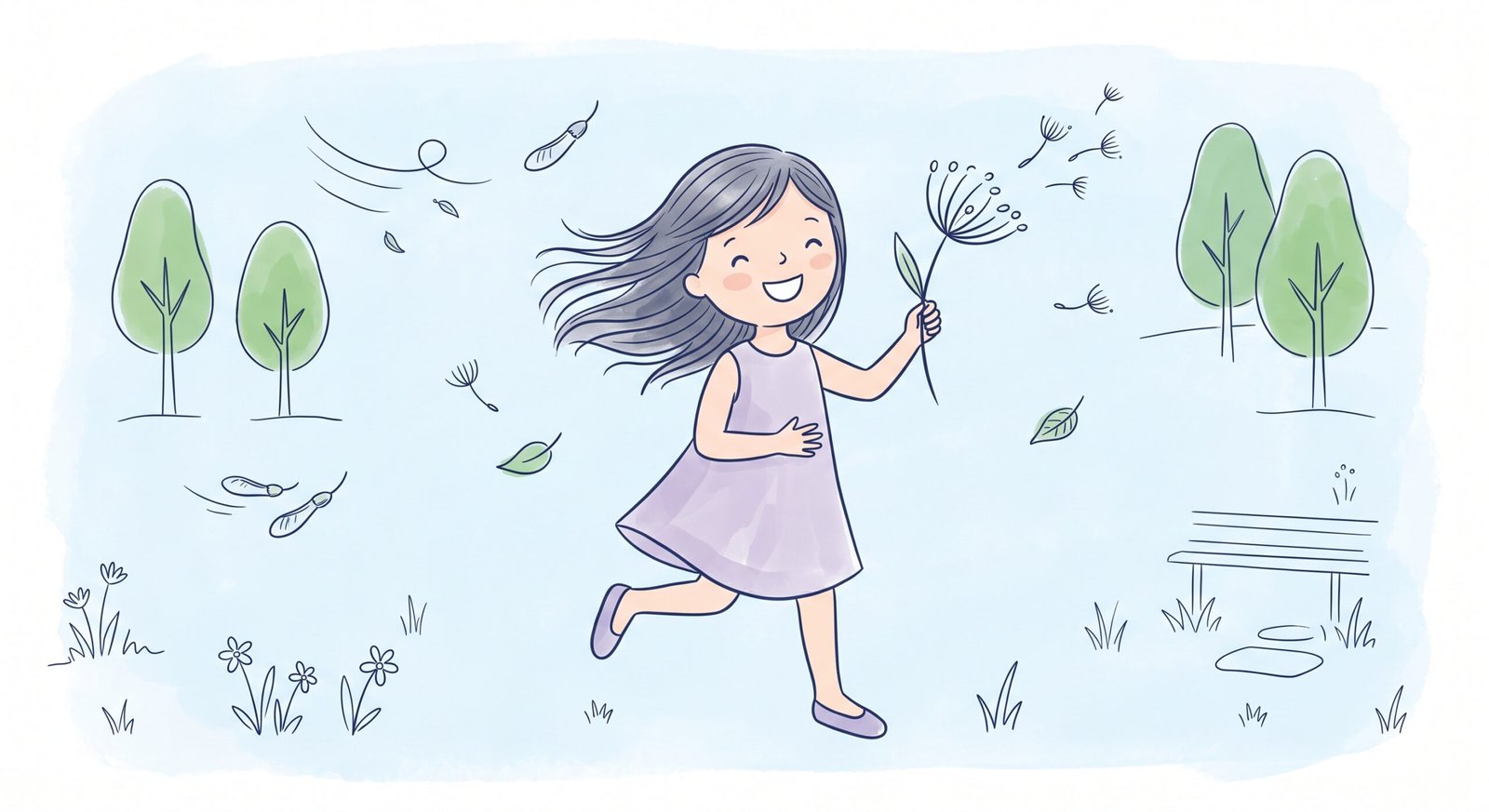
AI-made illustration based on a family photo, shared with my daughter’s permission.
I hold a PhD in Early Childhood Education from Deakin University and a Master of Education from Padang State University, Indonesia. My professional background includes working as an early childhood educator and NDIS support worker.
In 2026 I completed PESI’s Certified Autism Clinical Specialist Intensive Training, fifteen CPD modules covering autism assessment and the gender gap, attachment, sensory processing, DIRFloortime, masking and neuro-inclusive practice. It has deepened how I understand autistic children and their families. It is professional development, not a clinical qualification: I am not a psychologist, doctor or therapist, and I don’t assess, diagnose or treat.
My early professional life was anchored in lecture halls in Indonesia, where I taught early childhood teacher education. In October 2010 our family moved to Melbourne and I began my PhD at Deakin University. Early in my doctorate I taught an Indonesian language unit at Deakin, and towards the end I worked remotely as a curriculum advisor for a childcare service in Indonesia, helping shape its curriculum. I graduated in September 2016.
After finishing, I deliberately went to work on the floor as an educator in Melbourne early learning services. I wanted to know the daily practice, not only the theory, and that time changed how I write about young children.
I lived inside standard child development milestones, planning schemes, and textbook models of how young minds learn.
Yet behind all my academic training lay an unspoken, exhausting struggle that took decades to fully understand.
I am a mother of two daughters, and I am also a parent with ADHD. When my two daughters (born in 2003 and 2005) were young, I had no idea my eldest daughter was navigating ADHD. I also had no idea that I was navigating ADHD myself.
At that time, in my experience, girls presenting with internalised hyperactivity, intense emotions, or quiet executive dysfunction could easily slip through the cracks. I found little public knowledge, almost no neurodiversity affirming resources, and no practical roadmap for what was happening inside our home.
The standard strategies I had taught future educators started unravelling before breakfast. Verbal directions disappeared into thin air. Traditional reward charts fell flat. Routine steps like dressing or settling triggered tears and heavy frustration. Without knowing why our nervous systems reacted so strongly, those early years were clouded by guilt, self doubt, and exhaustion.
A Hyper-Focused Brain and an Eclectic Path
Looking back now with adult diagnoses in hand, everything makes sense. The challenges we faced were never about a lack of love, effort, or discipline. I now understand them largely as the result of two undiagnosed ADHD nervous systems trying to survive in a world built for neurotypical predictability.
Living as a parent with ADHD while navigating delayed diagnoses brings grief for the years spent wondering what was wrong, but it also brings immense clarity. When you have a hyper brain, your path rarely follows a straight corporate ladder.
I’ve begun writing honestly about what a late diagnosis is like in a series that starts with understanding my busy mind. I didn’t know I had ADHD during my PhD or my daughters’ early years; I see those years differently now, with hindsight.
My curiosity led me to pursue multiple diplomas and industry credentials alongside my doctorate, spanning early childhood education, adult training and assessment, social media marketing, and certification as a Certified Digital Marketing Professional from the Digital Marketing Institute.
I once worked a conventional 9 to 5 office role as a marketing manager, and it taught me an essential truth about my nervous system: rigid, predictable desk routines drained my energy completely. I need variety, creative autonomy, and practical challenges to stay mentally alive.
Over the years, I channelled that pattern-recognition drive into web design, user experience, and search engine optimisation. I now work as an independent SEO consultant, helping people with their websites, and I build my own sites, including this one.
One evening, the pieces connected: I had the technical skills to design and build websites, the doctoral background in developmental pedagogy, and decades of lived, kitchen-table experience navigating neurodivergence.
Keeping those hard-won lessons private made no sense when so many parents are currently sitting at their kitchen tables with crying children, wondering why standard advice is failing them. Through EarlyChildhoodEduNet, I share resources and ideas for parents and educators navigating ADHD, autism, sensory differences, daily routines, emotional regulation and early learning.
My aim is to help bridge the gap between educational knowledge and the everyday realities of supporting children.
I stopped treating emotional intensity as a behaviour problem and started asking what might be happening underneath it. Polyvagal theory (see polyvagal theory during early childhood meltdowns) is popular but contested: Grossman (2023) argues that its basic premises do not hold up (Biological Psychology), and Neuhuber and Berthoud (2022) check it against what is known about the vagus nerve (Biological Psychology).
I use it as one lens for describing what I see, not as established physiology, alongside ideas about sensory seeking and proprioception. In my experience, grounding play such as heavy work and gentle sensory resets can help a child settle before power struggles begin.
How My Days Look Today
Like many people with an ADHD brain, I get restless doing the exact same thing every single day. My working week balances very different worlds that keep my mind fresh and my thinking sharp.
On some days, I work out in the community as an NDIS support worker, assisting neurodivergent participants and their families directly in their homes drawing on the autism training I completed through PESI Australia in 2026. On other days, I channel my problem solving into SEO consulting, site architecture, and digital strategy.
On weekends, I recharge through Indonesian traditional dance performance, which gives me vibrant physical discipline, cultural rhythm, and creative joy outside of work.
Bringing together practical in-home support, website design, doctoral research, and lived family experience creates a practical bridge between classroom theory and living room reality.
Qualifications and Ongoing Learning
Academic Research and Teaching
- Doctor of Philosophy (PhD) in Early Childhood Education, Deakin University, Melbourne
- Master of Education (M.Ed), Padang State University, Indonesia
- Former University Lecturer in Early Childhood Teacher Education, Indonesia (before 2010)
- Taught an Indonesian language unit at Deakin University (early in my PhD)
- Remote Curriculum Advisor for a childcare service in Indonesia (late in my PhD)
- Early Childhood Educator in Melbourne early learning services (after my PhD)
Specialist Training and Community Experience
- Completed PESI Certified Autism Clinical Specialist Intensive Training (2026): fifteen CPD modules, including sensory processing, polyvagal theory, attachment and DIRFloortime. Professional development, not a clinical licence.
- In-home family support experience as an NDIS support worker
Professional Marketing & Technical Qualifications
- Certified Digital Marketing Professional (CDMP) — Digital Marketing Institute
- Diploma of Social Media Marketing
- Independent SEO Consultant and Website Designer
Vocational Education & Training
- Diploma of Early Childhood Education and Care
- Diploma of Training and Assessment (TAE)
How This Reshapes Learning and Play
When I design resources now, my focus is on keeping visual and cognitive demands low so the page itself never adds friction on days when energy is already running thin.
When an activity page is crowded with visual noise, a child with an active mind can shut down before holding a pencil. That insight led me to rethink handwriting readiness by focusing on fine motor skills for neurodivergent preschool hands and foundational hand strength activities rather than repetitive table drills.
In my experience, when learning incorporates movement, story, and genuine interest, focus comes more easily.
I design resources with clean, uncluttered visual space so children are not overwhelmed by the page itself. Most importantly, I share strategies that help parents and teachers protect their connection with a child instead of spending the whole day managing conflict.
My content is educational and informational, informed by my academic background, professional experience, lived perspective and relevant research. I am not an occupational therapist, clinical psychologist, speech pathologist or medical practitioner. Nothing here is clinical, medical or therapeutic advice, or a substitute for individualised professional advice.
My Path, in Order
Because I write from my own life, I keep the timeline straight. My daughters were born in 2003 and 2005, and before 2010 I lectured in early childhood teacher education in Indonesia. In October 2010 we moved to Melbourne: my eldest started primary school that month at seven, and my younger daughter started Prep in February 2011, just turned five. I completed my PhD at Deakin in September 2016, then worked as an educator in Melbourne early learning services. I also work as an NDIS support worker. My eldest was diagnosed with ADHD at twenty, and I was diagnosed in my forties. When a story on this site mentions my daughters, their ages and places follow this timeline.
What I Do, and What I Don’t
I write about how young children learn, play and regulate, and about how ADHD, autism and sensory differences can show up at home and in early learning rooms. I draw on research, my years in education and my family’s experience, and I try to make it practical for parents and educators.
I don’t assess, diagnose or treat children, and I don’t give medical, psychological, speech pathology or occupational therapy advice. When something on this site touches on a possible developmental concern, I point you to your GP, your Maternal and Child Health nurse or the right specialist, because they can see your child and I can’t.
How This Site Is Made
I list my sources at the end of each article and try to say clearly when something comes from my own experience rather than research. Where the evidence is mixed or thin, I say so. I review older posts as I learn more, and I’m adding a “last reviewed” date as each one is updated.
Some images on this site are AI-generated or AI-illustrated, including the picture at the top of this page, which is an AI-made illustration based on a family photo shared with my daughter’s permission.
If you spot an error, or a link that no longer works, please tell me through the contact page. I’d much rather fix it than leave it.
Dr Dewi Griffith
PhD in Early Childhood Education (Deakin University) · Early childhood educator and researcher · NDIS support worker · Mother of two, and a parent with ADHD
See How This Works in Practice
If traditional worksheets lead to frustration and tears at your table, explore our free printable tools and story-based resources designed to build confidence without pressure.
Explore Free Tools & Printables