
15 Playground Games for Kids: Easy No Equipment Games for School, Kinder and Home
Ten of these playground games for kids need no equipment at all, just a few children and some open space: tag, stuck in the mud, hide and seek, Simon says, red light green light, What’s the Time Mr Wolf, duck duck goose, statues, Octopus and clapping games.
Five more need one simple thing, like chalk or a rope: hopscotch, skipping, marbles, jacks and cat’s cradle. Each game below has quick rules, a starting age and a tip.
- Tag
- Stuck in the mud
- Hide and seek
- Simon says
- Red light, green light
- What’s the Time, Mr Wolf?
- Duck, duck, goose
- Statues
- Octopus
- Clapping games
- Hopscotch
- Skipping
- Marbles
- Jacks
- Cat’s cradle
Also on this page: quick guide table, games for primary school, sensory and ADHD tips, free Game Picker Card, the games I played in Sumatra and FAQs.
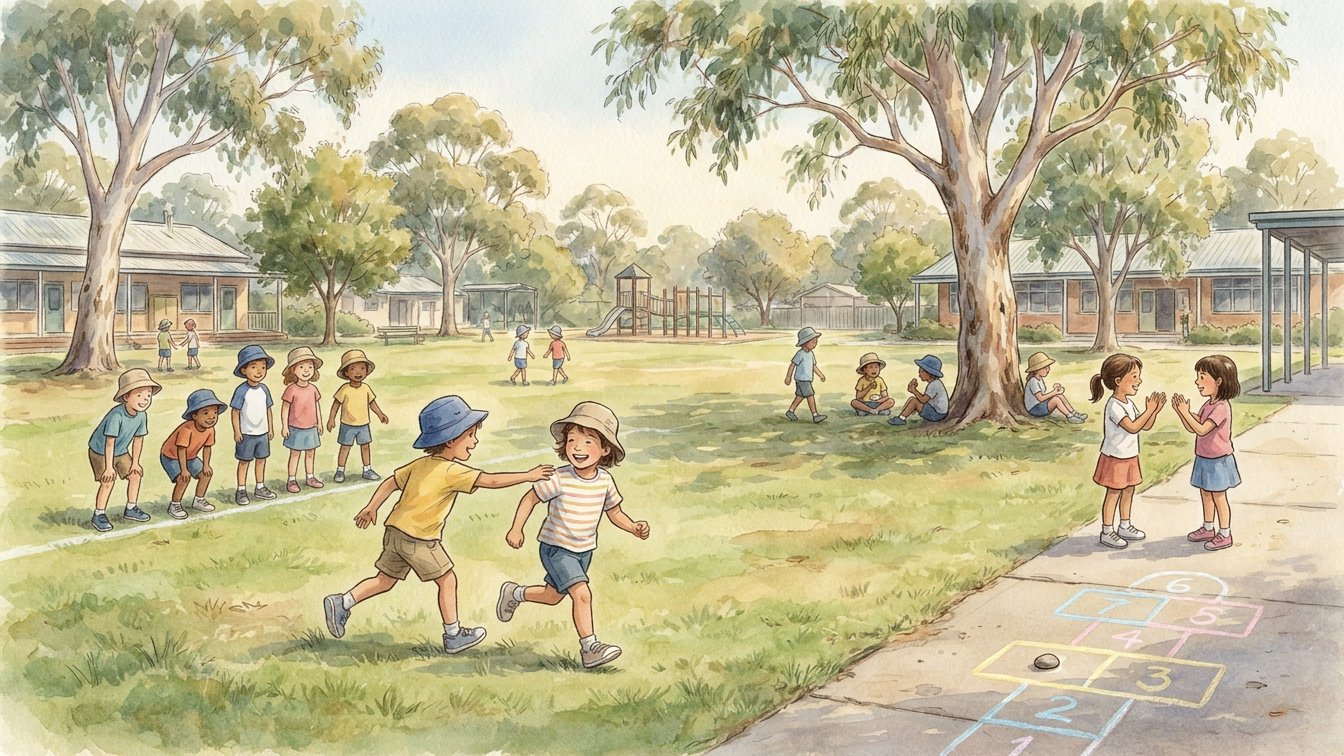
As a girl in Sumatra, I didn’t call it hopscotch. I called it Engklek. Years later, I chalked the same squares for my own daughters. The games below are the ones that have lasted, because they need almost nothing.
Part 110 Playground Games for Kids With No Equipment
Every game in this first part works on a patch of grass, a school yard or a quiet park with nothing in your hands. They’re the ones to reach for when the bag of balls has gone missing, or when a group of children needs to move right now.
1. Tag
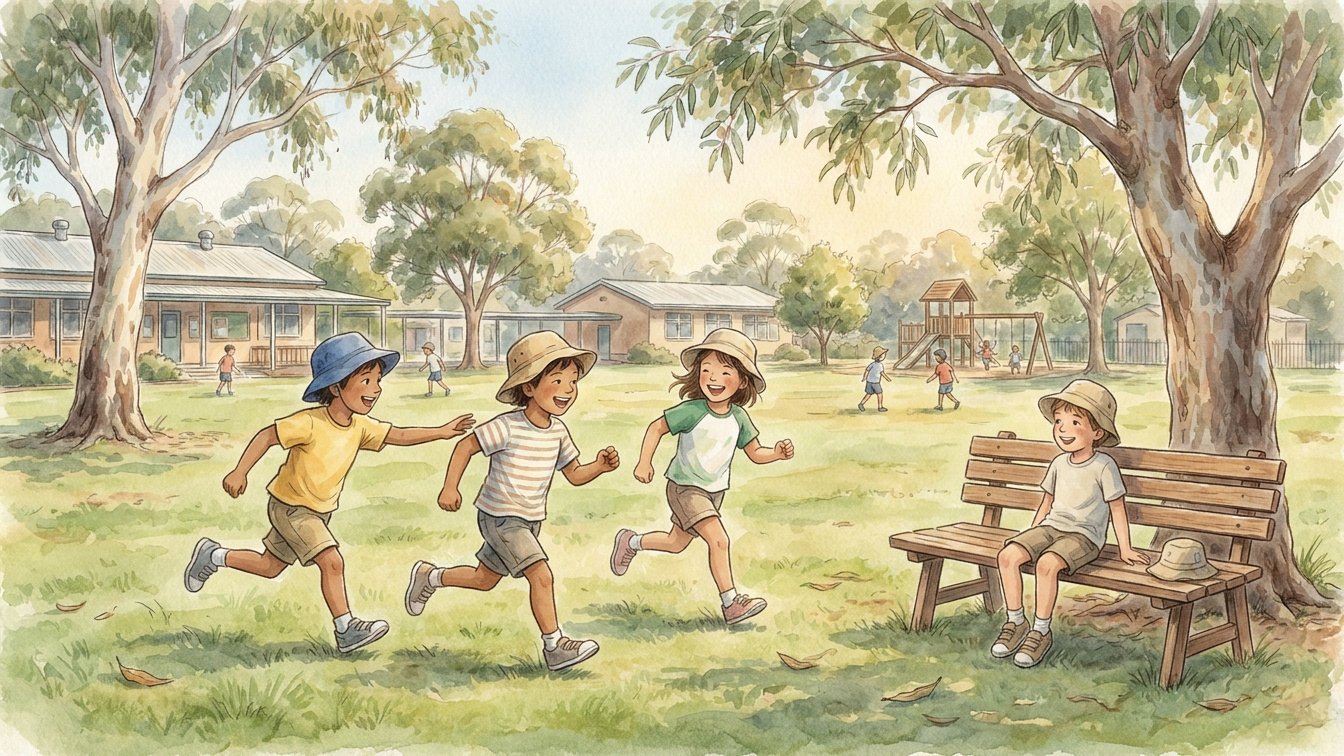
One player is “it” and chases the others. Whoever gets tagged becomes the new chaser. That’s the whole rule, which is why tag turns up in almost every school yard in the world, each with its own local twist.
Tag builds speed, quick footwork and changing direction. It also asks children to stick to rules while they’re excited, which is harder than it looks.
Best for: ages four and up, once a child can run at full speed without stumbling.
You need: nothing. Agree on the edges of the play space first.
Tip: set up a safe base that can’t be tagged, like a bench or a step, for younger or easily overwhelmed children.
2. Stuck in the mud
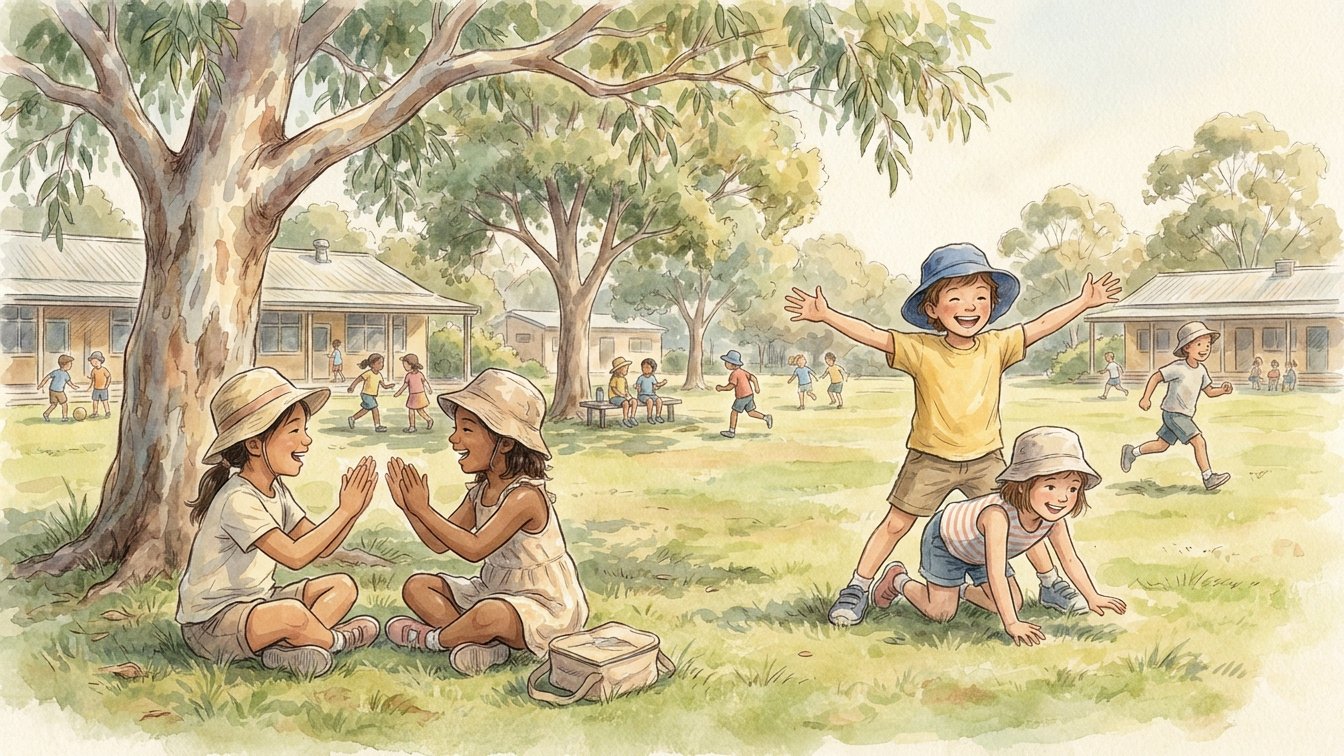
This is tag with a rescue. When the chaser tags you, you’re stuck in the mud. You freeze with your legs wide apart and your arms out. A free player can rescue you by crawling through your legs, or for little ones, by giving you a high five. Once everyone is stuck, the chaser wins and a new chaser takes over.
I like it because children who get caught early aren’t left standing on the side. Their friends come back for them, and the game keeps everyone moving. It also gives a sneaky bit of crawling and balancing practice in the middle of all the running.
Best for: ages four and up. With a big group, have two chasers.
You need: nothing.
Tip: on concrete or bark, swap crawling for a tap on the shoulder so knees stay safe.
3. Hide and seek
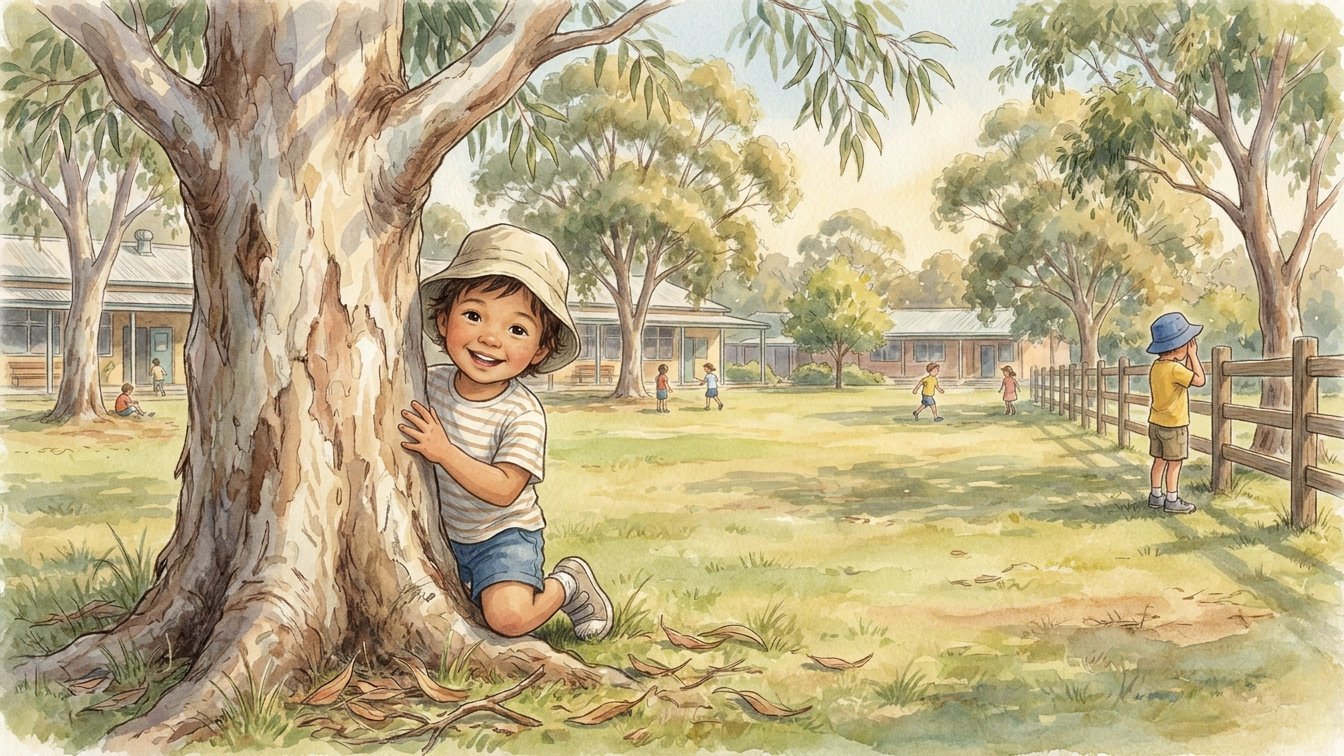
One player covers their eyes and counts out loud while the others hide, then sets off to find them. In Indonesia we called it petak umpet. Bella and Zara both loved it.
Working out whether someone else can see you is tricky for little ones. That’s why young preschoolers often “hide” with their legs poking out from behind the couch. It’s all part of learning that other people see things differently.
Best for: ages three and up indoors with gentle hints, five and up outdoors with agreed boundaries.
You need: nothing, plus a few good hiding spots.
Tip: agree on clear boundaries before the round starts, and a signal like a big clap for “come back in”.
4. Simon says
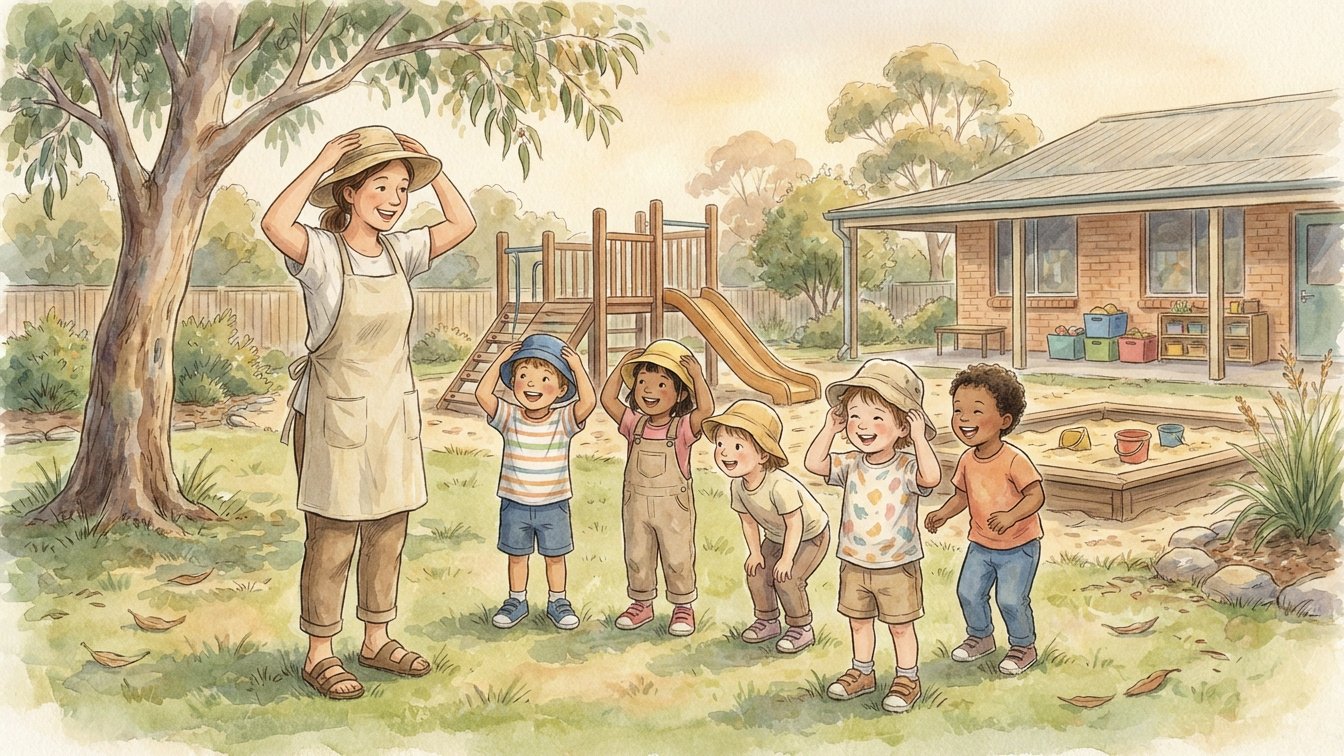
Players only do the action if the leader starts with “Simon says”. “Simon says touch your toes” means touch your toes. Just “touch your toes” means stay still. Children have to listen closely, hold back when Simon didn’t say, and move quickly when he did.
This is one of the stop and go games that researchers use when they study self control in preschoolers. More on that in the research section below.
Best for: ages three and up. Make it harder by speeding up or giving two step actions.
You need: nothing.
Tip: give every child a turn at being Simon. Making up clear instructions is a different skill from following them.
5. Red light, green light
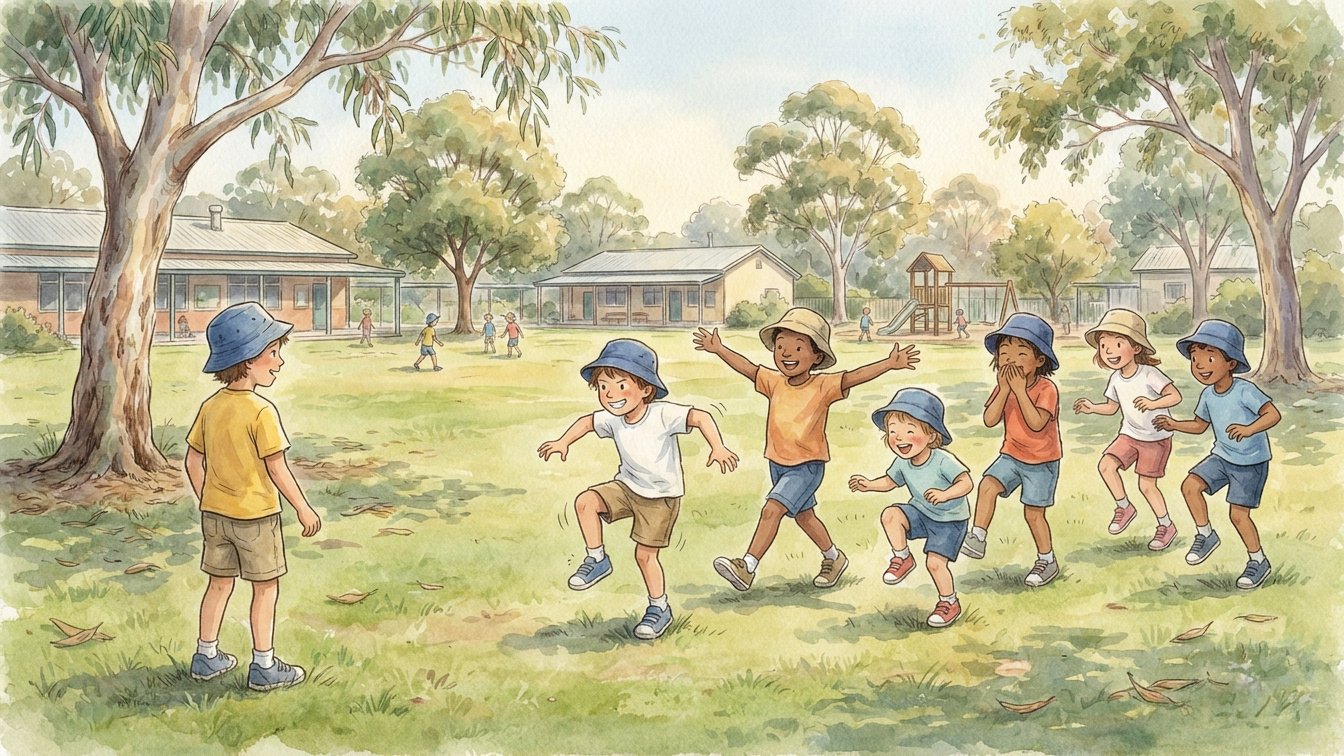
The leader stands at one end with their back to the group. Players race forward on “green light” and must freeze on “red light”, when the leader spins around. Anyone caught moving goes back to the start. The first to tap the leader wins and leads the next round.
Stopping your body mid run while excited is hard, which makes this great practice in body control. Our guide to regulation before learning explains why a settled body matters.
Best for: ages four and up.
You need: nothing. A start line and a finish line help.
Tip: add “yellow light” for slow motion tiptoe walking.
6. What’s the Time, Mr Wolf?
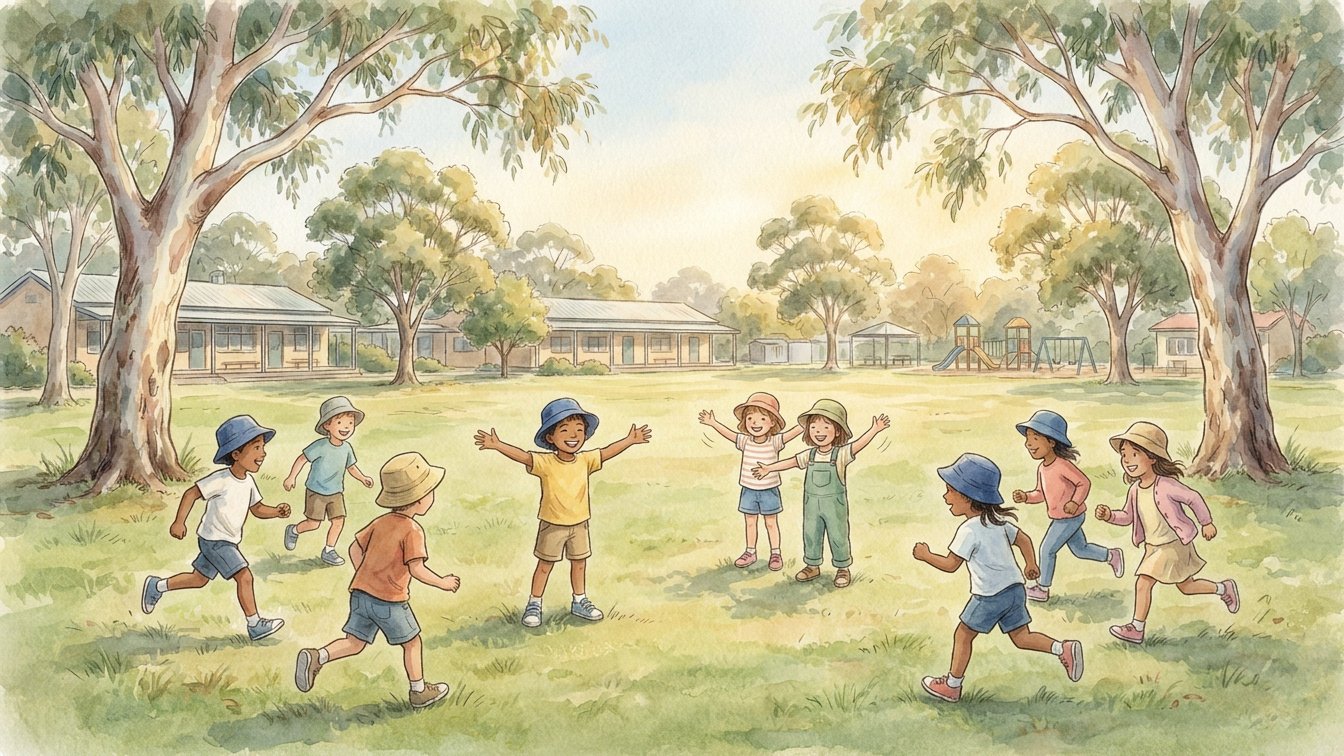
One child is Mr Wolf and stands at one end of the space with their back to the others. Everyone calls out together, “What’s the time, Mr Wolf?” The wolf answers with a time, like “Three o’clock!”, and the group takes three steps closer. When the wolf decides the group is near enough, the answer is “Dinner time!” The wolf turns and chases, and whoever is caught becomes the next wolf.
It’s a much loved game in Australian and British school yards. Little ones get counting practice without noticing, and the waiting builds up lovely suspense. It also teaches that you can feel a bit scared and still have fun, which is a big idea for a small person.
Best for: ages three and up. Older children can take giant steps, baby steps or hops.
You need: nothing. Mark a safe line the players can run back to.
Tip: for a nervous child, let them be the wolf first. Being in charge of the chase often makes it feel safer.
7. Duck, duck, goose
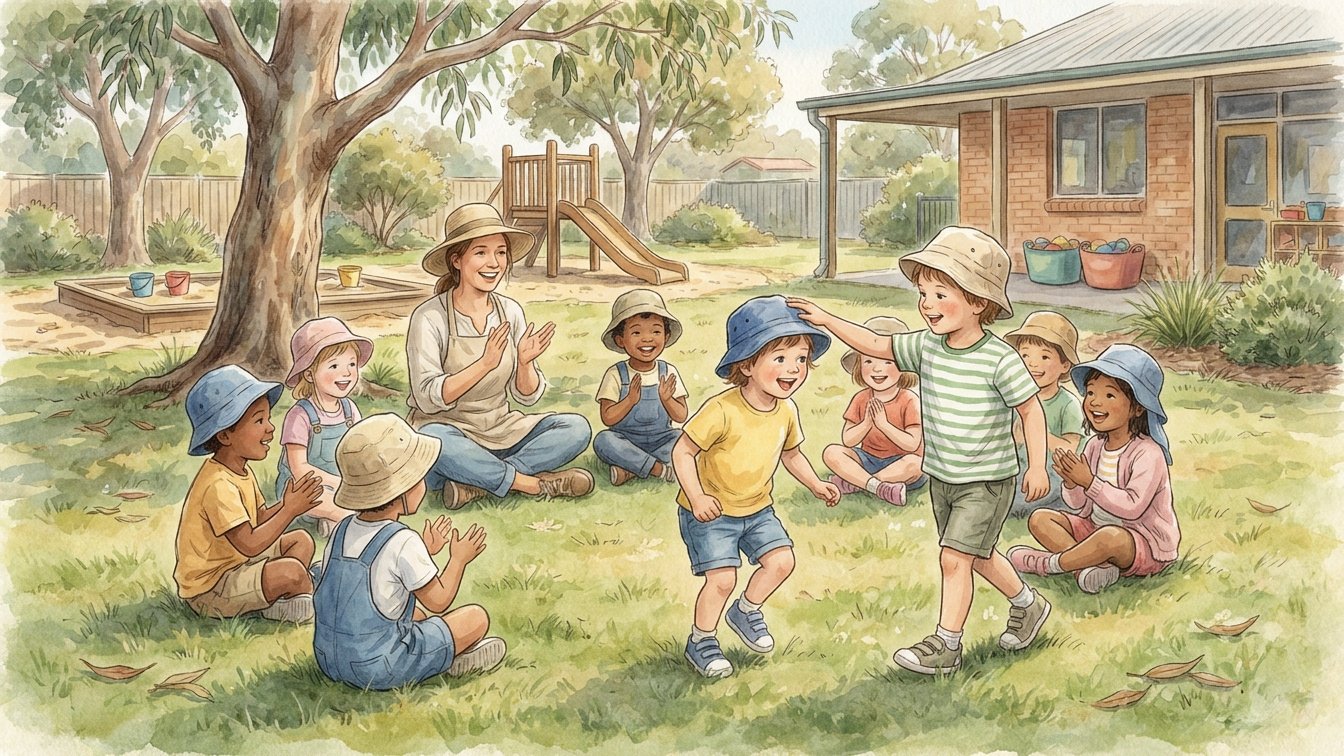
Children sit in a circle while the leader walks around, tapping heads and saying “duck”. On “goose”, that child jumps up and chases the leader around the circle to the empty spot. Whoever is left standing becomes the next leader.
I played many rounds of this during my two years as a relief educator in centres across Melbourne’s east. It builds patience while waiting, a burst of sprinting and turn taking in a big group.
Best for: ages three and up with an adult nearby.
You need: nothing. Grass is kinder than concrete for sitting.
Tip: for very young or hesitant children, make the chase a gentle walk rather than a race.
8. Statues
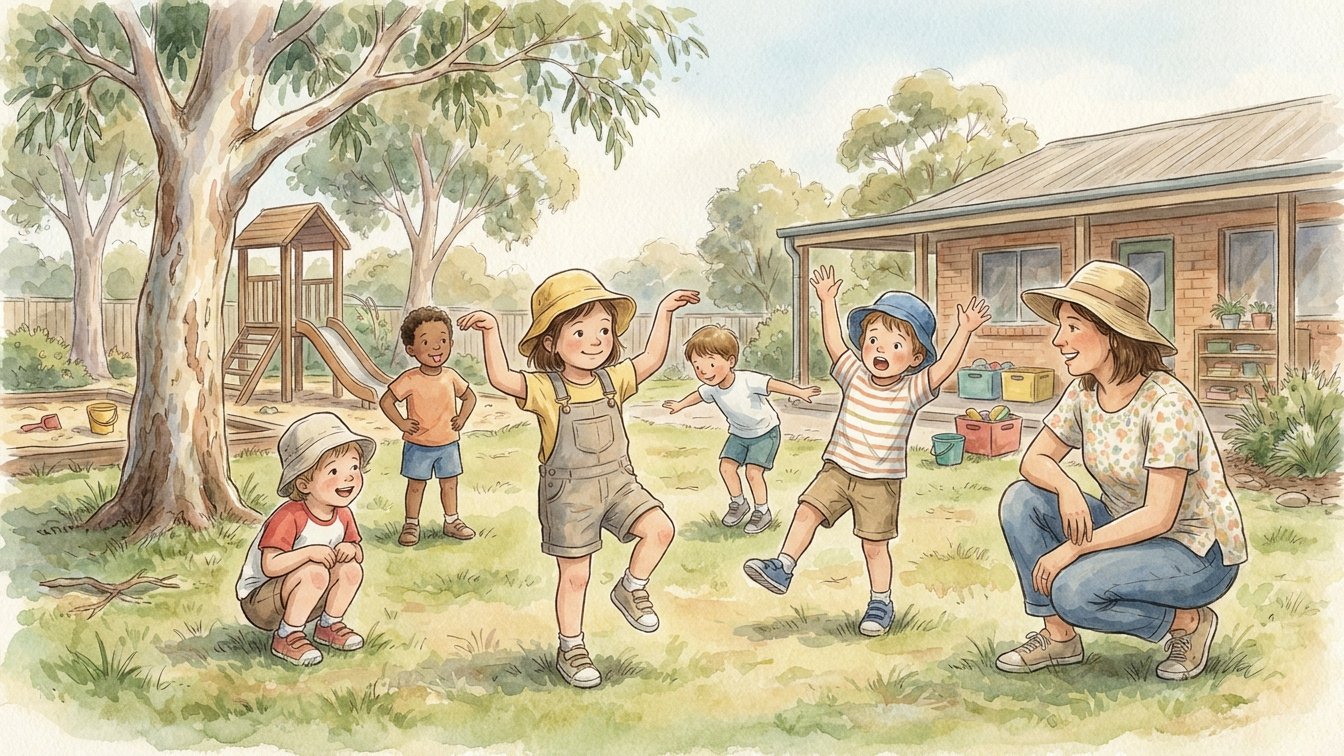
Everyone moves around the space, dancing, hopping or walking like animals, while the leader claps, sings or counts. When the leader stops, everyone freezes like a statue. The leader walks around looking for wobbles. Anyone who moves sits out for one round, or for younger children, becomes the leader’s helper.
You may know it as freeze dance when there’s music. On the playground you don’t need any. A clapping beat or a simple song you all know works just as well, and it means you can start the game anywhere.
Best for: ages three and up.
You need: nothing.
Tip: call out a statue shape before you stop, like “a tall tree” or “a tiny mouse”. It adds balance and imagination.
9. Octopus
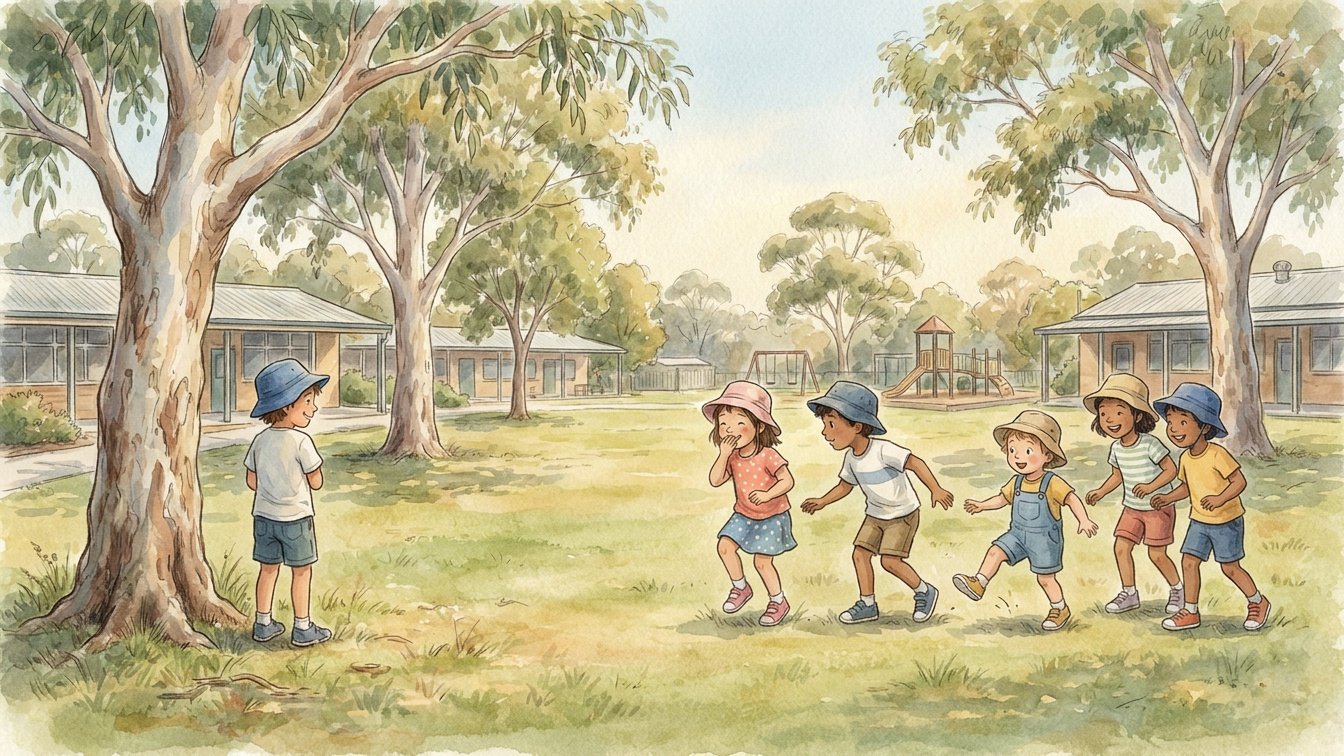
One player is the octopus and stands in the middle of a big space. Everyone else is a fish and lines up at one end. The octopus calls “Fishies, fishies, cross my ocean!” and the fish run to the other side. Anyone tagged becomes a tentacle. Tentacles stay on the spot where they were caught and can only tag with their arms, so the ocean gets trickier each round. The last fish left is the next octopus.
You might know a version called sharks and minnows. It’s a favourite for primary school because it works with a whole class, needs no gear and runs itself once the children know it.
Best for: ages five and up, with a big group.
You need: nothing. Mark both “shores” with a line, a fence or a row of trees.
Tip: remind tentacles that a tag is a gentle touch, not a grab.
10. Clapping games
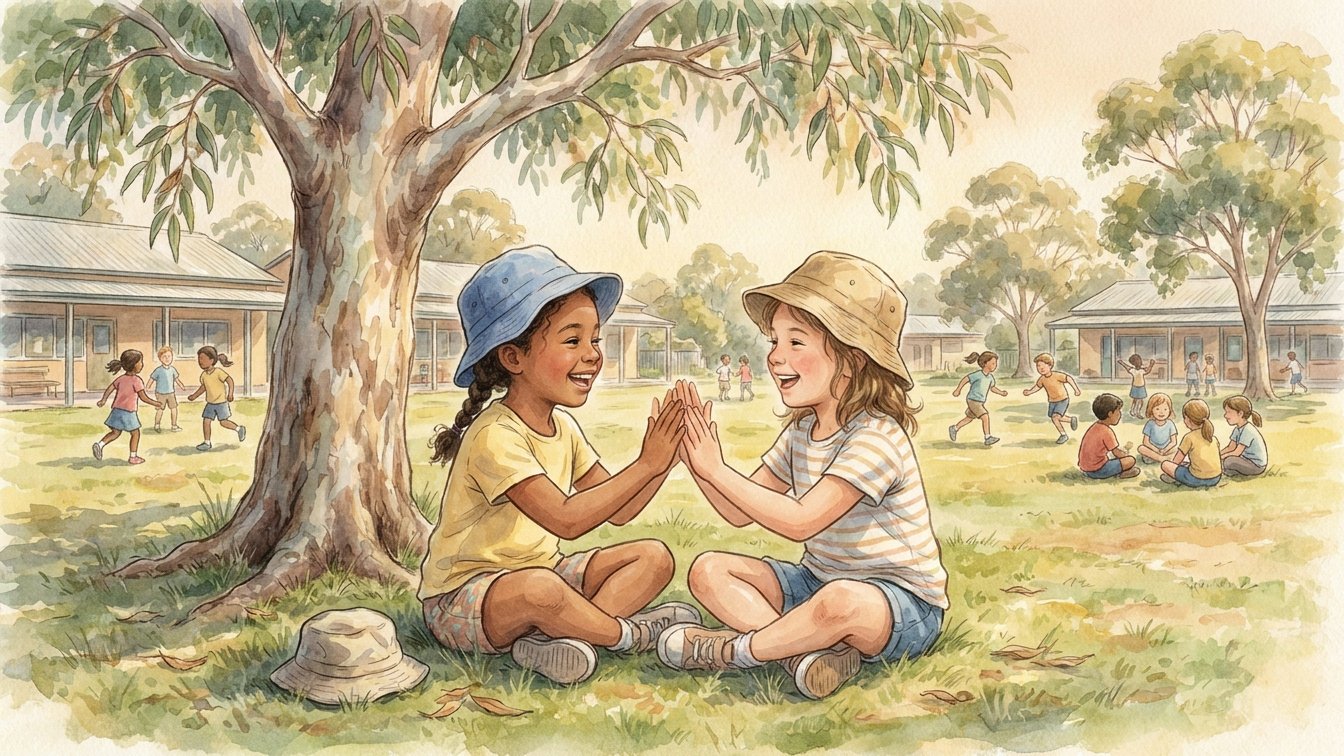
Two children face each other and clap a pattern while they chant a rhyme: clap your own hands, clap your partner’s right hand, clap your own, clap their left, and so on. As the rhyme speeds up, so does the pattern. Most clapping rhymes are passed from older children to younger ones, so the words change from school to school.
Clapping games look simple, but they ask a lot. Children have to cross the middle of their body, keep a beat, remember the words and match a partner, all at once. The rhyming and the steady beat are also lovely for early reading skills. Our guide to emergent literacy explains why.
Best for: ages five and up. Younger children can start with a simple “my hands, your hands” pattern.
You need: nothing but a partner.
Tip: ask grandparents which clapping rhymes they knew. You may find one nobody at school has heard.
5 Playground Games for Kids With Simple Equipment
These five need one small thing: a stick of chalk, a rope, a loop of string or a handful of marbles. Nothing you’d need to buy from a special shop.
11. Hopscotch
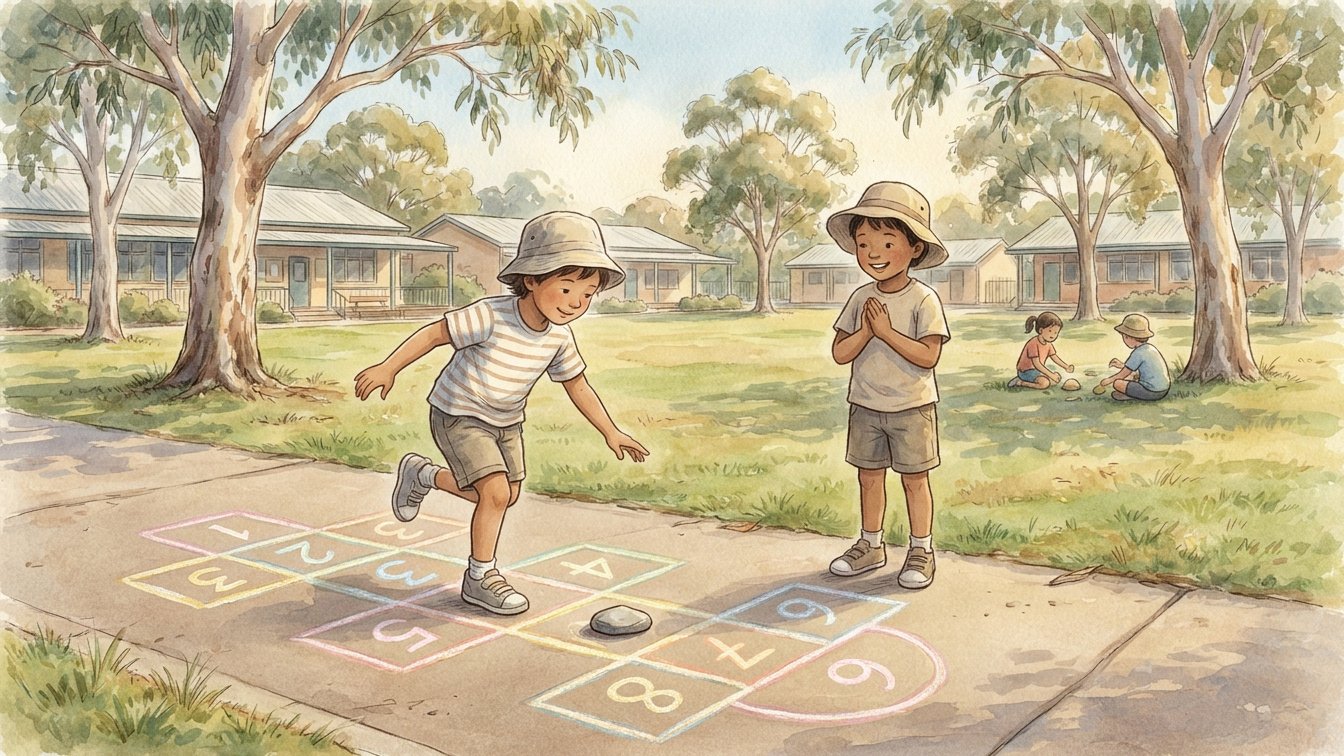
Draw a single square, then a pair side by side, alternating up to nine or ten squares, and number them. Players toss a marker onto square one, hop through the course skipping that square, turn at the top and hop back. On the way home they balance on one leg to pick up the marker. Then it’s square two, and so on.
This is Engklek, the game I grew up with. I chalked it for Bella and Zara when they were small in Indonesia, and we kept playing it after we moved to Melbourne.
Best for: ages three and up. Younger children can skip the marker and practise two footed jumps.
You need: footpath chalk and a flat stone or bean bag as a marker.
Tip: chalk fades with rain or a spray of the hose, so you can redraw the grid with letters or shapes. Our free Hopscotch Grid Card has layouts to copy.
12. Skipping
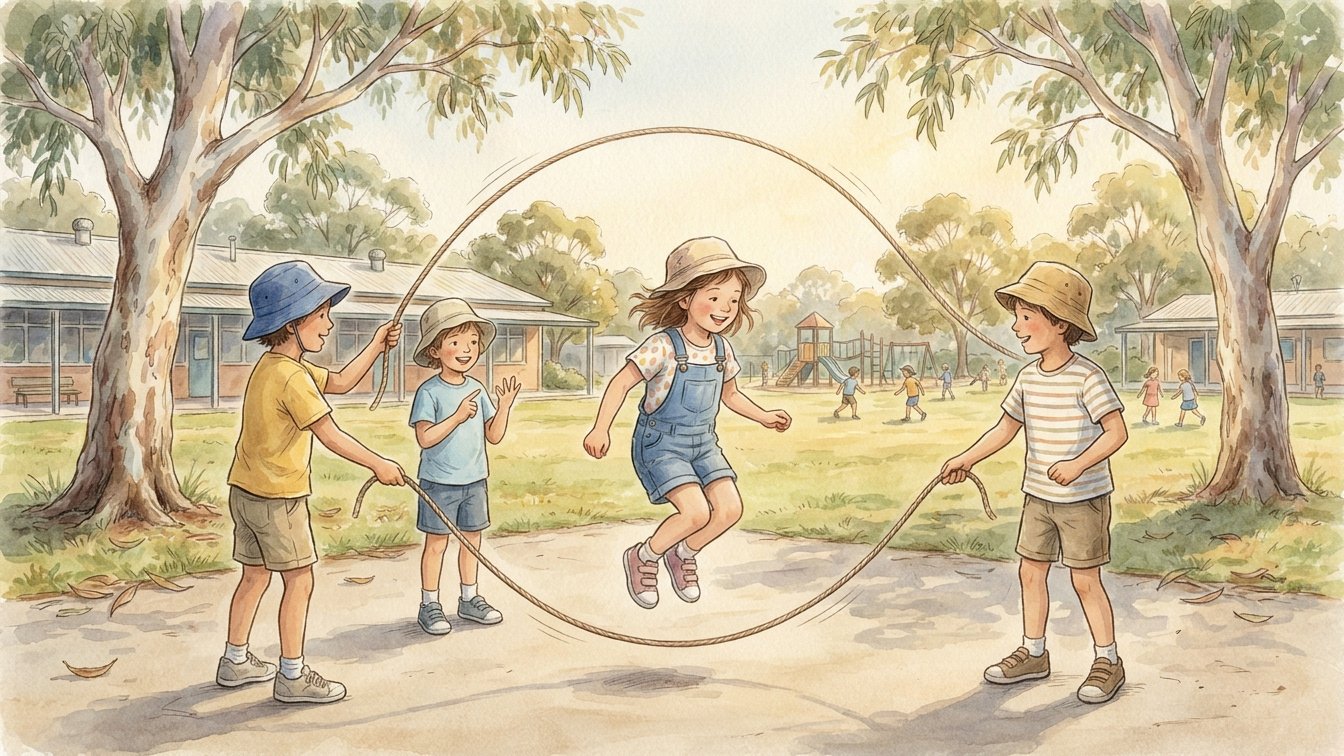
Skipping gets hearts pumping while still feeling like play. Start with a child turning their own rope, then move on to two people turning a long rope while others practise running in. In Sumatra we played lompat tali, often with a long rope made from rubber bands knotted together. It works the same way and costs almost nothing.
Skipping rhymes double as rhyme and counting practice. Counting clean jumps in a row gives children a personal goal without competing against anyone.
Best for: ages four and up for their own rope. Group turning usually suits children from about six.
You need: a skipping rope, or a long rubber band rope.
Tip: a good rope length is when your child stands on the middle and the handles reach their armpits.
13. Marbles
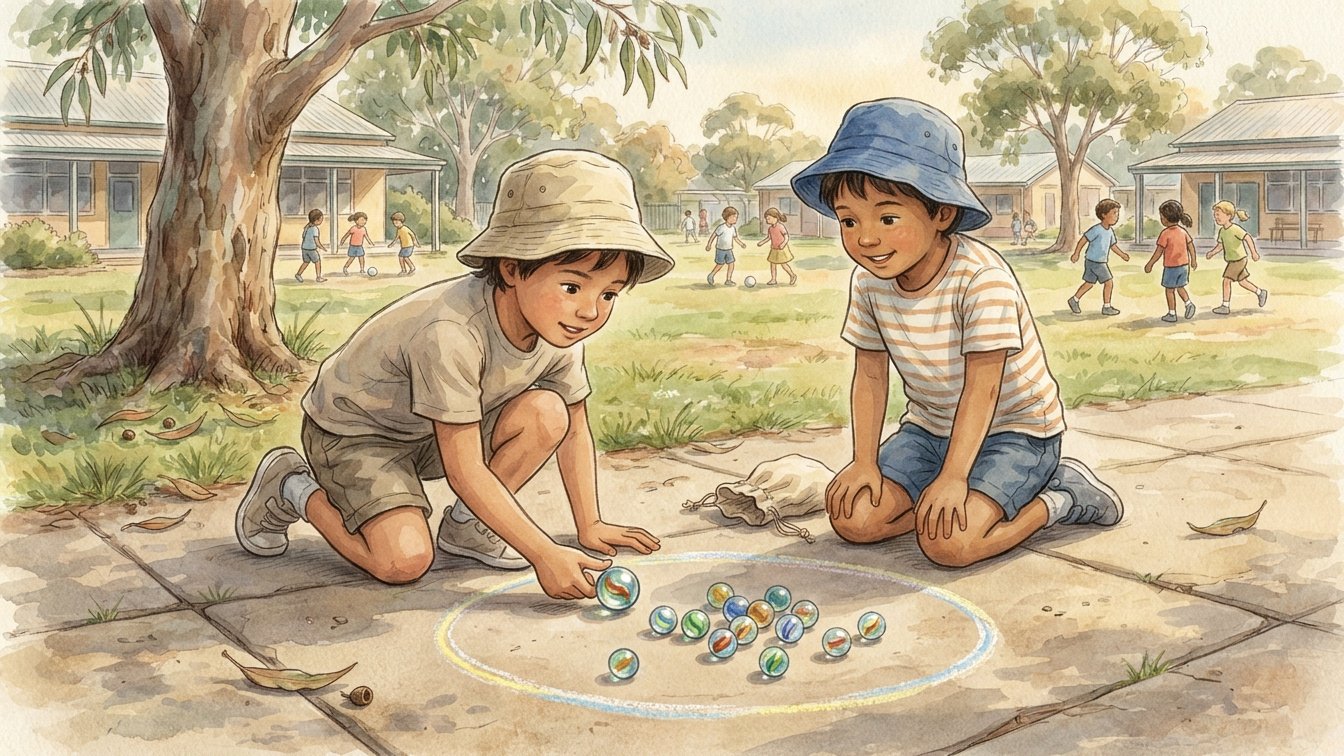
Players flick a larger shooter marble with the thumb to knock smaller marbles out of a chalk circle. In Indonesia we called them kelereng. It builds hand eye coordination, judging angles and using fingers separately, the same pinch in our pincer grasp activities.
Best for: ages five and up, once children have stopped putting small things in their mouths.
You need: a bag of marbles and chalk for the circle.
Tip: start with a big ring and let players shoot from close to the edge. Count the marbles each player wins and record them on our Calm Counting Worksheets.
14. Jacks
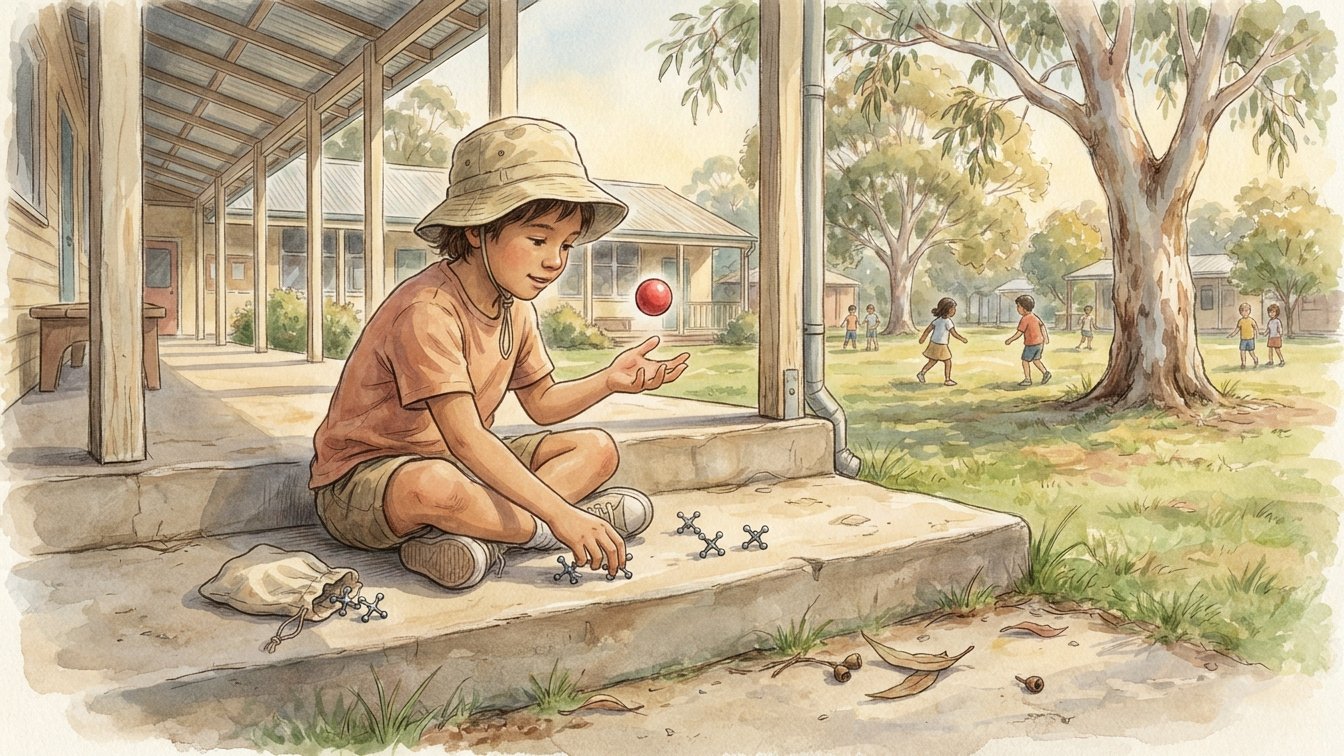
Scatter jacks on a smooth surface, toss a small ball in the air, scoop up one jack and catch the ball before it bounces twice. Then two jacks, then three. In Indonesia, bekel is played in a similar way.
Best for: ages five and up, once a child can catch a small bouncing ball with one hand most of the time.
You need: a set of jacks and a small ball.
Tip: a slightly bigger, softer ball makes the catch more forgiving. Our hand strength activities build the same small hand skills.
15. Cat’s cradle
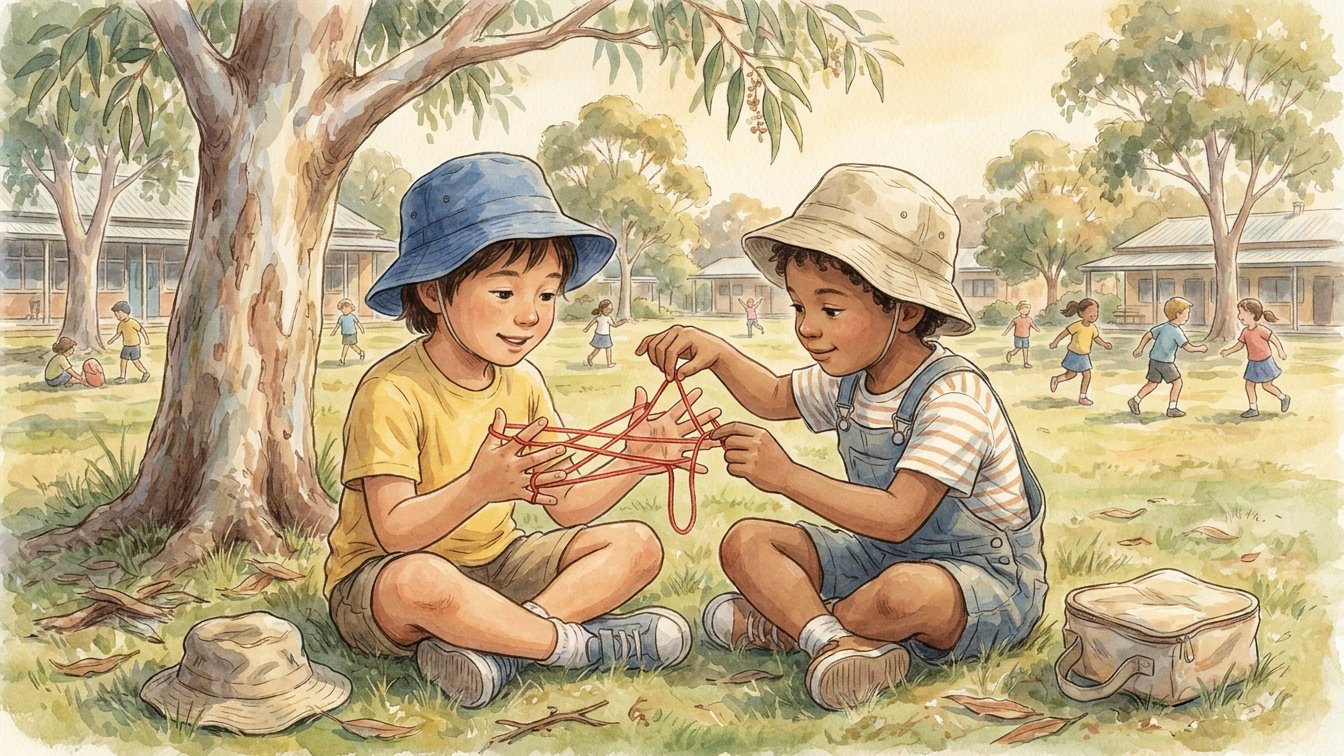
A loop of soft string passes between two players’ hands to make shifting shapes. It practises moving fingers one at a time, using both hands together and planning ahead, the same skills used later for cutting and pencil control.
Best for: ages six and up.
You need: about a metre of string, tied into a loop.
Tip: bright cotton yarn that isn’t too slippery is easier for small fingers.
Quick Guide to Playground Games for Kids: Ages, Skills and Equipment
| Game | Main skill | Starting age | Equipment |
|---|---|---|---|
| Tag | Speed, dodging | 4+ | None |
| Stuck in the mud | Running, helping others | 4+ | None |
| Hide and seek | Seeing from another view, patience | 3+ | None |
| Simon says | Listening, waiting | 3+ | None |
| Red light, green light | Stopping on cue | 4+ | None |
| What’s the Time, Mr Wolf? | Counting steps, suspense | 3+ | None |
| Duck, duck, goose | Turn taking, sprinting | 3+ | None |
| Statues | Balance, body control | 3+ | None |
| Octopus | Dodging, team play | 5+ | None |
| Clapping games | Rhythm, memory, crossing the middle | 5+ | None |
| Hopscotch | Counting, one leg balance | 3+ | Chalk, marker |
| Skipping | Rhythm, fitness | 4+ | Rope |
| Marbles | Finger aim, hand eye coordination | 5+ | Marbles, chalk |
| Jacks | Quick hands, fine motor | 5+ | Jacks, small ball |
| Cat’s cradle | Finger control, two hands | 6+ | String loop |
Starting ages are loose guides. Every child moves at their own pace, as I explain in child development milestones.
Playground Games for Kids at Primary School
A lot of parents and teachers come looking for playground games for primary school that need no equipment. That makes sense. Lunch breaks are short, gear goes missing and a whole class can’t share one ball. These five work best with a big group of school age children:
- Octopus: the whole class can play, and caught players stay in the game as tentacles.
- Stuck in the mud: nobody waits on the side for long, because friends rescue them.
- What’s the Time, Mr Wolf?: easy for older children to run for younger buddies.
- Tag with a twist: try freeze tag, or tag where you have to hold the spot where you were tagged.
- Clapping games: a quiet choice for the shady corner when children need a break from running.
Often the hardest part is getting a game started. One trick that helps: teach a new game in class first, so children walk outside already knowing the rules.
Playground Games for Kids at Kinder or Childcare
For three and four year olds, these playground games for kids work best when they’re short, gentle and led by an adult at first.
- Turn taking games like duck, duck, goose and hopscotch work well because only a few children run at once.
- Whole group games like Simon says, statues and red light, green light help children burn off energy before heading inside.
- Quiet games like marbles (for older children), chalk drawing and simple clapping patterns make calm small group stations in the shade.
As a relief educator, I often walked into rooms where the children didn’t know me. A game everyone already knows, like duck, duck, goose, is an easy way to join in. Our guide to play based learning with structure has more for educators.
Playground Games for Kids With Sensory or ADHD Needs
These games look easy from the sidelines. But a busy school yard can feel overwhelming for children with ADHD, autism or sensory differences. Shouting, sudden movements, tricky social rules and fast changes can push a sensitive nervous system into fight, flight or shutting down. Our guide to fight, flight and freeze in children with ADHD explains what that can look like.
When a neurodivergent child melts down during a game, it’s rarely about being a bad sport. Often their tank has emptied, or a sudden change was too much. Co regulation during a meltdown is the place to start.
- Heavy work before fast games: wall pushes, bear walks or carrying something heavy before tag. Our Pocket Heavy Work Cards have simple moves. Evidence for sensory strategies is limited, so treat them as ideas to try.
- Clear edges: chalk or cones mark where the game happens, which helps children who find wide open spaces hard.
- A clear finish: our visual routine cards show when play ends and what comes next, and our First Then Reset Mats help with “first play, then inside”. Sensory micro transitions soften the change.
- A quiet option: clapping games, marbles, jacks and cat’s cradle let children join in at a calmer pace.
- A safe base: a spot that can’t be tagged gives children a place to catch their breath.
- Lead before you chase: in Mr Wolf or red light, green light, letting a worried child be the leader puts them in charge of the scary part.
Bella showed signs of ADHD from babyhood, though she wasn’t diagnosed until her twenties. She loved hide and seek and skipping. Active games with clear rules can give a busy child’s energy somewhere to go, though every child is different.
The Games I Played in Sumatra
I grew up in Sumatra, and my childhood was full of these games, just with different names. Hopscotch was Engklek. Hide and seek was petak umpet. Skipping was lompat tali, with that long rubber band rope. Marbles and jacks were there too, as kelereng and bekel.
None of these games need a shop. Engklek needs squares on the ground. Lompat tali needs a rope of rubber bands. Petak umpet needs a few friends and somewhere to hide. Children all over the world grow up the same way, with games passed from older children to younger ones.
When I became a mother, I taught Bella and Zara Engklek, the way I’d played it. We started in Indonesia when they were small and kept going after we moved to Melbourne in 2010. Both girls also loved hide and seek and skipping. Watching them play the same kinds of games I had played felt like passing something on without needing to explain it.
Later, during my relief years in Melbourne, I joined plenty of rounds of duck, duck, goose. Different country, different children, same game.
What did you play as a child?
- Which game do you remember most?
- What was it called where you grew up?
- Have you taught it to your own children yet?
Playground Games for Kids Across Cultures
One thing I love about these games is how many versions there are. Hopscotch is Engklek in Indonesia, and has other names in other countries. Skipping and clapping rhymes change from street to street. Tag has a different set of rules in almost every school yard.
If your family comes from another country, or your grandparents grew up somewhere else, ask them what they played. You might find a version of tag, a clapping rhyme or a string game nobody in your child’s class has heard of. Children love being the expert who teaches the others.
For children learning English as an additional language, as Zara was when we arrived in Melbourne, playground games can be a gentle way to join in. Many games need few words. You can watch, copy and play long before you can explain the rules. Our guide to a child learning English as a second language has more.
Educators can ask families to share a game from home. A “games from our families” week can bring new rules, new rhymes and new names into the playground, and help every child feel their culture belongs there.
Why Classic Playground Games for Kids Are Worth Bringing Back
Every game on this list is older than smartphones, and some are centuries old. Iona and Peter Opie’s famous collection of children’s street and playground games shows how many have been handed from child to child for generations.1
They’ve lasted because they need so little. An open patch of concrete or grass, a few willing children, and maybe chalk or string. That simplicity is a comfort on busy days when a screen feels like the only option.
Here’s a number that surprised me. Australia’s 24 Hour Movement Guidelines suggest preschoolers aged 3 to 5 get at least 180 minutes of physical activity spread across the day. That’s three hours. At least 60 minutes of that should be energetic play, and sitting in front of a screen should be no more than an hour.2 For children aged 5 to 17, the guidelines recommend at least 60 minutes of moderate to vigorous activity every day.3
Three hours sounds like a lot until you realise it’s spread across the whole day, and includes all kinds of movement. A few rounds of tag, some skipping and a game of Mr Wolf add up quickly. Most of these games count as energetic play without complicated rules or an adult with a whistle.
What Research Says About Playground Games for Kids
Stop and go games and self control
Researchers who study self regulation in preschoolers use games very like Simon says and red light, green light. In a randomised trial, preschoolers played circle time games that asked them to listen, remember rules and stop on cue.4 A later study of a similar program, called Red Light, Purple Light, found promising but modest results for children from low income backgrounds.5
So these games are good practice, not a magic fix. Still, it’s lovely to know that something as simple as Simon says gives young children good practice in waiting and holding back.
Games with rules
Vygotsky noticed something similar long ago. In games with rules, children happily hold back their impulses, because sticking to the rule is part of the fun.6 I wrote more about this in Vygotsky’s play theory and my nephew Zeki.
A Screen Free Afternoon of Playground Games for Kids
- Focus on one game. Twenty happy minutes of hopscotch beats rushing through four games.
- Let the gear invite play. Leave chalk or a rope by the back door, and a game often starts without a word.
- Make room for solo play. Hopscotch and jacks work well for one child. Our guide to independent play has more.
- Welcome repetition. Playing the same game across several afternoons builds skill and confidence.
- Teach your own childhood games. Like I did with Engklek, share the games you grew up with.
Rainy week? Statues, Simon says and clapping games work in a hallway or lounge room. Our rainy day activities and indoor obstacle course fill the gap.
Safety Basics for Playground Games
- Running surfaces: flat grass or smooth paving, clear of tools, kerbs and loose gravel. Keep chalk games away from driveways when cars are moving.
- Gentle tags: agree before the game that a tag is a light touch on the back or arm. No pushing, grabbing or pulling clothes.
- Small pieces: marbles and jacks are choking hazards. Store them well away from babies, toddlers and children who mouth things.
- Ropes and string: pack them away after play, and never tie them around necks.
- Sun safety: hats, sunscreen, water and shade. SunSmart has current UV advice.
When to check in. If your child often trips, avoids running or climbing, struggles with balance more than other children their age, or finds group games very distressing, talk with your GP, Maternal and Child Health nurse or a paediatric physiotherapist or occupational therapist.
Free Printable: Game Picker Card for Playground Games for Kids
Fifteen games sorted into big body games, listening games and small hands games. Tick the ones you’ve tried and add your family’s own favourite.
Game Picker Card
Busy body, listening ears or quiet hands? Pick a game and tick it off.
Tag
Stuck in the mud
Octopus
Hopscotch
Skipping
Our game:
Simon says
Red light, green light
What’s the Time, Mr Wolf?
Statues
Duck, duck, goose
Our game:
Clapping games
Marbles
Jacks
Cat’s cradle
Chalk drawing
Our game:
How to use the Game Picker Card
- Print the card and stick it by the back door, or on the outdoor shed at kinder or school.
- Check how your child seems: full of energy, ready to listen, or wanting something quiet.
- Pick a game from that column, or let your child choose.
- Tick the game once you’ve played it, and add new games on the “Our game” lines.
- At the bottom, write your family’s favourite game and where it comes from, like a grandparent’s childhood game.
The downloadable PDF lists the original fifteen games, including freeze dance and chalk drawing. The on screen card above matches this page. Both work the same way.
More Free PDFs for Active Play
Fight, Flight, Freeze Spotter Card
Spot overwhelm early.
Download PDFFor children with ADHDMore free tools are on our printables page.
- Hopscotch rules and grids: hopscotch for kids
- Maths and movement: number line jumping game
- Movement: animal walks for gross motor play
- Indoors: indoor obstacle course for preschoolers
- Rainy days: rainy day activities at home
- Outdoors: nature scavenger hunt for kids
- Playground design: what makes a playground inclusive
- Low cost play: cardboard box activities at home
Playground Games for Kids FAQs
What playground games for kids need no equipment?
Tag, stuck in the mud, hide and seek, Simon says, red light green light, What’s the Time Mr Wolf, duck duck goose, statues, Octopus and clapping games all need nothing but a few children and some open space.
What are good playground games for primary school children?
Octopus, stuck in the mud, What’s the Time Mr Wolf, clapping games, skipping and hopscotch suit primary school well. They work with big groups, the rules are quick to explain and children can run them without an adult.
What are good playground games for preschoolers?
Simon says, red light green light, What’s the Time Mr Wolf, statues and duck duck goose are lovely starting points from about age three. Keep rounds short and make chasing gentle.
Do playground games help children’s development?
They give plenty of practice at balance, coordination, turn taking and following rules. Stop and go games like Simon says are used in self control research with preschoolers, with promising but modest results.
How much active play do young children need in Australia?
Australia’s guidelines suggest preschoolers aged 3 to 5 get at least 180 minutes of physical activity across the day, including 60 minutes of energetic play. Children aged 5 to 17 need at least 60 minutes of moderate to vigorous activity daily.
Research and guidance: the Opies’ collection of children’s games; Australia’s 24 Hour Movement Guidelines; Tominey and McClelland, and McClelland and colleagues, on stop and go games and self regulation; and Vygotsky on games with rules.
Experience: playing Engklek, petak umpet, lompat tali, kelereng and bekel in Sumatra, teaching Bella and Zara Engklek in Indonesia and then Melbourne, the girls loving hide and seek and skipping, and playing duck, duck, goose in my relief years are my own memories. The rules, ages and tips are general guidance, and game rules vary from place to place.
This is educational content, not medical or therapy advice. Always supervise young children during active play. Last reviewed: 25 November 2026.
References
- Opie, I., & Opie, P. (1969). Children’s games in street and playground. Oxford University Press.
- Australian Government Department of Health and Aged Care. (2021). Australian 24-hour movement guidelines for the early years (birth to 5 years): Fact sheet. https://www.health.gov.au/sites/default/files/documents/2021/05/24-hour-movement-guidelines-birth-to-5-years-fact-sheet.pdf
- Australian Government Department of Health and Aged Care. (2021). Recommendations for children and young people (5 to 17 years). https://www.health.gov.au/topics/physical-activity-and-exercise/physical-activity-and-exercise-guidelines-for-all-australians/for-children-and-young-people-5-to-17-years
- Tominey, S. L., & McClelland, M. M. (2011). Red light, purple light: Findings from a randomized trial using circle time games to improve behavioral self-regulation in preschool. Early Education and Development, 22(3), 489-519. https://doi.org/10.1080/10409289.2011.574258
- McClelland, M. M., Tominey, S. L., Schmitt, S. A., Hatfield, B. E., Purpura, D. J., Gonzalez, C. R., & Tracy, A. N. (2019). Red light, purple light! Results of an intervention to promote school readiness for children from low-income backgrounds. Frontiers in Psychology, 10, 2365. https://doi.org/10.3389/fpsyg.2019.02365
- Vygotsky, L. S. (1967). Play and its role in the mental development of the child. Soviet Psychology, 5(3), 6-18.
