Child Learning English Second Language: Lessons From a Curious 5-Year-Old
This article shares personal observations of my nephew’s early language journey in Indonesia, alongside research perspectives on play, scaffolding, and curiosity.
My nephew Zeki is five. He lives in Indonesia with my sister and her family, in a home where the everyday spoken language is Indonesian, not English. Yet on any given day, people across the world are watching him explain atomic structure in fluent English.
His parents started an Instagram page for him called @zeki.bookstagram. It began simply with children’s book recommendations and grew naturally from there. Now he chats about chemistry, geology, and planetary science, builds molecules inside Minecraft, and sketches his own scientific diagrams on paper. His videos have gathered more than 11 million views.
To be clear about where I am writing from: I live here in Melbourne. I have spent time with Zeki in person twice during family trips back to Indonesia, and most of the time I watch him grow up through a phone screen just like anyone else. This is not a formal parenting manual. It is simply what I notice as his aunt, looking through the lens of someone who has spent decades studying how young children explore and acquire language.
My sister has warmly given her blessing for me to share his journey here.
In this story:
How a Child Learning English Second Language Develops Natural Fluency
This is the most frequent question in his comment feed. Viewers often ask his parents what their daily routine looks like, how they structured his early years, or simply wonder aloud where a child picks up this level of technical vocabulary.
While I do not see every moment of his day, several clear pieces stand out.
The first surprised all of us in the family. Zeki was reading independently at around two and a half, well before entering any early learning programme. He began reading Indonesian first, and quickly transitioned to English text.
That sequence is meaningful. Indonesian uses the same Latin alphabet as English, but with very consistent phonetic rules where words are pronounced almost exactly as they are written. Once a child decodes the regular sounds of Indonesian, the printed characters on an English page are already familiar. What changes is the spelling irregularity of English. His first language provided a stable phonetic foundation that supported his second language rather than confusing it.
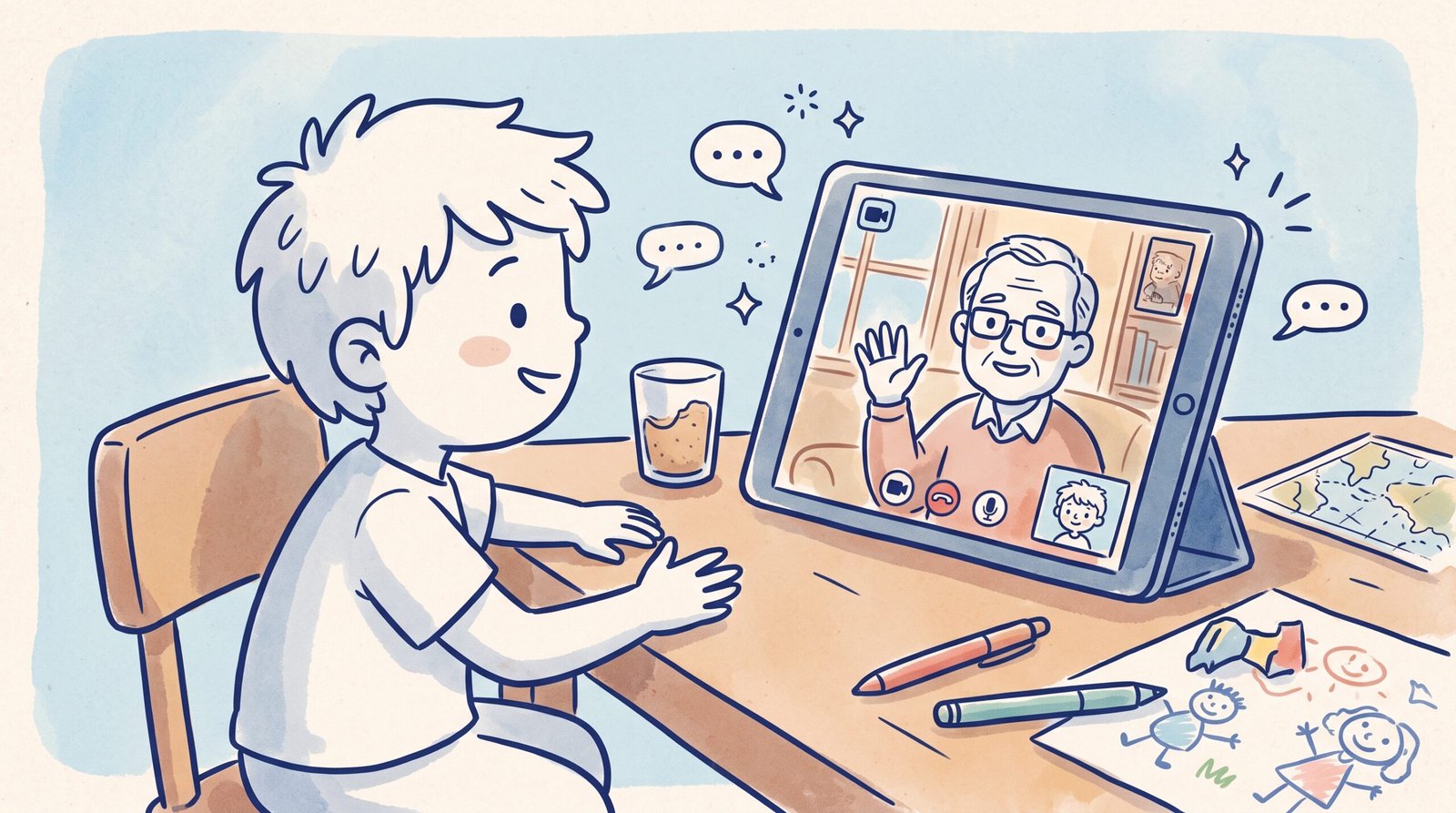
The second piece is my younger brother, Zeki’s uncle, who lives in Bali. He regularly catches up with Zeki over WhatsApp video calls in English. These are not formal lessons; they are natural, affectionate conversations between family members about things Zeki finds exciting.
Early childhood development research supports this kind of interaction. In one study investigating screen communication, toddlers aged one to two who engaged in live, responsive video chats with an adult learned new vocabulary and social patterns, whereas children who watched pre-recorded videos of the exact same adult did not.[1] Responsive, back-and-forth communication makes language meaningful in a way passive viewing rarely matches.
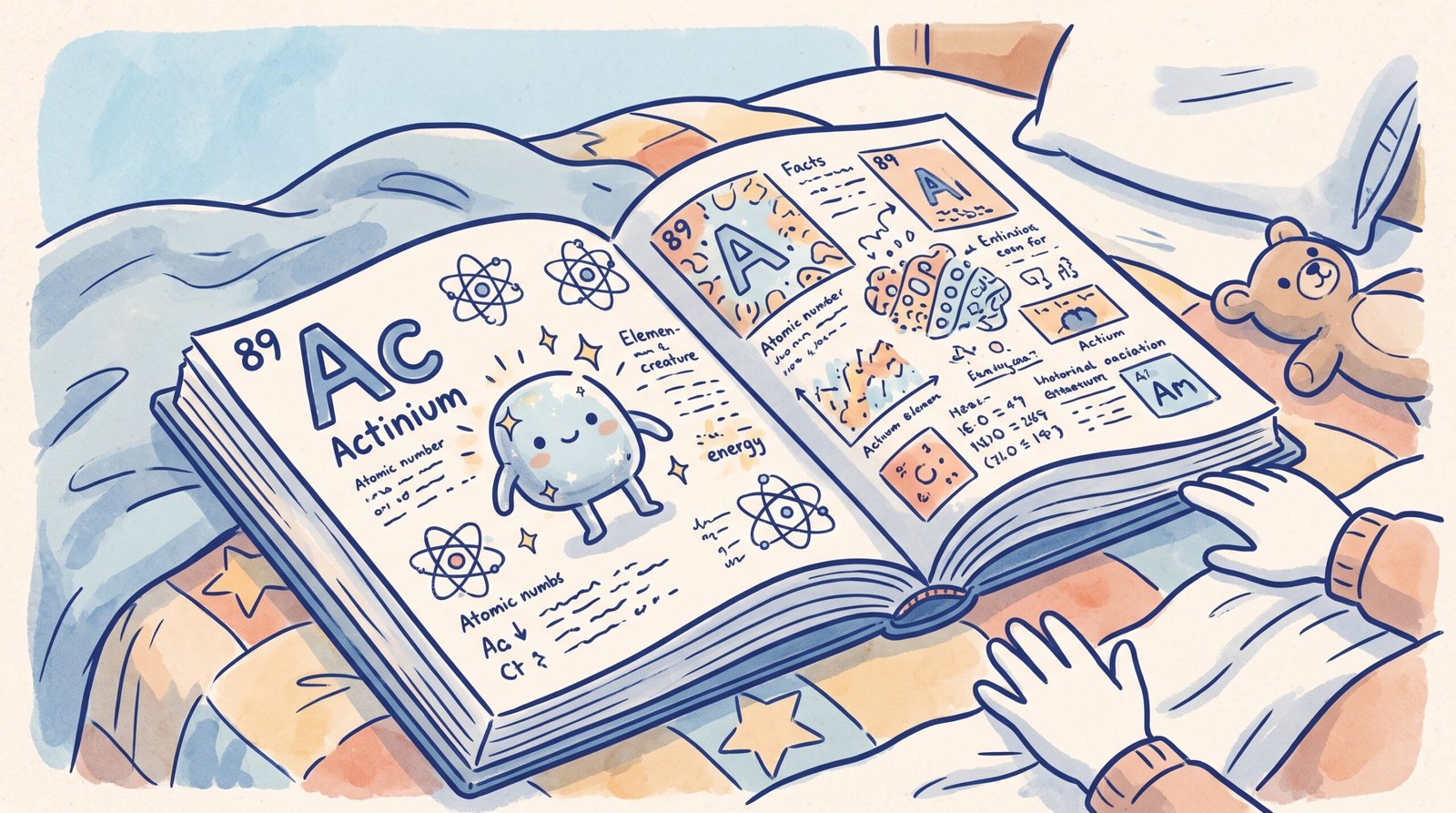
The third piece is books. His uncle continuously sends him substantial illustrated reference books packed with diagrams, elements, and astronomy. In one video, Zeki holds up an illustrated guide to the periodic table, tracing through actinium.
He also absorbs English naturally through online science videos and documentaries. Research on language acquisition shows that children regularly pick up rich second-language comprehension from subtitled media and topics they genuinely care about, even without formal instruction.[2]
Our own family experienced this journey when we relocated from Jakarta to Melbourne when my daughters were small. As I shared in what my five-year-old’s kindergarten drawings taught me about early EAL learning, children pick up new words fastest when the language helps them share something they find fascinating.
Minecraft as a Sandbox for a Child Learning English Second Language
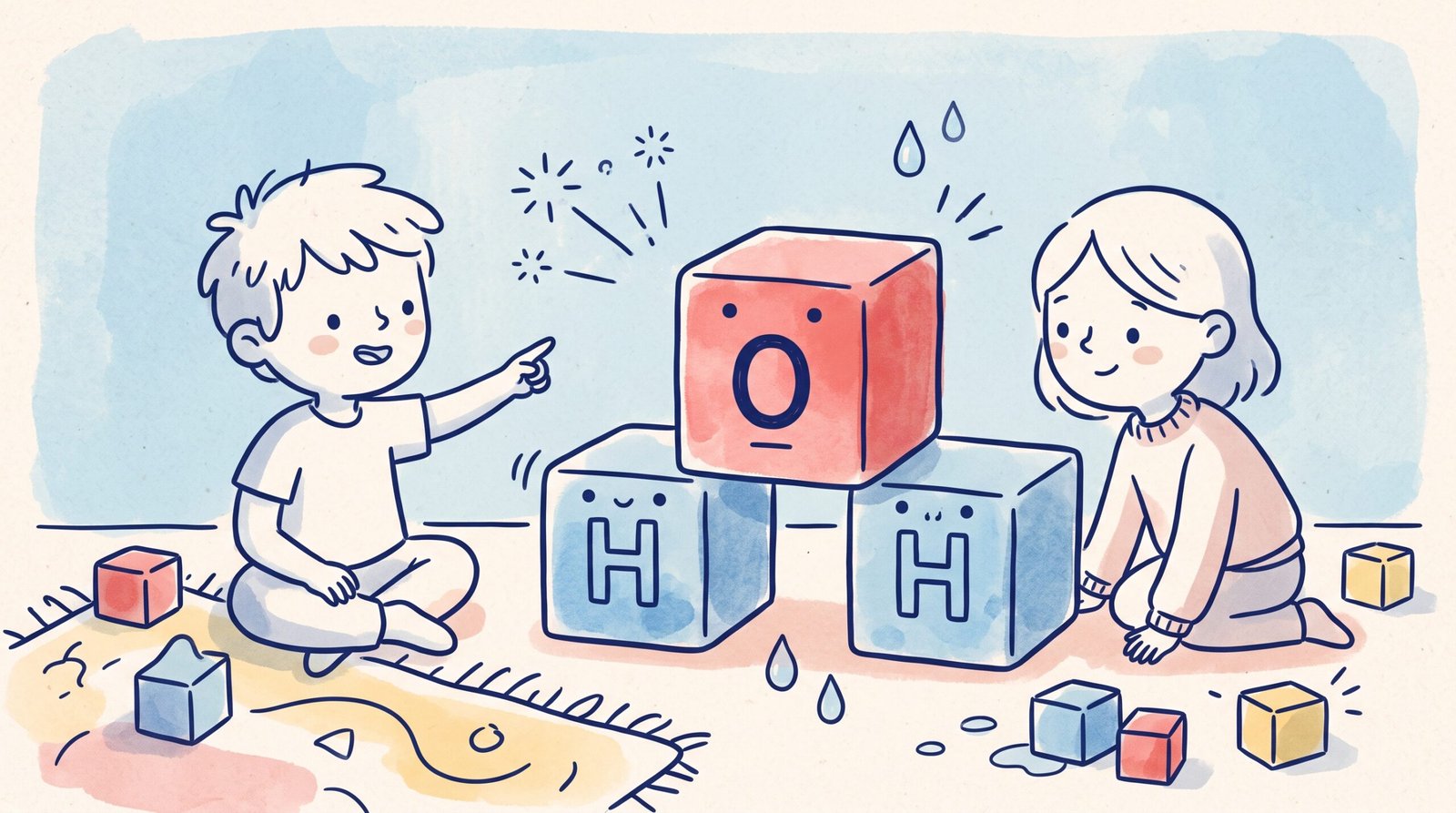
Many of Zeki’s videos are recorded within Minecraft. Rather than focusing only on building structures, he uses the game’s chemistry blocks. In one clip, he combines hydrogen and oxygen blocks to construct a water molecule, then talks through how he thinks fish breathe underwater.
He got parts of the chemistry wrong, which became the most valuable part of the video. Commenters gently explained that water molecules do not bond hydrogen atoms directly together, and that fish use gills to filter oxygen already dissolved in water rather than splitting the water molecule apart.
His parents handled the feedback thoughtfully. They replied with genuine appreciation to everyone who offered corrections, noting that Zeki is continually learning. Thousands of viewers liked their response.
In early childhood teaching, that reaction is pure gold. When a child shares their thinking aloud, mistakes are inevitable. When family members welcome corrections as a natural step in discovery, curiosity stays vibrant. That sense of safety matters far more than getting every scientific detail right on the first try.
“That Doesn’t Make Sense to Me”: Big Questions in Early Learning
One particular video highlights his thinking style beautifully.
Zeki holds open his science book to the section on actinium. He reads aloud that actinium is produced synthetically by colliding radium atoms with neutrons. Then he pauses, looks at the camera, and explains why that explanation feels incomplete: radium has 88 protons and actinium has 89. If you only introduce neutrons, where does the additional proton come from? He finishes with a genuine question: “So can someone explain?”
He is not simply reciting facts. He is evaluating new information against his current knowledge, spotting an apparent contradiction, and seeking clarification. That active enquiry is the heart of real learning at any age.
Radium-226 absorbs a neutron inside a reactor to become radium-227.[3] Because radium-227 is unstable, one of its neutrons undergoes beta decay, turning into a proton and releasing an electron. With that 89th proton formed, the atom becomes actinium. Zeki’s enquiry was spot on; the children’s book had simply omitted the nuclear decay step.
The Theory of Volcanic Future: Early Science Thinking in Action
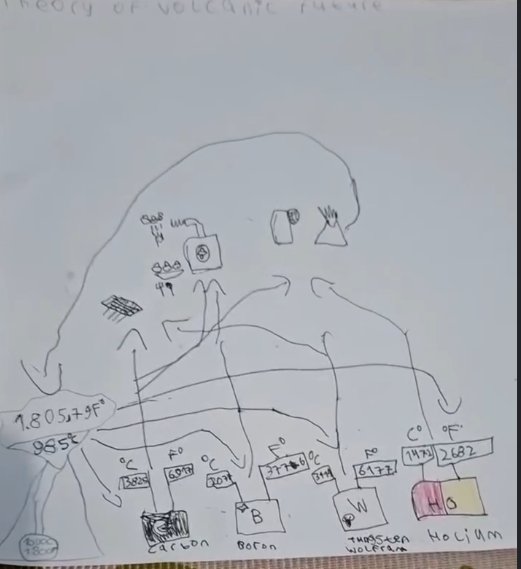
In another video, Zeki introduces what he calls his Theory of Volcanic Future.
He maps the whole concept out on a sheet of paper. His drawing shows a volcano with lava temperatures marked in Celsius and Fahrenheit, connected by arrows to elements like carbon, boron, tungsten, and holmium, alongside their respective melting points. He reasons that since certain elements withstand extreme heat, they might be harvested from volcanic activity for practical uses, such as tungsten for solar components or boron for pest management. Mid-explanation, he catches an error in his speech and quickly corrects himself.
From an industrial standpoint, harvesting minerals from active volcanoes presents obvious extreme hazards. But for a five-year-old, the value lies in the process. He synthesised information from books, drew visual relationships, articulated his hypothesis, and self-corrected along the way. That is scientific thinking emerging through play.
A Global Audience: Why Social Interaction Builds Language Skills
The comment section beneath his volcano video evolved into a global collaborative science discussion.
Viewers noted that the element he pronounced as “holium” was holmium, with many admitting they had never encountered it either. Others explained that carbon in volcanic systems largely vents as gas rather than solid deposits. An Indonesian viewer shared that tungsten is utilized in medical X-ray tubes because of its heat resistance, while another noted Roman uses of volcanic ash in ancient concrete.
Feedback arrived from many countries and linguistic backgrounds. High schoolers, university students, and parents commented on what they had learned or shared encouraging notes. A middle school student mentioned that English was also her second language and encouraged him to keep exploring.
We often talk about how learning happens through supportive social interaction. His online community became a uniquely warm example of that principle in action.
Why Genuine Interest Helps Any Child Learning English Second Language
How did English and science come together so smoothly for Zeki? My reading of the situation is that his natural fascination with science came first, and English served as the vehicle to explore it.
Educational researchers Suzanne Hidi and K. Ann Renninger describe interest as a gradual development. It begins with a situational spark in the environment. When supported by accessible materials and encouraging people, that initial spark deepens into sustained personal interest.[4]
In Zeki’s world, those supports were ready: engaging reference books, family members eager to converse, open-ended sandbox games, and adults who took his questions seriously. Nobody forced a rigid curriculum; they provided an environment where his questions could expand.
This aligns with what early childhood educators see every day: deep engagement happens when we observe what children gravitate towards and build around it, as discussed in fostering a love of learning without overcomplicating things.
What Early Childhood Research Teaches Us About Second Language Learners
Watching Zeki frequently brings Lev Vygotsky’s work to mind. During my early postgraduate studies before focusing on the Reggio Emilia approach, Vygotsky’s sociocultural perspective shaped how I look at child learning.
Vygotsky introduced the concept of the zone of proximal development: the dynamic space between what a learner can achieve independently and what they can achieve with supportive guidance from someone more knowledgeable.[5] Real growth happens right in that zone. Tasks that are too easy do not stretch the child, while tasks that are completely inaccessible cause withdrawal. The most fertile ground sits just beyond reach.
This is why comprehensive reference books can be so helpful. An illustrated guide to the periodic table stretches well past a five-year-old’s independent comprehension. But paired with supportive adults who talk through the pictures and unpack the ideas, the material becomes accessible. When Zeki asks his viewers to explain something, he is actively seeking that collaborative guidance.
How Adult Support Keeps Curiosity Growing
The term scaffolding, established in 1976 research on adult tutoring, describes how an educator supports the challenging aspects of a task so the child can focus on what they are currently mastering, gradually stepping back as competence develops.[6]
Scaffolding serves to support the learner, not replace their agency. You can see this in how commenters engage with his Minecraft videos: explaining specific biological mechanisms like gills, then leaving room for him to continue creating.
Play as a Natural Language Laboratory
Vygotsky observed that through imaginative play, a child often operates beyond their chronological age, describing the child in play as “a head taller than himself”.[5] When Zeki explains a scientific theory, he is stepping into the role of a working researcher. Play gives him the freedom to test complex terminology and concepts without fear of formal assessment.
For families, the takeaway is straightforward: introduce materials that offer a gentle challenge, stay close to explore alongside them, and gradually step back as your child takes ownership.
Why Labels Matter Less Than Everyday Curiosity
Comment sections frequently repeat terms like genius, prodigy, or future scientist, alongside IQ guesses.
While the enthusiasm is understandable, leaning heavily on labels can turn natural exploration into a high-stakes performance. When a young child is praised primarily for being exceptionally clever, being incorrect can start to feel unacceptable. That pressure can silence the very curiosity that drove their learning in the first place.
At five, development across emotional, social, physical, and cognitive domains happens at varied paces. Giving young children room to be enthusiastic, make mistakes, and enjoy childhood without performance expectations is what keeps learning joyful.
How Families Can Support a Child Learning English Second Language
While every child has their own unique temperament and learning rhythm, several practical ideas can support curiosity in any household:
Follow their questions: When your child asks how something works, lean into it together. Saying “I am not sure, let us look that up together” models lifelong enquiry far better than having an instant answer.
Connect language to genuine interests: Second-language learning thrives when anchored to topics and people children care about, whether that involves science, family catch-ups, or favourite storybooks.
Offer rich visual reference materials: Illustrated books with real diagrams give children something inspiring to stretch towards when shared with an adult.
Normalise mistake-making: Highlight the thought process rather than focusing only on getting the right answer.
Use everyday play as a testing ground: Sensory activities, building blocks, and simple setups like preschool kitchen science experiments turn everyday spaces into safe testing labs.
For bilingual and multilingual families, remember that a solid grounding in a first language provides a natural bridge to the next, as explored in how a multilingual child processes their expanding world.
Still Learning and Exploring Every Day
The comment his parents posted under that early Minecraft video remains my favourite takeaway: Zeki is still learning every day.
Children are naturally inclined to question, hypothesize, and build meaning when given the time and environment to do so. Supporting that curiosity is one of the most rewarding parts of working with young learners.
- From Jakarta to Melbourne: What My Five-Year-Old’s Kindergarten Drawings Taught Me About Early EAL Learning →
- Bilingual identity: Read about EAL, identity and belonging →
- Language foundations: Read about emergent literacy in preschoolers aged 3 to 5 →
- Simple home science: Preschool Kitchen Science Experiments With Everyday Items →
Research: an observational study of toddler learning via video calls; research on media exposure in language learning; interest development models; Vygotskian learning theory; seminal research on educational scaffolding; and isotope data from the US Department of Energy. Experience: reflections based on public video materials and family conversations. Last reviewed: October 2026.
References
- Myers, L. J., LeWitt, R. B., Gallo, R. E., & Maselli, N. M. (2017). Baby FaceTime: Can toddlers learn from online video chat? Developmental Science, 20(4), e12430. https://doi.org/10.1111/desc.12430 [60 children aged 1 to 2.]
- Kuppens, A. H. (2010). Incidental foreign language acquisition from media exposure. Learning, Media and Technology, 35(1), 65–85. https://doi.org/10.1080/17439880903561876 [Pupils in their final year of primary school in Belgium.]
- U.S. Department of Energy Isotope Program. (n.d.). Actinium-227. https://www.isotopes.gov/sites/default/files/2021-02/Ac-227.pdf
- Hidi, S., & Renninger, K. A. (2006). The four-phase model of interest development. Educational Psychologist, 41(2), 111–127. https://doi.org/10.1207/s15326985ep4102_4
- Vygotsky, L. S. (1978). Mind in society: The development of higher psychological processes (M. Cole, V. John-Steiner, S. Scribner & E. Souberman, Eds.). Harvard University Press.
- Wood, D., Bruner, J. S., & Ross, G. (1976). The role of tutoring in problem solving. Journal of Child Psychology and Psychiatry, 17(2), 89–100. https://doi.org/10.1111/j.1469-7610.1976.tb00381.x