
How to Foster a Love of Learning: 4 Powerful Ways Without Overcomplicating Things
In our household, learning how to foster a love of learning began with an uncomfortable realisation: turning every casual moment into an adult-directed lesson quietly suffocates natural curiosity. Real, enduring engagement flourished when I retired my academic binder and gave my daughters room to investigate their world without unsolicited teaching.
Understanding how to foster a love of learning taught me that children do not require engineered curricula at home; they need adults who notice what already fascinates them and have the restraint to step out of the way.
I built a full curriculum for my eldest once. She was six, right around the time I began doctoral study in early childhood education in Melbourne, with her little sister not far behind at four and a half.
It was a comprehensive curriculum binder: sequenced developmental objectives, colour-coded subject tabs, and a private sense of maternal pride that I was doing early learning properly.
It lasted roughly ten days. By the second week, my daughter grew quiet and noticeably wary whenever I pulled out “the folder.”
That is a heartbreaking thing to recognise about something you designed with complete love. She was not resisting knowledge; she was resisting having an ordinary afternoon converted into a lecture she had never requested. Realising that adult control actually works against how to foster a love of learning was a humbling turning point for me.
Many parents with academic backgrounds fall into this trap. We are trained to outline, structure, sequence, and evaluate. When seeking how to foster a love of learning, that institutional training can become an unintentional obstacle between parent and child.
In this honest reflection and guide:
The Ladybug on the Driveway: When Real Inquiry Took Over
The moment that permanently altered my perspective happened shortly after I quietly packed away the binder, motivated by exhaustion more than enlightened pedagogy.
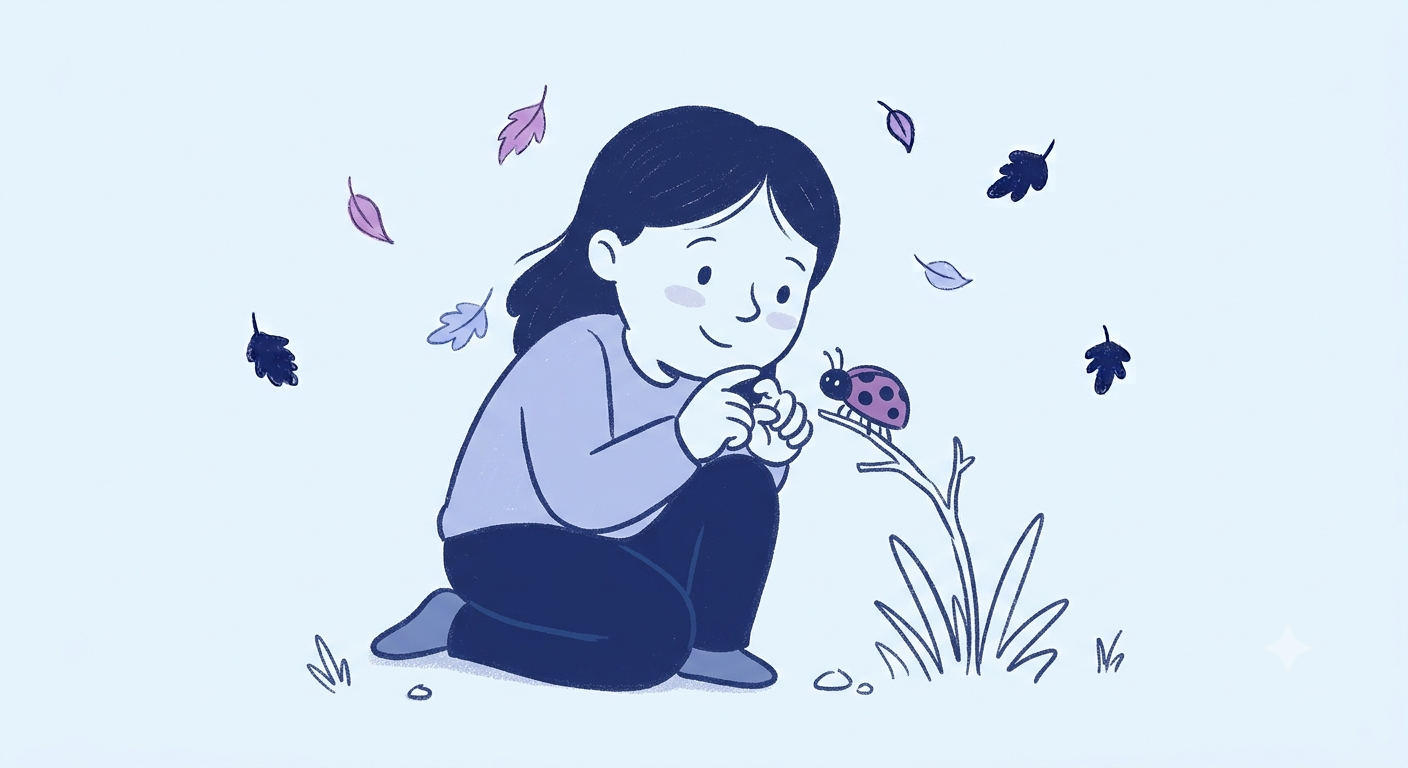
We were walking to the car on a damp morning, running late as usual, when my eldest stopped dead in her tracks to watch a tiny ladybug on the concrete.
I had zero prepared materials. No worksheet, no flashcards, and no pre-scripted questions.
She crouched down and began asking honest questions. Why does it have six legs? Where does it sleep when it rains? Can insects hear our footsteps?
I answered what I could, admitted openly when I was unsure, and we looked up the rest together that evening in a library book. It took eleven minutes on a cold driveway. I had never seen her eyes light up like that during any of my folder’s carefully scaffolded activities. That brief driveway stop showed me that discovering how to foster a love of learning starts with following genuine childhood questions.
That contrast stayed with me. A pre-planned unit fizzled within two weeks; eleven unplanned minutes on a driveway remained a cherished memory into adulthood.
Natural inquiry does not require adult scaffolding to exist. It requires breathing room.
This principle aligns with Australia’s national early childhood framework administered by ACECQA, which places child-directed inquiry and spontaneous play at the very heart of meaningful developmental outcomes.
Unlearning Academic Control: Why Restraint Takes Practice
Retiring a folder is simple; retiring the underlying instinct to over-manage is difficult.
For months afterward, I caught myself orchestrating sneaky, miniature lessons. I would turn a peaceful walk into a forced counting quiz or interrupt an imaginative storyline to correct a factual error nobody had questioned.
I also carried a lingering guilt that unstructured mornings were somehow lazy.
My younger daughter challenged my assumptions even further. Where her sister would sit motionless watching an insect, she was physical, rapid-fire, and constantly in motion, a pattern I reflect on when exploring subtle signs of ADHD in girls.
I initially worried that my child-led approach had broken down. In reality, curiosity merely looked different on her: it was physical, fast, and tactile.
Discovering how to foster a love of learning across diverse siblings meant accepting that genuine interest takes as many shapes as there are children.
The Science: Susan Engel and Alison Gopnik’s Gardener Model
Educational psychology backs up this need for adult restraint.
Psychologist Dr Susan Engel at Williams College, whose work is highlighted in Psyche’s research on nurturing curiosity, documented that young children in typical classrooms ask startlingly few questions: sometimes as few as two to five across a two-hour block, compared to dozens an hour in relaxed homes.[1]
Children do not run out of curiosity; adults inadvertently silence it by treating organic questions as interruptions to the scheduled agenda. Understanding how to foster a love of learning requires protecting those spontaneous questions before they are quieted by adult timetables.
Developmental cognitive scientist Alison Gopnik offers an illuminating metaphor in her foundational book The Gardener and the Carpenter, discussed in her interview on learning like children.[2]
The carpenter seeks to carve a raw piece of wood into a fixed, predetermined chair according to a blueprint.
The gardener, by contrast, enriches the soil, ensures sunlight, removes harmful weeds, and trusts the plants to grow into their own unique forms.
This hands-off trust also underpins Reggio Emilia practice, where, as we see in our guide on enhancing classroom creativity without extra resources, the environment acts as a silent educator that invites autonomous exploration.
The Carpenter Model vs The Gardener Model in Daily Routines
Here is how adult-driven carpentering contrasts with responsive gardening across typical daily moments:
| Daily Moment | The Carpenter Mindset (Over-Structured) | The Gardener Mindset (Child-Led) |
|---|---|---|
| 1. Morning Breakfast A child asks why milk smells sour. |
Shuts down the question to keep the school timetable moving without distraction. | Takes thirty seconds to discuss bacteria and temperature, respecting the spark before moving on. |
| 2. Evening Bath Time Water play and splashing. |
Forces educational foam letters and spelling drills into every single bath routine. | Provides cups and funnels for organic water exploration, adding questions only when invited. |
| 3. Walk to the Local Park Crossing paths with an anthill. |
Pulls the child along toward the playground equipment to complete gross motor exercise goals. | Pauses for five unhurried minutes to watch the ants carry breadcrumbs, honouring the discovery. |
| 4. Afternoon Craft Time Cardboard and scrap paper. |
Insists on step-by-step adult instructions to create a matching animal craft with one right finish. | Supplies tape, scissors, and boxes, letting the child design a fort or spaceship of their own. |
4 Powerful Ways: How to Foster a Love of Learning at Home
If you want to nurture deep, self-directed engagement without burning yourself out on complicated lesson plans, these four practical shifts show how to foster a love of learning in everyday life:
1. Give Genuine Questions 30 Honest Seconds
You do not need to create an afternoon science project every time your child asks a question.
- What to do: When your child asks why the sky is blue or how snails breathe, pause what you are doing for half a minute. Answer honestly, say “I don’t know, let’s look it up later,” and validate the thought.
- Why it works: Giving prompt attention signals that curiosity has inherent value. That short pause is the heart of how to foster a love of learning in ordinary domestic moments.
2. Set Out Low-Cost Provocations and Walk Away
Curiosity dies when an adult hovers, prompting and correcting every action.
- What to do: Leave open-ended objects on a low coffee table: pine cones, a magnifying glass, measuring tapes, or cardboard boxes like those we share in our cardboard box activities at home.
- Why it works: Unstructured materials invite tactile investigation, directly mirroring our approaches for making learning fun without breaking the bank. Setting out loose materials is a proven tactic for how to foster a love of learning without buying expensive kits.
3. Treat Footpath Wandering as Real Curriculum
An unscheduled walk to the corner post box often teaches more biology and physics than a structured workbook.
- What to do: Let your child set the walking pace. If they stop to examine a leaf for eight minutes, treat that as the destination rather than a frustrating delay.
- Why it works: Footpath expeditions awaken sensory curiosity. Pair this relaxed pacing with our simple ideas for a nature scavenger hunt for kids to let children lead the route. Experiencing the outdoors at a child’s pace demonstrates how to foster a love of learning through natural environment exploration.
4. Connect Tasks with Story Rather Than Drilling
Blank exercise sheets trigger resistance in sensitive or neurodivergent learners.
- What to do: Introduce early mark-making and pencil grip with short, imaginative narratives rather than dry repetitive lines.
- Why it works: Narrative anchors give learning personal meaning. This philosophy underpins our approach to neurodivergent literacy task initiation, transforming the starting line into an inviting doorway.
Protecting Curiosity Inside Classrooms and Busy Timetables
If you are teaching in an early learning centre or primary classroom, protecting spontaneous curiosity is undeniably more difficult than at home.
You are balancing national curriculum requirements, ratio guidelines, and rooms full of diverse needs.
You do not need to tear up your weekly timetable to honour wonder.
What helps is creating small, flexible buffers where an unexpected observation can be acknowledged: “That is an extraordinary question, Liam. Let’s write that on our wonder board so we can investigate it after lunch.”
This thirty-second validation tells every child in the room that their thoughts matter. It protects educator energy as well, helping counter parent-teacher burnout in early care. For early years teachers, knowing how to foster a love of learning inside a busy classroom comes down to validating student questions before moving on.
My daughters are grown women now. Neither remembers the colour-coded folder.
What they both remember, with vivid affection, is a ladybug crawling across our Melbourne driveway on a morning we were supposed to be somewhere else.
If you are wrestling with the impulse to do more, plan more, and teach more today, give yourself permission to step back.
Trust the child in front of you. Understanding how to foster a love of learning is not about adding more assignments; their curiosity is already alive, just waiting for you to leave the door open.
Free Printable: The Home Wonder Journal Starter
A gentle, story-based journal page designed to capture children’s spontaneous questions, drawings, and outdoor discoveries without testing or pressure.
Download the Free 3-Page Sampler- Keep everyday activities low-stress with How to Make Learning Fun Without Breaking the Bank: 4 Powerful Ways →
- Engage gross motor curiosity outdoors with our Nature Scavenger Hunt for Kids: 4 Footpath Adventures →
- Nurture focus with accessible loose parts in Cardboard Box Activities at Home: Imaginative Play →
- Build hand skills through ordinary tasks in Practical Life Activities Preschool at Home: Low-Cost Lifeskills →
- Overcome homework freeze gently using the ADHD Start Together Task Trick: 4 Powerful Ways to Help Your Child Begin →
References & Readings That Guided Me
- Engel, S. (2015). The Hungry Mind: The Origins of Curiosity in Childhood. Harvard University Press. [Extensive observational research detailing how adult instructional behaviour directly suppresses or nurtures spontaneous child question-asking].
- Gopnik, A. (2016). The Gardener and the Carpenter: What the New Science of Child Development Tells Us About the Relationship Between Parents and Children. Farrar, Straus and Giroux. [Foundational developmental framework contrasting outcome-driven carpentering with environment-building gardening].
- Bonawitz, E., et al. (2011). The double-edged sword of pedagogy: Instruction limits spontaneous exploration and discovery. Cognition, 120(3), 322–330. [Experimental proof showing that explicit teaching significantly narrows a child’s independent exploration].
- Australian Government Department of Education. (2022). Belonging, Being and Becoming: The Early Years Learning Framework for Australia (V2.0). [Curriculum benchmarks recognizing child-led inquiry, play-based exploration, and emergent interests as core learning drivers].