
How to Enhance Classroom Creativity: 4 Powerful Shifts Without Extra Resources
In early childhood services, discovering how to enhance classroom creativity began when I stepped away from academic research to work directly on the floor. Real creative agency has almost nothing to do with catalogue purchases. It thrives when educators arrange ordinary materials with intention, lower visual clutter, and step back so children can direct their own playful discoveries.
Understanding how to enhance classroom creativity proved to me that the most inventive play spaces are rarely the ones with overflowing budgets; they are the rooms where simple items are placed within easy reach.
After finishing my PhD in early childhood education, I did something a few of my academic colleagues found puzzling. Rather than moving straight into postdoctoral desk research, I went to work on the floor across several childcare centres in Melbourne’s east, having completed a Diploma alongside my doctorate.
The reasoning was straightforward in my own mind. I wanted to see what was actually true in a room full of children, not just what academic literature declared should happen. Theory and daily practice drift apart quietly without anyone noticing, and I did not want to write about early childhood design without living the daily rhythm of running a room.
Over those two years, I moved between toddler rooms and preschool rooms across Melbourne. It was not a single, settled placement. It was a deliberate, hands-on tour to observe variation in real-world environments.
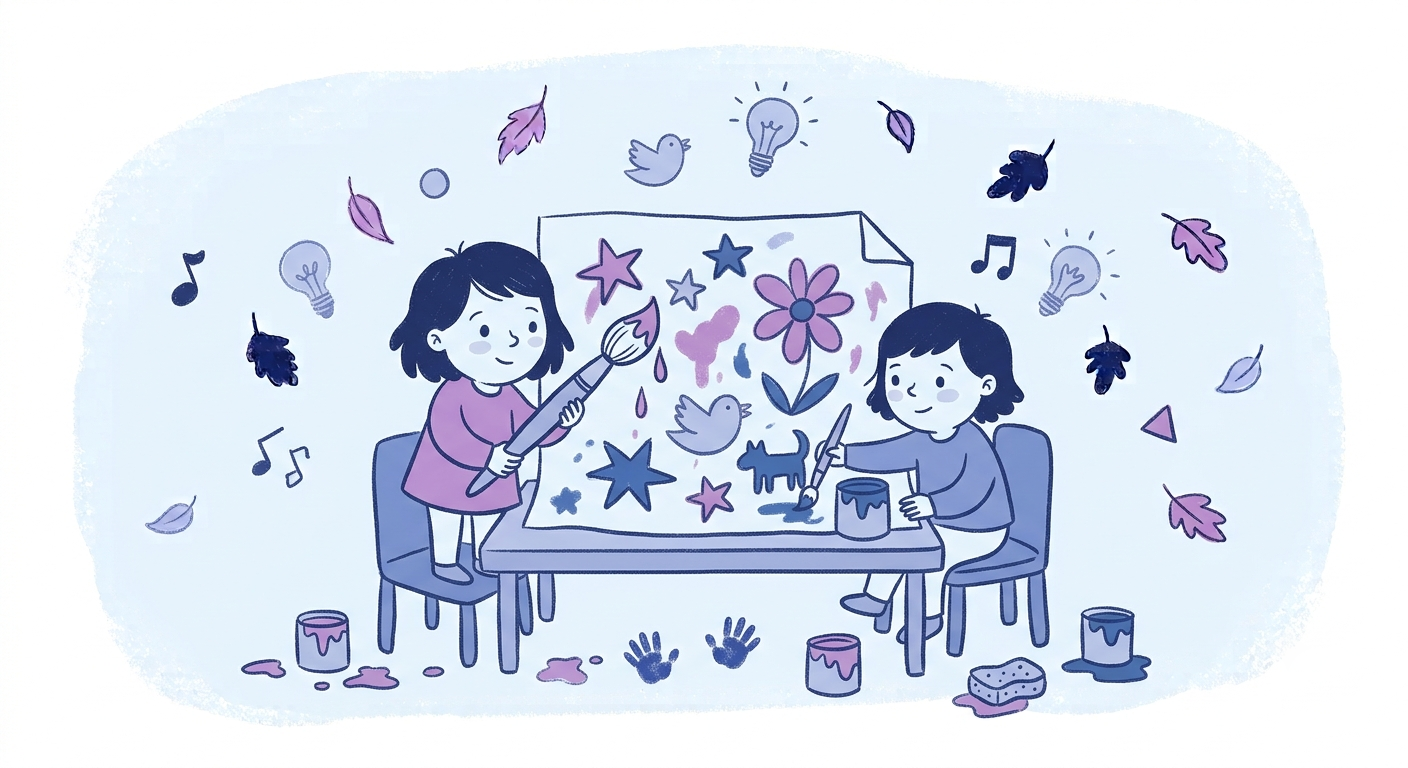
What I observed forever reshaped how I view physical design. Understanding how to enhance classroom creativity without buying new curriculum sets came down to accessibility, thoughtful spacing, and unhurried trust.
In this honest reflection and guide:
The Centre With Everything and the Room That Had Almost Nothing
One comparison from that period has stuck with me ever since. Two centres, located only a short drive apart in Melbourne, could not have looked more different on paper.
The first centre had an enviable materials budget: shelves of purpose-bought Montessori-style sets, a sensory room, and themed supplies replaced every term. The second centre was visibly leaner, furnished with second-hand timber tables, worn rug corners, and a modest supplies budget.
Walking into the well-funded centre, my initial feeling was relief. I assumed that here, figuring out how to enhance classroom creativity would be effortless because the equipment was already on hand.
Instead, that room felt strangely flat. Activities were almost entirely teacher-directed, materials were locked away in tall cupboards to prevent wear, and children cycled through rigid rotations with very little autonomy. When too many options competed for attention, children drifted aimlessly.
The leaner centre told a completely different story.
One educator there had almost no purpose-bought curriculum kits. Instead, she had arranged cardboard tubes, fabric offcuts, clean bottle lids sorted by shade, and a basket of smooth gum-nuts on low shelves with clear intention.
Children moved freely, combining materials in inventive ways that no adult had scripted. The noise in the room was productive negotiation over how to balance a bridge, not the fractured hum of boredom.
What Moving Between Age Groups Taught Me About Material Load
The comparison became even clearer as I moved between toddler and preschool rooms.
In toddler rooms, the most grounded educators kept choices minimal: a shallow basket of textured fabric, a tub of clean river stones, or a collection of light cardboard cylinders. Very young children engaged deeply when given room to transport, dump, stack, and explore physical weight, similar to the grounding principles we explore in our guide to practical life activities at home.
Overfilling a toddler space with noisy, flashing plastic items triggered sensory wandering and emotional fatigue, much like the patterns discussed in our analysis of sensory environments in early childhood.
Preschoolers needed a slightly different balance. They could sustain complex, multi-day building investigations, provided educators did not over-plan the final product.
The most capable educators laid out an inviting starting point and allowed the project to drift where children’s inquiries led, even when that meant setting aside the day’s printed plan.
Across both rooms, the lesson was the same: when educators ask how to enhance classroom creativity, the answer is to arrange the space and step back, not to arrange the space and dictate the outcome.
The Environment as the Third Teacher: Reggio Emilia in Practice
What I watched play out across those Melbourne centres has a foundation in international early childhood pedagogy.
In the Reggio Emilia approach, founded by Loris Malaguzzi in northern Italy, the physical environment is described as the “third teacher,” alongside adults and peers. A thoughtfully arranged space actively scaffolds inquiry and self-regulation, independent of budget.
Guidance published by Early Childhood Australia on the environment as the third teacher explains that physical layout communicates unwritten expectations to children about autonomy, trust, and creative freedom.
Similarly, practice insights from the National Association for the Education of Young Children (NAEYC) on emergent curriculum confirm that genuine creative reasoning emerges through children manipulating open-ended materials, rather than completing adult-directed craft exercises with a single correct finish.
Under Australia’s national early childhood framework administered by ACECQA, learning environments must be flexible, open-ended, and responsive to children’s capabilities. Knowing how to enhance classroom creativity through intentional arrangement aligns directly with that national quality standard.
Abundant Commercial Toys vs Thoughtful Open-Ended Arrangement
Understanding how raw material volume contrasts with intentional setup helps educators make rooms feel calmer without spending a cent:
| Environment Factor | The Cluttered, High-Budget Room | The Thoughtfully Arranged Low-Cost Room |
|---|---|---|
| 1. Accessibility of Materials How children obtain resources. |
Supplies kept behind high adult counters or locked in cupboards to protect inventory. | Open, low shelves with visible loose parts that children can reach independently without adult permission. |
| 2. Cognitive and Sensory Load Impact on nervous systems. |
Visual overload from bright plastic sets, crowded floor bins, and excessive decorative wall charts. | Neutral surfaces, decluttered display areas, and natural light that support regulation before learning. |
| 3. Depth of Creative Play How materials are utilized. |
Single-purpose toys with fixed rules leading to brief novelty and fast disengagement. | Open-ended natural elements and recycled items that transform into boats, bridges, or currency. |
| 4. Project Continuity Respecting children’s momentum. |
Everything packed away rigidly at the end of each hour to preserve tidy room displays. | Dedicated flat spaces where half-finished constructions remain intact for children to return to tomorrow. |
4 Powerful Shifts: How to Enhance Classroom Creativity in Real Rooms
If you are teaching in an early childhood room with a tight budget, these four zero-cost shifts will immediately deepen play:
1. Lower Materials to Child Height
Walk your room on your knees. What can a three-year-old actually see, choose, and carry without waiting for an educator’s help?
- What to do: Move everyday tools from high storage cupboards down onto low open shelving. Use open wicker baskets or shallow wooden trays so materials are visibly inviting.
- Why it works: Physical independence builds self-efficacy. When materials are reachable, children initiate creative ideas independently rather than waiting passively for an adult prompt. If you are exploring how to enhance classroom creativity on day one, start by lowering the shelf heights.
2. Rotate Materials Rather Than Stacking Them Up
Having every toy available at the same time divides focus and increases room friction.
- What to do: Pack half of your current supplies into storage. Leave out four to six curated provocations, then rotate a couple of baskets every three weeks.
- Why it works: Restricting volume deepens focus. Limiting visual clutter is one of the most effective strategies to set up low-cost sensory classrooms that protect neurodivergent learners from sensory fatigue.
3. Integrate Everyday Recycled and Natural Elements
Cardboard tubes, smooth pebbles, timber blocks, and fabric remnants offer infinite possibilities that single-purpose plastic toys cannot replicate.
- What to do: Combine natural items gathered outdoors with recycled clean containers, similar to the loose materials we highlight in our guide on nature scavenger hunts for kids.
- Why it works: Loose parts do not come with instructions. Children must formulate their own hypotheses, negotiate rules with peers, and invent physical structures from scratch. Understanding how to enhance classroom creativity with discarded boxes and pine cones saves your budget while deepening inquiry.
4. Protect Half-Finished Work Across Multiple Days
Nothing shuts down creative momentum faster than forcing children to dismantle an elaborate block city just because the clock says tidy-up time.
- What to do: Designate a flat tabletop or carpet corner as an “in-progress” zone with a small sign. Allow constructions to remain standing across several days.
- Why it works: Preserving children’s work honors their cognitive investment. Knowing their creations will be waiting tomorrow encourages multi-step planning and collaboration.
How to Tell When an Environment Is Genuinely Working
How do you know these subtle environmental shifts are taking hold?
Look for constructive mess that stems from active problem-solving, rather than scattered clutter from boredom. Watch whether children can explain what they are constructing and why, without needing to match an adult sample.
The noise level tells an honest story as well. An engaged room is rarely silent, but the sound carries a steady rhythm of negotiation and discovery, rather than erratic spikes from overstimulation.
Creating a calmer room also relieves teacher fatigue, helping prevent parent-teacher burnout in early care. When educators master how to enhance classroom creativity through spatial flow, they spend less time managing behavioral chaos and more time engaging with children.
If you are an educator feeling overwhelmed by tight budgets, take comfort in this: creative exploration does not depend on purchasing catalogues.
Rearrange what you already have, step back, and give children room to show you what is possible.
Free Printable: Classroom Environment Assessment Checklist
A simple, single-page reflective guide designed to help educators evaluate room layout, material accessibility, and sensory balance without extra administrative load.
Download the Free 3-Page Sampler- Design calming physical spaces in Low-Cost Sensory Classroom Setup: Practical Strategies for Educators →
- Support sensory balance with Calm Corner Design for Early Childhood: Designing Spaces for Felt Safety →
- Address acoustic noise in Classroom Noise Sensory Overload: 4 Powerful Ways Sound Triggers Meltdowns →
- Streamline daily routines with How to Plan Engaging Lessons Without the Stress →
- Build partnership handovers in How to Connect With Parents Without Endless Meetings: 4 Powerful Handover Shifts →
References & Readings That Guided Me
- Malaguzzi, L. (1998). History, ideas, and basic philosophy: An interview with Lella Gandini. In C. Edwards, L. Gandini, & G. Forman (Eds.), The Hundred Languages of Children: The Reggio Emilia Approach—Advanced Reflections (2nd ed., pp. 49–97). Ablex Publishing. [The foundational pedagogical premise establishing the physical environment as the third teacher].
- National Association for the Education of Young Children (NAEYC). (2015). Inspired by Reggio Emilia: Emergent curriculum in relationship-driven learning environments. Young Children, 70(5). [Evidence on open-ended materials fostering creative problem-solving and inquiry in early learners].
- Australian Government Department of Education. (2022). Belonging, Being and Becoming: The Early Years Learning Framework for Australia (V2.0). [National learning guidelines emphasizing open-ended, child-directed physical learning spaces].
- Nicholson, S. (1971). How not to cheat children: The theory of loose parts. Landscape Architecture, 62(1), 30–34. [Seminal framework showing that children’s creativity is directly proportional to the number and type of open-ended variables in an environment].