
Neurodivergent Christmas: 9 Easy Ways to Plan a Calm, Happy Day (Free Printables)
A neurodivergent Christmas goes better when children know what is coming. Visitors, noise, presents, new food and broken routines can all be a lot for autistic and ADHD children. Small steps, like a countdown, a picture plan and a quiet space, can make the day calmer for everyone.
This guide shares 9 easy ways to plan, what autistic people say helps, tips for a hot Aussie Christmas, and 4 free printables for your family.
Christmas can be wonderful. It can also be the loudest, busiest and most unpredictable day of the year. For many neurodivergent children, not knowing what comes next can be harder than the presents or the people.
In Australia, Christmas also lands at the start of the long summer break. Kinder and school routines stop. The weather turns hot. Families travel, visitors arrive and the days lose their usual shape.
If your child is autistic, has ADHD, or has sensory differences, you may already know how much all that change can cost them. You may have seen the meltdown after a big family lunch, or the child who hides under the table while everyone else opens presents.
This guide is about planning a neurodivergent Christmas that works for your child, and for you. A neurodivergent Christmas can still be joyful. It just may need a different plan. I’m a former early childhood educator with a PhD in early childhood education. I’m not a doctor or therapist. What I share here joins research, Australian autism organisations and the voices of autistic people.
- Why Christmas Can Be Hard
- What Autistic People Say Helps
- 9 Easy Ways to Plan a Calm Day
- Why Visual Plans Help
- A Hot Aussie Christmas
- Shopping and Travel
- When Things Get Too Much
- A Message for Grandparents and Visitors
- For Educators: Christmas at Kinder
- Every Family Celebrates Differently
- Free Printable: Calm Christmas Family Planner
- More Free PDFs
- FAQs
Why a Neurodivergent Christmas Can Be Hard
Christmas asks a lot of children all at once. For neurodivergent children, each of those asks can be bigger. Here are the most common reasons the season feels hard.
The routine disappears
Many autistic and ADHD children rely on routine to feel safe. Routine tells them what will happen and when. Over Christmas, meal times shift, bed times slip and whole days look different. Without that structure, the world can feel slippery.
Everything gets louder and brighter
Christmas brings flashing lights, carols, crowded shops, crackling bon bons and many voices talking at once. There are strong smells from cooking and new textures, like scratchy party clothes. For a child with sensory differences, this can add up fast.
People expect a lot socially
Relatives may expect hugs, kisses, eye contact and polite chat. Children are often asked to smile for photos, say thank you for gifts and sit at the table for a long meal. These social demands can be draining, even for children who love their family.
Surprises aren’t always fun
Wrapped presents are surprises by design. Some children love that. Others find not knowing very hard. The waiting, the excitement and the pressure to react in the right way can all build up.
Food can be a worry
Christmas menus are often full of special dishes. A child who eats a small range of foods may find nothing familiar on the table. Being pushed to “just try it” can turn a meal into a struggle.
Holding it together costs energy
Some children cope well in the moment, then fall apart later. They may hold it together at Nana’s house, then melt down in the car. This often comes from masking, which means hiding or pushing down their needs to fit in. I’ve written more about autistic masking and after school restraint collapse, which follows a similar pattern.
| What can be hard | What it might look like | What can help |
|---|---|---|
| Changed routine | Asking the same question over and over, clinginess, refusing to leave the house | A countdown and a picture plan for the day |
| Noise and lights | Covering ears, hiding, running off, getting rough in play | Ear defenders, a quiet room, softer lights |
| Visitors | Freezing, not answering, pulling away from hugs | A visitor page, and a choice of how to say hello |
| Presents | Tears, tearing paper fast, seeming ungrateful | A present plan, gift bags, opening later in private |
| Food | Not eating, leaving the table, gagging at smells | Familiar safe foods on the table, no pressure to try |
| Holding it together | A meltdown or shutdown later, in the car or at bed time | Breaks during the day, and a slow day after |
What Autistic People Say Helps at Christmas
Some of the best neurodivergent Christmas advice comes from autistic people themselves. Amaze, Victoria’s autism organisation, gathered holiday tips from autistic adults.1 Their ideas include:
- Choose an ally. Pick one family member to speak up for access needs before and during the day.
- Spread out social events. Leave calm gaps between gatherings, with quiet activities.
- Bring noise cancelling headphones, and a safe person.
- Offer opt in and opt out choices, including regular alone time that isn’t seen as rude.
- Respect comfort foods, and don’t force hugs, kisses, photos or chat.
These tips were written by autistic adults, but they translate well to children. A young child can’t always ask for an ally or a break. So it’s our job, as the grown ups, to build those things in for them.
Autism Spectrum Australia (Aspect) shares similar advice from an autistic mother. She suggests building the menu around foods your family enjoys, choosing only the traditions that matter, and setting up a quiet break space for anyone who needs it.2
9 Easy Ways to Plan a Calm Neurodivergent Christmas
You don’t need to do all nine. Pick the two or three that fit your child and your neurodivergent Christmas best. Small, steady changes often help more than a big overhaul. One of these ideas has good research behind it, and I’ll come back to it further down.
Count down the sleeps together
A visual countdown shows children exactly how long is left. Colour one bauble each night on the free 12 Sleeps Countdown. Starting on 13 December keeps the wait short enough to manage.
Make a picture plan for Christmas Day
Show the day in order: first, then, next, after that, last. Use the free Christmas Day Plan and picture cards. Look at it together a few days before, and again on the morning.
Get ready for visitors
Show photos of who is coming. Let your child choose how to say hello, like a wave, a smile or a high five. The free Visitors and Presents pages include a short story to read together.
Plan the presents
Decide when presents will be opened, and how. Some children prefer to know what’s inside, or to open gifts later in private. Amaze suggests not pressuring anyone to open gifts in front of others, or asking again and again if they like them.3
Set up a quiet space
Choose a quiet room or corner before the day. Add a cushion, a blanket, headphones and a favourite toy or book. Show your child where it is, and tell them they can go there any time. My guide to calm corner design has more ideas.
Protect the senses
Pack ear defenders or headphones. Turn flashing lights to steady, or off, in the quiet room. Let your child wear comfy, familiar clothes instead of a new outfit. Small sensory changes can make a long day easier.
Bring safe foods
Make sure there’s something on the table your child already eats. If you’re visiting, bring it with you. Let them eat without comments or pressure. Christmas isn’t the day to introduce new foods.
Plan breaks, and a way to leave
Build breaks into the day, before your child needs them. Agree on a leaving time in advance. If you’re at someone else’s house, have a plan for leaving early, without blame. The free Outing Energy Plan helps you think through before, during and after.
Plan a slow day after
Keep Boxing Day quiet if you can. Familiar food, outside play, usual bed time and no visitors. A slow day gives your child’s nervous system time to settle after the big one.
Choosing which neurodivergent Christmas ideas to start with
If you only do one thing, I’d start with the picture plan. Knowing what comes next helps with almost every other challenge on the list. If your child finds waiting hard, add the countdown. If visitors are the big worry, start there instead.
For a child whose usual routine matters a lot, the free Today Is Different Card can also help. It gives you a simple way to show that today’s plan has changed.
Why Visual Plans Help Neurodivergent Children
I mentioned earlier that one idea has good research behind it. It’s the visual plan.
A large review of autism research looked at decades of studies to find which practices have strong evidence. Visual supports were one of 28 practices that met the bar. So were social narratives, which are short stories that describe a situation and what to expect.4
That’s why the free printables in this post use pictures and short stories. The Christmas Day Plan is a visual support. The Visitors page includes a short narrative to read together.
What about children with ADHD?
There’s less research on visual supports for ADHD than for autism. But many children with ADHD find it hard to hold a spoken plan in their heads, especially when they’re excited. A picture plan they can see takes that job off their working memory.
What the research doesn’t tell us
Most of the research is about everyday routines and learning, not Christmas Day. There’s no study showing a countdown makes Christmas easier. These ideas are reasonable, gentle and low risk. But every child is different, so watch what works for yours.
You can read more about using pictures day to day in visual routine cards for ADHD kids and the daily routine for neurodivergent children guide.
A Hot Aussie Neurodivergent Christmas
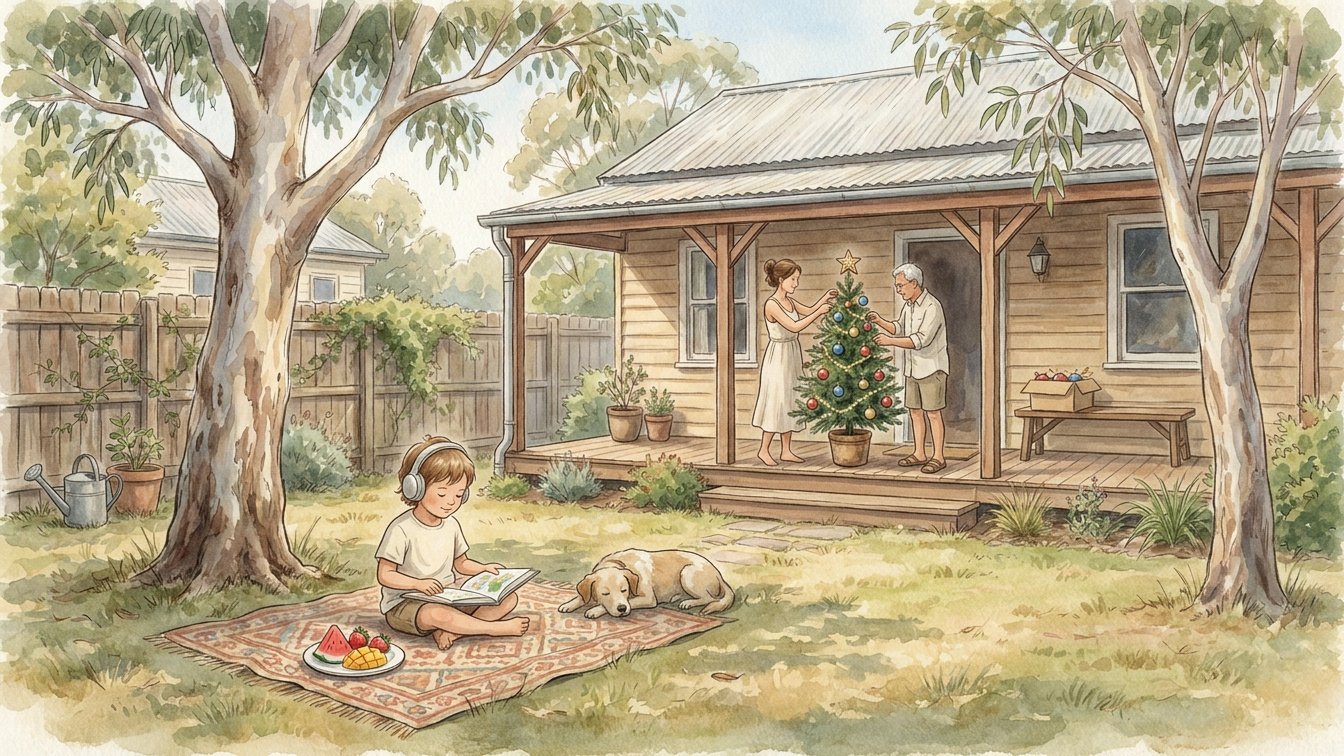
Most Christmas advice online comes from cold places. In Australia, our Christmas is hot, bright and often outdoors. That brings its own sensory challenges.
Heat and sensory load
Heat can make anyone cranky. For a child with sensory differences, sticky skin, sunscreen, hats and bright sun can all add to the load. Plan cool, shady breaks inside, and keep water close.
Sun safety, the gentle way
Better Health Channel recommends using several kinds of sun protection whenever UV is 3 or higher: covering clothes, SPF50+ sunscreen, a broad brimmed hat, shade and sunglasses.5 In Victoria, UV is often 3 or higher from mid August to the end of April.
- Practise before the day. Try the hat and sunscreen at home first.
- Let them choose. A favourite hat or a cooler sunscreen texture may go down easier.
- Use a picture. Add “sunscreen and hat” to the day plan, so it’s expected.
The beach, the pool and the backyard
Many families spend Christmas afternoon near water. Busy beaches and pools are loud and crowded. Some neurodivergent children are also drawn to water. Always keep a close eye on children near water, and agree on one adult who is watching at all times.
If a busy beach is too much, a quiet backyard with a sprinkler or a paddling pool can be just as fun. My guide to sensory overload in public covers busy places in more detail.
The long summer break
Christmas is just the start of a long break from kinder or school. Weeks without the usual rhythm can be hard. Keep a few anchors in each day, like the same breakfast, a daily walk and a steady bed time.
Neurodivergent Christmas Shopping and Travel
The weeks before Christmas bring their own challenges. Shops get busy, carols play everywhere and many families travel to see relatives.
Christmas shopping
Aspect’s holiday guide suggests avoiding crowded shopping centres from late November, and buying gifts online where you can.2 If you do need to go, try a quiet time, like early on a weekday morning. Keep the trip short, with a clear list and a clear end.
Travelling for a neurodivergent Christmas
Long drives, flights and staying in someone else’s house can all unsettle a child. Bring familiar things from home, like a pillow, a favourite cup and their usual snacks. Show photos of where you’re going, and where your child will sleep.
My guide to travelling with an autistic child has more ideas, and the free Travel Day Plan helps break the trip into small steps.
Christmas Eve
Christmas Eve can be the hardest night for sleep. Excitement, late visitors and a changed routine all collide. Keep bed time as close to usual as you can. Look at the day plan together one more time, then put it away until morning.
When a Neurodivergent Christmas Gets Too Much
Even with good planning, there may be hard moments. That doesn’t mean you did anything wrong. It means your child reached their limit.
Meltdowns are not naughtiness
A meltdown happens when a child’s nervous system is overwhelmed. It’s not a choice, and it’s not a tantrum aimed at getting something. The child needs safety and calm, not consequences.
What helps in the moment
- Move to a quieter space if you can.
- Talk less. Use short, calm words, or none at all.
- Stay close, without touching unless your child wants it.
- Lower the demands. Presents, photos and lunch can wait.
- Reconnect later, when your child is calm again.
I’ve written more about this in child meltdowns and co regulation and autistic meltdowns in public. The free Storm Plan helps you plan ahead for big moments.
Look after yourself too
Parents often carry the planning load for a neurodivergent Christmas, for the whole family. If you’re neurodivergent yourself, the noise and busyness may drain you as well. Build in your own quiet moments. A calm grown up helps a calm child.
Please note. This is general information, not medical advice. If your child’s distress is frequent, intense or getting worse, talk to your GP, paediatrician or your child’s therapist. If anyone is in danger, call 000.
A Message for Grandparents and Visitors
Many families find it helps to tell relatives about their child’s needs before the day. A short message can stop a lot of awkward moments. You could copy and change this one:
“We’re looking forward to Christmas! Just so you know, [child] finds busy days a lot. They might not want hugs, so please let them choose how to say hello. They’ll have their own food, and may take breaks in a quiet room. If they don’t answer or open presents straight away, that’s okay. Thank you for helping us make it a happy day.”
Small things visitors can do
- Let the child come to them, instead of rushing in for a hug.
- Keep voices and music a bit lower if they can.
- Choose sensory friendly gifts. Amaze suggests avoiding loud, strongly scented or flashing items, and asking the family first.3
- Don’t take it personally if the child hides, plays alone or leaves the table.
If you’re the grandparent reading this, thank you. Making space for a child to be themselves is one of the kindest gifts you can give.
For Educators: A Neurodivergent Christmas at Kinder and Care
The end of year brings concerts, parties and special days. These can be just as hard for neurodivergent children as Christmas Day itself.
- Show what’s coming. Add party days and concerts to the visual timetable a week ahead.
- Offer roles. Some children prefer to hand out programs, help with lights or watch from the side.
- Keep a quiet space open during parties and concerts.
- Make it optional. Wearing costumes, singing on stage and sitting on Santa’s knee should always be a choice.
- Share plans with families, so they can prepare at home too.
This fits with neurodiversity affirming practice, where we change the environment to fit the child, rather than expecting the child to fit the event.
Every Family Celebrates Differently
Not every family celebrates Christmas, and not every family celebrates it the same way. Some families have other festivals. Some keep the day small. Some skip the big lunch and go to the beach.
A neurodivergent Christmas doesn’t have to look like the ones in advertisements. If a quiet day at home with takeaway and a favourite movie works for your family, that’s a good Christmas. You’re allowed to drop traditions that don’t fit.
The ideas in this post also work for other big days, like birthdays, weddings and festivals. A countdown, a picture plan and a quiet space help with any day that’s different from usual.
A note on the Wobblin pages
The free countdown, day plan and visitor pages come from my Wobblin’s Calm Aussie Christmas kit. Wobblin is a soft, golden character who feels “a bit wobbly inside” when things change. Many children find it easier to talk about big feelings through a character.
Free Printable: Calm Christmas Family Planner
Plan before the day, on the day and after, all on one page.
Download the Free PDFCalm Christmas Family Planner
Small plans for a calmer, happier day.
Start the countdown
Share the day plan
Show who is coming
Plan the presents
Message family
Other:
Quiet space ready
Headphones packed
Safe foods ready
Breaks planned
Our ally:
Leave by:
A slow day
Familiar food
Time outside
Usual bed time
What worked:
Next time:
How to Use the Family Planner
- Print the planner two weeks before Christmas and stick it on the fridge.
- Tick off column 1 as you prepare, starting with the countdown.
- On Christmas Eve, check column 2 and fill in your ally and leaving time.
- Use column 3 to plan a slow day after Christmas.
- Write what worked, and keep the page for next year.
Free Christmas printables for your child
Pair the planner with the three free Wobblin printables, made for children to use:
- 12 Sleeps Countdown: colour a bauble each night and count back from 12.
- Christmas Day Plan: a first, then, next strip with 10 picture cards and 2 blank ones.
- Visitors and Presents: a short story, a who is coming page, break cards and a present plan.
More Free PDFs for a Calm Neurodivergent Christmas
More free tools are on our printables page.
- Hub: regulation and behaviour
- Busy places: overwhelming public places
- Food: eating out with an autistic child
- Travel: travelling with an autistic child
- Routines: free daily routine template
- After the day: after school restraint collapse
Neurodivergent Christmas FAQs
How do I prepare my autistic child for Christmas?
Show what’s coming with pictures. A countdown, a picture plan for the day and photos of visitors can help. Plan a quiet space, safe foods and breaks before the day.
How can I help my ADHD child stay calm at Christmas?
Keep some routine, like meals and bed time. Use a picture plan they can see, build in movement breaks and plan a slow day after. Excitement can be as tiring as stress.
Should my child have to hug relatives?
No. Let your child choose how to say hello, like a wave or a smile. Autistic people often say forced hugs and kisses are one of the hardest parts of family gatherings.
What if my child doesn’t like surprise presents?
That’s common. You can tell them what’s inside, use gift bags, or let them open presents later in private. Ask visitors not to press for a reaction.
What should I do if my child melts down on Christmas Day?
Move somewhere quieter, talk less and stay close. Lower the demands, and let presents or lunch wait. Reconnect once your child is calm.
When should we start the Christmas countdown?
For young children, 12 sleeps is often enough. Starting on 13 December keeps the wait short, while still giving time to prepare.
Research and guidance: holiday tips from autistic people and a neuroinclusive gift guide from Amaze; a holiday guide from Autism Spectrum Australia (Aspect); Hume and colleagues’ review of evidence based practices for autism; and Better Health Channel’s sun protection advice for children.
Experience: the planning ideas, printables and educator tips draw on my work as a former early childhood educator, with a PhD in early childhood education. I’m not a doctor or therapist. Every child and family is different.
This is general information, not medical advice. Last reviewed: 21 November 2026.
References
- Amaze. (2021, December 13). Holiday tips from autistic people. https://www.amaze.org.au/2021/12/holiday-tips-from-autistic-people/
- Robinson, A. (2024, November 22). Making the holidays work for everyone: A parent’s guide to an autism friendly festive season. Autism Spectrum Australia. https://aspect.org.au/blog/making-the-holidays-work-for-everyone-a-parents-guide-to-an-autism-friendly-festive-season
- Amaze. (2024, December 18). A guide to giving neuroinclusive Christmas gifts. https://www.amaze.org.au/2024/12/a-guide-to-neuroinclusive-gift-giving-at-christmas/
- Hume, K., Steinbrenner, J. R., Odom, S. L., Morin, K. L., Nowell, S. W., Tomaszewski, B., Szendrey, S., McIntyre, N. S., Yücesoy-Özkan, S., & Savage, M. N. (2021). Evidence-based practices for children, youth, and young adults with autism: Third generation review. Journal of Autism and Developmental Disorders, 51(11), 4013-4032. https://doi.org/10.1007/s10803-020-04844-2
- Better Health Channel. (2024). Skin cancer: Children. Victorian Department of Health. https://www.betterhealth.vic.gov.au/health/conditionsandtreatments/skin-cancer-children
