
After School Restraint Collapse: Why Children Fall Apart After School or Kinder, and 7 Easy Ways to Help
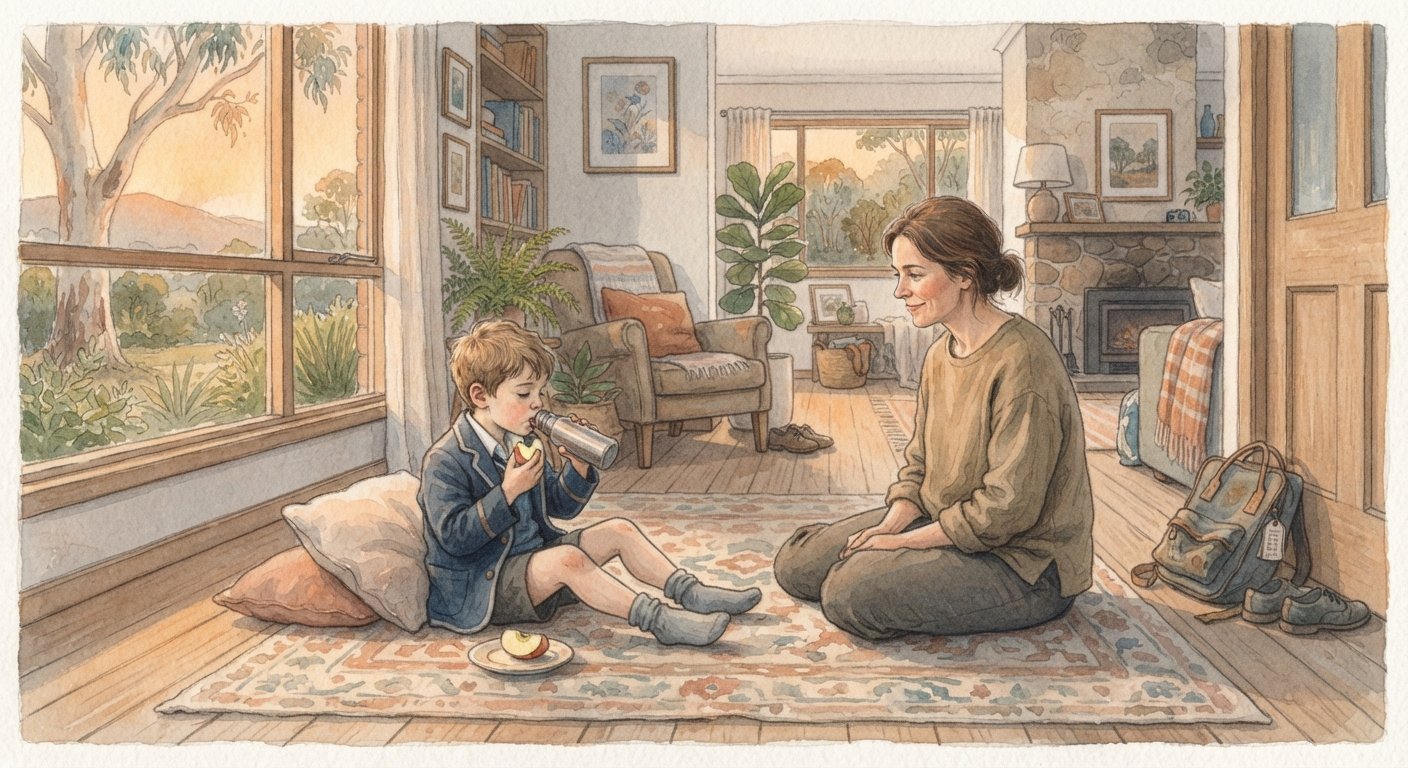
After school restraint collapse is the tears, anger, meltdowns or exhaustion many children show soon after they get home from school, kinder or childcare. They’ve spent the day holding it together. Home is safe, so the feelings come out there.
It’s a common pattern, not a diagnosis, and your child isn’t being naughty. Many children experience it, and it’s often stronger in autistic, ADHD and sensory sensitive children. This guide explains why it happens and what helps in the first hour, and includes a free After School Landing Plan and twelve related free PDFs.
When Bella started school in Melbourne, her teachers told me she was fine. At home, she was a different child.
We had moved from Indonesia in October 2010, when Bella was seven and I was starting my PhD at Deakin. Within minutes of getting home from school, there were often tears or anger. She was very hungry and very tired, and at the same time she needed to move. She ran, climbed and couldn’t keep still.
Nobody knew then that Bella had ADHD. She wasn’t diagnosed until her twenties, and I wasn’t diagnosed until my forties. Back then, I just knew that the girl her teachers described and the girl who walked through our door were not the same.
Now I have a name for what was happening: after school restraint collapse. I’m writing this as a former early childhood educator, informed by my professional development with PESI Australia, including their autism intensive training, and as a mum who lived it.
If your child is calm at school or kinder and falls apart at home, this is for you. If you’re an educator who hears “but he’s fine here”, it’s for you too.
- How This Guide Helps
- What After School Restraint Collapse Is
- Why It Happens
- Who It Affects Most
- What Research Says
- Signs at School and at Home
- After Kinder and Childcare
- 7 Easy Ways to Help
- The First Ten Minutes
- What Usually Makes It Worse
- For Educators
- Free Printable: After School Landing Plan
- More Free PDFs
- FAQs
How This After School Restraint Collapse Guide Helps
- Understand why children hold it together all day, then fall apart at home.
- Spot the signs at school, kinder and home.
- Try 7 easy ways to help, most of them free.
- Plan the landing with a free After School Landing Plan.
- Know when to get more support.
Further down, I’ll share what often matters most: the first ten minutes after pick up. When those go gently, the rest of the afternoon often goes more smoothly.
What After School Restraint Collapse Is
The phrase “after school restraint collapse” was coined by parenting counsellor Andrea Loewen Nair. It describes something parents have noticed for generations. A child keeps their feelings and energy contained all day, then lets go once they’re somewhere safe.
It’s a parenting term, not a medical diagnosis. Most children have some days like this, especially at the start of a school year, after a big change, or near the end of a long term.
| What it is | What it isn’t |
|---|---|
| A release of stress after a long, demanding day | Proof that your parenting is the problem |
| A sign your child feels safe with you | A sign your child “saves” bad behaviour for you |
| Often worse when hungry, tired or overloaded | A diagnosis of anything on its own |
| Something you can plan for | Something your child can just switch off |
Why After School Restraint Collapse Happens
A school or kinder day asks a lot of a young child. Most of it happens quietly, so adults don’t always see the effort.
- Following rules and routines set by someone else, all day.
- Sitting, waiting and taking turns, often longer than their body would like.
- Noise, light and crowds in classrooms, corridors and playgrounds.
- Social effort: working out friendships, games and unspoken rules.
- Learning new things, which is tiring even when it’s fun.
- Not eating or drinking enough, because they were busy, distracted or didn’t like the food.
- Masking: hiding stims, worries or differences to fit in.
By home time, the tank is empty. Hunger and tiredness lower it further. Then a small thing, like the wrong snack or a question about their day, tips them over.
That’s what I saw with Bella. The hunger, the tiredness and the need to move all arrived at once, the moment she was home.
Which Children Are Affected Most
Any child can have these hard afternoons. They’re often stronger and more frequent for:
- Autistic children, who may be masking, managing sensory load and decoding social rules all day.
- Children with ADHD, who may be working very hard to sit still, wait and focus.
- Sensory sensitive children, for whom a noisy room is tiring in itself.
- Children learning in a new language, who are listening and translating all day.
- Children going through change, like starting school, moving house or a new sibling.
Girls, and children who are eager to please, are often very good at holding it together. That can make the gap between school and home especially wide. See signs of ADHD in girls and autism in girls.
What Research Says About After School Restraint Collapse
There isn’t much research on after school restraint collapse as a named idea. But research on related experiences helps explain it.
A study of autistic teenage girls found they camouflaged their autistic traits more in mainstream classes, and felt less need to mask at home. The most common cost they, their mothers and their educators described was exhaustion.1 Studies of autistic adults also describe camouflaging as tiring and draining.2
It’s also well known that parents and teachers often describe the same child differently. A large review found these differences are common, and that they often reflect genuine differences between settings, not one adult being wrong.3 So “she’s fine at school” and “she falls apart at home” can both be true.
One unit in my professional development with PESI Australia, including their autism intensive training, focused on masking in autism. It reminded me that holding it together always has a cost, even for very young children, and that adults need to look for that cost rather than only the calm surface.
Evidence for specific strategies, like heavy work or snack routines, is mostly practical and experience based. I’ve kept that in mind, and the ideas below are gentle starting points, not treatments.
Signs of After School Restraint Collapse, at School and at Home
| At school or kinder, you might hear | At home, you might see |
|---|---|
| “She’s no trouble at all.” | Tears or anger within minutes of getting home |
| “He’s quiet, he just gets on with it.” | Shouting, slamming doors or refusing simple requests |
| “She’s a lovely helper.” | Running, climbing, crashing and spinning |
| “He eats well.” (but the lunchbox comes home full) | Desperate hunger or thirst |
| “They’re settling in fine.” | Exhaustion, zoning out or wanting to hide |
| “No worries at all.” | Big reactions to small things, like the wrong cup |
With Bella, I saw tears and anger, hunger, tiredness and a big need to move. Her teachers saw the calm side.
After School Restraint Collapse After Kinder and Childcare
Restraint collapse doesn’t wait for school. Many three and four year olds fall apart at pick up from kinder or childcare. Some cry the moment they see their parent. Others hold on until the car, then let go.
- Long days in care can be very tiring for little bodies.
- Transitions at pick up, like packing bags and saying goodbye, add one more demand.
- Seeing their parent is often the moment it feels safe to let go.
A crying child at pick up doesn’t mean they had a bad day. Ask the educator how the day went, and look at the whole picture. See sensory micro transitions for ideas that help with the change.
7 Easy Ways to Help With After School Restraint Collapse
Connect before you ask
A smile, a hug if they want one, or “I’m happy to see you.” Save “How was your day?” for later. Questions can feel like one more demand.
Food and water first
Bring a snack and water bottle to pick up. Choose something familiar and filling. Many children are hungrier than they realise.
Offer movement or quiet
Some children need to run, climb, jump or push. Others need a dark, quiet space. Offer a choice, and notice what helps your child.
Lower demands in the first hour
Hold off on homework, chores, reading practice or bath time. Give the first hour to landing.
Keep the landing predictable
The same simple routine each day, like snack, outside, then quiet time, helps children know what’s coming.
Talk later, side by side
Many children share more at dinner, in the bath or at bedtime. Try “What was the best bit?” or “Was anything tricky?”
Lighten the week where you can
If afternoons are hard, look at after school activities. One or two calm afternoons each week can make a big difference.
For movement ideas, see pocket heavy work cards and sensory seeking and proprioception. For quiet, see calm corner design.
The First Ten Minutes After Pick Up
This is the part I promised. The first ten minutes after pick up often set the tone for the rest of the day.
| Time | What helps | What to hold off on |
|---|---|---|
| At pick up | A calm hello, a smile, carrying their bag | Questions about their day |
| In the car or on the walk | Snack and water, quiet or soft music | Plans, reminders and errands |
| Arriving home | Shoes off, movement or a quiet spot, their choice | Homework, chores and screens as a reward |
| If they fall apart | Few words, a calm body, stay close | Lectures, consequences or “you were fine at school” |
If a meltdown happens anyway, that’s OK. It doesn’t mean you did it wrong. Stay calm and close, and talk about it later. See child meltdowns and co regulation and coregulation strategies.
Why the first ten minutes matter so much
After a long day, a child’s body is often running on empty. Hunger, thirst and tiredness all make it harder to manage feelings. A snack, a drink and a calm adult in those first minutes give their body a chance to settle before anything else is asked of them.
It also helps adults. When the plan is simple and the same every day, you don’t have to think on the spot, at the end of your own long day. The free After School Landing Plan puts this on one page.
An example landing routine
Every family’s afternoon looks different. Here’s one simple example you can adapt. The order matters more than the exact times.
| When | What happens |
|---|---|
| Pick up | “Hi, I’m happy to see you.” Snack and water in the car. |
| Home, first 20 minutes | Shoes off, then the child’s choice: trampoline, bike, digging, or a cushion and a book. |
| Next 30 minutes | Free play, or a calm activity together, like drawing or building. |
| Later | Homework or reading practice, if needed, kept short. |
| Dinner or bath | Talking about the day, side by side. |
The Movement Break Planner has more ideas for the movement part of the landing.
Talking with your child about hard afternoons
When everyone is calm, perhaps on the weekend, it can help to talk about afternoons together. Keep it light and free of blame. You might say, “After school, your body seems very tired and full. What helps you feel better when you get home?”
Children often have good ideas. Some want to be left alone for a while. Others want a cuddle, a particular snack or to jump on the trampoline. Write their ideas into the plan, so they know you listened. The My Story Page is another gentle way to hear what helps them.
Start of term, holidays and long weeks
Hard afternoons are often worse at the start of a school year, after holidays, when there’s a new teacher or classroom, and towards the end of a long term. Friday afternoons can be harder than Monday ones.
At those times, plan for more landing time and fewer extras. Expect the wobbles, and remind yourself that they usually ease as your child settles.
When evenings are hard too
A tough afternoon can spill into dinner and bedtime. If your child’s body is still buzzing at night, a calm, predictable wind down helps. The Bedtime Bridge Card gives simple steps for winding down together.
Siblings and busy households
If you’re collecting more than one child, afternoons can get crowded fast. One child may want to talk non stop while another needs silence. A younger sibling may want to play just as an older one needs space.
It can help to give each child their own landing spot, even a cushion in a different room. Stagger the snacks if that keeps the peace, and save group conversations for dinner. If two children often clash after school, plan an activity they can do side by side without needing to share, like drawing, building or bouncing on separate cushions.
Grandparents and carers who do pick up can follow the same plan. Children feel safer when the landing looks the same, whoever is there.
Is it restraint collapse or something more?
Most children have some hard afternoons. It’s worth looking more closely if the pattern is very intense, lasts for hours, happens every day for weeks, or comes with other changes. These might include trouble sleeping, stomach aches before school, not wanting to go, losing interest in things they enjoy, or saying they feel sad or worried most of the time.
These can be signs of anxiety, bullying, learning difficulties or unmet sensory or communication needs. A chat with your child’s teacher and your GP is a good first step. Bring notes of what you’ve seen, including the good days.
What Usually Makes Afternoons Harder
- A string of questions as soon as you see them.
- Rushing straight to another activity, like sport, shopping or a playdate.
- Homework or chores first, before food and rest.
- Comparing, like “Your teacher said you were good. Why are you like this now?”
- Taking it personally. It’s a release, not a judgement of you.
- Punishing the collapse, which can add shame to an already hard moment.
Boundaries still matter. If a child is hurting someone or breaking things, step in calmly to keep everyone safe. Then help them settle, and talk about it later.
Look after your own battery too
Pick up often comes at the end of your own long day. If you’re neurodivergent yourself, or running on empty, the after school hour can be hard for you as well. A snack for you, a few slow breaths in the car, or a simple plan you don’t have to think about can help. See being a parent with ADHD and the Weekly Battery Check In.
After School Restraint Collapse: For Educators
When a family says “she falls apart at home”, it’s tempting to reply “but she’s fine here”. Both can be true. A child who seems calm may be working very hard to stay that way.
- Believe families. What they see at home is important information.
- Look for quiet signs of effort, like a full lunchbox, very still bodies or children who never ask for help.
- Lower the load at the end of the day with calm, low demand activities before pick up.
- Remind children to eat and drink, especially those who get distracted or overwhelmed.
- Build in movement and quiet breaks during the day, not just when there’s a problem.
- Share small wins and worries with families at pick up, kindly and briefly.
For easier conversations with families, see connecting with parents without endless meetings. The Capacity Check Card can help children show how full their battery is during the day.
When to get more support. Talk with your GP, Maternal and Child Health nurse or your child’s teacher if after school restraint collapse is happening every day, is getting worse, involves hurting themselves or others, or comes with changes in sleep, eating, school refusal or ongoing worry or sadness. A child psychologist or occupational therapist can help work out what’s going on. If a child is in danger, call 000.
Free Printable: After School Landing Plan for After School Restraint Collapse
Arrive, move or rest, then reconnect. A simple plan for the first hour after school, kinder or childcare.
Download the Free PDFAfter School Landing Plan
Land first. Talk later.
Calm hello, no questions
Snack ready
Water bottle
Carry their bag
Quiet car or walk
Our idea:
Run or climb outside
Push, pull or carry
Quiet spot or cushion
Bath or water play
No homework yet
Our idea:
Play together
“Best bit of today?”
Talk side by side
Dinner together
Calm bedtime
Our idea:
How to Use the After School Landing Plan
- Print the plan and choose two or three ideas from each column with your child.
- Stick it on the fridge, or keep a copy in the car.
- Follow column 1 at pick up, then let your child choose from column 2.
- Leave column 3 until your child has had food, water and time to land.
- Notice what helps over a week, and adjust the plan together.
Tips for using the plan
- Let your child help choose the snack and the movement or quiet ideas.
- Share it with grandparents and carers who do pick up.
- Educators can share it with families who mention hard afternoons.
More Free PDFs for Calmer Afternoons
More free tools are on our printables page.
- Hub: Regulation and Behaviour
- Masking: autistic masking
- Skills: why your child can do it some days and not others
- Stress: fight, flight and freeze in children
- Recovery: when public places feel overwhelming
- Evenings: toddler sleep resistance and ADHD
After School Restraint Collapse FAQs
What is after school restraint collapse?
It’s the tears, anger or exhaustion many children show soon after getting home. They’ve held their feelings and energy in all day, and let go once they feel safe.
Why is my child fine at school but not at home?
Many children work hard to hold it together at school or kinder. Home is where they feel safe enough to let go. Both pictures can be true at once.
Is after school restraint collapse a sign of autism or ADHD?
Not on its own. It happens to many children. It’s often stronger in autistic, ADHD and sensory sensitive children, so talk with your GP if you have other concerns.
Does it happen after kinder or childcare too?
Yes. Many three and four year olds fall apart at pick up or in the car. Long days, transitions and seeing their parent can all play a part.
What helps most after school?
A calm hello without questions, a snack and water, a choice of movement or quiet, and low demands in the first hour. Talk about the day later.
Research and guidance: Halsall and colleagues on camouflaging by autistic girls at school; Hull and colleagues on camouflaging in autistic adults; and De Los Reyes and Kazdin on differences between parent and teacher reports. The term “after school restraint collapse” comes from parenting counsellor Andrea Loewen Nair, and isn’t a diagnosis.
Experience: Bella’s after school tears and anger, her hunger, tiredness and need to move, and her teachers saying she was fine, all in her early primary school years in Melbourne, are my own family’s experience. Bella was diagnosed with ADHD in her twenties. My professional development with PESI Australia, including their autism intensive training, informed this article.
This is educational content, not medical advice. Last reviewed: 17 November 2026.
References
- Halsall, J., Clarke, C., & Crane, L. (2021). “Camouflaging” by adolescent autistic girls who attend both mainstream and specialist resource classes: Perspectives of girls, their mothers and their educators. Autism, 25(7), 2074-2086. https://doi.org/10.1177/13623613211012819
- Hull, L., Petrides, K. V., Allison, C., Smith, P., Baron-Cohen, S., Lai, M.-C., & Mandy, W. (2017). “Putting on my best normal”: Social camouflaging in adults with autism spectrum conditions. Journal of Autism and Developmental Disorders, 47(8), 2519-2534. https://doi.org/10.1007/s10803-017-3166-5
- De Los Reyes, A., & Kazdin, A. E. (2005). Informant discrepancies in the assessment of childhood psychopathology: A critical review, theoretical framework, and recommendations for further study. Psychological Bulletin, 131(4), 483-509. https://doi.org/10.1037/0033-2909.131.4.483
