
Eating Out With an Autistic Child (or a Child With ADHD): What Families Wish Others Knew, and 6 Easy Ways to Help
Eating out with an autistic child or a child with ADHD brings together many hard parts of public life. Think noise, crowds, waiting, unfamiliar food, sitting still and strangers watching. Many families enjoy meals out with a little planning. How staff and other diners respond makes a big difference.
This article starts with a moment from your own meals out, then walks through a café scene and why restaurants can be hard. You’ll find what research says, what families wish others knew, six easy ways to help, and a free Eating Out Plan.
When Bella and Zara were small, the food was rarely the problem when we ate out. The wait was. And the noise.
Neither of my girls is autistic. Bella has ADHD, though we didn’t know until she was diagnosed in her twenties. I was diagnosed in my forties. So when we ate out as a family, two busy brains were at the table, and neither of us had words for it yet.
With both girls, the long wait for food was often the hardest part. So were busy, noisy places with lots of people. I learnt to pack our own snacks, choose quieter times and quieter seats, bring drawing things or a book, and leave early when we needed to. Nobody taught me those things. I worked them out one meal at a time, often after a meal that didn’t go to plan. Looking back, those small habits did more for our family meals than any rule about sitting nicely.
So before you read on, think back to a meal out when a child or family caught your attention. A child under the table. A child crying at the next booth. A parent walking a child up and down outside. A family who brought their own food into a café.
What did you feel? Maybe annoyance, sympathy, or worry that your own meal was being spoilt.
What did your mind tell you? Perhaps “they shouldn’t bring kids here”, “that child needs discipline” or “why are they allowed to bring outside food?”
What did you do? Did you stare, move tables, say something, or offer a smile?
Keep that moment in mind. By the end of this article on eating out with an autistic child, you might see that family a little differently.
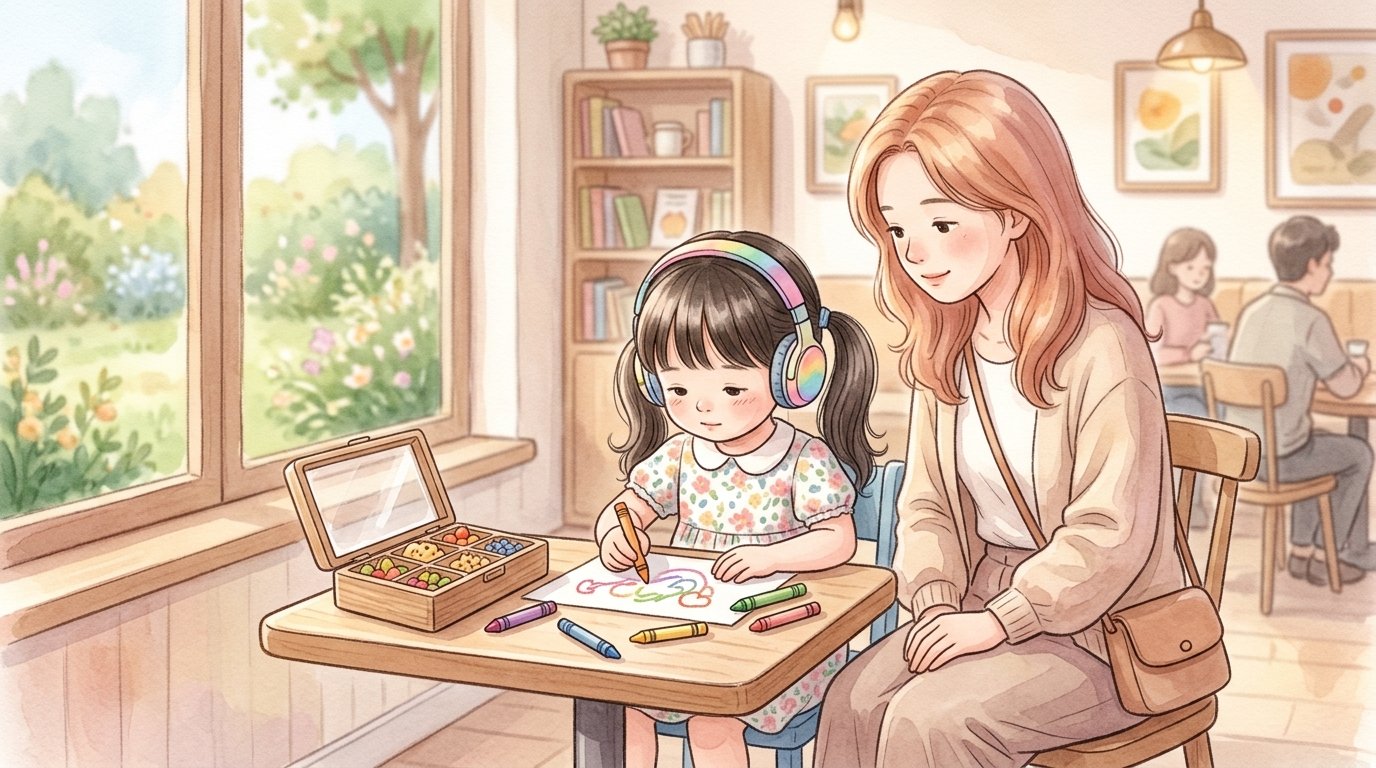
- How This Article Helps
- A Scene in a Café
- The Five Steps
- Why Eating Out Can Be So Hard
- What Research Says About Food and Waiting
- What Families Wish Others Knew
- Start Small
- Eating Out With a Child Who Has ADHD
- Planning a Meal Out, Step by Step
- When It’s Time to Leave
- What Cafés and Restaurants Can Do
- 6 Easy Ways to Help
- Free Printable: Eating Out Plan
- More Free PDFs
- Back to Your Moment
- FAQs
How This Article on Eating Out With an Autistic Child Helps
- Reflect on what you’ve seen in cafés and restaurants, and what you might not have seen.
- Understand why each part of a meal out can be hard for autistic children and children with ADHD.
- Learn what research says about food selectivity and waiting.
- Plan a meal out step by step, with a free Eating Out Plan.
- Try six easy ways to help, whether you’re another diner or a staff member.
Further down, I’ll share the single question any waiter could ask to change a family’s whole meal. It’s free, and most staff never think to ask it.
This is the sixth article in the Everyday Stories. Lived Experiences. Better Understanding. series, part of our Inclusion Beyond the Classroom hub.
Eating Out With an Autistic Child: A Scene in a Café
A general illustration of a situation many families describe, not one family’s story.
A father brings his six year old autistic daughter to a busy café on a Saturday morning. She eats only a few foods, so he orders plain toast and asks for the butter on the side.
The café is loud: a coffee grinder, clattering plates, music and a full room. The toast takes twenty minutes. When it arrives, it’s buttered and cut into triangles instead of squares.
She pushes the plate away, covers her ears and slides under the table. At the next table, a woman says loudly, “In my day, children ate what they were given.” Her friend nods. The father, cheeks burning, starts packing up.
The Five Steps: Everyday Stories. Lived Experiences. Better Understanding.
What happened
An autistic girl became overwhelmed in a noisy café after a long wait, and her toast arrived differently from what she expected. She covered her ears and went under the table. A nearby diner made a loud comment.
What did people assume
That she was a fussy, spoilt child, and that her father was too soft to make her eat what was in front of her.
What might we not understand
The noise had been building for twenty minutes. Waiting with nothing to do drained her. For many autistic children, food that looks or feels different from what’s expected can seem unsafe, not just unwanted. Going under the table was her way of shutting out a room that had become too much.
What could have helped
A quieter table away from the coffee machine. Staff who brought the toast quickly, or checked how she likes it. A diner who looked away kindly instead of commenting.
What can we learn
For some children, the plate matters less than everything around it: the wait, the noise and the eyes on them. Small changes from venues and kindness from strangers can turn a meal out from impossible to enjoyable.
Why Eating Out With an Autistic Child Can Be So Hard
A meal out is a chain of small challenges, each one adding to the last.
| Part of the meal | What can be hard | What can help |
|---|---|---|
| Arriving | A busy entrance, noise, people everywhere | Going at quiet times, booking ahead |
| Choosing a seat | Tables near kitchens, speakers or doors | A corner, a booth or outdoor seating |
| Ordering | New menus, unfamiliar food, decisions | Checking the menu online first |
| Waiting | Nothing to do, hunger, time dragging | A snack, drawing, a short walk |
| The food | Wrong shape, sauce on top, food touching | Asking for plain or separated food |
| Sitting still | Hard chairs, long meals | Short meals, movement breaks |
| Other people | Stares, comments, feeling watched | Kind staff, a quieter corner |
Sensory input is a big part of this. Restaurants can be loud, bright and full of smells. Our guide to sensory overload in public explains why that can be so overwhelming, and the Venue Sensory Snapshot helps you check a place before you go.
What Research Says About Eating Out With an Autistic Child
Food selectivity in autism
A meta analysis by William Sharp and colleagues found that autistic children were about five times more likely to have feeding problems than other children, including eating a narrow range of foods.1 Sharon Cermak and colleagues describe how many autistic children are sensitive to the texture, colour, smell or presentation of food.2
So when a child refuses toast because it’s cut the “wrong” way, it often isn’t fussiness. The change can make familiar food feel unfamiliar.
Waiting and ADHD
ADHD researchers describe “delay aversion”: many children with ADHD find waiting especially uncomfortable and try hard to escape or fill it.3 A twenty minute wait for food, with nothing to do, can feel very long to a child with ADHD.
Sensory differences
Sensory differences are part of how autism is described, and many autistic people describe noise, light and smells as overwhelming.4 Busy restaurants combine all three.
There isn’t much research on restaurants specifically. Most of what we know comes from families, autistic adults and general research on food, waiting and sensory experience. I’ve tried to be honest about that.
What Families Wish Others Knew About Eating Out With an Autistic Child
- “We’ve planned more than you think.” The family that seems unprepared has often checked the menu, chosen the time and packed snacks.
- “Outside food isn’t rudeness.” For a child who eats very few foods, bringing a safe option can be the only way to eat out together.
- “Leaving early isn’t failure.” Sometimes going home after the entrée is a success.
- “Headphones and tablets have a reason.” They can make a noisy room bearable.
- “A smile helps more than advice.” Comments, even kind ones, can add pressure.
- “Under the table might be the calmest place.” It’s a way to shut out too much noise and light.
Families of autistic children often feel judged in public. Our guide to when people judge a parent for their child’s behaviour looks at this more closely.
Eating Out With an Autistic Child: Start Small
If meals out feel impossible right now, a gentle ladder can help. Each step builds confidence before the next. Many families find eating out with an autistic child gets easier with practice in familiar, low pressure places.
| Step | What it looks like |
|---|---|
| 1. Pretend café at home | Play ordering, waiting and eating, with a menu you make together |
| 2. Takeaway pick up | Go in, order, wait a few minutes and leave |
| 3. Snack outdoors | A drink or snack at an outdoor table, quiet time of day |
| 4. Short café visit | One item each, fifteen minutes, then home |
| 5. A simple meal | A familiar place, a safe food, a planned exit |
| 6. A longer meal | Family celebrations, with breaks built in |
Move at your child’s pace. Some children stay happily at step three for a long time, and that’s fine. Pretend play at home is a lovely way to practise, much like the ideas in Vygotsky’s play theory. Stories help too. Our visual storytelling guide shows how to make a simple picture story about going to a café.
Eating Out With a Child Who Has ADHD
Eating out with a child who has ADHD brings its own challenges. The hardest part is often the waiting and the sitting still, rather than the food.
That was true for us. With both girls, the long wait for food was often when things started to unravel. Bella, with her undiagnosed ADHD, found sitting at a table with nothing to do especially hard.
| ADHD challenge | What it can look like | What can help |
|---|---|---|
| Waiting | Restless, loud, climbing, asking “when?” | Snacks, drawing, a short walk outside |
| Sitting still | Wriggling, standing up, sliding off chairs | Booths, movement breaks, shorter meals |
| Noise and busyness | Getting louder and more wound up | Quieter times and seats |
| Long meals | Falling apart by dessert | Leave before it tips over |
A few bear walks or wall pushes before you go in can help a busy body settle. See our pocket heavy work cards and ADHD behaviour strategies.
Planning for Eating Out With an Autistic Child, Step by Step
These are the things I did with my girls, plus ideas many families find helpful.
Before you go
- Choose quieter times. Early lunch or early dinner, before the rush. This was one of my main strategies.
- Check the menu online, and decide on a safe option before you arrive.
- Look at photos of the venue together, so it feels familiar.
- Pack your own food or snacks. I always did. A safe snack can bridge the wait or replace a meal that doesn’t work.
- Pack something to do. Drawing things or a book saved us many times.
When you arrive
- Ask for a quieter seat, like a corner, booth or outdoor table, away from the kitchen and speakers.
- Order your child’s food first, or ask for it to come out early.
- Ask for plain food or sauce on the side if that helps.
- Use the Sunflower lanyard if your family finds it useful. See invisible disability.
While you wait
- Bring out the drawing things or book straight away.
- Offer a snack if the wait is long.
- Take a short walk outside together if it’s building.
- Use headphones if noise is a problem.
Visual supports can help children know what’s coming. The First Then Starter Tiles work well: “First order, then drawing, then food.” See also visual routine cards.
Eating Out With an Autistic Child: When It’s Time to Leave
Leaving early when we needed to was one of the most useful things I learnt. It took me a while to stop seeing it as failure.
If a meal is tipping over, it’s okay to ask for the food to be boxed up, pay, and go. A calm exit is better than a long meltdown, for your child and for you. You can eat the rest at home or in the car.
- Watch for early signs: covering ears, getting louder, sliding off the chair, going quiet.
- Have a plan: know where you’ll go, like outside or the car.
- Keep your voice calm and low. Fewer words help.
- Try again another day. One hard meal doesn’t mean eating out won’t work.
If your child does have a meltdown, see meltdowns and co regulation and the Storm Plan.
What Cafés Can Do to Make Eating Out With an Autistic Child Easier
This is the question I promised. A waiter could ask one thing at the start of the meal: “Is there anything that would make today easier for you?” One sentence tells a family they’re welcome, at no cost at all.
| Small change | Why it helps |
|---|---|
| Offer a quieter table | Away from the kitchen, coffee machine and speakers |
| Bring children’s food first | Shortens the hardest part, the wait |
| Offer plain options | Sauce on the side, food not touching |
| Menus with photos online | Families can plan ahead |
| Quiet hours | Lower music, dimmer lights at certain times |
| Train staff in the Sunflower | Staff know when to offer help |
| Allow safe food from home | Lets children who eat few foods join in |
A later article in this series will look at how businesses can be more autism inclusive in more depth.
6 Easy Ways to Help a Family Eating Out With an Autistic Child
Give space, not stares
If a child is struggling, look away kindly. Staring adds pressure to a family already doing their best.
Hold back the advice
“Children should eat what they’re given” or “try being firmer” rarely helps. Most families have heard it before.
Offer a smile
A warm look or a quiet “you’re doing great” can mean a lot to a parent who feels watched.
Swap tables if you can
If you’re at the quiet table and a family clearly needs it, offering to swap is a lovely gesture.
For staff: ask, don’t assume
“Is there anything that would make today easier?” Then listen, and follow through.
For staff: bring food quickly and simply
Children’s food first, plain if asked, and served how the family requested. Small details matter.
When feeding is a bigger worry. If your child eats a very small range of foods, is losing weight, gags or chokes often, or mealtimes cause a lot of distress at home too, talk with your GP or Maternal and Child Health nurse. A paediatrician, dietitian, speech pathologist or occupational therapist can help. Eating out is easier when feeding is well supported at home.
Free Printable: Eating Out Plan for Eating Out With an Autistic Child
Before you go, while you wait, and if it gets too much. One page to keep in your bag.
Download the Free PDFEating Out Plan
Plan the wait. Pick the quiet seat. Leaving early is okay.
Quiet time chosen
Menu checked online
Safe snack packed
Drawing things or a book
Headphones packed
Our idea:
Quiet seat asked for
Child’s food first
Drawing or book out
Snack if it’s long
Short walk outside
Our idea:
Step outside together
Fewer, calmer words
Food boxed up
Leave early, no shame
Try again another day
Our idea:
How to Use the Eating Out Plan
- Print the plan and keep a copy in your bag or car.
- Before you go, tick column 1 together, including your child’s safe food choice.
- When you arrive, use column 2 to settle in and fill the wait.
- If it’s building, follow column 3 calmly and without shame.
- Circle your family’s best seat, and note what worked for next time.
Tips for using the plan
- Start small. A short snack at a quiet café is a great first step when eating out with an autistic child.
- Return to places that work. Familiar venues are easier.
- Share it with grandparents or anyone eating out with your child.
More Free PDFs for Eating Out and Everyday Inclusion
More free tools are on our printables page.
Back to Your Moment
Think back to the meal you remembered at the start. The child under the table. The family with their own food. The parent walking a child outside.
Maybe that family had checked the menu, chosen the time and packed snacks, just as I did. Maybe the wait had gone on too long, or the room was too loud. Maybe leaving early was their win for the day.
Next time, you’ll know a little more. And a smile, a quiet table or one kind question might be the thing that makes their meal possible.
- Hub: Inclusion Beyond the Classroom
- Previous: travelling with an autistic child
- Next in the series (coming soon): What Makes a Playground Inclusive?
- Sensory: sensory overload in public
- Hidden needs: invisible disability
- Masking: autistic masking
Eating Out With an Autistic Child FAQs
How do I prepare for eating out with an autistic child?
Choose a quiet time, check the menu online, pack a safe snack and something to do, and ask for a quieter seat. Have a plan for leaving early if needed.
Why is my autistic child so fussy about food?
Many autistic children are sensitive to the texture, smell, colour or look of food. Research shows feeding difficulties are much more common in autistic children. It’s usually sensory, not fussiness.
Is it okay to bring outside food to a restaurant for my child?
Many venues are happy to help when you explain your child eats a limited range of foods. Ask staff politely. It can make eating out possible for the whole family.
How can I help a child with ADHD wait for food?
Bring drawing things or a book, offer a snack, ask for their food first, and take a short walk outside if needed. Shorter meals at quieter times help too.
How can restaurants be more autism friendly?
Offer quieter tables, bring children’s food first, provide plain options and online menus with photos, and train staff to ask families what would help.
Research and guidance: Sharp and colleagues on feeding problems in autism; Cermak and colleagues on food selectivity; Sonuga Barke on delay aversion in ADHD; and the American Psychiatric Association on sensory differences in autism.
Experience: eating out with Bella and Zara, the long waits and noisy places, and the strategies I used (our own snacks, quieter times and seats, drawing things and books, and leaving early) are my own memories. Neither of my girls is autistic; Bella was diagnosed with ADHD in her twenties. The café scene is a labelled general illustration, not one family’s story.
This is educational content, not medical or dietary advice. Last reviewed: 15 November 2026.
References
- Sharp, W. G., Berry, R. C., McCracken, C., Nuhu, N. N., Marvel, E., Saulnier, C. A., Klin, A., Jones, W., & Jaquess, D. L. (2013). Feeding problems and nutrient intake in children with autism spectrum disorders: A meta-analysis and comprehensive review of the literature. Journal of Autism and Developmental Disorders, 43(9), 2159-2173. https://doi.org/10.1007/s10803-013-1771-5
- Cermak, S. A., Curtin, C., & Bandini, L. G. (2010). Food selectivity and sensory sensitivity in children with autism spectrum disorders. Journal of the American Dietetic Association, 110(2), 238-246. https://doi.org/10.1016/j.jada.2009.10.032
- Sonuga-Barke, E. J. S. (2002). Psychological heterogeneity in AD/HD: A dual pathway model of behaviour and cognition. Behavioural Brain Research, 130(1-2), 29-36. https://doi.org/10.1016/S0166-4328(01)00432-6
- American Psychiatric Association. (2022). Diagnostic and statistical manual of mental disorders (5th ed., text rev.). American Psychiatric Publishing.

2 Comments
Comments are closed.