
ADHD Memory: Did I Do It, or Did I Only Think About Doing It? 5 Easy Habits That Help Me
ADHD memory can leave you unsure whether you did something, or only thought about doing it. Did I lock the door? Is the stove off? Did I take my vitamin? When attention is somewhere else, the brain may not store a clear memory of the action.
This is my story at 47, what research says about memory and checking, and 5 easy habits that help me. There’s a free Did I Do It? Check Card to print for your front door.
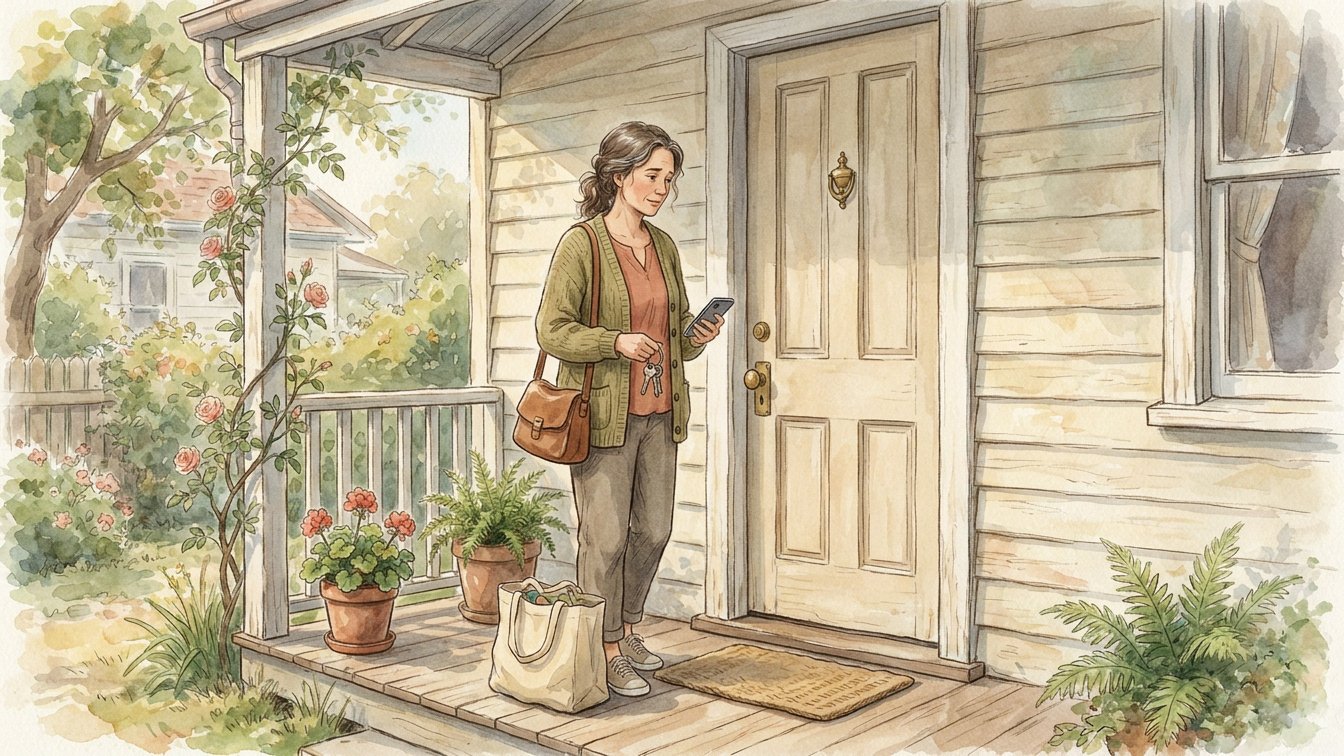
I lock the front door. I walk to the car. Then a small voice asks, “Did you lock it?” And I can’t find a clear memory of doing it.
So I walk back and check. Sometimes I check more than once.
If that sounds familiar, this post is for you. I was diagnosed with ADHD in my forties, and I’m 47 now. Lately, my memory and focus feel harder than they used to, and the “did I do it?” feeling is part of that.
I’m a former early childhood educator with a PhD in early childhood education. I’m not a doctor or a psychologist. This is my experience, alongside what research says so far.
- My Three Big “Did I Do It?” Moments
- Why ADHD Memory Works Like This
- What Research Says
- Why Checking Again Can Make Doubt Worse
- Why It Feels Worse in My Forties
- 5 Easy Habits That Help Me
- More Ideas You Could Try
- When to Talk to Your GP
- If You Live With Someone Like Me
- What This Means for Our Children
- Free Printable: Did I Do It? Check Card
- More Free PDFs
- FAQs
My Three Big “Did I Do It?” Moments With ADHD Memory
Everyone forgets things. That’s normal. What I’m describing is a little different. It’s not forgetting to do the task. It’s doing the task, then not being sure I did it.
For me, it shows up in three places most often.
1. The front door
I lock the door on autopilot. My hands know the routine so well that my head isn’t needed.
Then the question arrives. Did I lock it? I can’t find a clear picture of doing it today. So I walk back to check, and sometimes I check again.
2. The stove
The stove worry comes after I’ve left home. Suddenly, I wonder if I turned it off.
A door left open is a worry. A stove left on could be a danger.
3. My daily vitamin
I take a vitamin each day. It’s such a small, familiar job. And that’s exactly the problem.
I open the box and stop. Did I already take today’s one? My brain remembers taking it many times. It just can’t tell me if one of those times was this morning.
The feeling underneath
The tasks are small. The feeling isn’t. ADHD memory doubt can wear me down, and make me doubt myself in bigger ways.
Before my diagnosis, I blamed myself for forgotten things. Now I understand more about how ADHD memory works, and I’m learning to be kinder to myself about it. One research finding about checking surprised me most, and I’ll come back to it further down.
Why ADHD Memory Works Like This
Here is the simplest way I can explain it. To remember doing something, your brain first needs to notice you doing it. If your attention is elsewhere, the memory may never form clearly.
Autopilot tasks leave a faint trace
Locking a door, turning off a stove and taking a vitamin are all automatic. We’ve done them hundreds of times. Our hands can do them while our heads are busy.
I’ve always had a busy head. While my hands lock the door, my thoughts are often already somewhere else. The action happens, but my attention isn’t with it.
So later, when I search for the memory, there isn’t much to find. There’s a blur, not a clear picture.
Why ADHD memory blurs today with yesterday
There’s another layer. I’ve locked that door every day for years. So my brain holds many memories of locking it, and they all look much the same.
When I ask, “Did I lock it today?”, my brain finds lots of door locking memories. But it can’t easily stamp one with today’s date. That’s why the vitamin is so tricky too.
Thinking about it can feel like doing it
ADHD brains often plan ahead. I might think, “I need to turn off the stove before I go,” while I’m still cooking. Later, the memory of thinking it can feel a lot like the memory of doing it.
That’s the “did I do it, or did I only think about doing it?” problem. Both leave a trace. With a busy head, the two traces can feel alike.
| What happens | What it can feel like later |
|---|---|
| I lock the door while thinking about something else | “I think I locked it, but I can’t picture it.” |
| I plan to turn off the stove, then turn it off on autopilot | “Did I turn it off, or did I only plan to?” |
| I take my vitamin every morning | “I remember taking it. Was that today?” |
| I go back and check again and again | “Now I’m even less sure.” |
What Research Says About ADHD Memory and Doubt
I wanted to know whether research backs up what I feel, so I went looking. This is what I found, in plain words. The research is still growing, and not every study is about this exact problem.
Telling doing apart from imagining
Psychologists have studied how we tell memories of things we did apart from things we only imagined. This is often called reality monitoring.1 Usually, memories of doing something carry more detail, like sights, sounds and touch.
When we do a task on autopilot, that detail may be thin. Then the memory of doing it can look a lot like the memory of imagining it. That fits my experience closely.
ADHD and working memory
Working memory is the part of memory that holds information in mind while we use it. A large review of studies found that adults with ADHD, on average, do less well on working memory tasks than adults without ADHD.2
That doesn’t mean every adult with ADHD has poor memory. It means that, as a group, holding and tracking information is often harder.
Remembering to do things later
There’s also prospective memory, which means remembering to do something in the future. Think of “take the vitamin after breakfast.”
One study of adults with ADHD found the biggest difficulty was planning the steps of a task, not recalling the plan.3 I found that interesting. My trouble often starts before the memory is even made.
What research doesn’t tell us yet
I couldn’t find much research on the exact “did I do it?” feeling in adults with ADHD. Most of what I share here joins together research on attention, memory and checking. It’s a sensible explanation, not a settled one.
Why Checking Again Can Make Doubt Worse
I mentioned earlier that one finding surprised me most. This is it. You’d think checking the door again would settle the doubt. Often, it does the opposite.
In a well known set of experiments, people checked a pretend gas stove on a computer again and again. The more they checked, the less vivid their memories became. Their confidence dropped, even though their memory was just as accurate.4
Those studies were about checking in general, not ADHD. But they made a lot of sense to me. Each extra check adds another similar memory to the pile. Then it’s even harder to pick out the one that counts.
The ADHD memory checking loop
Here is how the loop seems to work for me:
- Attention elsewhere. I do the task while thinking about something else.
- A faint memory. The action leaves only a weak trace.
- Doubt. Later, I can’t be sure it happened.
- Worry. I picture what might go wrong.
- Checking. I go back, and the extra checking blurs things further.
For me, the worry comes after the memory problem. Anxiety can make it all louder, of course. But it doesn’t always start there.
Knowing this changed how I check. Now I try to check once, properly, and make that check easy to remember. More on that in the habits below.
Why My ADHD Memory Feels Worse in My Forties
I’ve always had a busy head. But lately, my memory and focus feel harder than before.
I’m 47, and I think perimenopause is part of it. My memory and focus feel worse lately. Stress hits faster, and I’m more tired. I wrote about all of this in ADHD and perimenopause, and the Notes Page from that post may help you track changes too.
A 2025 research review found that hormonal changes across a woman’s life can affect ADHD symptoms, mood and thinking.5 Researchers say more studies are needed. But it helped me to know I’m not imagining the change.
Tiredness plays a part too. When I’m tired, my attention drifts more easily. Then there’s even less of me present for small tasks like locking the door.
If your ADHD memory feels worse in your forties, it’s worth raising with your GP. Other things can affect memory as well, so it’s good to have them checked.
5 Easy Habits That Help My ADHD Memory
None of these are a cure. They don’t stop the doubt from coming. But they give me something solid to check against, so I can let the doubt go faster.
I say it out loud
When I lock the door, I say, “I’m locking the front door.” When I turn off the stove, I say, “The stove is off.” It feels a bit silly at first. But hearing my own voice helps the moment stick.
I take a photo
I take a quick photo of the locked door or the stove switched off. If the doubt comes later, I open my phone instead of turning the car around. The photo has the time on it, so I know it was today.
I flip or move my vitamin box
After I take my vitamin, I flip the box or move it to a different spot. When I wonder later, I look at the box. Its position tells me the answer, so my memory doesn’t have to.
I photograph where I park
At big places, like Chadstone or the airport, I photograph my car and the bay number. At a shopping centre, I also photograph the shop near the entrance I used. Coming back, I don’t have to guess.
I accept my husband’s visual reminders
My husband leaves my vitamin beside a glass of water. He puts a protein bar on top of my car keys, so I take it when I leave. These small things save me a lot of thinking.
Why these habits help my ADHD memory
Each habit does one of two things. It either makes the moment more noticeable, or it leaves proof outside my head.
Saying it out loud makes the moment more noticeable. Research on the “production effect” found that people remember words better when they say them aloud.6 That research was about word lists, not doors. But it fits why my voice seems to help.
Photos, the flipped box and my husband’s reminders leave proof outside my head. They take the job away from my ADHD memory and hand it to something I can see.
An honest note about photos
I was curious whether photos help memory, so I checked. One study found people remembered objects less well when they photographed them, compared with only looking.7
So a photo may not make me remember locking the door. But that’s not what I need it for. I need a record I can check later. For that, it works well.
About the parking photos
Big car parks are hard on my ADHD memory, because so many levels and rows look alike. The photo of the nearby shop helps me find the right entrance first. Then the car photo does the rest.
At the airport, I might be away for days. Coming back, the photo with the bay number is a gift from my past self.
About my husband’s reminders
It might look like a small thing. But he isn’t doing it because I’m failing. He’s setting up our home in a way that works with my brain.
The vitamin beside the water means I see it at the right moment. The protein bar on the keys means I can’t leave without noticing it. Neither needs me to remember anything.
More Ideas You Could Try for ADHD Memory
I don’t use these myself yet. Many people with ADHD find them useful, and some fit with the research above.
- A two second look. Pause and look at the locked door or the switched off stove. Notice it on purpose before you walk away.
- One thing at a time. Finish the task before you start thinking about the next one.
- Check once, then stop. Make one careful check, ideally with a photo. Use the photo, not another trip back.
- A pill organiser. Day labelled boxes show you at a glance whether today’s is gone.
- A checklist by the door. A short list where you can see it as you leave. Our free check card below is one option.
- A home for everything. Keys, wallet and glasses always go in the same spot.
- Phone reminders. A daily alarm for the vitamin, with a label that says what to do.
Free tools that pair well with these ideas
If you’re tracking patterns, the What I’m Noticing Diary helps you see when the doubt is worst. On heavy weeks, the Lighten the Load Planner can free up some head space. Busy outings, like big shopping centres, go better for me with the Outing Energy Plan.
A note on stove safety
If stove worry is strong for you, it may help to make the stove itself safer. Never leave cooking unattended. Some newer cooktops and appliances have timers or automatic shut off features. A smoke alarm that works is important in every home too.
Be gentle with the doubt
When the doubt arrives, I try not to argue with it. I say to myself, “That’s my ADHD memory being unsure. I have a photo. I can check it.” Then I look, and I keep going.
Some days that works straight away. Some days the worry hangs around. That’s okay too.
When to Talk to Your GP
For many people with ADHD, the “did I do it?” feeling is annoying but manageable. Sometimes, though, checking can become something bigger.
Checking taps, locks or switches over and over can be a sign of obsessive compulsive disorder, or OCD. Healthdirect says OCD may be present when obsessions and compulsions take up more than an hour a day, cause significant distress or interfere with daily life.8
ADHD and OCD are different. But some people have both, and some signs can overlap. Only a doctor or psychologist can work out what’s going on for you.
Important. This is my personal experience and general information, not medical advice. Please talk to your GP if checking takes up a lot of your day, causes you distress, or if your memory is changing in ways that worry you. If you feel overwhelmed, you can call Lifeline on 13 11 14. If you’re in danger, call 000.
What to take to your GP
- What you check, and how often.
- How long the checking and worry take each day.
- When it’s worse, like when you’re tired, stressed or rushing.
- Other changes, like sleep, mood or perimenopause symptoms.
The GP Appointment Planner can help you say everything you came in to say.
If You Live With Someone Who Has ADHD Memory Doubt
If someone you love keeps checking the door, please don’t tease them about it. They usually feel silly enough already.
Small, practical help goes a long way. My husband’s vitamin and protein bar trick is a good example. It’s quiet, kind and it works.
- Make things visible. Put important items where they’ll be seen at the right moment.
- Offer a second pair of eyes. “I saw you lock it” can settle a worry fast.
- Skip the “again?” comments. A gentle answer helps more than a sigh.
- Celebrate the systems. Photos and flipped boxes are clever, not strange.
You can also read about ADHD and forgetfulness, which covers the wider picture of forgetting in daily life.
What This Means for Our Children
My website is mostly about young children, so I always come back to them. Children with ADHD often have this same “did I do it?” uncertainty.
A child might honestly believe they packed their drink bottle. They thought about it, so it feels done. Then the bottle is still on the bench.
When that happens, it helps to remember they may not be careless or fibbing. Their ADHD memory may simply not have stored the moment clearly.
Ideas for children
- Picture checklists by the door, for the school bag or kinder bag.
- Say it and touch it. “Hat, in. Lunch box, in.” Touching each item adds detail to the memory.
- One step at a time. Short instructions are easier to hold than long ones.
- Calm, not cross. Help them check without shame.
If you’re a parent with ADHD yourself, you might be juggling your own memory and your child’s at the same time. That’s a lot. I’ve written more about it in living as a parent with ADHD.
You Are Not Losing Your Mind
The hardest part of this for me has never been the door. It’s the self doubt. “Why can’t I remember something so simple? What’s wrong with me?”
This is what I’d tell my younger self. Nothing is wrong with your caring. You check because you care about your home and your family. Your ADHD memory just needs some help to keep up.
I still have many strengths. I have lots of ideas. I love learning. I finished a PhD with this same busy head. A brain that doubts the front door can still do big things.
So now, when I stand at the door wondering, I say it out loud. I take my photo. And I walk to the car.
Free Printable: Did I Do It? Check Card
Stick it by your front door. Say it, see it, snap it, then go.
Download the Free PDFDid I Do It? Check Card
Say it out loud. Look on purpose. Take a photo. Then go.
Front door locked
Back door locked
Stove off
Windows closed
Photo taken
Other:
Monday
Tuesday
Wednesday
Thursday
Friday
Saturday
Sunday
Place:
Level:
Bay:
Near:
Car photo taken
Entrance photo taken
How to Use the Check Card
- Print the card and stick it near your front door, or keep it in your bag.
- Use column 1 as you leave. Say each one out loud as you check it.
- Tick your vitamin day in column 2, or flip the box as well.
- Fill in column 3 at big car parks, like shopping centres or the airport.
- When the doubt comes later, check your photo or the card, then let it go.
Tips for using the check card
- Laminate it, or slip it in a plastic sleeve, and use a whiteboard marker.
- Print a few, one for the door and one for the car.
- Change the list to fit your home, like adding the iron or the back gate.
More Free PDFs for Adults With ADHD
More free tools are on our printables page.
- Start here: understanding my busy mind
- Memory: ADHD and forgetfulness
- Hormones: ADHD and perimenopause
- Parenting: living as a parent with ADHD
- Feelings: alexithymia in ADHD mothers
- Ideas: plenty of ideas, hard to finish
ADHD Memory FAQs
Why can’t I remember if I locked the door?
Locking a door is an autopilot task. If your attention is somewhere else while you do it, your brain may not store a clear memory. With ADHD, attention often drifts, so this can happen more.
Is “did I do it?” doubt part of ADHD?
It isn’t an official ADHD symptom, but many adults with ADHD describe it. Research shows adults with ADHD often find working memory harder, which may help explain it.
Does checking again help?
One careful check can help. But research on repeated checking found it made memories less vivid and lowered confidence. A photo or a visible marker often works better than going back again.
Is it ADHD or OCD?
They are different, though some people have both. Healthdirect suggests OCD may be present when checking takes more than an hour a day or causes significant distress. Talk to your GP if you’re unsure.
Can perimenopause make ADHD memory worse?
Many women say it does. A 2025 review found hormonal changes can affect ADHD symptoms, mood and thinking. More research is needed, and your GP can help check other causes.
What helps most with this kind of doubt?
For me, saying it out loud, taking a photo and flipping my vitamin box help most. They make the moment stick, or leave proof I can check later.
Research and guidance: Johnson and Raye’s work on reality monitoring; Alderson and colleagues’ review of working memory in adults with ADHD; Fuermaier and colleagues’ study of prospective memory in adult ADHD; van den Hout and Kindt’s experiments on repeated checking; Kooij and colleagues’ 2025 review on hormones and female ADHD; MacLeod and colleagues’ research on the production effect; Henkel’s study on photos and memory; and healthdirect’s information on OCD.
Experience: the door, stove and vitamin moments, my husband’s reminders and my 5 habits are my own experience at 47. I’m a former early childhood educator with a PhD in early childhood education, not a medical doctor or psychologist. Every person is different.
This is general information, not medical advice. Last reviewed: 21 November 2026.
References
- Johnson, M. K., & Raye, C. L. (1981). Reality monitoring. Psychological Review, 88(1), 67-85. https://doi.org/10.1037/0033-295X.88.1.67
- Alderson, R. M., Kasper, L. J., Hudec, K. L., & Patros, C. H. G. (2013). Attention-deficit/hyperactivity disorder (ADHD) and working memory in adults: A meta-analytic review. Neuropsychology, 27(3), 287-302. https://doi.org/10.1037/a0032371
- Fuermaier, A. B. M., Tucha, L., Koerts, J., Aschenbrenner, S., Westermann, C., Weisbrod, M., Lange, K. W., & Tucha, O. (2013). Complex prospective memory in adults with attention deficit hyperactivity disorder. PLoS ONE, 8(3), e58338. https://doi.org/10.1371/journal.pone.0058338
- van den Hout, M., & Kindt, M. (2003). Repeated checking causes memory distrust. Behaviour Research and Therapy, 41(3), 301-316. https://doi.org/10.1016/S0005-7967(02)00012-8
- Kooij, J. J. S., de Jong, M., Agnew-Blais, J., Amoretti, S., Bang Madsen, K., Barclay, I., Bölte, S., Borg Skoglund, C., Broughton, T., Carucci, S., van Dijken, D. K. E., Ernst, J., French, B., Frick, M. A., Galera, C., Groenman, A. P., Kopp Kallner, H., Kerner auch Koerner, J., Kittel-Schneider, S., … Wynchank, D. (2025). Research advances and future directions in female ADHD: The lifelong interplay of hormonal fluctuations with mood, cognition, and disease. Frontiers in Global Women’s Health, 6, Article 1613628. https://doi.org/10.3389/fgwh.2025.1613628
- MacLeod, C. M., Gopie, N., Hourihan, K. L., Neary, K. R., & Ozubko, J. D. (2010). The production effect: Delineation of a phenomenon. Journal of Experimental Psychology: Learning, Memory, and Cognition, 36(3), 671-685. https://doi.org/10.1037/a0018785
- Henkel, L. A. (2014). Point-and-shoot memories: The influence of taking photos on memory for a museum tour. Psychological Science, 25(2), 396-402. https://doi.org/10.1177/0956797613504438
- Healthdirect Australia. (2024). Obsessive-compulsive disorder (OCD): Symptoms and treatment. https://www.healthdirect.gov.au/symptoms-of-ocd
