
How to Hold a Pencil Correctly: The Tripod Grip, Explained Simply
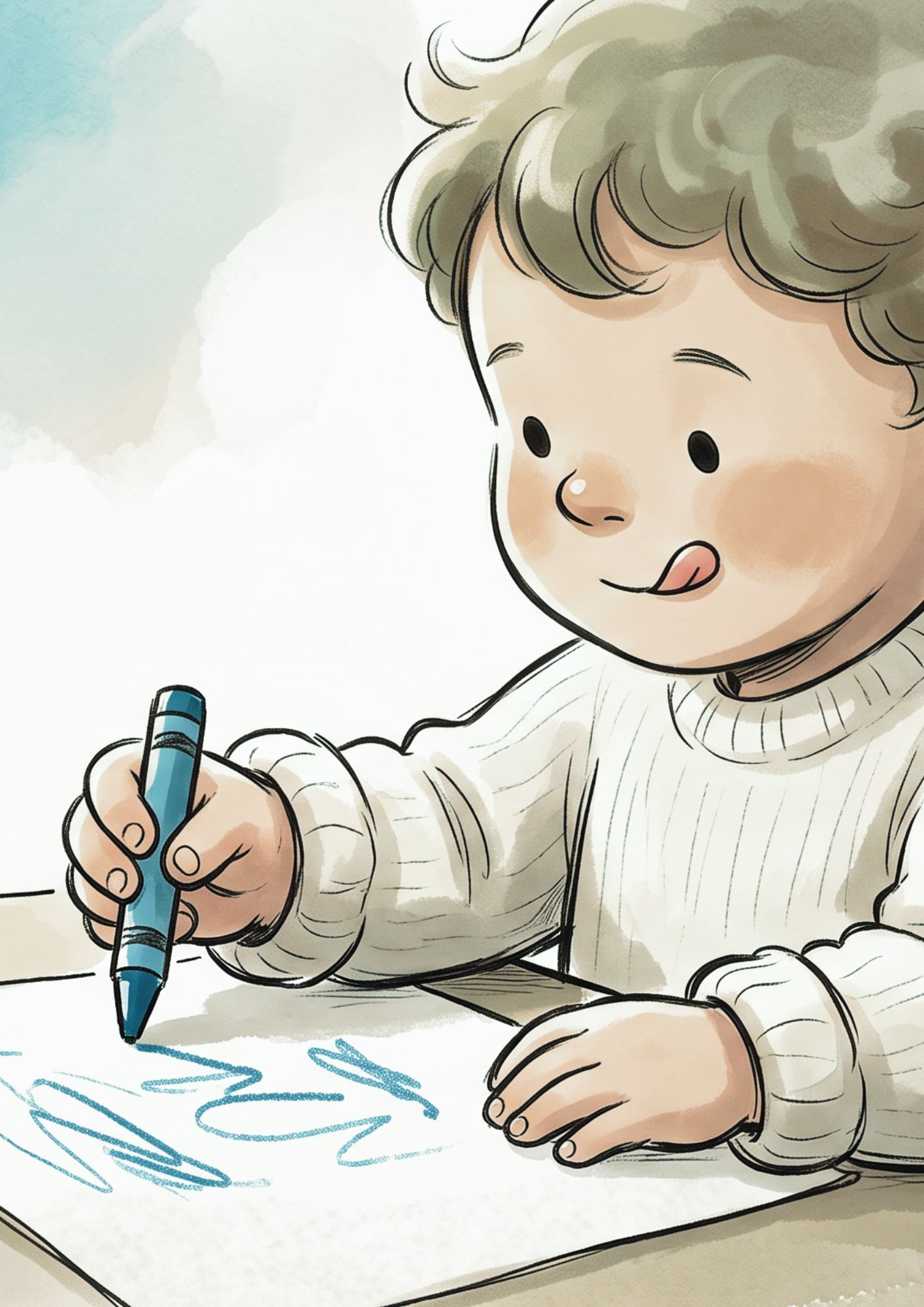
My youngest held her pencil like she was stabbing the table for a solid year. Full fist, thumb tucked under, whole arm doing the work from the shoulder. Every parenting forum I read made it sound like a five-minute fix, just show them the tripod grip and off they go. It was not a five-minute fix. It took broken crayons, a lot of patience, and honestly a bit of me backing off and letting her arm muscles catch up before her fingers could do what I was asking of them.
Pencil grip is one of those things that looks simple from the outside and turns out to have developmental stages underneath it, none of which you can skip by just telling a three-year-old to hold it “properly.” So here’s what I’ve picked up, partly from training and partly from watching two different kids get there in their own time, though every child is a little different and this is just what worked in our case.
What “correct” actually means
The grip occupational therapists and teachers are working toward is called the dynamic tripod grip, the pencil rests in the web space between your thumb and index finger, held by the tips of the thumb, index, and middle finger, with the ring and pinky finger tucked in and resting quietly against the palm. Dynamic just means the fingers themselves do the moving when writing, rather than the whole wrist or arm.
It’s called a grip and not “the” grip for a reason, though. Some children settle into a quadropod instead, four fingers rather than three, and from what I understand of the research, it tends to be treated a bit more relaxed than the internet makes it sound, a stable, comfortable four-finger grip that doesn’t seem to tire the hand isn’t necessarily something to worry over. What seems to matter more is whether the grip lets a child write for a while without their hand cramping up, rather than whether it matches a diagram exactly.
The stages before tripod
- 1 to 2 years — whole-fist grasp, thumb on top, movement comes from the shoulder
- 2 to 3 years — palmar grasp, thumb rotates down, movement comes from the elbow and arm
- 3 to 4 years — early tripod attempts begin, still often static and effortful
- 4 to 6 years — dynamic tripod settles in, fingers move independently with less strain
I mention this because I still get asked, fairly often, why a four-year-old isn’t holding a pencil “the right way” yet, and from what I’ve seen, they’re usually just where they’re supposed to be. Grip seems to be a strength and coordination milestone before it’s a compliance one, so correcting it more sternly doesn’t tend to speed up shoulder and hand strength.
That said, there does seem to be a point where gentle guidance helps more than just waiting it out, usually once a child is around three and a half to four and starting to show interest in drawing and writing on their own. From what I’ve read and seen, waiting well past that can let an awkward grip settle into a habit, and habits by age seven or eight tend to be harder to shift than a habit at four, though I’d hold that loosely rather than as a hard rule.
A few tricks that helped in our house
Broken crayons made the biggest difference for my youngest, as far as I could tell. A crayon snapped down to about an inch, maybe an inch and a half, doesn’t leave much room for a whole fist to wrap around it, so a child tends to end up pinching it almost by accident. It felt a little silly the first time I did it, snapping perfectly good crayons in half, but it seemed to work better than any verbal instruction I tried.
The alligator mouth trick is another one I go back to often. Thumb and index finger open and close like a little mouth, “chomp” onto the pencil, then let the alligator go to sleep resting against the middle finger. Kids seem to respond to the story of it more than a plain instruction, which is more or less the point.
For a child who’s already gripping too hard or too tight, tucking a small pom-pom or scrunched-up bit of tissue under the ring and pinky finger has helped in our experience. It gives those two fingers something to do, curling around an object, instead of leaving them floating and tense, which often seems to be where an overly tight grip comes from.
Before any of that, though, I’d lean toward starting with strength-building activities first, if I were doing this over again. A grip has less to hold onto if the hand behind it hasn’t built up the muscle yet, which overlaps with what we cover in our scissor skills piece, since cutting and pencil control draw on a lot of the same hand strength.
What not to worry about
Left-handed or right-handed, the tripod target is generally the same, so a left-handed grip isn’t automatically wrong, it may just need a slightly different pencil angle to stay comfortable. Grip also seems to keep shifting well into the school years for a lot of kids, so a slightly immature grip at five isn’t necessarily a red flag on its own, it’s still fairly ordinary.
Where I would pay closer attention is if a child seems to actively avoid drawing or writing altogether, or if their hand visibly tires or aches after only a minute or two. That’s less about grip technique and more a sign the underlying hand strength needs more work first, which is a “build the foundation” problem, not a “correct the grip” problem.
Where this fits into the bigger picture
Pencil grip doesn’t develop in isolation, it sits on top of the same hand strength and finger control we talk about across fine motor skills generally. If your child is still building that foundation, our story-based tracing bundle was built around exactly this, short, story-driven pencil practice that builds grip and control together, and there’s a free sample if you’d like to try it first.
References
- American Occupational Therapy Association. Pencil Grasp Development in Early Childhood.
- NAPA Center. Understanding the Tripod Grasp and Handwriting Readiness.
- ot-mom-learning-activities.com. Correct Pencil Grasp for Handwriting: Dynamic Tripod and Alternatives.
Related topics for parents
- Scissor skills by age
- Child development milestones and how children grow
- Story-based tracing printable bundle
- Hand strength activities for preschoolers
- Pre-writing skills for preschoolers
Questions parents often ask
A dynamic tripod grip usually settles in somewhere between four and six, after passing through a fisted grasp around one to two and early tripod attempts around three to four, a progression occupational therapy resources like NAPA Center describe in detail. That timeline matched what I saw with my own two, a four-year-old still working it out was never behind, just on schedule.
The tripod grip is where a pencil is held between the tips of the thumb, index, and middle finger, with the ring and pinky finger tucked in against the palm. Dynamic just means the fingers themselves move the pencil rather than the whole wrist doing the work, a distinction I didn’t fully understand myself until I started digging into why my daughter’s grip looked “right” but still tired quickly.
Snapping a crayon down to about an inch, the alligator mouth trick, and tucking a small pom-pom under the ring and pinky finger are all techniques occupational therapy resources like OT Perspective recommend, and they were the ones that actually worked in our house too, though building hand strength first mattered more than any single trick.
A stable four-finger quadropod grip is generally considered just as functional as a three-finger tripod, according to OT Perspective’s writing on grip development, so it isn’t automatically something to correct. What matters more, in my experience and in what the research says, is whether a child can write for a while without their hand cramping, not whether it matches a diagram exactly.