
Early EAL Learning: How Moving Climates Build Environmental Vocabulary
Our journey with early EAL learning began the moment we stepped off the plane in Melbourne, swapping the warm, predictable rhythms of Jakarta for a cold October drizzle. Back in Jakarta, weather was a simple concept. You had the dry season, when the heat sat thick in the air, and you had the wet season, when torrential rain would hammer down for an hour before the sun broke through again. Clothing was equally straightforward. Thin cotton shirts, shorts, and sandals were all we ever needed.
When our family moved to Melbourne in October 2010 so I could start my doctoral degree, the climate shock was immediate. Melbourne weather is famous for delivering four seasons in a single afternoon, but to a five year old girl from the tropics, it was baffling.
Zara was born at the end of December 2005. When she entered an Australian kindergarten classroom in February 2011, she was barely five years old, making her one of the youngest children in the group. She was navigating a brand new culture, a room full of English speakers, and an environment where the weather changed constantly.
As a mother balancing university seminars, late night study, and part time work, I worried about how she would manage this shift. In early EAL learning, language acquisition is not just about picking up words like cold or rain. It is about understanding entirely new concepts. How do you explain autumn leaves or winter jumpers to a child who had lived her whole life in tropical warmth?
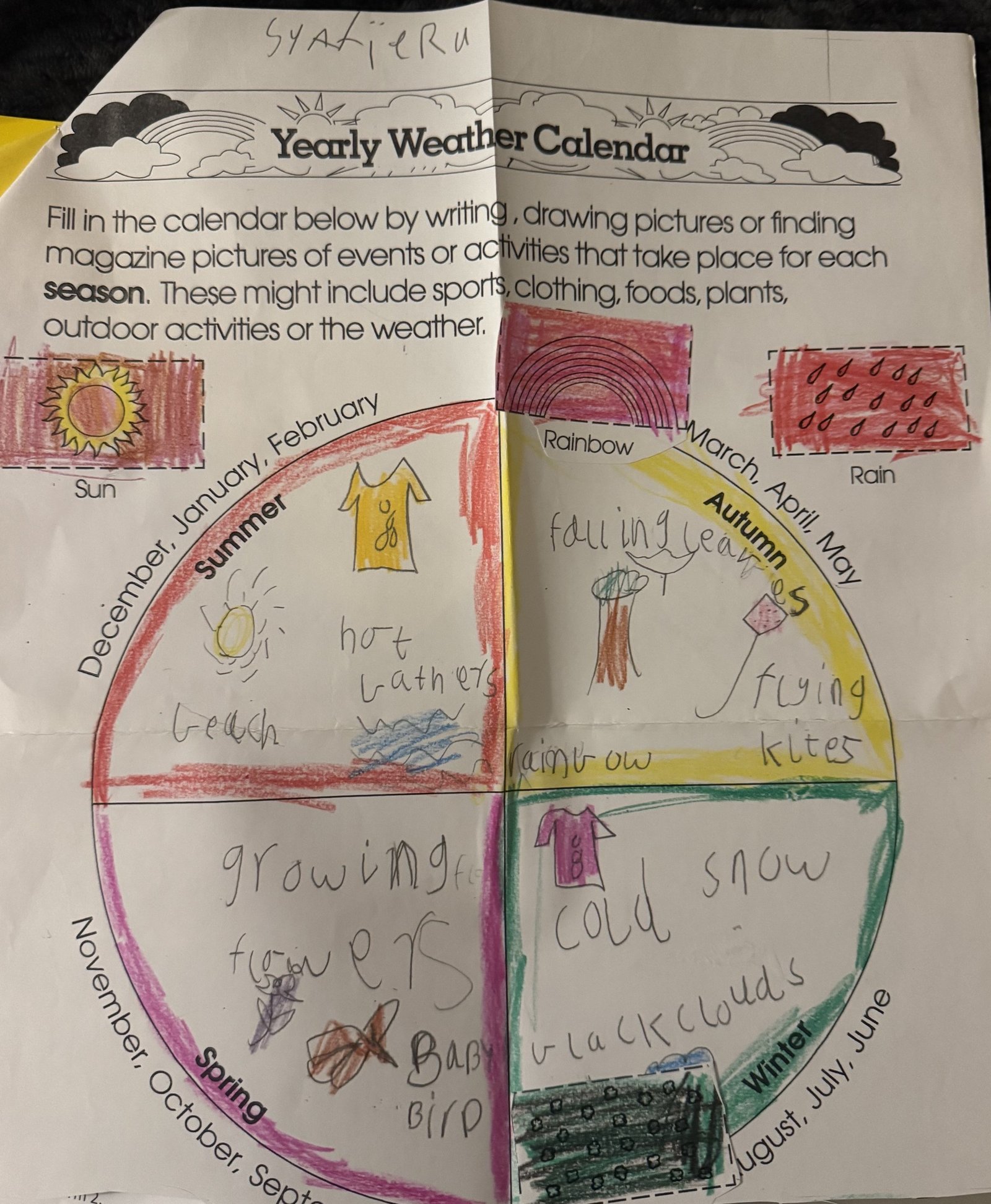
The answer came home in her school portfolio a few months later, captured on a single sheet of paper called the Yearly Weather Calendar.
The Cultural Shift from Tropical to Temperate in Early EAL Learning
When a child begins their early EAL learning journey in an Australian school, educators often focus on basic classroom commands and everyday greetings. But environmental vocabulary carries a massive cognitive load, especially for families arriving from equatorial regions.
Look at how Zara mapped out her new understanding of Melbourne’s seasons on her calendar wheel:
- Summer (December, January, February): She coloured the segment red, drawing a yellow sun, a bright t-shirt, and writing “Sun”, “Beach”, and “hot wathers” (hot weather).
- Autumn (March, April, May): In the yellow section, she drew a tall brown tree with leaves falling off, a pink kite, and wrote “falling leaves”, “flying kites”, and “a rainbow”.
- Winter (June, July, August): In the green quarter, she drew a heavy purple jumper, dark clouds, rain, and scribbled a dense black storm box, writing “cold”, “snow”, and “black clouds”.
- Spring (September, October, November): In the pink quarter, she drew a blooming purple flower, a brown nest, and wrote “growing flowers” and “baby bird”.
This drawing was far more than an art exercise. It was evidence of her mind building a brand new conceptual framework. She was discovering that in Melbourne, the months of December, January, and February meant sweltering summer days at the beach, while June brought dark, freezing afternoons that required heavy jumpers.
The Victorian Early Years Learning and Development Framework (VEYLDF) emphasizes that children construct learning by connecting new experiences to their existing cultural understanding.[1] For Zara, drawing gave her a safe medium to cross that bridge. She did not need to translate Indonesian words directly into English. Instead, she used colour, imagery, and simple labels to anchor her observations.
Using Art as Cognitive Scaffolding for Early EAL Learning
In early childhood pedagogy, we often refer to Jerome Bruner’s stages of representation. Bruner explained that children process knowledge first through physical action (enactive), then through visual images (iconic), and finally through abstract symbols like written words (symbolic).[2]
In early EAL learning, skipping straight to the symbolic stage by asking a child to write sentences about autumn or winter can cause cognitive freeze. The child has to process the new language mechanics alongside a physical environment they are still making sense of.
By giving Zara a circular wheel split into four distinct colour coded sections, her teacher provided ideal visual scaffolding. The iconic representation (her drawing of the falling leaf or the purple jumper) gave her brain an immediate hook. Once the picture was down on paper, writing the words “falling leaves” or “cold” became a natural labeling process rather than a stressful test.
This visual approach aligns closely with the EAL Companion to the Victorian Curriculum, which highlights the critical role of visual supports, graphic organisers, and contextual diagrams in supporting multilingual students.[3]
Building Environmental Word Power at Home
Seeing Zara’s progress through this activity taught me that early EAL learning does not require structured grammar drills at home to build strong English vocabulary. What children need are authentic, low pressure experiences connected to visual context.
If you are supporting a child who is learning English as an additional language, especially after moving to a new climate, here are practical ways to build environmental language through daily life:
1. Connect Words to Real Textures
When you walk to the local park or head out for groceries, notice the weather together physically. Feel the cold air on your cheeks, touch the damp grass after morning rain, or crunch dry autumn leaves underfoot. Pair those physical sensations with simple, descriptive English words: “crunchy leaves”, “cold wind”, or “bright sunshine”.
2. Use Morning Clothes Sorting as Language Practice
Getting dressed in the morning is a fantastic daily routine for early EAL learning. Talk through choices based on the weather outside: “It is cold today, so we need our warm jumpers and raincoats.” Sorting clothes into summer bathers versus winter coats gives language a concrete, practical purpose.
3. Celebrate Phonetic Attempts
On Zara’s wheel, she wrote “hot wathers” for hot weather. I did not pull out an eraser or correct her spelling. Linguist Stephen Krashen demonstrated that when an adult over corrects early language attempts, it raises the child’s “Affective Filter”, causing anxiety and shutting down their willingness to communicate.[4] Her attempt was phonetically logical and showed she was listening carefully to the English sounds around her.
4. Keep the Home Language Strong
While Zara was participating in early EAL learning activities at school, we continued to talk, tell stories, and share our family life in Indonesian at home. Professor Jim Cummins established that a child’s conceptual foundation in their primary language directly supports their ability to acquire a second language.[5] Knowing the concept of weather and seasons in her first language allowed Zara to transfer that understanding smoothly into English.
Explore Visual Learning Resources
Download our free Visual Tracing & Drawing Sample, created with simple layouts, high contrast lines, and plenty of space for early EAL learners to draw their ideas first.
Download Free Printable Sample (PDF)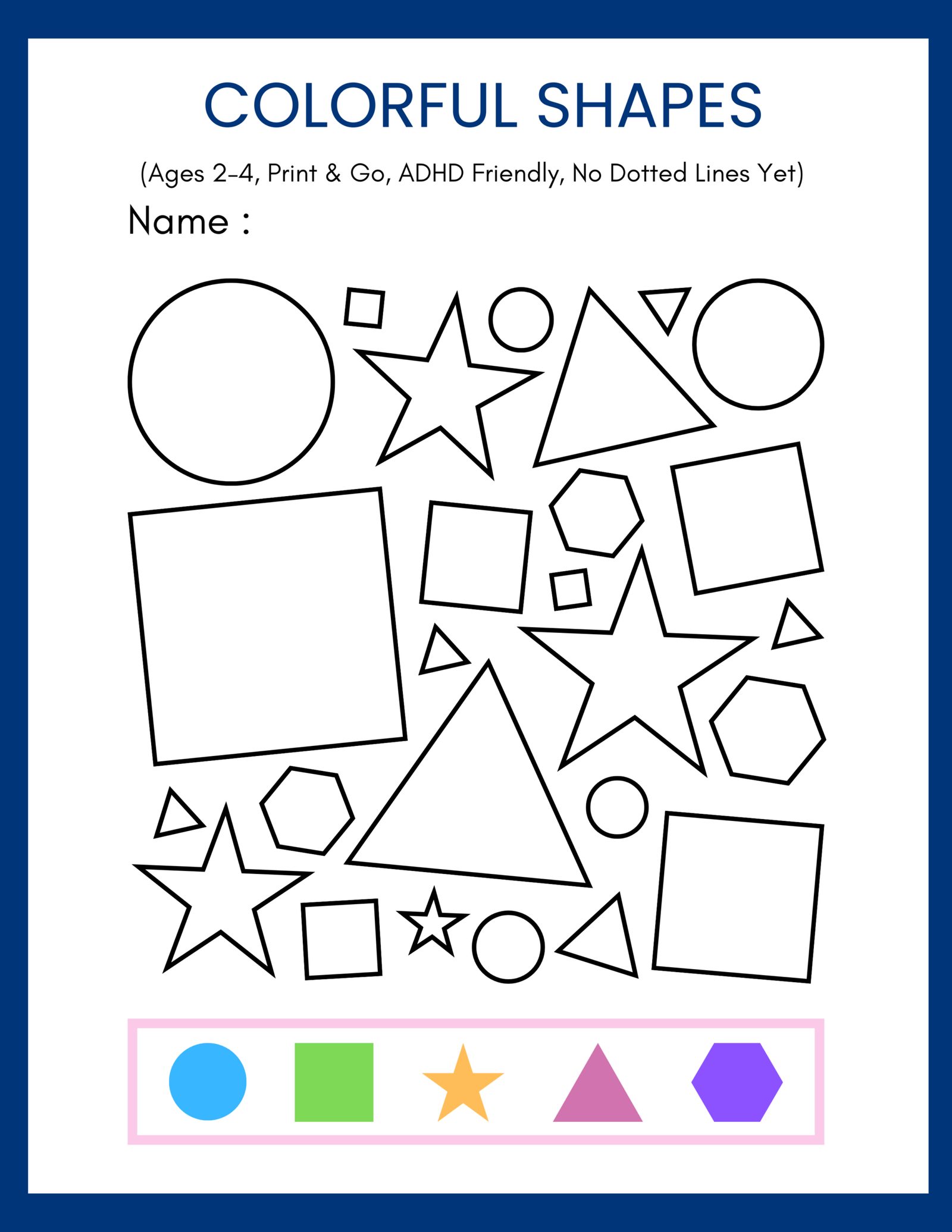
Looking Back at the Weather Wheel
When I look back at Zara’s kindergarten calendar today, I am reminded of how much early EAL learning happens beneath the surface when we give young children the right tools. That simple wheel allowed my five year old daughter to make sense of a strange, cold Melbourne sky, turning her observations into art, and her art into English words.
If your child is currently adjusting to a new language or a new environment, remember that language acquisition takes time and safety. Give them pencils, paper, and plenty of room to draw their world first. The words will find their way.
Discover Story-Based Early Literacy Bundles
Discover visual learning printables designed to build vocabulary, fine motor strength, and writing confidence through drawing and story-based practice.
View Our Printables CollectionReferences
- State of Victoria (Department of Education and Training). (2016). Victorian Early Years Learning and Development Framework (VEYLDF). Department of Education and Training.
- Bruner, J. S. (1966). Toward a Theory of Instruction. Harvard University Press.
- Victorian Curriculum and Assessment Authority (VCAA). (2019). EAL Companion to the Victorian Curriculum F–10. VCAA.
- Krashen, S. (1982). Principles and Practice in Second Language Acquisition. Pergamon Press.
- Cummins, J. (2000). Language, Power and Pedagogy: Bilingual Children in the Crossfire. Multilingual Matters.