
Multilingual Phonics for ADHD: Proven EAL Guide for Stress-Free Learning (2026)
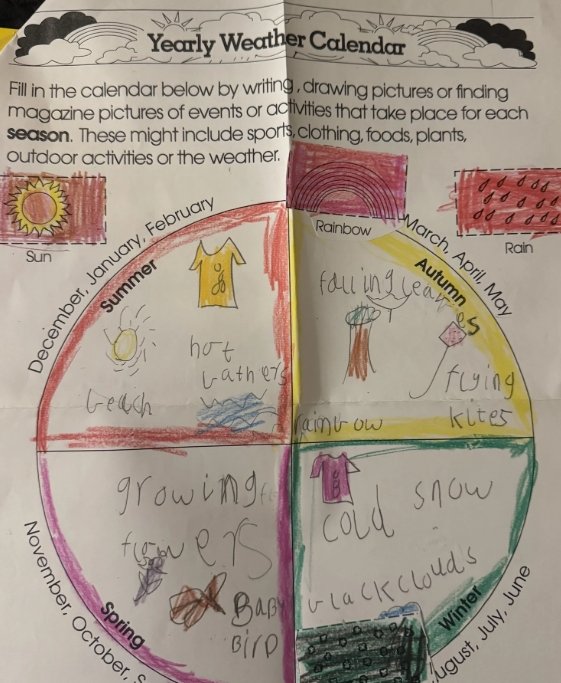
Navigating multilingual phonics for ADHD preschoolers requires a complete shift away from high-pressure drills and toward short, tactile routines.
When my family moved to Melbourne, my daughters Bella and Zara started school as English as an Additional Language (EAL) students.
At the time, initial school evaluations focused exclusively on their language acquisition.
They completely missed the fact that we were also navigating neurodivergence at home.
Bella struggled with executive dysfunction during reading time.
Zara, on the other hand, created her own visual systems to hold onto her native language while learning English sounds.
As an ADHD parent managing my own energy limits, late-afternoon homework caused endless stress for all of us.
Traditional flashcards and worksheets led straight to tears and shutdowns.
Through my background in early childhood education, I built a practical framework for multilingual phonics for ADHD learners.
This approach skips high-pressure drills in favor of short, tactile, movement-based routines that work with your child’s brain instead of fighting it.
How Neurodivergence Affects Dual-Language Learning
Understanding why standard tools fail in multilingual phonics for ADHD requires looking at what happens in their brains during late-afternoon reading practice.
Working Memory Overload
Phonics requires holding a sound in mind, connecting it to a letter, and writing it down.
For an EAL child with ADHD, this process gets bogged down by extra cognitive steps:
- Translating constantly between English and their home language.
- Trying to spot subtle differences in English vowel sounds that do not exist in their native tongue.
- Handling fine motor writing tasks when their hands and body are already tired.
Dopamine Gaps and Task Blockers
ADHD brains naturally look for immediate feedback and high engagement.
Plain black-and-white worksheets offer neither.
When a task feels boring, an ADHD child experiences real physical difficulty getting started.
This is not laziness or bad behavior; it is a neurological block.
Forcing them to sit still and finish the page usually leads to meltdowns.
What to Say During After-School Shutdowns
When your child pushes their work away, tries to cry, or refuses to speak, try this approach:
Parent: “I can see your brain and hands are tired from a long day at school. Let’s put the pencils away for now.”
Child: (Takes a deep breath or relaxes shoulders)
Parent: “Grab a toy car from your room. Let’s zoom it across the floor every time we make the sound /b/!”
Why this works: It removes handwriting pressure, lowers stress, and turns phonics practice into a physical game.
Bella’s Journey: Beating Afternoon Fatigue
Bella’s reading practice used to fall apart around four in the afternoon.
Sticker charts and promises of rewards didn’t work because her brain was simply out of fuel.
Everything changed when we replaced paper exercises with active multilingual phonics for ADHD sound games.
During this stage, her unusual spelling attempts were actually signs of growth.
Reading about invented spelling in early EAL learners shows how early phonetic spelling helps children connect sounds to print.
When an ADHD child writes “KAZ” for “cars” or “BOK” for “book,” they are actively working out speech sounds.
Correcting every mistake right away breaks their focus and makes them want to quit.
Active Phonics Rules that Worked for Bella
- Ditch the kitchen chair: Let your child balance on a cushion, lie on a soft rug, or stand up while working on sounds.
- Focus on listening first: Practice hearing and repeating sounds before asking them to write letters down.
- Keep it brief: Limit active phonics games to three or four minutes at a time throughout the day.
Zara’s Journey: Pictures, Identity, and Daily Routines
While Bella needed physical movement, Zara processed language through art.
Long before she felt comfortable speaking full English sentences in class, she drew detailed pictures to tell stories.
Instead of treating her drawing as a distraction, we used visual storytelling as a core foundation for multilingual phonics for ADHD preschoolers:
- Drawing as communication: Using drawing stories in early EAL learning helps kids share complex ideas without struggling to find spoken words in English.
- Protecting home language: Children learn a second language faster when they feel proud of their first one. Supporting EAL identity and belonging keeps their confidence intact while learning English phonics.
- Simple daily topics: Predictable topics give children a safe environment to practice vocabulary. Using weather vocabulary in daily EAL routines offers a natural way to practice repeating sounds like
/s/for sun or/r/for rain.
Practical Multilingual Phonics for ADHD Routines
To keep an ADHD preschooler engaged while learning two languages, routines need to be simple and tactile.
Here are three structured methods you can use at home immediately.
1. Contrastive Auditory Sound Bursts
Long study sessions tire out an ADHD child’s working memory.
Replace long lessons with quick one-minute games—a simple, effective approach to multilingual phonics for ADHD while making dinner or riding in the car.
How to play:
- Pick a shared sound: Find a sound present in both English and your home language, such as the voiced bilabial stop
/b/in English (ball) and Bahasa (batu). - Establish a response: Set a single physical action, such as a two-handed table tap.
- Call out words: Say words in both languages. Your child taps only when they hear the target starting sound.
- Target discrimination: Use words like “batu” (tap), “park” (stay still, as
/p/is voiceless), and “book” (tap).
2. Cross-Linguistic Syllable Clapping with Kinesthetic Resistance
Kids with ADHD pay attention better when their bodies receive heavy physical input.
Pairing speech sounds with physical resistance helps anchor multilingual phonics for ADHD concepts directly into long-term memory.
| Activity | Physical Action | Multilingual Example | How It Helps |
|---|---|---|---|
| Resisted Syllable Pushes | Push firmly against a wall for each syllable | Push for home language words like se-la-mat (3 pushes), then English words like morn-ing (2 pushes). | Provides heavy proprioceptive input to increase alertness. |
| Voiced vs. Voiceless Check | Place fingertips on the throat to feel vocal cord vibration | Compare continuous sounds like /s/ (no vibration) versus /z/ (vibration). |
Helps EAL learners physically feel subtle sound differences. |
3. Single-Trace Grapheme Trays
Writing with a pencil can be frustrating for a child who is still figuring out speech sounds.
Sensory trays let kids practice letter shapes using their fingers instead of pencils, anchoring multilingual phonics for ADHD success through tactile feedback.
Setup & Execution:
- Cover a dark baking sheet with a thin layer of fine salt or dark sand.
- Place a single grapheme card showing the letter in front of the tray.
- The child traces the letter shape using their index and middle fingers together.
- They vocalize the continuous phoneme for the exact duration of the stroke.
- A single horizontal swipe across the sand clears the tray for a clean mental reset.
Sample Weekly Schedule
You do not need to sit down for long lessons every afternoon.
Instead, fit multilingual phonics for ADHD naturally into your week:
| Day | Best Time | Activity | Main Goal |
|---|---|---|---|
| Monday | Walk to school | Auditory Sound Bursts | Hearing initial sounds |
| Tuesday | After school snack | Single-Trace Sand Trays | Connecting sounds to letter shapes |
| Wednesday | Before bath time | Resisted Syllable Pushes | Proprioceptive sound practice |
| Thursday | Making dinner | Voiced vs. Voiceless Throat Checks | Understanding word parts |
| Friday | Wind-down time | Drawing stories together | Building confidence through art |
What This Means for Us
Two daughters, two paths.
Bella’s ADHD phonics collapse taught me the power of rhythm and sensory play.
Zara’s EAL drawings taught me the strength of identity and visual scaffolds.
My own ADHD parenting voice taught me that routines must survive the afternoon fatigue crash.
Together, they remind me that multilingual phonics for ADHD succeeds best when tailored to the child, because literacy is never one size fits all.
References and Further Reading
- Reading Rockets: Phonics Instruction Essentials
- Understood.org: Phonics Strategies for Neurodivergent Learners
- LD@School: Structured Literacy and Memory Support
- Early Childhood Australia: Resources for Diverse Classrooms
- National Autistic Society: Sensory Processing and Early Learning
Disclaimer: I write from my perspective as an educator with a PhD in Early Childhood, a curriculum advisor, and a neurodivergent parent. This article is meant for informational purposes. If you have questions about your child’s speech, sensory needs, or development, please speak with a speech-language pathologist, occupational therapist, or pediatrician.