
“What Should I Wear Today?” Using Weather Drawings to Build Daily Conversational English
Building practical EAL weather vocabulary in early childhood rarely happens by sitting down with flashcards or memorising lists. For young multilingual children, real language takes root when words are tied directly to meaningful, daily decisions, like picking out a warm jumper when the wind turns cold or grabbing bathers for a summer afternoon.
When our family arrived in Melbourne from Jakarta in October 2010 so I could start my doctoral degree, morning routines were one of our biggest cultural transitions. Back home in Indonesia, picking clothes was simple. It was always warm, so cotton shirts, shorts, and sandals were our daily default. Suddenly, we were living in a city famous for four seasons in a day, where a sunny morning could turn into a cold, wet afternoon in a heartbeat.
My daughter Zara was born at the end of December 2005. When she entered an Australian kindergarten classroom in February 2011, she was barely five years old and spoke almost no English. Rushing off to university lectures while ensuring she was properly dressed for the fickle Melbourne weather was a daily juggle. But looking back at her kindergarten portfolio, I realised that these exact clothing decisions were giving her a rich foundation in functional English.

Clothing as Functional EAL Weather Vocabulary
When children draw their daily routines, they are doing much more than illustrating a page. They are creating visual hooks for words they are still learning to speak out loud.
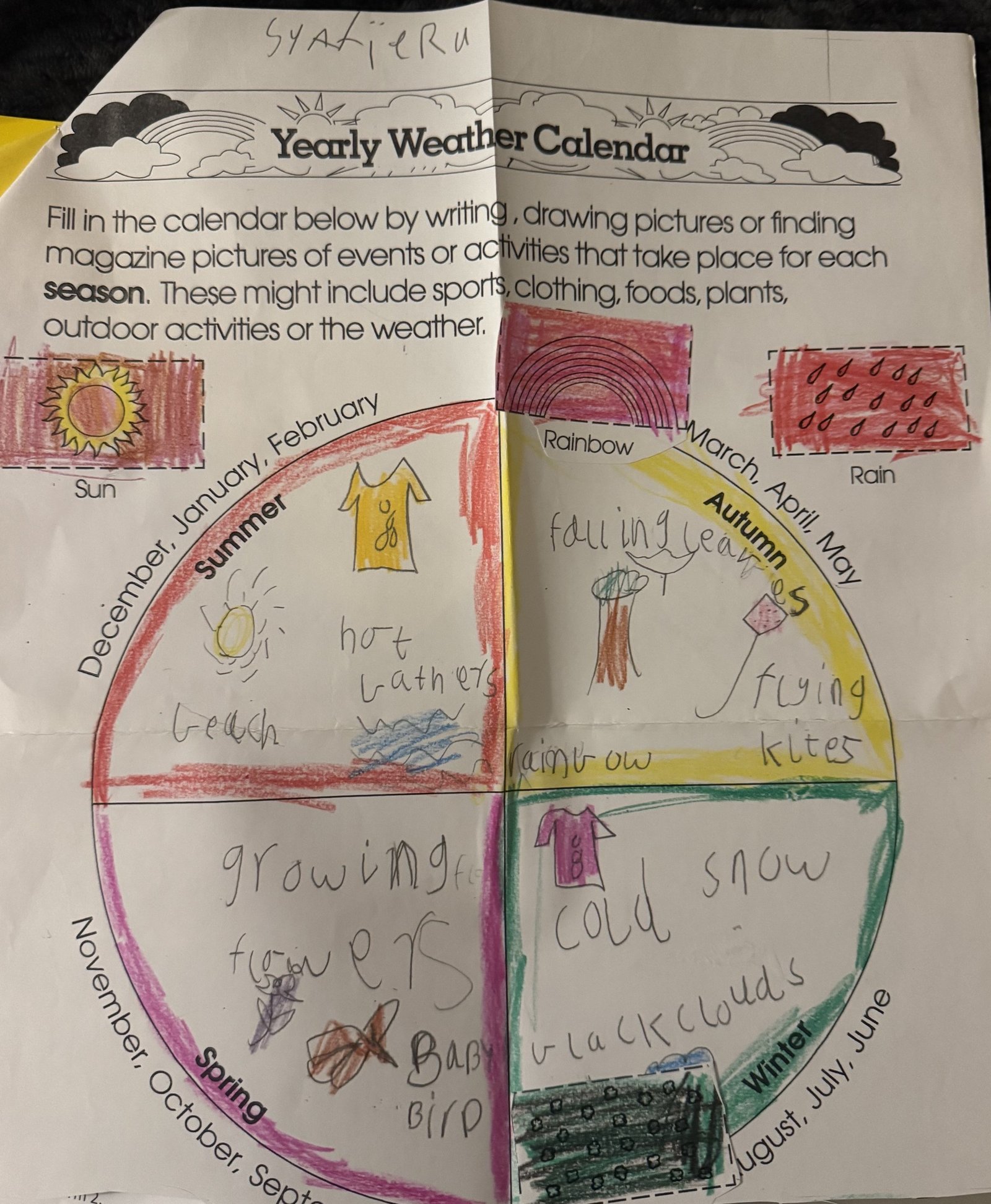
When you look closely at Zara’s “Yearly Weather Calendar” school work above, you can see how her mind naturally connected climate concepts to concrete, everyday objects:
- Summer (December, January, February): Alongside her drawing of the sun and beach, she sketched a yellow t-shirt to represent “hot wathers” (hot weather).
- Winter (June, July, August): In the green segment, she sketched a heavy purple jumper, dark clouds, rain, and wrote out the words “cold” and “snow” alongside a dark storm box.
This drawing shows a crucial stage in early language acquisition. Long before an EAL learner can construct complex sentences like “Because it is cold outside, I am wearing a coat,” they understand the functional purpose of the clothing item. The yellow t-shirt means warmth and swimming; the purple jumper means cold winds, rain, and staying warm inside.
The Victorian Early Years Learning and Development Framework (VEYLDF) stresses that young children learn best when language is embedded in meaningful social contexts and familiar home routines.[1] Dressing for the day is one of the most consistent, natural context-rich routines a family shares.
Moving from Nouns to Action Phrases in Early EAL
In early childhood EAL pedagogy, functional language grows in clear stages. Children usually start with single concrete nouns (jumper, sun, rain), move into noun-adjective pairs (warm coat, black clouds), and eventually build functional action phrases (put on boots, take off jacket).
Jerome Bruner’s model of learning highlights that visual images (the iconic stage) serve as a bridge between concrete physical actions and abstract words.[2] By drawing clothing items directly inside seasonal wheels or activity sheets, children create a visual cheat-sheet for their brains. The drawing gives them a visual anchor that makes learning new words far less intimidating.
This approach is supported by the EAL Companion to the Victorian Curriculum, which emphasizes using real-life objects, visual matching, and daily routines to help multilingual students build practical communication skills.[3]
Four Practical “Dress for the Weather” Home Routines
If you are supporting a young child building their EAL weather vocabulary at home or in class, turning morning preparation into a language-rich routine is one of the easiest, low-stress strategies you can use. Here are four simple ideas:
1. The Window Check Routine
Before choosing clothes in the morning, stand at the window together for thirty seconds. Look at the trees and the sky, and talk about what you see in simple, descriptive English: “Look, the trees are blowing. It is windy today!” or “I see grey clouds. It might rain.”
2. Either/Or Clothing Choices
To encourage speaking without putting your child on the spot, offer two visual choices while holding up the items: “It is cold outside today. Do you want the blue jumper or the red sweater?” This gives them the target vocabulary directly while letting them practice making decisions in English.
3. Weather Sorting Games at Laundry Time
When folding laundry together, turn it into a quick language game. Ask your child to sort clothes into two piles: “Summer clothes” (shorts, bathers, t-shirts) and “Winter clothes” (jumpers, beanies, thick socks). Physical handling combined with simple labels reinforces category vocabulary naturally.
4. Celebrate Approximate Speech
When your child tries to express a weather phrase, focus on their message rather than fixing their grammar on the spot. On Zara’s wheel, she wrote “cold” and “snow” next to her winter clouds. If your child points outside and says “Big cold today!”, respond warmly by validating their thought: “Yes, it is very cold today! Let’s get your warm coat.” Stephen Krashen’s research shows that accepting early attempts keeps a child’s anxiety low, encouraging them to keep experimenting with English.[4]
Free Visual Activity Starter
Download our free Visual Tracing & Matching Sample, designed with big, clear shapes and simple layouts to help young multilingual learners build confidence through drawing and play.
Download Free Sample (PDF)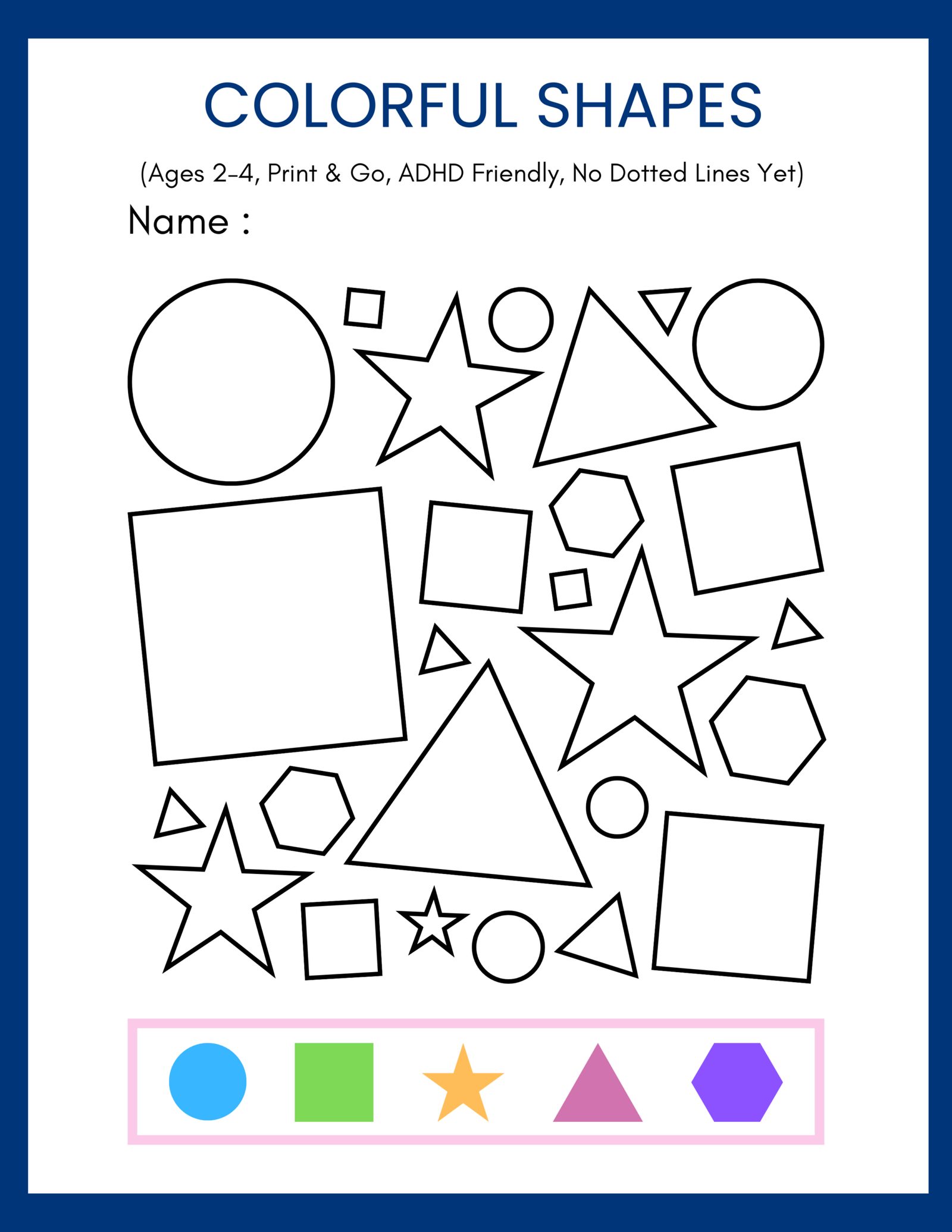
Building Confidence Through Practical Communication
Looking back at Zara’s kindergarten portfolio from 2011, I am reminded that language learning is not about perfection. It is about connection, understanding, and navigating the world around us. That simple purple jumper on her weather wheel, drawn next to her notes on cold weather and snow, was a sign that she was figuring out Melbourne, one cold morning at a time.
When we give children time, visual support, and meaningful daily routines, they do not just learn English words. They gain the confidence to share their thoughts, express their needs, and thrive in their new school environment.
Explore Our Visual Literacy & Tracing Bundles
Discover printable activity packs built around story-based drawing, visual vocabulary, and low-anxiety pre-writing practice for young learners.
Explore Early Literacy BundlesReferences
- State of Victoria (Department of Education and Training). (2016). Victorian Early Years Learning and Development Framework (VEYLDF). Department of Education and Training.
- Bruner, J. S. (1966). Toward a Theory of Instruction. Harvard University Press.
- Victorian Curriculum and Assessment Authority (VCAA). (2019). EAL Companion to the Victorian Curriculum F–10. VCAA.
- Krashen, S. (1982). Principles and Practice in Second Language Acquisition. Pergamon Press.
- Cummins, J. (2000). Language, Power and Pedagogy: Bilingual Children in the Crossfire. Multilingual Matters.