Building Simple Cross Curricular Connections
Most early learning happens in neat little boxes. Maths at ten, literacy after morning tea, art on a Friday if there is time left. Nothing wrong with that structure on paper, but kids do not actually experience the world that way. There is genuine power in creating simple cross-curricular connections that allow one core idea to travel across multiple subjects naturally.
Exploring meaningful cross-curricular connections just means picking a single, tangible theme and following it into more than one area of discovery. It is not a new idea, and it does not need to be complicated to work. The trick is picking a theme small enough to actually finish across a week, rather than something so broad it turns into three separate units wearing a trench coat.
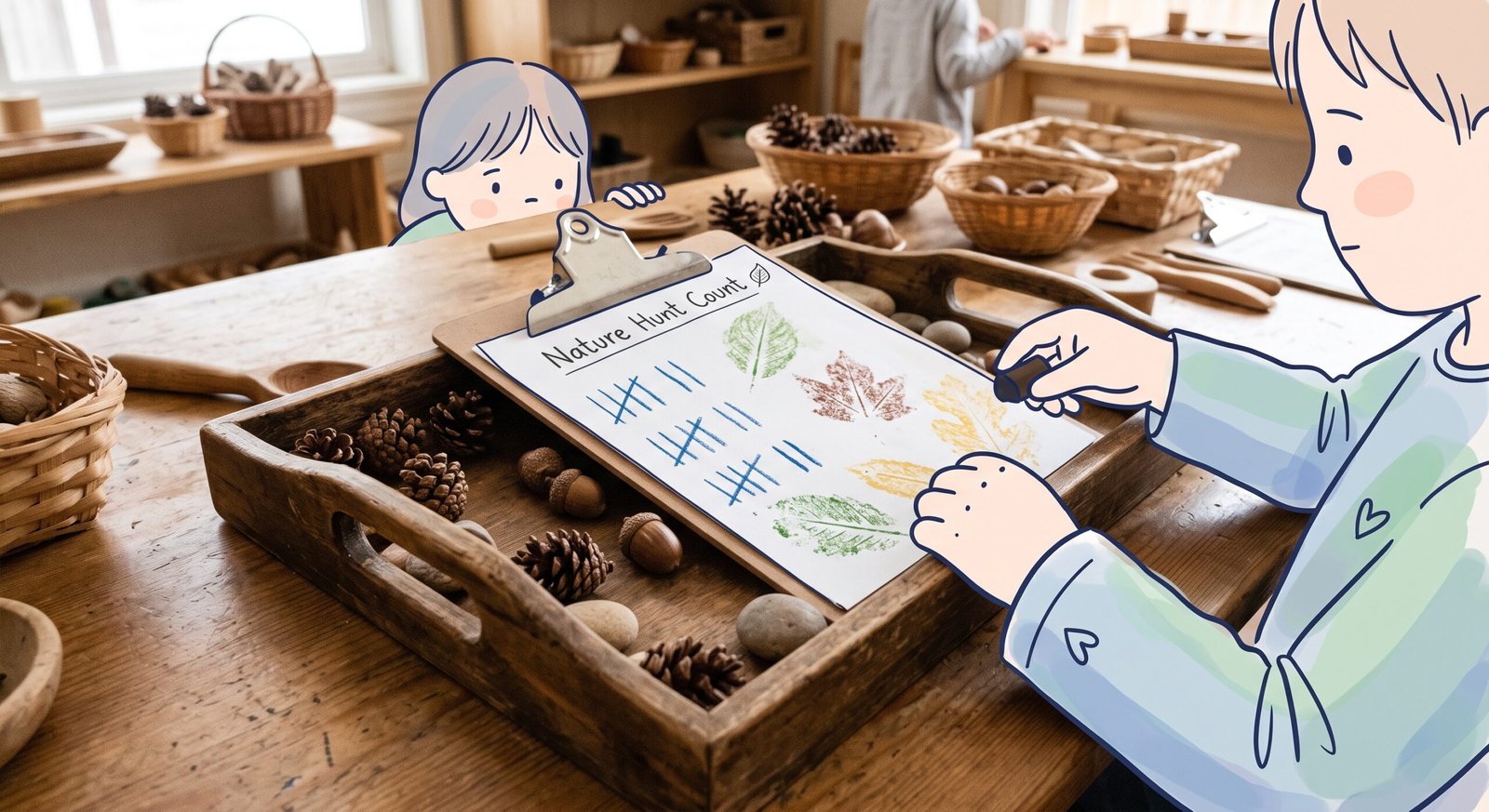
When four year olds find an earthworm on a wet morning, they do not split the moment into biology, counting, and language. They want to watch it curl, see how far it crawls along a paver, find out whether it likes the shade, and tell anyone who will listen about the little rings around its skin. When we turn around and tell them to put the worm down because it is time to sit at a table and fill out a photocopied sheet of cartoon apples, we lose the best part of how they learn.
How to Build Simple Cross-Curricular Connections at Home
The easiest mistake with connected teaching is dreaming up something enormous. A unit on dinosaurs sounds exciting until you realise a four year old cannot touch a fossil, cannot watch a brontosaurus walk through the yard, and has to take every single fact on hearsay. It stays in their head as abstract information.
Take something ordinary instead. A class pet, the weather that week, an autumn leaf tray, or a garden bed if you have got one. Something a child can look at, touch, or check on daily. That is what makes these cross-curricular connections feel real rather than forced, because the maths and the art and the writing are all pointing back at the same actual thing in front of them.
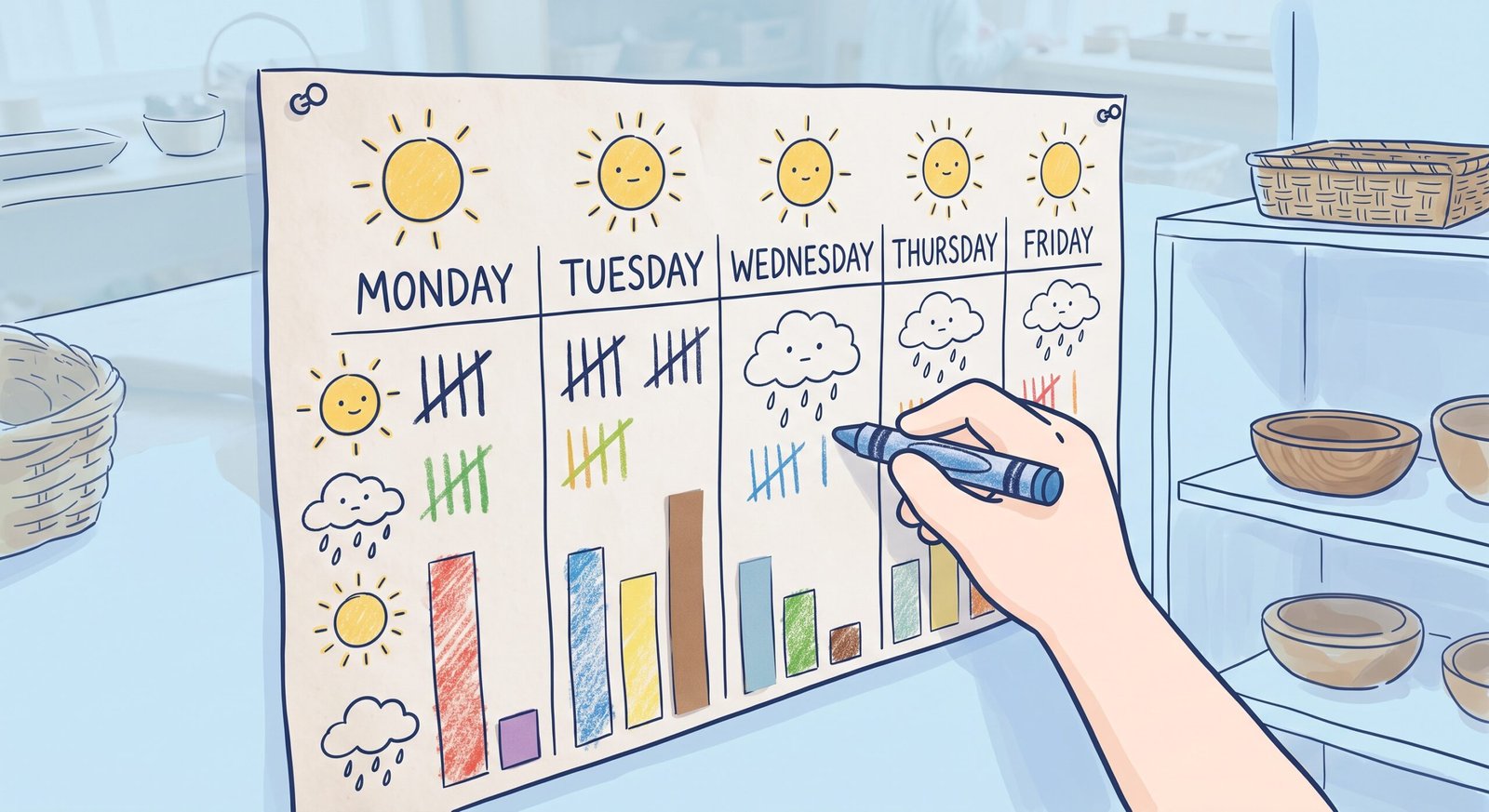
Say the theme is a class weather chart.
Maths: tally the week’s weather and compare which type came up most.
Literacy: write or dictate one sentence a day about what the weather felt like.
Art: draw the sky for each day and line the drawings up at the end of the week.
Science: set a glass jar on the verandah to catch real rain and check the water level with a ruler.
None of that needs new commercial resources or an exhausting prep session on Sunday evening. It is the same five minutes of weather watching each morning, just pointed at three or four different skills instead of one.
Why bother connecting them at all
The honest answer is that it helps things stick. A child who has already spent the week noticing the morning chill has something real to write or talk about, rather than staring at a blank page trying to invent a sentence from nothing. The maths means more because it is their own tally mark, not a worksheet of someone else’s numbers. None of this is a magic trick, it is just giving one piece of thinking a few more places to land.
It is also, if I am honest, a decent way to stretch a light week. If you are short on new material, revisiting the same theme through a different subject the next day still feels fresh to a five year old, even if it is the third time you have looked at that weather chart or seedling tray since Monday.
| Learning Area | Isolated Subject Approach | Connected Cross Curricular Approach |
|---|---|---|
| Numeracy | Counting pictures of hats on a printed worksheet. | Tallying sunny and rainy days on the morning board. |
| Language | Tracing random letters disconnected from daily routine. | Dictating a one sentence observation about the morning wind. |
| Science | Listening to a generic textbook story about clouds. | Measuring rain in a jar on the verandah with a ruler. |
| Creative Art | Colouring pre drawn outlines inside strict margins. | Mixing watercolours to paint the shifting greys of the sky. |
Another simple anchor: The garden seedling tray
If the weather feels too predictable where you live, seeds offer the same quiet rhythm. A handful of broad beans or sunflower seeds folded into wet paper towels against a sunny windowpane gives you an entire week of organic learning without a single worksheet.
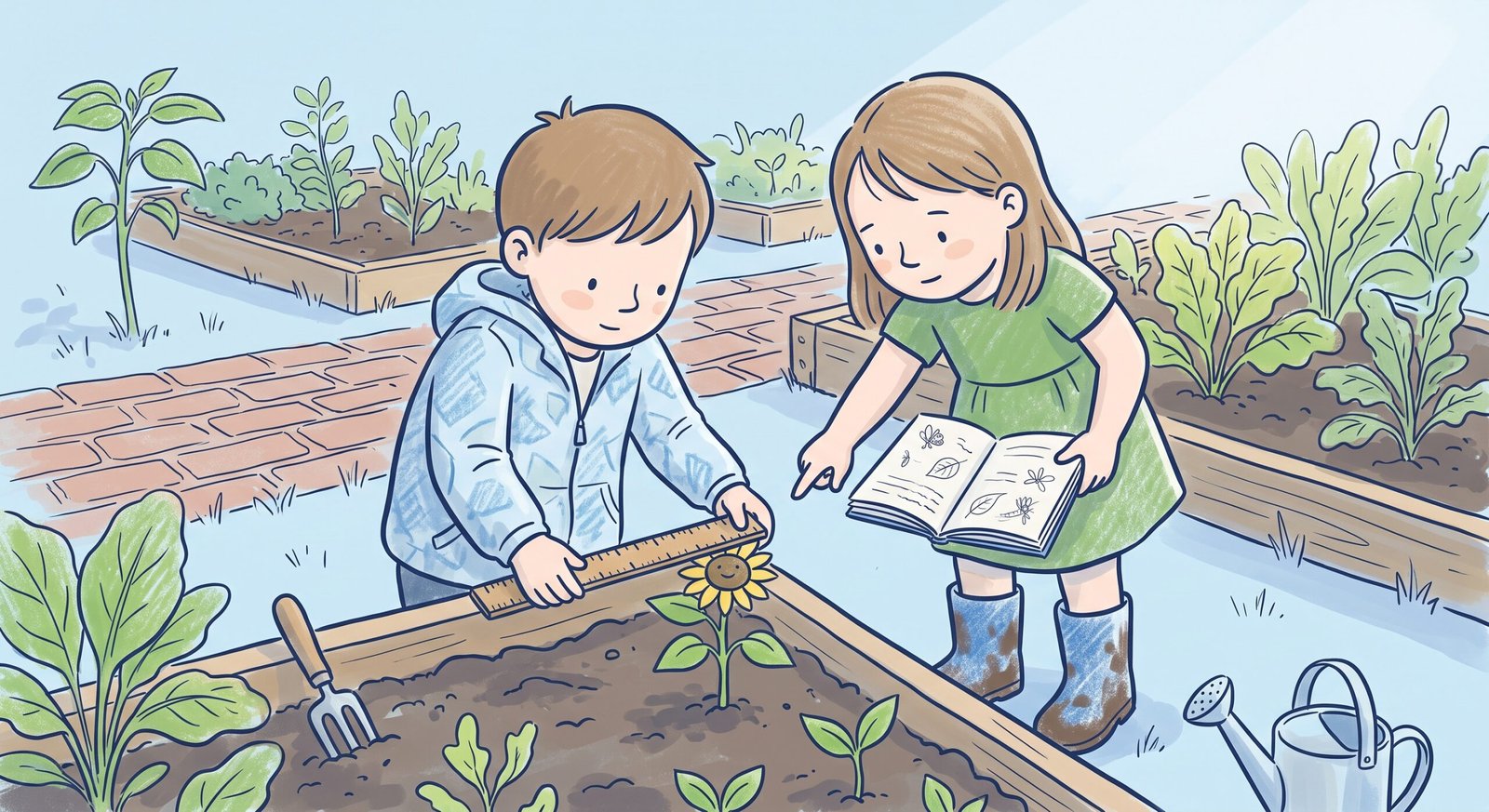
Say the theme is a bean seed on the windowsill.
Science: using a magnifying glass to spot the tiny white root breaking through the coat.
Maths: building a tower of wooden blocks beside the shoot to measure how tall it grew overnight.
Literacy: writing the child’s name and the planting date on the pouch, and sketching the seed in a small journal.
Physical Play: pressing thumb holes into small pots of soil and patting the dirt down around the roots.
Notice how naturally those subjects sit side by side. You do not have to explain that blocks can measure height. The child sees the green stem pushing past three blocks on Tuesday, and by Thursday they are racing to the window to see if it has hit five blocks. The measuring is happening because they actually care about the bean.
Connecting themes to whole body movement
Young kids do not just think with their eyes and ears. They think with their knees, their feet, and their hands. When a theme stays stuck on a low table all week, children with high physical energy begin to tune out.
Taking your anchor theme outdoors changes the mood completely. If your class is watching rain clouds, draw big chalk puddles on the pavers and challenge children to leap over them. If you are exploring numbers alongside seeds, set up a simple hopscotch or jumping track where children count forward as they move.
We see this same physical connection in our guide to teaching early math skills with a number line jumping game, where stepping forward along a taped line gives abstract addition a physical place to happen. The same principle applies to classic gross motor play; our collection of classic playground games for kids shows how stop and go rules build the body control and focus children need for integrated learning.
Why this works so well for neurodivergent kids
One of the quiet strengths of building clear cross-curricular connections is how much easier it makes the day for autistic children and kids with ADHD. In a traditional kindergarten or prep room, the schedule is full of sharp stops and starts. Put your pencils away, pack up the blocks, sit on the mat for phonics, line up for physical play.
Every single one of those shifts demands mental energy. For a child who finds task switching hard, that constant stopping and starting creates real tension before lunchtime even arrives. Keeping one familiar theme running through the morning acts like an anchor. The activity changes, but the subject stays the same, which keeps their nervous system settled.
It also gives you an easy way to welcome their deep personal interests. If a child talks constantly about trains or garbage trucks, you do not have to fight that interest to teach numbers or handwriting. You count the wheels on the train, draw the tracks on large butcher paper, and trace the letters on the signal signs. In our guide on 7 ways to support neurodivergent literacy task initiation, we talk about how using these special interests helps kids step across the starting line without tears or anxiety.
If you want to carry that tactile, hands on building further into your room, you can make sensory tunnels, play mailboxes, and quiet reading nooks out of everyday delivery boxes using our cardboard box activities at home.
Where this connects to story based tracing
This is actually the same idea our tracing worksheets are built on, just applied more broadly. A letter on its own is an abstract thing to a young child. A letter tied to a one line story about a bunny in a meadow gives that same letter somewhere to land, the same way a weather chart gives a maths tally somewhere to land.
These narrative cross-curricular connections turn dry skills into meaningful play. You are taking handwriting, which usually requires rote repetition, and giving it an authentic purpose in the child’s imagination.
Where this idea comes from
This is not just a classroom hunch. It is a well established foundation of early childhood pedagogy. The National Association for the Education of Young Children has long pointed to integrated, connected learning experiences as far more effective than teaching subjects in isolation, on the reasoning that children naturally experience the world as connected rather than divided into separate lesson blocks. NAEYC’s curriculum development resources go into this in more depth if it is something you want to explore further.
The developmental theory underneath it goes back to Jean Piaget, the Swiss psychologist whose work still shapes early childhood practice today. Piaget showed that children build understanding by connecting new observations to what they already know, not by receiving separate, disconnected facts. A weather chart that touches maths, writing, and art in the same week is really just that idea in practice, one experience getting linked to several existing threads of thinking rather than sitting on its own. This overview of Piaget’s theory of education covers the core concepts well if you want to read deeper.
Curious what connected learning looks like on an actual worksheet page?
See the Story-Based Tracing Bundle