
Pincer Grasp Activities: 4 Brilliant Ways to Master the Tiny Grip
In our household, exploring pincer grasp activities began long before my daughters ever sat at a desk. It started on a messy highchair tray, where watching little fingers navigate single blueberries showed me that the precise grip required for pencils and scissors develops through low-stress sensory exploration rather than structured handwriting drills.
Introducing playful pincer grasp activities helps parents and educators understand that pencil grip is not born on a worksheet; it is forged across months of pinching crumbs, peeling stickers, and exploring the physical world.
Long before Zara or Bella ever held an HB pencil, they were doing the exact physical work that made mark-making possible in the first place.
It looked like a one-year-old sitting in a highchair, dedicating ten uninterrupted minutes of fierce concentration to picking up a single, rolling blueberry between the pad of her index finger and the tip of her thumb.
I did not think of it as academic preparation back then. It is such an ordinary, everyday infant movement that it is easy to overlook how much biological engineering is taking place inside that tiny wrist and palm.
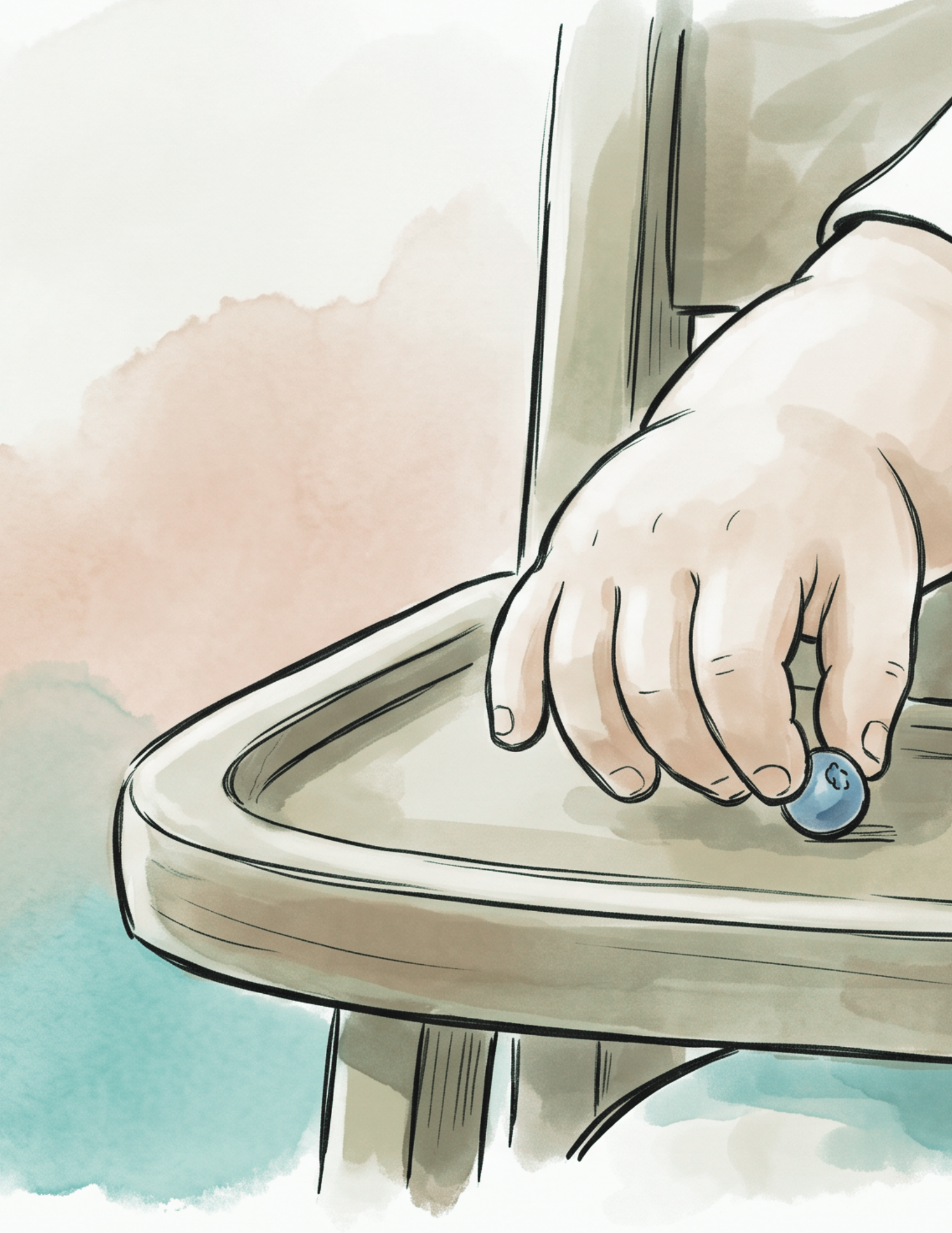
That deliberate movement is the pincer grasp. It is the quiet powerhouse of the upper extremities, laying the groundwork for holding crayons, fastening winter jackets, using scissors safely, and feeding oneself with cutlery.
When we support children with purposeful pincer grasp activities, we give their hand muscles the intrinsic strength needed to avoid hand cramping and fatigue once formal schooling begins.
In this developmental guide:
What the Pincer Grasp Actually Is: The Biomechanics
The pincer grasp is the intentional coordination of the index finger and thumb to pinch, hold, and manipulate small objects.
While it looks effortless to an adult, the action requires the brain to separate the two sides of the hand. Paediatric occupational therapists refer to this as the “radial-ulnar dissociation.”
The pinky and ring finger (the ulnar side) curl inward toward the palm to provide stability, while the thumb, index, and middle finger (the radial side) remain free to execute precise, dynamic movements.
Clinical guidelines published by the American Occupational Therapy Association (AOTA) highlight that fine motor coordination relies on this foundational separation. Without it, a child is forced to use their whole fist to grasp small tools, which leads to early muscle strain.
Engaging toddlers in regular pincer grasp activities strengthens the web space—the rounded circular opening formed between the thumb and index finger—ensuring it stays open and stable during fine motor work.
From Raking to Precision: The Milestone Timeline
Hand development follows a predictable anatomical sequence, moving from large gross motor sweeps toward refined fingertip control:
| Age Range | Grasp Classification | Physical Mechanics Observed |
|---|---|---|
| 6 to 8 Months | Raking Grasp | The infant uses all fingers together like a small rake, sweeping objects into the palm without isolating the thumb. |
| 8 to 10 Months | Inferior / Crude Pincer Grasp | The thumb and index finger make contact, but the object rests against the sides or pads of the fingers rather than the tips. |
| 10 to 12 Months | Pincer Grasp (Pad-to-Pad) | The pads of the index finger and thumb press together to secure small food pieces or objects. |
| 12 to 15 Months | Neat / Superior Pincer Grasp | The very tips of the index finger and thumb meet with precision, forming a visible circular “O” shape in the web space. |
| 2 to 4 Years | Dynamic Pincer & In-Hand Manipulation | The child rotates, adjusts, and controls small tools, threading beads, peeling stickers, and managing early fasteners. |
While milestones offer a reassuring compass, children develop at their own pace. What matters most is steady progression from whole-hand scooping toward isolated fingertip control.
Why This Tiny Grip Unlocks Pre-Writing and Independence
It is easy to categorize the pincer grasp as a fleeting infant milestone and forget about it once a child starts walking.
Yet this exact grip underpins almost every functional life skill required in an early childhood classroom:
In self-care routines, as we outline in our comprehensive guide on buttoning, zipping, and self-dressing skills, a child cannot pull a jacket slider or ease a button through a fabric slit without strong pad-to-pad pinching.
In preschool crafts, cutting safely with blades, as discussed in scissor skills by age, requires opening and closing the hand while isolating the index and middle fingers.
And in emergent handwriting, learning how to hold a pencil correctly with a relaxed, dynamic tripod grasp is physically impossible if the thumb-index web space has not developed through varied pincer grasp activities.
Developmental research from Harvard’s Center on the Developing Child emphasizes that motor competencies and cognitive autonomy are closely linked. When a child can manipulate tools independently, their self-efficacy expands.
Immature Palmar Grasp vs Refined Digital Pincer Grasp
Understanding how hand grasps evolve helps educators and parents spot when a child needs gentle, supportive scaffolding:
| Developmental Feature | Immature Palmar Grasp | Refined Digital Pincer Grasp |
|---|---|---|
| Primary Muscle Group | Large extrinsic forearm muscles and whole-hand flexors. | Intrinsic hand muscles, thenar eminence (thumb mound), and isolated finger lumbricals. |
| Hand Web Space | Closed and flat; the thumb presses tightly against the side of the index finger. | Open, curved, and circular, allowing free, flexible finger movement. |
| Movement Origin | Whole arm movements driven from the shoulder and elbow joints. | Delicate, micro-movements originating at the wrist and finger joints. |
| Fatigue Rate | High fatigue; holding crayons or tools tightly tires the arm muscles quickly. | Low fatigue; balanced muscular control allows sustained focus without hand cramping. |
4 Brilliant Ways: High-Impact Pincer Grasp Activities at Home
You do not need expensive therapy toys or plastic gadget kits to build fine motor dexterity. These four brilliant pincer grasp activities use simple, everyday household items:
1. The Snack Tray Finger Hunt
Mealtimes are the most natural, recurring fine motor gym in a child’s day.
- What to do: Scatter small, safe finger foods across a smooth highchair tray or flat plate: blueberries, steamed peas, toasted oat rings, or small cereal puffs. Encourage your toddler to pick them up one at a time.
- Why it works: The desire to eat provides an immediate, self-reinforcing motivation to pinch rather than scoop. This daily routine turns breakfast into one of the most effective pincer grasp activities without adding extra tasks to your day.
2. Sticker Peeling and Posting Galleries
Peeling a flat sticker off a backing sheet is a challenging fine motor puzzle for little fingers.
- What to do: Bend the edge of a sticker sheet slightly so the rim lifts, then encourage your preschooler to pinch the edge and peel it off cleanly. Provide an empty cardboard box or drawing pad for them to press the stickers onto.
- Why it works: Peeling demands bilateral coordination: one hand stabilizes the sheet while the other executes a neat pinch-and-pull. It engages the same muscles explored in our hand strength activities for kids.
3. The Colored Water Dropper Lab
Squeezing a rubber pipette isolates the thumb and index finger while teaching cause and effect.
- What to do: Set out two small cups: one filled with water tinted with natural food dye, and one empty. Provide a child-sized eye dropper or pipette and invite your preschooler to transfer the liquid drop by drop.
- Why it works: Squeezing the bulb requires isolated finger flexion against resistance, strengthening the thenar muscles that later support pencil grip. It pairs naturally with our calming ideas for sink and water play for preschoolers.
4. Cardboard Slotted Button Drop
Orienting flat discs to slide through a narrow slit develops in-hand manipulation and spatial orientation.
- What to do: Cut narrow slits into the lid of an empty cardboard shoebox or clean yogurt container. Offer a collection of clean bottle lids, large wooden buttons, or playing cards for your child to pinch, rotate, and post through the slots.
- Why it works: Children must adjust the angle of the object in their fingertips before releasing it, building the dexterity needed for classroom supplies, similar to our upcycled cardboard box activities at home.
Connecting Hand Strength, Scissors, and Self-Dressing
Hand development does not happen in isolation. It is woven into everyday gross motor, sensory, and self-care skills.
A child who spends time crawling, climbing trees, and pushing heavy boxes develops the stable shoulder girdle and core strength required to hold their hands steady.
Similarly, pairing pincer grasp activities with everyday practical play—such as buttoning pyjamas or peeling mandarin segments—ensures fine motor development remains purposeful and joyful.
For children navigating neurodivergence or executive function differences, starting table tasks can sometimes trigger a freeze.
In our guide to the ADHD start together task trick, we discuss how sitting beside a child and completing the first step together melts away initiation resistance.
When fine motor activities are shared and pressure-free, children build confidence that stays with them throughout their learning journey.
When to Seek Occupational Therapy Guidance
Every child’s developmental path has its own natural variations. However, early conversations with a family doctor, maternal child health nurse, or paediatric occupational therapist can offer peace of mind if you notice any of the following:
- A toddler older than 15 to 18 months who exclusively uses a whole-hand raking motion and shows no emerging thumb-and-finger pinch.
- A child whose hands appear unusually floppy (low muscle tone) or stiff, showing signs of trembling when trying to pick up small objects.
- A preschooler who consistently avoids all small-object play, beads, or puzzles due to noticeable hand fatigue or frustration.
- Asymmetry in hand use, where a child under 18 months exclusively uses one hand while keeping the other clenched or inactive.
Guidance from the Royal Children’s Hospital Melbourne underscores that early identification of motor variations makes support simple, playful, and effective.
Under Australia’s early years framework administered by ACECQA, supporting children’s emerging physical capabilities and bodily agency is a cornerstone of early learning.
Remember, fine motor milestones are not a race.
Celebrate the small, quiet victories—the peeled sticker, the caught pea, the completed button—and know that every tiny pinch is laying the foundation for a lifetime of independent exploration.
Free Printable: Fine Motor Play Prompts Pack
A simple, prompt-based printable pack filled with playful mark-making, finger tracing, and low-mess fine motor games designed for little hands.
Download the Free 3-Page Sampler- Strengthen hand arches in Hand Strength Activities for Kids: Simple Everyday Games →
- Guide scissor safety in Scissor Skills by Age: Developmental Stages and Safe Activities →
- Encourage natural finger grip in How to Hold a Pencil Correctly: Gentle Guidance for Beginners →
- Explore calm pre-writing games in Fine Motor Skills Pencil Control Activities Without Worksheets →
- Build morning fastener independence in Buttoning, Zipping, and Self-Dressing Skills: 4 Brilliant Ways to Build Independence →
- Overcome task start resistance using the ADHD Start Together Task Trick: 4 Powerful Ways to Help Your Child Begin →
References & Readings That Guided Me
- Erhardt, R. P. (1994). Developmental Hand Dysfunction: Theory, Assessment, and Treatment (2nd ed.). Therapy Skill Builders. [Foundational clinical text describing radial-ulnar dissociation and grasp progression].
- Case-Smith, J., & O’Brien, J. C. (2015). Occupational Therapy for Children and Adolescents (7th ed.). Elsevier Mosby. [Evidence-based milestones for in-hand manipulation and pre-writing motor control].
- American Occupational Therapy Association (AOTA). (2020). Occupational therapy practice framework: Domain and process (4th ed.). American Journal of Occupational Therapy, 74(Suppl. 2). [Standards for pediatric fine motor intervention and everyday self-care activities].
- Australian Government Department of Education. (2022). Belonging, Being and Becoming: The Early Years Learning Framework for Australia (V2.0). [National learning outcomes highlighting physical wellbeing, fine motor agency, and holistic developmental health].
Questions parents often ask
It typically starts around 9 to 10 months as an inferior pincer grasp, refining into a neat, precise grasp by 12 to 15 months, a progression Erhardt maps out in her work on hand development. With my own two, the change was gradual enough that I mostly noticed it in hindsight, one day the blueberry-picking-up just looked cleaner than it had a few weeks before.
Picking up small pieces of food off a tray, peeling stickers, threading large beads, and using tweezers or a dropper all build this grasp without needing special toys. Sticker peeling was the genuine favourite in our house, mostly because it didn’t feel like an activity at all, it felt like a sheet of stickers.
A raking grasp, typical around 8 to 10 months, uses the whole hand to scoop an object toward the palm. A pincer grasp uses just the thumb and index fingertip, and Case-Smith and O’Brien’s occupational therapy textbook describes it as one of the clearest early markers of a child’s overall fine motor trajectory, which is part of why it’s worth paying attention to even though it looks so small at the time.
A wide range of timing is generally ordinary. It’s worth mentioning to a GP or paediatric occupational therapist if a child is well past 18 months and still relying entirely on a whole-hand raking motion, since an early conversation is a much smaller thing than a delayed one.