
Parent Teacher Burnout Neurodivergent Care: 4 Powerful Survival Shifts
If you are sitting in your car outside school pickup with your hands trembling on the steering wheel, or standing in an empty classroom at four in the afternoon unable to face another individual learning plan, you are living the reality of parent teacher burnout neurodivergent care strains.
We talk endlessly about child regulation, child accommodations, and child sensory diets. Yet there is a quiet, heavy secret sitting at the centre of early education and family homes across Australia: the adults doing the caring are running on completely empty tanks.
When you are holding space for a child whose nervous system is on fire, your own body pays the biological invoice. Too often, the advice offered to exhausted adults consists of superficial self-care platitudes like taking a bubble bath or doing breathing exercises during lunch breaks. Having lived through deep exhaustion as an early years educator with a doctorate from Deakin University, and as an ADHD mum raising an ADHD daughter here in Victoria, I know those platitudes do not touch the bone-deep fatigue we feel.
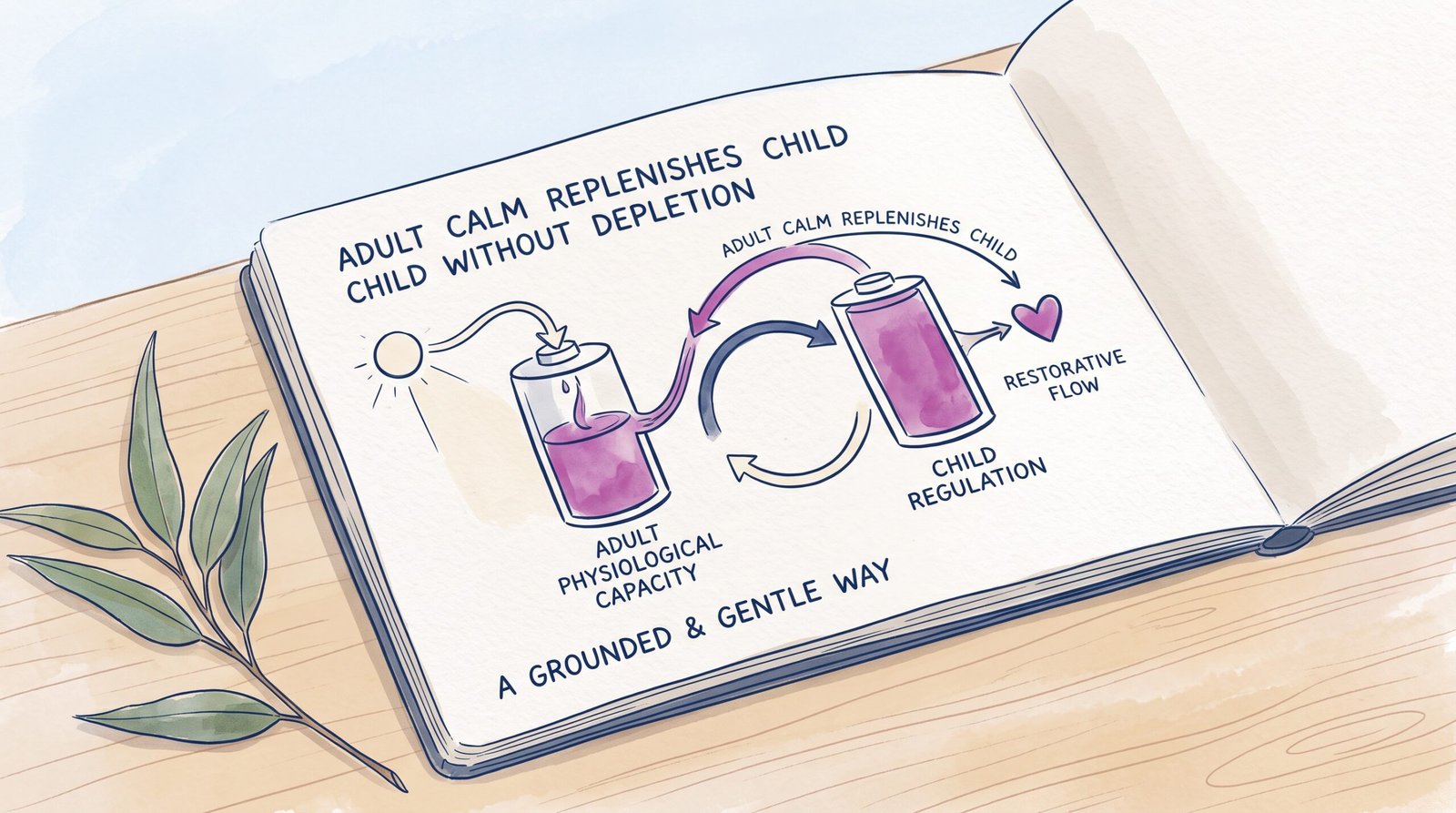
The 4 PM Hallway Floor: When My Own Battery Hit Zero
To understand how parent teacher burnout neurodivergent care collapses our daily stamina, let me take you back to a Friday afternoon in late November. My daughter was five, completing her final term of four-year-old kindergarten.
That week had been relentless. We had navigated two sensory meltdowns over sock seams, three lengthy emails from educators about playground pushing, a paediatrician appointment on the other side of Melbourne, and the endless mental gymnastics of trying to hold down my own professional deadlines with an adult ADHD brain.
We walked through our front door at half past three. My daughter dropped her bag, kicked her runners down the hallway, and immediately dissolved into screams because our kitchen banana was slightly bruised.
I did not raise my voice. I did not give a speech about gratitude. Instead, I slid my back down the plasterboard hallway wall and sat directly on the timber floorboards. The tears spilled over my cheeks before I could stop them. I had nothing left to give. My daughter was screaming on the floor, our laundry basket was overflowing, my phone was pinging with unread work messages, and my internal battery was at absolute zero.
In that moment, I realised that the advice we give to families and teachers is fundamentally incomplete. We cannot co-regulate a dysregulated child when our own nervous system is drowning in sympathetic fight or flight. Understanding parent teacher burnout neurodivergent care realities requires acknowledging that caregiver capacity is a physical resource that runs out.
The Double Whammy: Caregiver Overload in Unforgiving Systems
Why is parent teacher burnout neurodivergent care reaching crisis levels in our homes and preschool centres? It is not because adults lack dedication, love, or resilience. It is because we are operating within systems designed for neurotypical conformity that place impossible demands on atypical development.
In Australia, early childhood frameworks overseen by ACECQA call for fully inclusive, differentiated environments. Yet educators are routinely asked to support four or five complex neurodivergent profiles in rooms with twenty-two children, hard surfaces, inadequate ratios, and zero sensory dampening.
At home, parents must become case managers, occupational therapy aides, speech practice coaches, and behavioural detectives, all while managing standard domestic responsibilities. This double burden is precisely where parent teacher burnout neurodivergent care turns from temporary tiredness into chronic physical burnout.
| Caregiver Pressure Point | What Mainstream Systems Expect | The Living Reality of Parent Teacher Burnout Neurodivergent Care |
|---|---|---|
| Continuous Emotional Co-Regulation | Adults remain calm, patient, and neutral through every high-volume meltdown and sensory storm. | Biological Mirroring Strain: Mirror neurons constantly absorb the child’s cortisol spikes, pushing the adult’s heart rate into chronic autonomic alarm. |
| The Paperwork & Funding Burden | Writing endless support plans, attending meetings, and justifying accommodations every term. | Administrative Exhaustion: Hours of advocacy that treat natural neurological wiring as a bureaucratic checklist to defend. |
| Social Scrutiny & Judgment | Demonstrating visible control over child behaviour in supermarkets, parks, and group mat sessions. | Hypervigilance & Isolation: Living under constant fear of critical glances from strangers or colleagues who mistake overload for poor parenting. |
| The Personal Neurodivergent Overlay | Adults possess flawless executive planning, sensory tolerance, and emotional stamina. | Sensory Clash: Many parents and teachers have ADHD or sensory sensitivities themselves. A child’s loud distress directly triggers the adult’s sensory overload. |
As child trauma specialist Bruce Perry has repeatedly proven in clinical literature, an unregulated adult cannot regulate an unregulated child.[4] When we push parents and educators to the brink of physiological collapse, everyone suffers. Addressing parent teacher burnout neurodivergent care is an urgent educational necessity.
The Biological Reality of Secondary Sensory and Autonomic Fatigue
To tackle parent teacher burnout neurodivergent care effectively, we must look at what happens inside the adult body during repeated co-regulation episodes.
When a six-year-old child screams, throws resources across a classroom, or bolts toward a busy road, your sympathetic nervous system instantly activates. Your adrenal glands pump adrenaline and cortisol into your bloodstream, your pupils dilate, and your digestion slows down. This biological reaction is an involuntary survival mechanism described by Stephen Porges in Polyvagal Theory.[1]
In neurotypical caregiving, these spikes happen occasionally and are followed by long stretches of social safety where parasympathetic vagal brakes restore calm. But in neurodivergent caregiving, these alarms sound five, ten, or fifteen times every single day.
The adult body never gets the chance to return to baseline. You live in a state of chronic autonomic arousal, scanning rooms for sensory triggers, listening for vocal pitch changes, and predicting transitions before they erupt. This constant state of neuroception vigilance is why parent teacher burnout neurodivergent care feels so physical. You wake up exhausted because your body has been running an invisible marathon while standing still.
As an ADHD mum, high-volume noise is my primary sensory trigger. When my daughter’s vocal volume spikes during a sensory storm, my own ears physically ache. My instinct is to run away or shut down. For years, I felt immense shame about that reaction. Learning the biology of parent teacher burnout neurodivergent care showed me that my reaction was not bad parenting; it was two sensitive nervous systems colliding in a confined space.
4 Powerful Survival Shifts for Parent Teacher Burnout Neurodivergent Care
Surviving parent teacher burnout neurodivergent care requires practical, boundary-driven shifts that preserve your physical battery. Here are four essential strategies:
1. Radical Demand Dropping: What Actually Keeps Everyone Alive?
When caregiver capacity collapses, you must stop trying to run a high-demand household or a rigid classroom schedule. Take a clean sheet of paper and divide your daily tasks into two columns:
Non-Negotiable Safety: Eating food, drinking water, taking essential medication, and physical protection from harm.
Social Conditioning Demands: Eating with cutlery, wearing matching clothes, finishing every handwriting page, packing away toys before bedtime, and sitting upright at tables.
On low-capacity days, drop every demand in the second column without apology. If dinner is toast and sliced apples eaten on the floor while watching a documentary, that is a triumphant parenting choice. It preserves adult fuel so you can stay safe and kind. Reducing demand is the single fastest way to arrest parent teacher burnout neurodivergent care cycles.
2. Parallel Low-Demand Presence Instead of Active Intervention
When a child is dysregulated, tired adults often make the mistake of over-talking, asking questions, offering choices, and explaining consequences. This verbal barrage burns massive executive energy for both people.
Shift to parallel presence. Sit down on the floor three metres away. Turn your body slightly to the side so you are not making intense direct eye contact. Drop your shoulders, take a long, audible exhale, and say nothing:
“I am sitting right here on the rug. The room is safe, and I am resting my body.”
This technique, rooted in Ross Greene’s collaborative model, allows the child to borrow your calm presence without requiring active verbal processing.[3] It protects your vocal cords, calms your heart rate, and lowers the temperature of the room.
3. Protect Your Own Sensory Channel Relentlessly
Educators and parents are expected to endure sensory chaos that would overwhelm anyone in an office or factory setting. If you want to survive parent teacher burnout neurodivergent care, you must treat your own sensory boundaries as non-negotiable:
Acoustic Buffering: Wear discreet high-fidelity earplugs (such as Loop plugs) during noisy morning pack-up times or dinner preparation. They reduce decibel sharpness without blocking child voices, preventing your nervous system from going into sensory fight or flight.
Lighting Adjustments: Turn off overhead fluorescent tubes in your classroom or kitchen whenever possible. Rely on warm secondary lamps or daylight filtered through cotton curtains to give your optical nerve a rest.
Physical Space Resets: If your child is safe in a gated living room or engaged in a quiet corner, step out onto the verandah for sixty seconds of cold air. Pausing to reset is essential maintenance.
4. Dismantle the Good Parent / Dedicated Teacher Guilt Trap
The heaviest emotional component of parent teacher burnout neurodivergent care is guilt. We look at our struggling kids, compare ourselves to sanitised parenting accounts online, and decide that if we were just more patient, more creative, or more selfless, our children would not struggle so much.
Burnout researcher Christina Maslach demonstrated that professional burnout is primarily driven by an imbalance between environmental demands and available systemic resources, not individual character flaws.[2] You are not burnt out because you are weak. You are burnt out because you have been carrying an impossible load in an unsupported environment for far too long.
Building a Sustainable Support Model Across Victorian Homes and Classrooms
What does an authentic, sustainable care model look like when we move past parent teacher burnout neurodivergent care crisis management?
It starts with transparent communication between home and school. When my daughter has had an exhausting sensory week, I do not send her to school with an apology. I write a simple, honest note to her educator:
“Good morning. We had a very low-capacity evening with significant sensory distress. Her battery is at roughly thirty percent today. Please feel free to drop non-essential workbook demands and offer extra quiet time in the reading nook.”
When educators receive that information, it removes the mystery. They no longer wonder why the child cannot write their name on Friday morning. They can adjust room demands proactively, which protects the teacher’s energy as well as the child’s.
Furthermore, as developmental research from Harvard’s Center on the Developing Child emphasizes, sustainable adult-child relationships rely on responsive, predictable interactions rather than perfection. When adults protect their own physical boundaries, they can show up with genuine warmth when it matters most.
Forgiving Yourself on the Kitchen Floor
Looking back on that Friday afternoon when I sat crying on our hallway floorboards, I no longer see that moment with embarrassment. I see it as the turning point where I stopped pretending that our family could live by standard, linear parenting rules.
My daughter eventually stopped screaming that afternoon. Seeing me sitting quietly on the floor, she walked down the hallway, sat down beside my knee, and rested her head against my arm. We did not eat a gourmet dinner. We did not practice speech sounds or complete fine-motor tracing sheets. We ate toast, watched a story about wombat rescue, and went to bed early.
Surviving parent teacher burnout neurodivergent care does not require finding more energy to do more tasks. It requires the courage to do less. It means honouring your own human limits, setting down the heavy expectations of a neurotypical world, and remembering that keeping yourself steady and whole is the greatest gift you can ever offer the children in your care.
- Read why daily energy tanks rise and fall in Why Child Can Do It Some Days Not Others →
- Discover why standard age checklists fail our children in Why Milestones Don’t Fit Neurodivergent Children →
- Explore executive fatigue and dopamine swings in ADHD Skills Inconsistency Explained →
- Return to our main cluster guide on Spiky Profiles and Capacity in Neurodivergent Children Hub →
References
- Porges, S. W. (2011). The Polyvagal Theory: Neurophysiological Foundations of Emotions, Attachment, Communication, and Self-Regulation. W. W. Norton & Company. [Autonomic reactivity, neuroception of threat, and the biological cost of chronic co-regulation].
- Maslach, C., & Leiter, M. P. (2016). Understanding the burnout experience: Recent research and its implications for psychiatry. World Psychiatry, 15(2), 103-111. [Systemic mismatches between workplace or caregiving demands and human physiological resources].
- Greene, R. W. (2014). Lost at School: Why Our Kids with Behavioral Challenges Are Falling Through the Cracks and How We Can Help Them. Scribner. [Collaborative problem-solving and low-demand strategies to prevent adult-child escalation].
- Perry, B. D., & Szalavitz, M. (2017). The Boy Who Was Raised as a Dog: And Other Stories from a Child Psychiatrist’s Notebook. Basic Books. [The neurosequential model of therapeutics and the necessity of adult regulation for child co-regulation].
- Shanker, S. (2016). Self-Reg: How to Help Your Child (and You) Break the Stress Cycle and Successfully Engage with Life. Penguin Random House. [Identifying biological and hidden environmental stressors affecting adult and child self-regulation].