
Shape Activities for Kids: 7 Brilliant Play Ideas for Real Learning
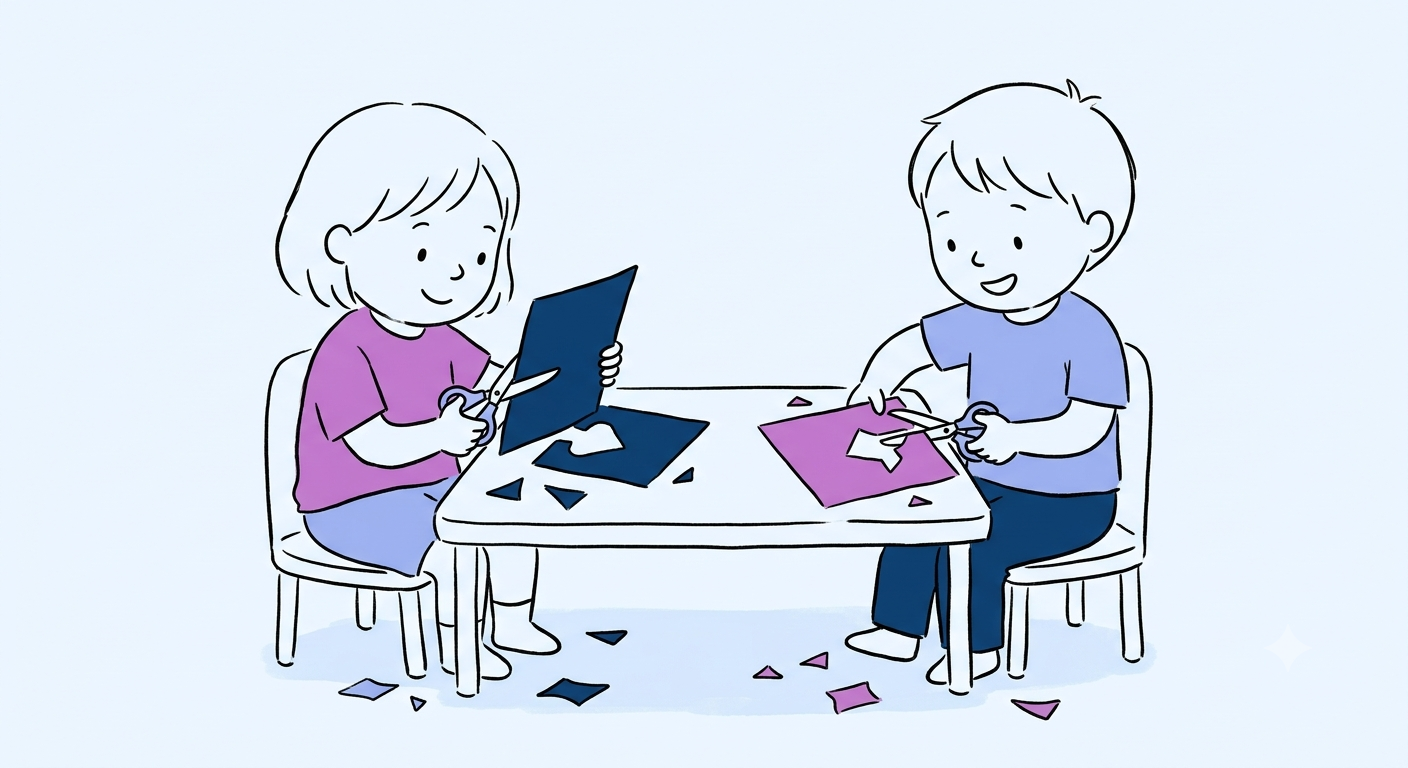
I still smile when I think back to the afternoon my daughter firmly informed me that a square had magically disappeared right in front of her eyes. We were sitting together on the timber floor with some coloured paper offcuts. I picked up a simple blue paper square, turned it slightly so it rested on one corner, and asked her what shape she could see. She gave me that classic, slightly exasperated toddler look and said, “Mum, that is not a square anymore, that is a diamond.”
When I rotated the paper back so the edge sat flat against the floorboards, she nodded with complete relief. “Now it is a square again.” Same piece of paper, same four equal sides, same four right angles. Yet in her developing visual world, tipping it on an angle completely changed what it was. That quiet moment taught me a lesson that years of teaching degrees never quite captured so clearly. Meaningful shape activities for kids are not about drilling names off a plastic poster. They are about helping young hands touch, turn, and feel how shapes live in three dimensional space.
Table of contents
- What parents and educators usually notice first
- What is often misunderstood about shape learning
- What is happening underneath behaviourally and neurologically
- Why hands-on shape activities for kids work best
- What does not work even though it is commonly recommended
- Small adjustments that reduce stress for both child and adult
- Expectations versus reality in neurodivergent development
- Foundational principles for early learning
- References used
What parents and educators usually notice first
In preschool rooms and Australian homes alike, shape learning often looks smooth until the moment it suddenly does not. A child might confidently shout “circle” when pointing at a wall clock, or point out a “square” on their favourite picture book cover. Parents feel proud, thinking early maths skills are well and truly sorted.
Then something unexpected happens. Hand that same preschooler a long, skinny scalene triangle lying on its side, and they will tell you it is a party hat or a ramp, but definitely not a triangle. Ask them to sort a tray of mixed plastic shapes, and you might watch them become restless, tossing the pieces, or lining them up strictly by colour while ignoring the sides and corners completely.
When adults try to correct them by repeating the shape name over and over, children often disconnect. For our neurodivergent kids, especially those with ADHD, autism, or sensory sensitivities, being quizzed on something that does not make intuitive sense creates instant tension. They might drop under the table, fiddle with their clothing, or run to the outdoor play area. It looks like they are simply refusing to listen, but their body is reacting to an expectation that feels confusing and abstract.
Image concept: A minimalist storybook illustration in soft navy linework and muted lavender tones showing a young girl kneeling on a living room rug, turning a wooden square tile in her hands with curious, thoughtful eyes.
SEO alt text: Young girl exploring spatial geometry through hands on shape activities for kids on a living room rug.
What is often misunderstood about shape learning
The most common misunderstanding about early geometry is assuming that naming a shape is the same thing as understanding it. Early childhood culture is filled with primary coloured board books where every circle is a red ball, every triangle is an equilateral slice of cheese pointing straight up, and every rectangle lies flat like a brick.
Researchers call this visual anchor a shape prototype. Children lock onto the single picture book image they have seen fifty times. When a real shape deviates from that tidy picture, their brain rejects it. They think a triangle must point straight up to be real. They think turning a square turns it into a diamond.
This is why memorisation falls short. Geometry is not a vocabulary test. It is a study of spatial properties, boundaries, relationships, and balance. When we reduce early maths to flashcards, we miss the foundational layers of sorting by attributes and spatial reasoning. A child who can chant the names of six shapes might still struggle to understand how two triangles slide together to build a rectangle on the living room floor.
Image concept: A calm Australian early learning classroom showing two children side by side at a low table, combining triangular wooden blocks to form larger rectangles.
SEO alt text: Preschool children collaborating on composing geometric shapes during early childhood math play.
What is happening underneath behaviourally and neurologically
When we watch a child grapple with shapes, their visual system, spatial processing centres, and motor planning pathways are all working at once. To recognise a shape that has been rotated, the brain has to perform mental rotation. It must hold the image in working memory, turn it internally, and check if the properties still match the original template.
For young neurodivergent children, this mental load can be intense. Children with ADHD frequently experience working memory fatigue when asked to hold multiple abstract rules in their head at the same time. If an adult asks them to remember that a triangle has three straight sides while simultaneously asking them to ignore the fact that it is pointing sideways, their cognitive battery drains very quickly.
Sensory profiles also play an enormous role. Autistic children and children with sensory processing differences often rely heavily on predictable visual patterns to feel safe in their environment. A square that changes its orientation can feel genuinely destabilising because its visual predictability has shifted. Furthermore, flat printed worksheets provide zero tactile feedback. Without the physical feeling of corners poking into their fingertips or edges running along their palms, their proprioceptive system cannot help their brain map the shape.
When we replace flat flashcards with rich, physical shape activities for kids, we give their nervous system the concrete sensory feedback it needs. Touching real objects allows children to ground their learning through their hands, taking the pressure off fragile visual memory.
Image concept: Close up view of small hands feeling the sharp wooden corners of a tactile wooden triangle block on a soft blue textured mat.
SEO alt text: Close up of toddler hands feeling edges and vertices during tactile shape activities for kids.
Why hands-on shape activities for kids work best
When you move away from the desk and bring geometry into the physical world, learning becomes natural, playful, and calming. Effective shape activities for kids invite full body movement, tactile exploration, and genuine problem solving.
Here are seven practical, low pressure ideas that work beautifully at home or in early learning settings:
- The rotated square experiment: Take a square wooden block or a square coaster. Place it flat on the carpet, then slowly rotate it so it rests on its corner. Instead of correcting your child if they say it changed, invite them to test it together. Count the sides one by one. Check the corners. Ask them gently, “Does it still have four straight sides? Are they still the same size?” Letting them verify the properties gives them real ownership.
- Washing line shape hunt: Peg cardboard cutouts of circles, triangles, and rectangles along an outdoor clothesline or an indoor ribbon. Give your child a collection of household items, such as lids, sponges, and coasters, and let them match each object to its matching silhouette on the line. Moving back and forth provides calming vestibular input.
- Attribute sorting with mixed colours: Never use shapes that are all colour coded, such as all red circles and all blue squares, because children will sort by colour instead of shape. Gather circles, squares, and triangles cut from scrap cardboard in completely mixed colours. Challenge your child to sort them into groups that have corners and groups that are round.
- Verandah chalk outline walks: Draw giant geometric shapes on outdoor pavers or driveways using thick sidewalk chalk. Call out simple spatial challenges: “Can you balance along the three straight lines of the triangle?” or “Can you hop inside the shape with no corners?” Moving their entire body through the shape cements spatial memory.
- Composing shapes with kitchen snacks: Cut sandwiches, pancakes, or watermelon slices into triangles and small squares during morning tea. Show your child how two right angle sandwich triangles can be pushed together to build a rectangle. Eating their creations makes spatial transformations deeply satisfying and memorable.
- Sensory mystery bag: Place durable wooden shapes inside an opaque fabric bag or pillowcase. Have your child reach in with their eyes closed, feel a shape with their fingers, and guess what it is based purely on the number of edges and corners they can feel before pulling it out. This builds powerful tactile discrimination.
- Everyday nature geometry: On an afternoon walk to the local Australian park, hunt for shapes hidden in natural and built spaces. Notice the circular drainage covers, rectangular brickwork on letterboxes, and triangular roof trusses. Real world shapes prove to kids that geometry is all around them.
Hands-On Early Geometry Starter Pack
Looking for gentle, low pressure shape exploration? Download our tactile shape mats and attribute sorting guides designed for neurodivergent children and busy homes.
Explore the Shape PackImage concept: A sunny outdoor patio setting where a parent and child use chalk to draw big open geometric outlines across paving stones with simple, happy expressions.
SEO alt text: Parent and child drawing large chalk shapes on outdoor pavers during playful shape activities for kids.
What does not work even though it is commonly recommended
A lot of mainstream educational advice encourages habits that quietly ramp up stress for sensitive children. Recognising what to avoid helps us protect the natural curiosity our kids bring to their play.
Flashcard speed drills are one of the most common recommendations. Adults flip through cards showing a circle, square, or triangle, asking the child to name them as fast as possible. For a child with slower verbal processing or ADHD, this format creates immediate performance anxiety. It turns a fascinating geometric concept into a high pressure quiz. When a child freezes or guesses wildly just to end the drill, it is a sign of nervous system overload, not an inability to learn.
Relying solely on flat, single colour worksheets is another trap. Commercial tracing sheets that only show uniform shapes in predictable upright orientations teach children that shapes must look exactly like the textbook to count. When a child only ever sees triangles pointing upward, their mental model freezes into a narrow prototype.
Hand over hand tracing also creates friction. Forcing a child hand to trace the perimeter of a drawn triangle removes their motor agency. If their hand muscles are tired or their joints are sensitive, physical steering can feel invasive and triggering. True spatial learning happens when the child moves freely, exploring edges and corners on their own terms.
Image concept: A tidy, minimalist wooden toy shelf with divided compartments holding natural sorting bowls, uncluttered and calming, in soft blue and white tones.
SEO alt text: Uncluttered early childhood learning shelf with wooden sorting bowls and geometric exploration materials.
Small adjustments that reduce stress for both child and adult
Creating a rich geometric learning environment does not require hours of prep or expensive specialist toys. A few thoughtful shifts in how we set up the space and how we talk can transform the entire experience.
Start by changing the physical setup. If your child struggles to focus at the dining table, move to the carpet. Let them lie on their stomach on a supportive rug while manipulating wooden pattern blocks. Prone positioning engages the shoulder girdle, stabilises the core, and provides calming pressure to the torso, helping active children settle their attention naturally.
Shift your language from testing to wondering aloud. Instead of quizzing your child with rapid questions like “What shape is this? How many sides?”, try narrating your own observations: “Look at this piece, it has three sharp corners that poke my finger,” or “I wonder if these two blocks will fit together to make a long rectangle.” This observational style invites collaboration without putting the child on the spot.
Keep sessions delightfully short. A child does not need thirty minutes of geometric play to build real skills. Five minutes of turning a block in their hands, folding a napkin into a triangle during lunch, or noticing the shape of their biscuit builds lasting neural connections without ever reaching the point of frustration.
Image concept: An adult and a young child sharing a peaceful moment at a low coffee table, gently placing a wooden circle into a matching wooden puzzle board.
SEO alt text: Mother and child enjoying calm, low pressure shape activities for kids at a low wooden table.
Expectations versus reality in neurodivergent development
When you browse social media or look at developmental milestone checklists, it is easy to feel that your child is missing out. We see glossy photos of toddlers sorting intricate geometric puzzles, and we wonder why our own child scatters the blocks across the floor or insists on sorting the plastic storage tubs instead of the shapes inside.
In neurodivergent development, learning is rarely smooth or symmetrical. A child might have an extraordinary intuitive grasp of three dimensional architectural balance, creating complex towers with wooden blocks that seem to defy gravity, while simultaneously struggling to name a flat printed rectangle on a page. This spiky profile is completely normal.
Letting go of arbitrary timelines allows us to appreciate the rich learning happening right in front of us. When a child spends months turning objects in their hands, feeling weights, and testing how pieces balance, they are building genuine spatial intuition. When their expressive language and abstract reasoning catch up in their own time, that physical foundation will give deep meaning to every geometry lesson they encounter in school.
Image concept: A reflective storybook illustration of a mother and daughter looking through a sunny window at geometric rooflines and trees, bathed in soft lavender and blue hues.
SEO alt text: Mother and daughter looking out a window observing real world shapes in an Australian suburban setting.
Foundational principles for early learning
When you are unsure how to approach early maths at home, anchor your choices in these core ideas:
- Attributes matter more than names: Focus on the properties that make a shape what it is, such as straight edges, curved borders, and sharp corners, rather than memorising labels.
- Variety breaks the prototype trap: Show shapes in multiple sizes, unusual proportions, and rotated orientations so your child builds a flexible, robust concept of geometry.
- Movement and touch unlock understanding: Let hands touch, turn, build, and carry. Physical interaction grounds abstract concepts into real memory.
- Nervous systems come before academic goals: If an activity causes distress, pause and reconnect. A regulated child learns naturally, while a stressed child cannot absorb new ideas.
- Everyday moments are enough: Folding laundry, slicing fruit, and walking down the street offer all the geometry practice a young child truly needs.
By leaning into playful, grounded shape activities for kids, we give our children the freedom to explore spatial relationships with curiosity, confidence, and genuine joy.
References used
- Clements, D. H., & Sarama, J. (2014). Learning and teaching early math: The learning trajectories approach (2nd ed.). Routledge. https://www.routledge.com
- National Research Council. (2009). Mathematics learning in early childhood: Paths toward excellence and equity. The National Academies Press. https://doi.org/10.17226/12519
- Australian Government Department of Education. (2022). Belonging, Being and Becoming: The Early Years Learning Framework for Australia (EYLF V2.0). Australian Government. https://www.acecqa.gov.au/eylf
- National Association for the Education of Young Children (NAEYC). (2010). Early childhood mathematics: Promoting good beginnings. NAEYC Position Statement. https://www.naeyc.org/resources/position-statements
- Raising Children Network. (2023). Developing early numeracy and maths skills. The Australian Parenting Website. https://raisingchildren.net.au
- Royal Children’s Hospital Melbourne. (2021). Kids Health Info: Child development in the preschool years. https://www.rch.org.au/kidsinfo
- Australian Psychological Society. (2020). Evidence-based psychological interventions for children and adolescents: A review of the research literature. https://psychology.org.au
- National Health and Medical Research Council. (2022). Australian guidelines for ADHD: Clinical practice guideline. Australian ADHD Professionals Association (AADPA). https://aadpa.com.au/guideline