
Shapes and Colours Activities for Toddlers: 7 Brilliant Play Ideas Before Tracing
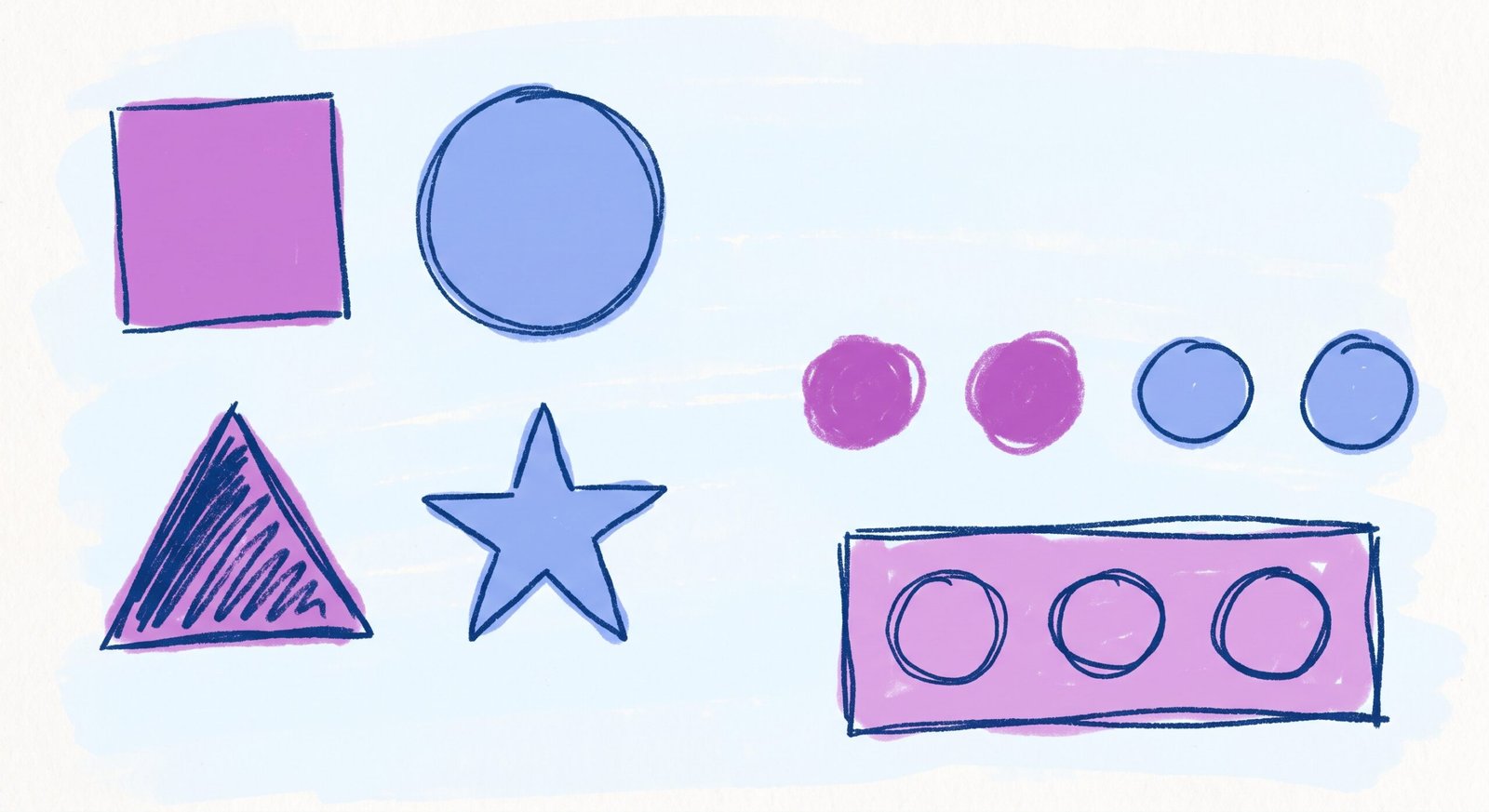
I still remember the morning I decided to put tracing worksheets away for good. The morning sun was pouring across our kitchen floor, and I had set out what I thought was an inviting little table activity. A fresh sheet of paper with dotted triangles, and a brand new chubby crayon ready to go. Within about a minute and a half, the crayon was tossed under the fridge. My youngest was crouched on the rug, busy pulling every plastic bowl out of the bottom cupboard and sorting them into neat stacks of red, blue, and yellow.
Years of working in early learning and raising children who see the world a bit differently had taught me what was going on, but my first gut reaction was still that familiar parental sigh. Why is it so hard to sit and trace? Is this avoidance? But watching her hands work so quietly on that rug made it clear. She was not avoiding learning at all. She was simply choosing the kind of work her hands and brain were actually ready for. Real, low stress shapes and colours activities for toddlers are about holding, sorting, and feeling things in the real world before we ever ask a little hand to follow a line on paper.
Table of contents
- What parents and educators usually notice first
- What is often misunderstood about this stage
- What is happening underneath behaviourally and neurologically
- Why shapes and colours activities for toddlers work best through sensory play
- What does not work even though it is commonly recommended
- Small adjustments that reduce stress for both child and adult
- Expectations versus reality in neurodivergent development
- Foundational principles for early learning
- References used
What parents and educators usually notice first
In both my own home and my early childhood rooms, pencil time is often where the big tears start. I watch toddlers grip a crayon with a tight little fist, pressing until the paper rips or the wax snaps in half. Or they barely brush the paper before dropping the pencil and wandering off into the hallway. When we push them to sit back down, their little bodies get restless. They slip out of the chair, kick the table legs, or start bouncing off the walls.
What puzzles so many of us as parents is how they can jump up from a workbook after ten seconds, but then spend half an hour outside sorting pebbles by size, or carefully lining up toy cars by colour across the hallway carpet. It can feel like they are deliberately ignoring us. But in reality, their bodies are telling us the truth. Staying still in a chair and steering a tiny pencil tip along a printed path takes a massive amount of physical stamina and focus. It is exhausting work for a little body that just wants to move and explore.
What is often misunderstood about this stage
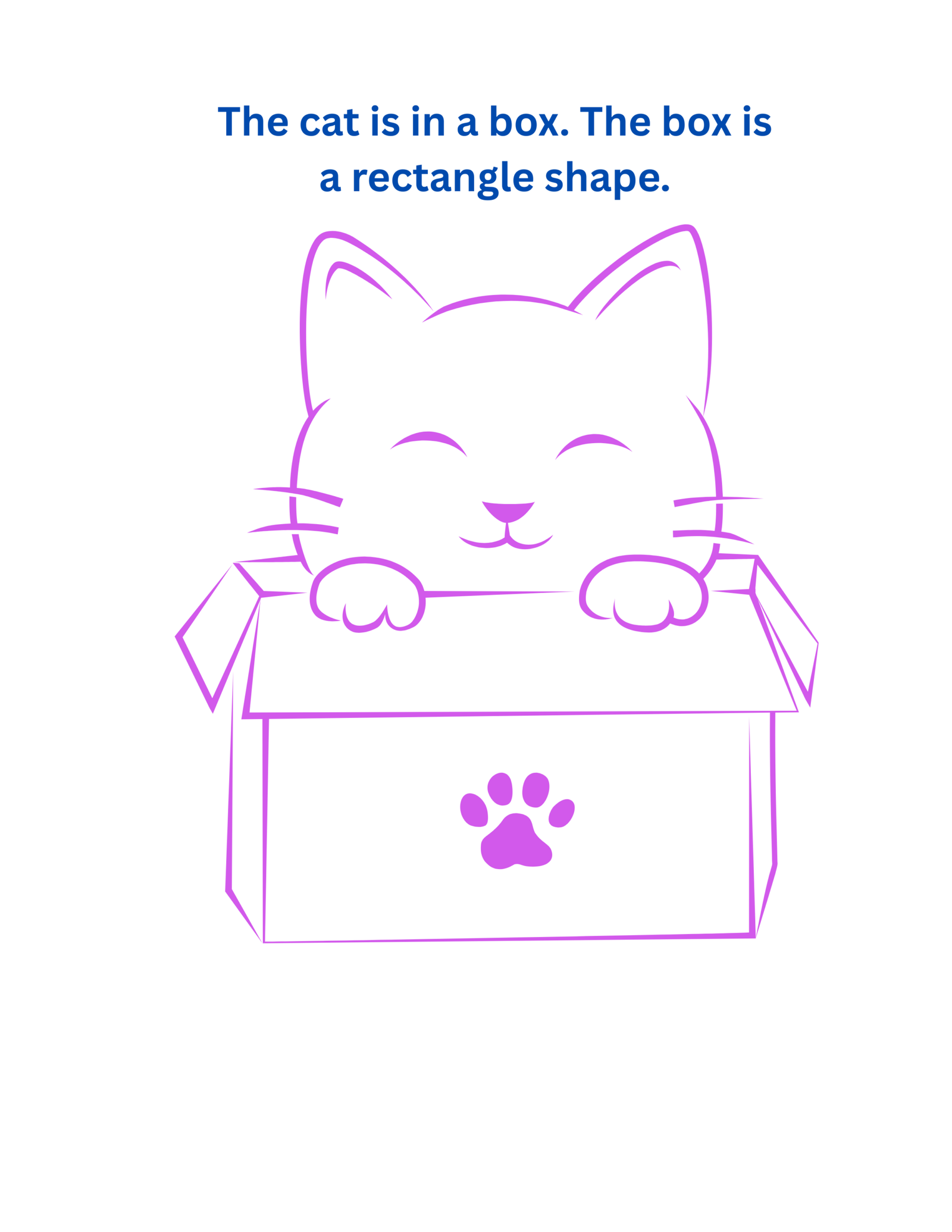
The biggest trap we fall into as parents is thinking that knowing a shape and drawing a shape are the same skill. They are completely different things. We are often told that if our child is going to start kindergarten or preschool soon, they need to trace circles and squares on paper. That puts all the focus on the hand grip instead of how the child actually thinks about the world around them.
When our kids run away from tracing, people often label it as poor behaviour. We are told to use reward charts, offer stickers, or make them sit still for five minutes to build persistence. I have felt that pressure myself. But pushing through that resistance usually leads straight to meltdowns.
Your child does not need to draw a triangle to understand what a triangle is. Tracing is heavy physical work. When an activity demands more body control and focus than a toddler has right now, their nervous system sounds an alarm. That wiggle, that slide off the chair, that sudden urge to run across the room is just their body trying to find balance. It is not defiance. It is just biology.
What is happening underneath behaviourally and neurologically
Once I started looking at my children through a sensory lens, everything changed. To hold a pencil and trace a line, a child needs a strong core, steady shoulders, and balanced wrists. Many neurodivergent kids, including those with ADHD or autism, have lower muscle tone or flexible, bendy joints. Just sitting upright on a wooden dining chair burns through most of their energy. By the time their fingers pick up a pencil, their body is already worn out from trying to stay balanced.
Their eyes and brains are also working overtime. They have to tell the difference between background clutter and the line they need to follow, and coordinate their eyes to move smoothly across the page. For a child who is sensitive to visual clutter, a busy workbook page can feel overwhelming. For a child who seeks out heavy movement, a tiny crayon feels like nothing in their hand, so they press down hard just trying to feel where their hand is in space.
There is also the brain reward system to consider. Kids with ADHD brains run on interest, joy, and freedom to try things out. A worksheet has only one right answer, and every time the pencil slips off the dotted line, it feels like a mistake. That visual error can make a sensitive child feel anxious very quickly. But when we offer hands on shapes and colours activities for toddlers using real objects, there is no wrong answer. Holding a wooden block or sorting felt pieces feels good in their hands and lets them explore without the fear of getting it wrong.
Why shapes and colours activities for toddlers work best through sensory play
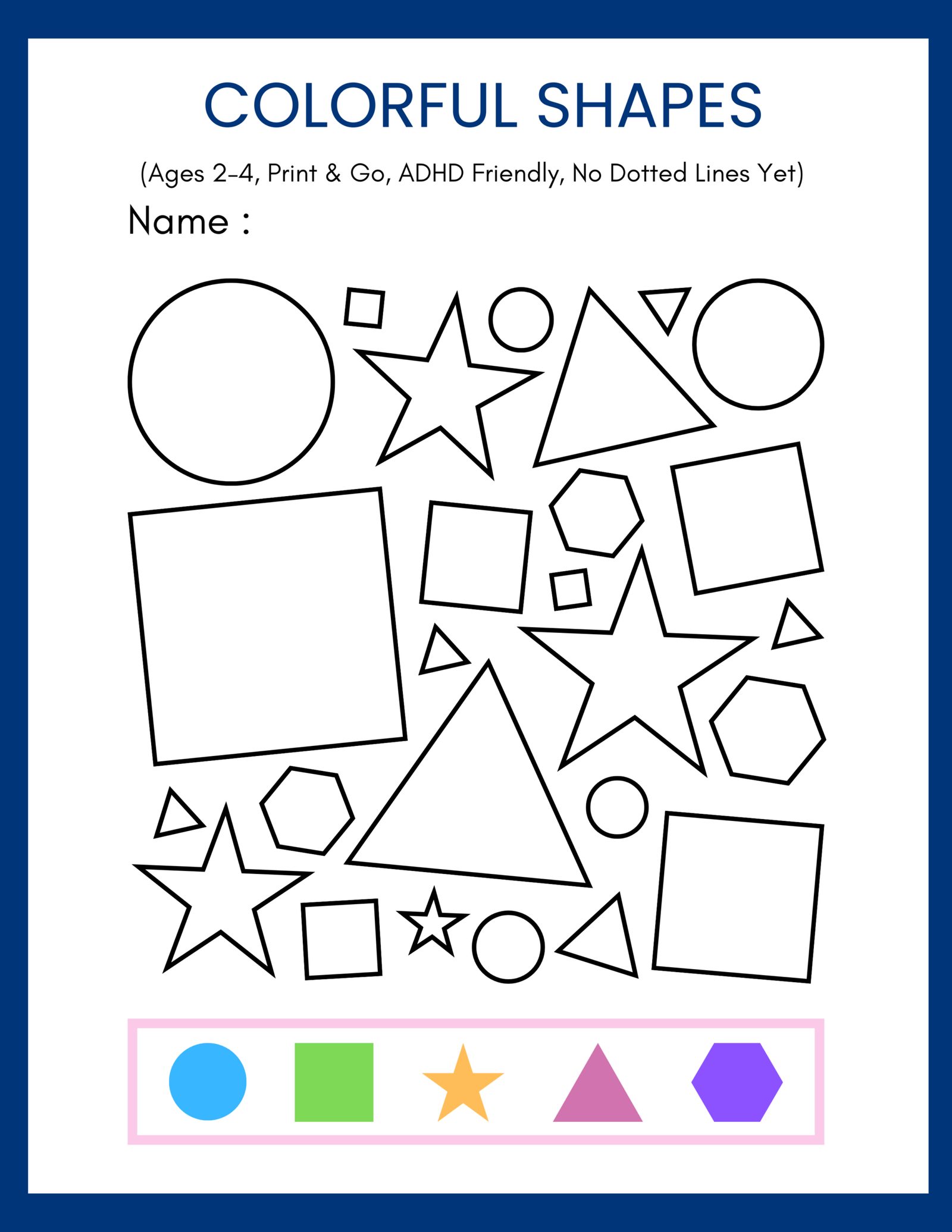
When we let go of the pressure to sit at a table, learning becomes fun again. Over the years, I have found that meeting kids on the floor or outside works wonders. Big, tactile shapes and colours activities for toddlers give their busy bodies the movement they crave while teaching the exact same early math concepts.
Here are a few real life ideas that have saved my sanity at home:
- Laundry basket sorting: Put two big laundry baskets out on the rug or grass, one for red things and one for blue. Let your toddler run through the house carrying cushions, towels, or shoes to drop into the right basket. That heavy lifting gives their muscles calming feedback while teaching colour sorting.
- Warm water splash hunt: Fill the laundry trough or a big plastic tub with warm soapy water and toss in plastic shape blocks. Let them scoop and splash while talking about the round lids and square containers. Water play instantly soothes a tired nervous system.
- Neighbourhood pram walks: When sitting at home feels too hard, step outside. Walk around the block and hunt for shapes together. Notice the big round street signs, square letterboxes, and rectangular bricks on garden walls. No pencils needed.
In preschool rooms and classrooms, these simple setups keep learning calm and inviting:
- Tummy time on the floor: Lay a soft mat on the floor and let children lie on their tummies to sort fabric scraps or coloured cards. Lying on their bellies builds neck and shoulder strength naturally, which prepares their hands for writing later without any table fights.
- Outdoor fence easels: Attach an easel or a piece of clear Perspex to the outdoor fence. Let kids stand up and paint huge circular shapes with broad brushes. Standing up lets their whole body support the arm movement so their hands do not tire out.
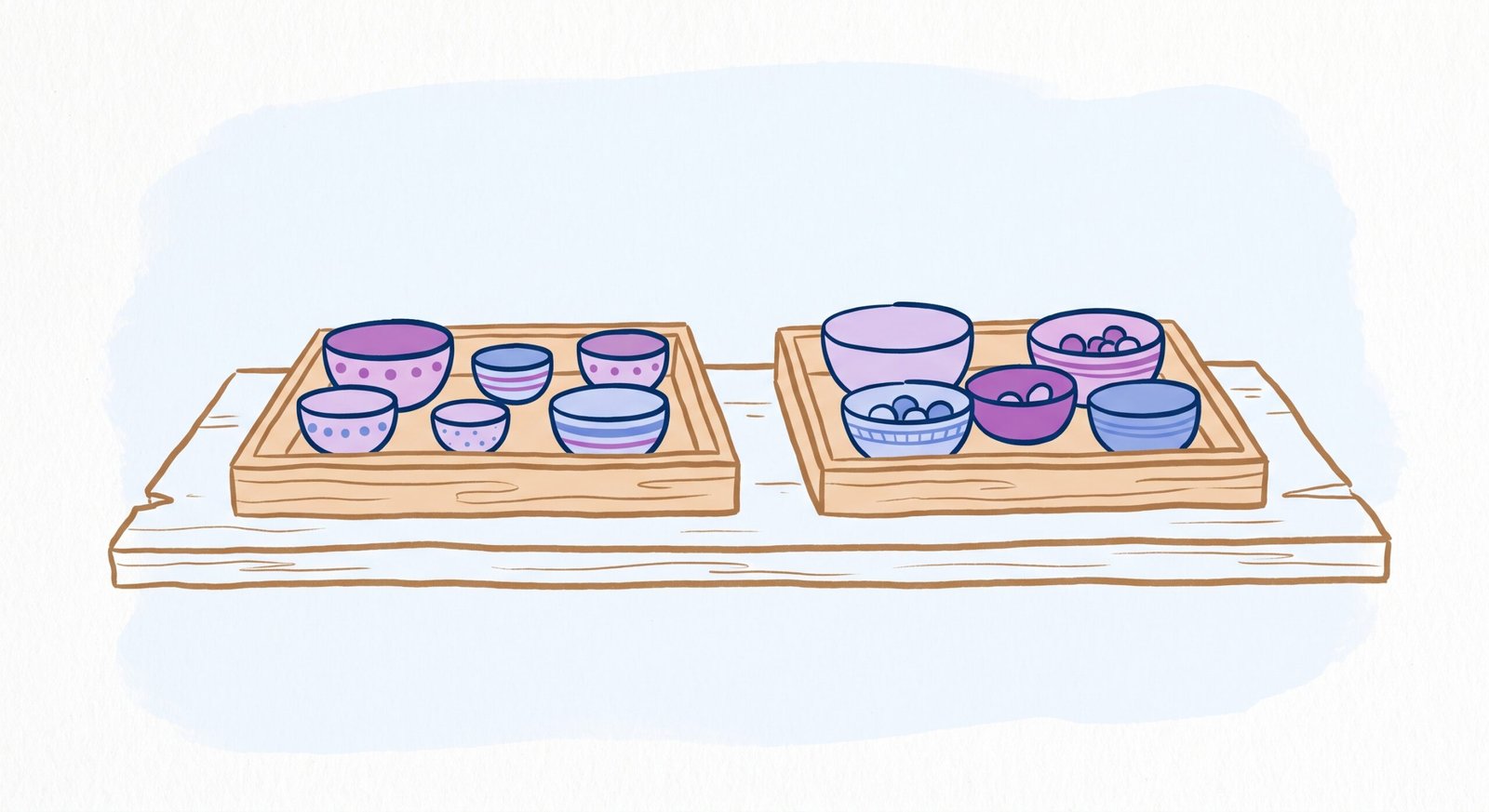
- Nature sorting trays: Collect gumnuts, smooth river stones, and seed pods on an outdoor walk, then sort them into simple wooden trays by size, texture, or shape. Keeping things natural lowers visual noise and feels calm.
- Simple shape silhouettes: Cut large, simple shape outlines out of cardboard and let children place matching wooden pieces directly on top. It gives them the satisfaction of matching shapes without any demand to hold a pencil.
Using these open ended shapes and colours activities for toddlers takes all the tension out of the room and brings the joy of learning back into focus.
Try a Free Shapes & Colours Sample
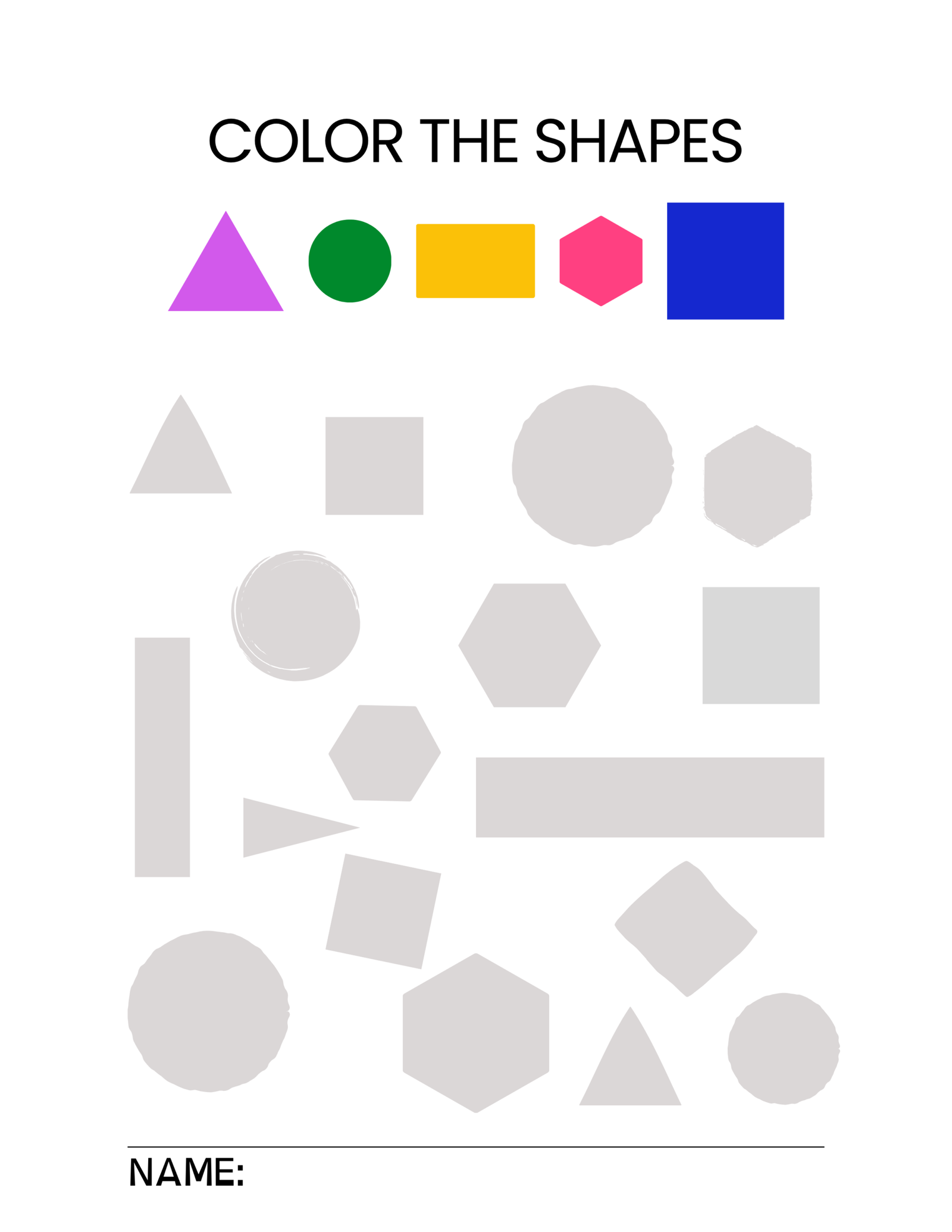
Grab a free 5-page sample of our Shapes & Colours Activity Pack with big shapes, simple matching, and no dotted lines to follow yet. See if it is the right fit for your home or classroom.
Download the Free Sample (PDF)What does not work even though it is commonly recommended
There is plenty of advice out there that sounds helpful on paper, but falls apart completely when you try it with a neurodivergent toddler. Here are a few things I learned to stop doing:
Taking over their hand is one of the most common mistakes. We place our hand over the child hand to guide their pencil along the dotted line. While we mean well, kids often pull away or freeze up. When we steer their hand for them, their own brain and muscles are not actually learning how to plan the movement. It just turns pencil time into a power struggle.
Sticker charts and reward systems also backfire in early learning. Telling a toddler they will get a treat if they finish three tracing sheets assumes they are refusing out of laziness. If their hands are tired or their eyes are overwhelmed, a sticker cannot fix that physical hurdle. It just teaches the child to ignore what their body is telling them in order to please us.
Forced table timers are another quick road to tears. Setting a timer and insisting that a three year old stay in their chair until a page is finished usually ends in an emotional breakdown. Flashing digital apps with loud bells and whistles can also be tricky. They might keep a toddler staring at a screen, but the fast sensory pace often leaves them overstimulated, cranky, and disconnected from real world learning.
Small adjustments that reduce stress for both child and adult
You do not need special equipment or expensive programs to help your toddler learn. A few tiny changes to your home routine can make a massive difference for everyone:
Look at how your child is sitting. When a little one sits on a tall adult chair with their feet dangling in the air, their body feels tippy and insecure. Pop a sturdy cardboard box or a low stool under their feet so they feel grounded. Better yet, let them kneel at the low coffee table, stand at a shelf, or stretch out on the carpet. Introducing calm shapes and colours activities for toddlers on the floor lets them use their energy for play instead of trying not to fall off a chair.
Keep visual clutter down. If you do use paper, choose pages with lots of empty white space and thick, bold borders. Swap out regular skinny pencils for chunky beeswax blocks, whiteboard markers, or fat paintbrushes with watercolours. Thick lines and easy gliding crayons let children feel successful straight away without needing a delicate finger grip.
Change how you talk during play. Instead of saying “Good boy, you stayed inside the lines,” try just saying what you see: “Look at that, you gathered all the round lids together,” or “That big blue crayon covered the whole page.” Taking away the pressure of praise helps our sensitive kids relax, experiment, and play without worrying about making mistakes.
Expectations versus reality in neurodivergent development
Being a parent in the age of social media can be hard on the heart. You scroll through your feed and see pictures of other three year olds holding pencils like little adults, writing their names, and cutting straight lines with scissors. Then you look down at your own child, who just poured a bowl of buttons all over the floorboards, and that sinking feeling creeps in.
I want you to take a deep breath. Development is not a neat race where everyone hits the same mark on the same day. For our neurodivergent kids, growth is wonderfully uneven. A four year old might build an incredible, balanced tower of blocks using complex geometry, yet have zero interest in holding a pencil for sixty seconds. That is completely okay.
Letting go of the rush to trace took a huge weight off my shoulders. A toddler who spends their days sorting autumn leaves by colour, running their fingers around the rims of pots, and testing how shapes balance is building deep spatial awareness. When their hand strength and focus catch up in their own time, they will have a rich, real world understanding of how shapes fit together.
Foundational principles for early learning
When you are feeling tired and unsure of what to do next, keep these simple thoughts close to your heart:
- Hands on before pencil work: Let little hands touch, carry, and balance real objects before asking them to make sense of flat lines on paper.
- Listen to the body: If your child is wiggling, running away, or resisting, their nervous system is asking for a break or a change of pace. It is not defiance.
- Keep it low pressure: Create play where there is no single right way to do things, so your child always feels capable and safe.
- Follow their curiosity: If you set out shape cards and your child decides to sort the plastic peg baskets instead, that is still real learning happening right in front of you.
- Connection comes first: Your bond with your child matters far more than any completed worksheet. Walk away from the table whenever things get tense and share a warm hug instead.
Choosing simple, grounded shapes and colours activities for toddlers protects their natural curiosity and lets their skills blossom at their own comfortable pace.
Get the Full Shapes & Colours Activity Pack
The complete bundle with big shapes to colour, simple matching pages, and gentle sorting activities built for littler hands and shorter attention spans. Instant PDF download to print at home.
Get the Full Bundle on EtsyReferences used
- Australian Government Department of Education. (2022). Belonging, Being and Becoming: The Early Years Learning Framework for Australia (EYLF V2.0). Australian Government. https://www.acecqa.gov.au/eylf
- Australian Psychological Society. (2020). Evidence-based psychological interventions for children and adolescents: A review of the research literature. https://psychology.org.au
- Clements, D. H., & Sarama, J. (2014). Learning and teaching early math: The learning trajectories approach. Routledge. https://www.routledge.com
- National Health and Medical Research Council. (2022). Australian guidelines for ADHD: Clinical practice guideline. Australian ADHD Professionals Association (AADPA). https://aadpa.com.au/guideline
- Raising Children Network. (2023). Movement and physical development for toddlers. The Australian Parenting Website. https://raisingchildren.net.au
- Royal Children’s Hospital Melbourne. (2021). Kids Health Info: Normal development in pre-schoolers. https://www.rch.org.au/kidsinfo
- Case-Smith, J., & O’Brien, J. C. (2015). Occupational therapy for children and adolescents (7th ed.). Elsevier. https://shop.elsevier.com
- Zwaigenbaum, L., Bauman, M. L., Stone, W. L., Yirmiya, N., Estes, A., Hansen, R. L., McPartland, J. C., Natowicz, M. R., Choueiri, R., Fein, D., Kasari, C., Pierce, K., Buie, T., Carter, A., Davis, P. A., Granpeesheh, D., Robins, D. L., Roley, S. S., Wagner, S., & Wetherby, A. (2015). Early identification of autism spectrum disorder: Recommendations for practice and research. Pediatrics, 136(Supplement 1), S10-S40. https://doi.org/10.1542/peds.2014-3667c