
Invented Spelling Neurodivergent Support for Early Writers
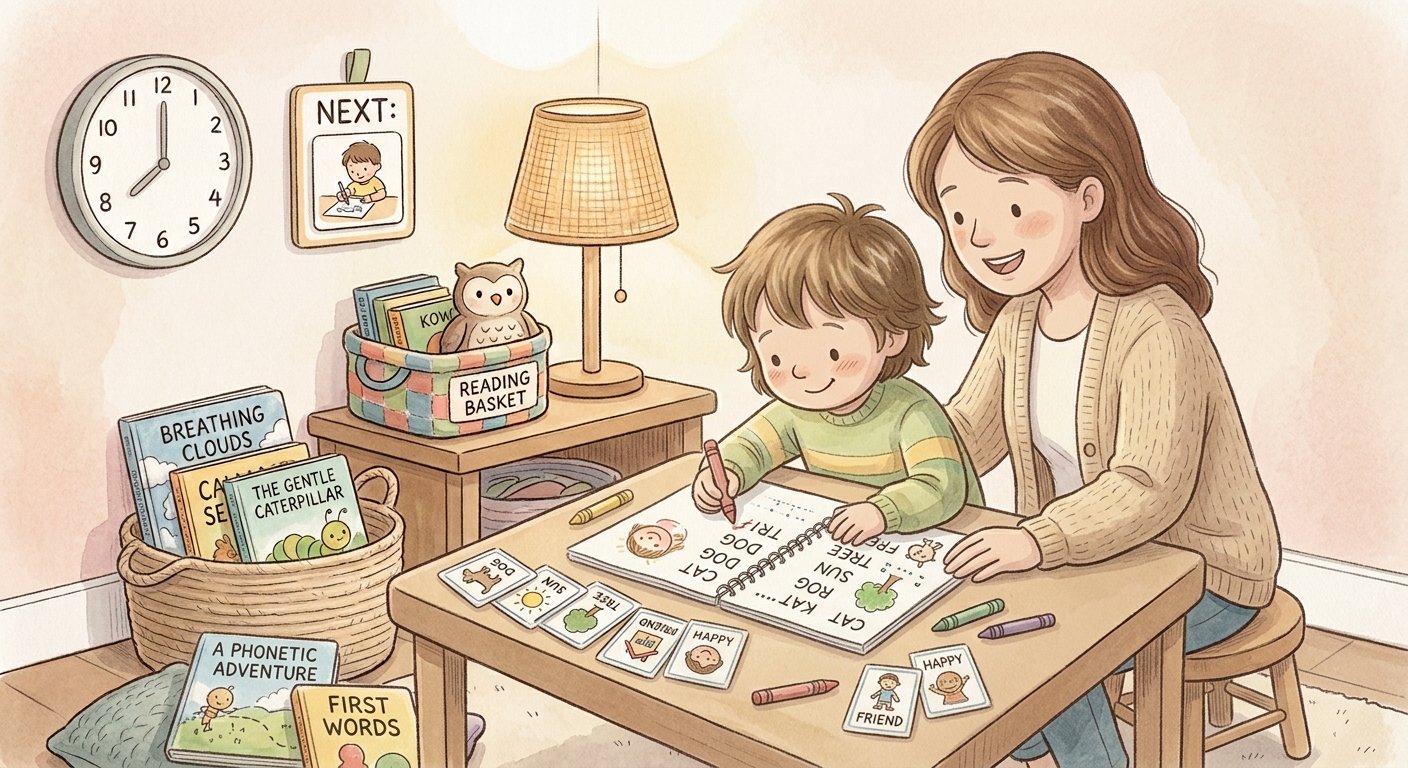
Invented spelling neurodivergent routines began in our home in a very natural way. One morning, my child wrote a small note that said hot wathers. They held it up proudly, smiling with the kind of confidence that only comes from creating something independently. I knew exactly what they meant. They were writing hot waters. Instead of correcting them, I celebrated the moment. It was a sign that writing felt safe.
Many neurodivergent children avoid writing because spelling feels heavy. They worry about getting words wrong. They worry about being corrected. They worry about the gap between what they want to say and what they can spell. Invented spelling neurodivergent routines remove that pressure. Based on guidance from Early Childhood Australia, invented spelling is a natural stage of literacy development that helps children explore sounds and build confidence before formal spelling rules are introduced.
Why Invented Spelling Neurodivergent Routines Help Early Writers
Invented spelling neurodivergent support is not careless writing. It is a developmental bridge. According to Understood, children with ADHD and autism often experience working memory challenges and perfectionism that make conventional spelling feel overwhelming. Invented spelling gives them a way to express ideas without fear. It also supports multilingual children who are still mapping English sounds to letters.
When children write frend for friend or luv for love, they are showing how they hear the word. They are experimenting with sounds. They are building phonological awareness. These early attempts matter far more than correctness.
Step by Step Invented Spelling Neurodivergent Routine
I want to describe one morning in detail, so you can picture it and copy it if it feels right for your family.
We were sitting at the kitchen table. The room was quiet. My child had a small piece of paper and a pencil. There was no worksheet. No instructions. Just space.
First, I asked a simple question. I said, what would you like to write about today. They thought for a moment and said, hot water in my cup. I smiled and said, write it the way you hear it. This phrase is the heart of invented spelling neurodivergent support.
They began slowly. They said the word hot out loud. Then they wrote h and o and t. They looked up at me and I nodded. I did not correct. I did not add more. I simply said, I can read that, it says hot.
Then they moved to the next word. They said wathers. They were hearing the word waters with their own sound pattern. They wrote w a t h e r s. They looked at the word for a moment, then looked at me. I said, I can read that too, it says wathers. That is how you hear it. I love that you wrote it.
In that moment, I was doing three things. I was inviting them to write what they heard. I was showing them that their attempt was readable. I was protecting their confidence. Based on research from the National Autistic Society, reducing performance pressure helps autistic children engage more deeply in expressive tasks. That is exactly what I saw. Their shoulders stayed relaxed. Their breath stayed steady. Writing felt safe.
How Parents Can Copy Invented Spelling Neurodivergent Routines
Begin by choosing a calm moment. Sit together at a table or on the floor with a small piece of paper and a pencil. Keep the environment simple. No worksheets. No long instructions. Just space.
Ask your child what they would like to write about. It can be something very small. A favourite drink. A pet. A toy. A feeling. When they answer, repeat their idea back to them and say, write it the way you hear it.
As they write, encourage them to say each word out loud first. If they say frend, invite them to write the sounds they hear. If they say luv, invite them to write the sounds they hear. When they finish a word, read it back to them exactly as they wrote it. Say, I can read that, it says frend. I can read that, it says luv. This shows them that their writing communicates meaning, even when the spelling is not conventional.
If they look at you for approval, keep your response gentle and specific. You might say, I love how you listened to the sounds in that word, or, you wrote what you heard, that is what writers do. This keeps the focus on effort and courage rather than correctness.
Five Gentle Invented Spelling Neurodivergent Ideas
Once this routine feels comfortable, you can explore more gentle ideas. You might invite your child to draw a picture and write one invented spelling word to label it. You might create a small book of their invented spelling words and read it together. You might keep a special notebook where they can write any word they want, in any way they hear it. You might pair invented spelling with our visual storytelling post, where children draw their ideas first and add words later. You might connect it with gentle phonics, noticing the sounds they are using without turning it into a test.
How Invented Spelling Neurodivergent Support Builds Confidence
Invented spelling strengthens expressive language. It encourages risk taking. It builds phonological awareness. It helps children see themselves as writers. When children begin with freedom rather than fear, they transition into conventional spelling more confidently. Based on Early Childhood Australia’s literacy guidance, emotional safety is one of the strongest predictors of early writing engagement.
Invented spelling also supports children who struggle with task initiation. When writing feels lighter, children begin more easily. This connects naturally with our post on literacy confidence for children who pause at the starting line.
Internal Links
You may find these related posts helpful. Our gentle phonics guide supports children who learn differently. Our visual storytelling post helps children express ideas before writing. Our literacy confidence post supports children who hesitate at the starting line. Our pencil control activities help children who find handwriting tiring.