
How to Make Learning Fun: 4 Powerful Ways Without Breaking the Bank
In our household, discovering how to make learning fun was born out of financial necessity. When money was tight during my early study years in Melbourne, discarded cardboard boxes, pots, and wooden spoons outperformed expensive electronic toys, proving that imagination needs open space rather than expensive plastic gadgets.
Understanding how to make learning fun without breaking the bank taught me that children do not crave commercial gadgets; they crave the freedom to invent their own play using everyday household items.
We arrived in Melbourne in 2010. I was starting my PhD, my two daughters were six and four and a half, and our family budget was stretched to its absolute limit.
Scholarship stipends only stretch so far, and international relocation costs eat into savings fast, especially in those first tender months before our routine found its footing.
Back then, every purchase passed through a ruthless mental filter. Most things failed. New educational toys, the kind other families seemed to buy without a second thought, sat firmly out of our reach.
I carried a quiet, persistent mother guilt about that financial gap. It was not just about missing plastic toys; it was the gnawing worry that having little money meant my girls were falling behind before they even started school.
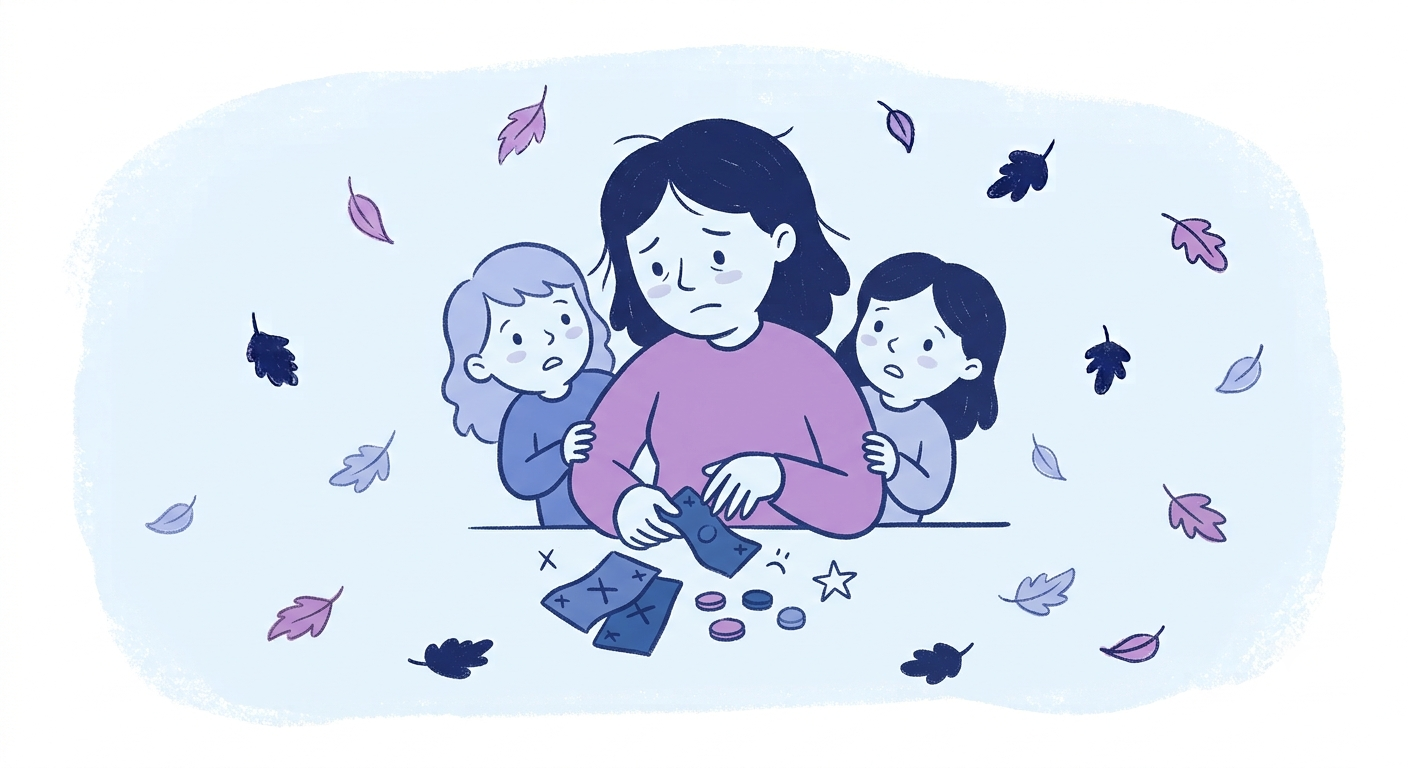
Yet that lean season forced me to look at our living room through an entirely different lens. Learning how to make learning fun at our kitchen table turned out to be the greatest developmental gift we ever received.
In this honest reflection and guide:
The One Expensive Toy I Bought and Instantly Regretted
Early in our first semester, guilt won over my budget spreadsheet.
I bought an expensive, brightly packaged electronic math toy from an education shop near the university. It had flashing lights, sound effects, and a bold promise stamped across the box about building preschool cognitive genius.
It cost far more than I had to spare. I justified the cost by telling myself it was an investment in their academic future, not just a frivolous distraction.
It held their interest for roughly three days. By the following week, the plastic gadget sat abandoned in the corner, gathering dust while its novelty wore off completely. Standing over it, I felt sick about the wasted money. I had tried to buy my way out of maternal guilt, and it had backfired. That single purchase showed me that commercial bells and whistles are never the secret to how to make learning fun.
Single-purpose toys dictate the terms of play: push button A, hear sound B. Once a child decodes that fixed circuit, their curiosity drops off sharply.
The Cardboard Box That Changed Everything
The true turning point happened by accident a few weeks later while unpacking kitchen essentials.
My younger daughter claimed the empty cardboard delivery box from a new saucepan set, along with a plain wooden spoon from the cutlery drawer.
She entertained herself for forty-five unhurried minutes. The box became a boat, a drum, a cave, a hat, and a secret hiding spot.
Her older sister joined in, bringing blankets and fabric scraps. That single cardboard box generated more imaginative storytelling, cooperative negotiation, and focused problem-solving than the flashing store-bought toy had across an entire month.
Watching them laugh on our second-hand rug, I realized how completely backward marketing messages can be. The item that cost precious dollars was forgotten; the item that cost nothing, heading for the recycling bin, held their focus for days.
That breakthrough reshaped my whole understanding of how to make learning fun at home. It inspired many of the low-cost ideas we share in our guide to cardboard box activities at home, proving that simple containers unlock infinite play.
The Science: Simon Nicholson and the University of Toledo Findings
What happened on our kitchen floor has a deep foundation in early childhood research.
In 1971, architect Simon Nicholson introduced the Theory of Loose Parts, proposing that a child’s inventiveness is directly linked to the number of variable, movable, open-ended items in their environment.[1]
Fixed-purpose toys can only ever be what the factory designed them to be. A cardboard box, a river pebble, or a wooden peg can become a hundred different things.
Rigorous evidence from researchers at the University of Toledo confirms that toy abundance actively harms play quality.[2]
Comparing toddlers provided with either four toys or sixteen, researchers discovered that children given fewer toys engaged in significantly longer, deeper, and more creative play episodes.
Having fewer toys in the room reduces sensory overload and encourages deeper investigation, an outcome that directly supports neurodivergent children as we explore in our piece on sensory environments in early childhood.
Australia’s national early childhood framework administered by ACECQA highlights that children construct knowledge by experimenting with natural and recycled materials in their daily environment.
Commercial Battery Toys vs Open-Ended Household Materials
Here is how single-purpose purchased toys compare to everyday loose parts:
| Play Dimension | Expensive Electronic Plastic Toys | Everyday Household & Recycled Materials |
|---|---|---|
| 1. Cognitive Demand How the brain interacts. |
Passive entertainment: the child watches the toy perform pre-programmed sounds and songs. | Active construction: the child must invent the narrative, test balance, and solve physical problems. |
| 2. Longevity of Interest How long play lasts over time. |
Short-lived novelty: interest plummets once the child memorizes the preset electronic functions. | Endlessly adaptable: cardboard, fabric, and pegs transform into new games across months and years. |
| 3. Sensory Regulation Impact on nervous systems. |
Loud speakers, strobe lights, and rigid plastic parts that easily trigger sensory fatigue. | Natural acoustic feedback, soothing textures, and low-stimulus tactile engagement. |
| 4. Financial & Emotional Strain Toll on parents. |
Heavy financial cost, broken plastic guilt, and stress over lost specialized batteries. | Zero financial pressure: easy to replace, simple to compost or recycle when play concludes. |
4 Powerful Ways: How to Make Learning Fun in Everyday Life
You do not need specialized shopping trips to create rich learning moments. These four zero-cost approaches show how to make learning fun using what is already sitting in your cupboards:
1. The Pot, Pan, and Water Pouring Lab
Kitchen tools teach volume, conservation, and gravity through practical movement.
- What to do: Fill a shallow baking tray with a cup of water, dried rice, or dry lentils. Hand your child metal measuring spoons, clean plastic containers, and a wooden whisk.
- Why it works: Pouring and scooping develops fine motor control without worksheets, aligning with our popular ideas for sink and water play for preschoolers and calming low-mess sensory bins. When exploring how to make learning fun on rainy mornings, simple water pouring beats any store-bought science kit.
2. Masking Tape Floor Adventures
A single roll of paper masking tape transforms a living room rug into an active play environment.
- What to do: Run straight and zigzag tape lines across your floorboards to build roadways for toy cars, balancing tracks for little feet, or indoor jumping grids.
- Why it works: Whole-body movement integrates spatial reasoning. Pair this with our ideas for indoor obstacle courses for preschoolers and dynamic hopscotch variations to burn off afternoon energy indoors.
3. Egg Carton Color & Nature Sorting
Cardboard egg cartons make natural twelve-pocket sorting trays.
- What to do: Paint the bottom of each egg cup a different color, or leave them natural. Send children into the backyard or down the footpath to find matching leaves, pebbles, and gum-nuts.
- Why it works: Hands-on sorting builds classification and pre-math comparison skills without expensive flashcards, echoing the tactile rhythms of our nature scavenger hunts for kids. This tactile sorting exemplifies how to make learning fun using objects gathered freely along garden paths.
4. Shaving Foam or Salt Tray Letter Tracing
Pencils can create frustration when small hand muscles fatigue quickly.
- What to do: Spread a thin layer of table salt, polenta, or soapy foam across a cookie sheet. Invite your child to draw swirls, roads, and letter shapes with an index finger.
- Why it works: Sensory resistance builds muscle memory without the anxiety of pencil mistakes. This low-stress tactile practice supports foundational writing, as explored in our guide on tactile letter formation techniques.
Tapping Free Community Treasures Beyond Your Front Door
Once household materials proved their worth, I started noticing free developmental resources across our Melbourne neighbourhood:
Our municipal library offered free weekly rhythm and rhyme sessions, toy borrowing programs, and a rotation of hundreds of high-quality picture books that saved our grocery budget.
Local op-shops provided wooden puzzles and classic board games for three dollars, missing tokens easily replaced with buttons or hand-drawn cardboard counters.
Neighbourhood community groups routinely gave away outgrown balance bikes and trikes simply to clear hallway space.
Years later, with Bella and Zara grown into confident adults, neither remembers the expensive electronic toy I agonized over buying.
Both remember the cardboard box fort with the working window flap that took an entire Saturday afternoon to assemble on the living room rug.
If you are asking yourself how to make learning fun while feeling the pinch of a tight budget today, take heart. You do not need money to raise a curious, capable thinker.
Trust the cardboard box waiting in your hallway. It has more than enough wonder inside it to last a childhood.
Free Printable: The Home Explorer Activity Pack
A simple, open-ended printable pack designed to spark imaginative drawing, storytelling, and sensory play with everyday materials.
Download the Free 3-Page Sampler- Explore physical household play in Practical Life Activities Preschool at Home: Low-Cost Lifeskills →
- Build large-scale cardboard worlds with Cardboard Box Activities at Home: Imaginative Upcycling for Kids →
- Calm busy afternoons using Low-Mess Sensory Bins for Preschoolers: Calming Tactile Play →
- Discover free outdoor inquiry with our Nature Scavenger Hunt for Kids: 4 Delightful Footpath Ideas →
- Support hand muscles gently with Fine Motor Skills Pencil Control Activities Without Worksheets →
References & Readings That Guided Me
- Nicholson, S. (1971). How not to cheat children: The theory of loose parts. Landscape Architecture, 62(1), 30–34. [The foundational premise proving children’s creative inventiveness depends on open-ended, movable variables rather than static toys].
- Dauch, C., Michelle, M. M., Kaenzig, K. E., & Argadine, C. (2018). The influence of the number of toys in the environment on toddlers’ play. Infant Behavior and Development, 50, 78–87. University of Toledo. [Empirical study showing that fewer toys promote sustained, deeper, and more creative play episodes].
- Australian Government Department of Education. (2022). Belonging, Being and Becoming: The Early Years Learning Framework for Australia (V2.0). [Curriculum benchmarks recognizing open-ended play and recycled materials as core to environmental inquiry].
- Ginsburg, K. R. (2007). The importance of play in promoting healthy child development and maintaining strong parent-child bonds. Pediatrics, 119(1), 182–191. [American Academy of Pediatrics clinical report on unstructured child-driven play versus commercial toys].