
Gentle Phonics for Neurodivergent Preschoolers: 4 Real Fixes That Work
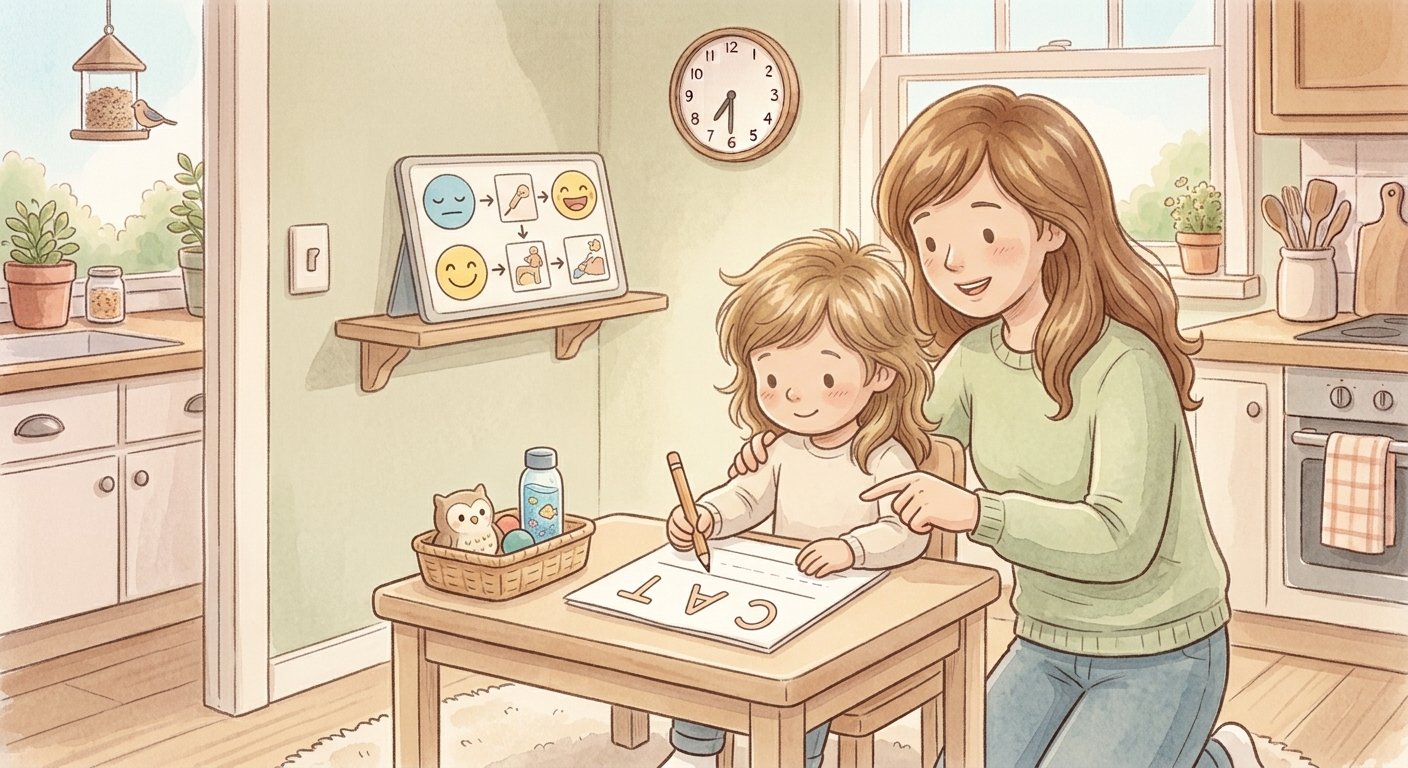
Implementing Gentle Phonics for Neurodivergent Preschoolers often collapses at 4pm. Teaching phonics to young neurodivergent learners requires a complete shift in timing, environment, and movement. I remember sitting at the kitchen table when my daughter was four years old. She was meant to trace the letter “m”. I had repeated the sound twenty times. She sighed, pushed her pencil away, and stared at the wall. That was the moment phonics collapsed—not because she couldn’t learn, but because attention was gone.
Years later, working in early childhood education, I see the exact same thing. Traditional literacy practice after afternoon tea usually leads to wriggling, noise, and crumbs everywhere. Favouring Gentle Phonics for Neurodivergent Preschoolers fixes this cycle before the afternoon “attention crash.”
Why Traditional Literacy Fails Gentle Phonics for Neurodivergent Preschoolers
When delivering phonics instruction late in the afternoon, resistance is rarely a behavioural issue—it is an executive function constraint. Executive functioning operates like a battery that drains continuously from morning to evening.
- Attention Crashes: Practicing Gentle Phonics for Neurodivergent Preschoolers prevents the meltdowns that happen when dopamine levels dip late in the day.
- Working Memory Depletion: Holding a speech sound in mind while managing fine-motor pencil control requires heavy working memory load, which drops significantly by 4pm.
- Sensory Overload: After hours of classroom noise, clutter, and transitions, the sensory threshold for neurodivergent children is extremely low. Adding a static worksheet causes instant overwhelm.
- Task Initiation Bottlenecks: When a task feels ambiguous, tedious, or physically uncomfortable, the ADHD or autistic brain experiences task paralysis. Asking a depleted child to sit still and grip a pencil triggers an immediate self-preservation response.
Traditional Phonics vs. Gentle Phonics for Neurodivergent Preschoolers
Understanding why standard classroom literacy tasks fail at home comes down to mechanical differences in learning styles. Here is how adapted micro-routines compare directly to traditional early reading methods:
| Dimension | Traditional Phonics | Gentle Phonics for Neurodivergent Preschoolers |
|---|---|---|
| Primary Medium | Paper worksheets, workbooks, static flashcards | Tactile trays (sand, flour), floor tape, body movement |
| Motor Requirement | Fine-motor pencil grip stamina | Gross-motor movement, finger-tracing, whole-body activation |
| Duration & Frequency | 15–30 minute continuous table block | 60-second to 3-minute high-engagement micro-bursts |
| Executive Load | High working memory + sustained inhibition | Low working memory; external sensory anchors |
| Dopamine Trigger | Delayed (stickers, completion charts) | Immediate (rhythm, physical motion, playful interaction) |
Gentle Phonics for Neurodivergent Preschoolers: 4 Real Fixes
Instead of fighting neurobiology or struggling against the clock, effective phonics routines adapt through multisensory integration, movement, and timing shifts.
For broader strategies, explore our detailed guide on Gentle Phonics Strategies for Neurodivergent Learners.
Fix 1: Short Micro-Sessions
Five isolated, high-engagement 60-second sound bursts distributed throughout the day yield far higher orthographic retention than one agonizing 20-minute table session. Stop the activity before fatigue sets in to preserve a positive connection with reading.
Fix 2: Movement-Anchored Learning
Pair sound recognition with large muscle groups to boost dopamine and alertness. Turn sounds into clapping, stomping, or bouncing games: “Stomp every time you hear a word that starts with /b/!” Channel energy instead of fighting it.
Fix 3: Sensory Play Integration
Ditch paper and pencils. Spread a thin layer of flour, sand, or playdough onto a baking tray. Have the child trace target letter shapes using their fingers while voicing the sound. The physical friction provides tactile feedback that embeds letter formation in long-term memory without requiring fine-motor pencil stamina.
Fix 4: Strategic Timing Shifts
Shift phonics away from the 4pm table fatigue entirely. Weave sound play into natural daily transitions: whisper letter sounds while brushing teeth, clap syllables during car rides, or search for letters on cereal boxes during breakfast.
Step-by-Step Parent Scripts for 60-Second Phonics Bursts
When implementing Gentle Phonics for Neurodivergent Preschoolers, having exact language removes the guesswork. Use these practical scripts during micro-sessions throughout the day:
Script 1: The 60-Second “Stomp & Sound” Game
Target Skill: Auditory phoneme isolation paired with gross-motor movement.
- Parent: “We are on a hunt for the /b/ sound! Every time you hear a word starting with /b/, stomp your feet like a giant. Ready?”
- Parent: “Ball!” (Child stomps) “Yes! /b/ for ball!”
- Parent: “Sun!” (Child holds still) “Great freeze! No /b/ in sun.”
- Parent: “Banana!” (Child stomps) “Boom! That’s two stomps. High five, game over!”
Elapsed Time: 45 seconds. Outcome: High engagement, zero fatigue.
Script 2: High-Friction Sand Tray Tracing
Target Skill: Visual-spatial letter formation without fine-motor pencil strain.
- Setup: Pour a thin layer of dry rice, play sand, or flour into a shallow baking tray.
- Parent: “Let’s draw the snake sound /s/. Watch my finger sweep around…”
- Parent: “Your turn! Shake the tray like magic water to clear it, then make the /s/ curve with your index finger.”
- Child: Traces the shape while making a continuous “Sssss” sound.
- Parent: “Boom! You carved the /s/! Give yourself a shake.”
Elapsed Time: 90 seconds. Outcome: Proprioceptive muscle memory reinforcement.
Observational Case Studies: Adapted Phonics in Practice
Case 1: The Kinesthetic Learner
Challenge: A 4-year-old boy with high physical impulsivity refused letter-card drills during phonics activities and showed emotional meltdowns during table time.
Intervention: We replaced flashcards with tape lines on the floor. He jumped to the corresponding letter line when a phoneme was called.
Outcome: Letter-sound recall improved significantly within two weeks because physical movement provided the necessary neurological arousal to process the sounds.
Case 2: The Sensory-Seeking Learner
Challenge: A child who struggled with fine-motor endurance consistently tore workbooks or scribbled in frustration.
Intervention: We transitioned to shaping letters out of firm playdough while singing the corresponding phoneme song.
Outcome: Deep tactile feedback satisfied her sensory needs while reinforcing the visual-spatial structure of the letters.
Case 3: The Auditory-Rhythmic Learner
Challenge: A preschooler who tuned out visual prompts and workbooks during late afternoon table practice.
Intervention: We introduced a 2-beat drum rhythm (clapping knees then clapping hands) while chanting letter sounds during transitions.
Outcome: The rhythmic cadence bypassed visual fatigue, allowing the child to spontaneously repeat phoneme chains independently hours later.
Troubleshooting Common Afternoon Phonics Roadblocks
Even when practicing Gentle Phonics for Neurodivergent Preschoolers, challenges can arise. Here is how to navigate common roadblocks:
What if my child refuses tactile textures like flour or sand?
Tactile defensiveness is common among neurodivergent children. Never force a child to touch a texture that causes sensory distress. Substitute wet or messy materials with dry, clean tactile alternatives:
- Form letters using thick velvet ribbons, pipe cleaners, or textured yarn glued onto cardstock.
- Trace letter outlines on a smooth tablet screen using a stylus or finger.
- Draw large letter shapes in the air using a torch or light wand in a dimly lit room.
What if my child cannot stop moving long enough to listen?
Do not fight the movement—embed the phonics concept into the movement. Allow them to bounce on a mini-trampoline or balance cushion while chanting letter sounds. Proprioceptive input (deep muscle pressure) helps ground the nervous system, allowing auditory processing centres to engage far more effectively than when sitting still.
What if my child gets frustrated instantly by mistakes?
Neurodivergent preschoolers often experience heightened Rejection Sensitive Dysphoria (RSD) or frustration intolerance. Keep the tone playful and low-stakes. If they make an incorrect sound, adopt a silly persona: “Whoops, my brain misheard that one! Let’s try it together.” Shift focus immediately from evaluation to co-regulation.
Step-by-Step: Setting Up a 5-Minute Phonics Burst
- Clear Visual Clutter: Clear the immediate environment of non-essential toys and items to reduce visual distraction.
- Isolate One Target Phoneme: Focus strictly on a single letter-sound pairing rather than overwhelming the child with multiple concepts.
- Incorporate Movement or Sensory Input: Choose one sensory medium (sand tray, clay, clapping rhythm).
- Deliver Immediate, Specific Feedback: Praise the specific effort immediately (e.g., “Great clear /m/ sound!”) to keep dopamine feedback loops active.
- End on a Success: Conclude the session while energy is high to ensure success with Gentle Phonics for Neurodivergent Preschoolers.
Everyday Parent Routines Across the Day
Integrating Gentle Phonics for Neurodivergent Preschoolers does not require sitting down for a formal lesson. Naturally weaving micro-interactions into your existing daily routine keeps learning effortless:
- Morning Routine (Breakfast): Spot a target letter on cereal boxes or juice cartons while eating. Keep it to a quick 30-second game.
- Commute / Travel: Play “Sound Detective” in the car or bus. Pick one sound (like /m/) and spot objects outside the window starting with that phoneme.
- Bath Time: Use foam letters stuck to wet tub walls or draw letter shapes in bath foam using fingers.
- Bedtime Wind-Down: Whisper letter sounds softly while tracing shapes gently on your child’s back as part of a calming sensory routine.
Related Resources
For further evidence-based early literacy guides, visit:
- Gentle Phonics Strategies for Neurodivergent Learners
- Foundational Early Literacy Skills for Preschoolers
Research & References
Understanding how Gentle Phonics for Neurodivergent Preschoolers works relies on established literacy research and executive functioning science:
- Reading Rockets: Evidence-Based Phonics Instruction Strategies
- Understood.org: Phonemic Awareness and Executive Functioning in Early Readers
- LD@School: Structured Literacy Frameworks for Diverse Learners
Disclaimer: This article provides educational guidance on adapting phonics for neurodivergent preschoolers based on early childhood education research and lived experience. It provides educational information only. If you have specific concerns regarding your child’s developmental milestones, executive functioning, or speech-language needs, please consult a qualified developmental paediatrician or paediatric occupational/speech therapist.