
Why I Chose a More Flexible Working Life After My ADHD Diagnosis
This is my own account of how I came to choose work that gives me more flexibility. It is one person’s experience, not a prescription for what anyone else should do.
Years ago I worked in a corporate office doing marketing management, nine to five. It was not me at all. The open plan noise, the fluorescent lights, and every day looking the same left me exhausted.
I did not have a good word for why at the time. I just knew I was tired in a way that a weekend did not fix. What I wanted, without being able to say it, was a working life with more than one door in it.
This post is the story of how I ended up choosing work that gives me more flexibility, and what that choice has asked of me in return. I have an ADHD diagnosis, and I will come back to that, but I want to be clear from the start that this is simply what I noticed about myself.
In this reflection:
Why a Nine-to-Five Was Not the Right Fit for Me
There was nothing wrong with the workplace itself. The colleagues were supportive and the tasks were meaningful. What did not work was the fixed shape of it: sitting at the same desk every day, under the same lighting, within hours that could not bend.
I have written about sensory environments before, including fluorescent flicker and softening a harsh room. In an office setting, constant overhead lighting and steady background chatter slowly drained my energy.
What I remember most clearly was the dip in the early part of the day. If my focus dropped, I had few options. In a rigid office setup, I could not switch to physical movement, step outside to reset my attention, or move to a completely different type of task. The fixed hours kept me at the desk regardless of how my mind was functioning.
I learned that I need variety, practical problems to solve, and some autonomy over how the day unfolds. Without those elements, staying engaged was an uphill battle. With them, I could work for hours with genuine interest.
From My PhD to Digital Marketing
My doctoral research came first. I wrote about that experience, and how my understanding of it has shifted over time, in I Did My PhD in Bed.
Following my PhD, I completed a Certified Digital Marketing Professional course funded through the Victorian Government. The subject matter caught my interest, leading to a role as a digital marketing manager that I held for over a year.
That position was the nine-to-five role I described above. It taught me practical skills that I still rely on, and it gave me clear insight into what kind of working rhythm did not suit me.
Over the years, I have also completed qualifications across early childhood education, adult training and assessment, and social media marketing, alongside my Master of Education. Each qualification felt like opening another door, providing practical choices for how to shape my working life.
Shaping My Own Days, Work That Gives Me More Flexibility
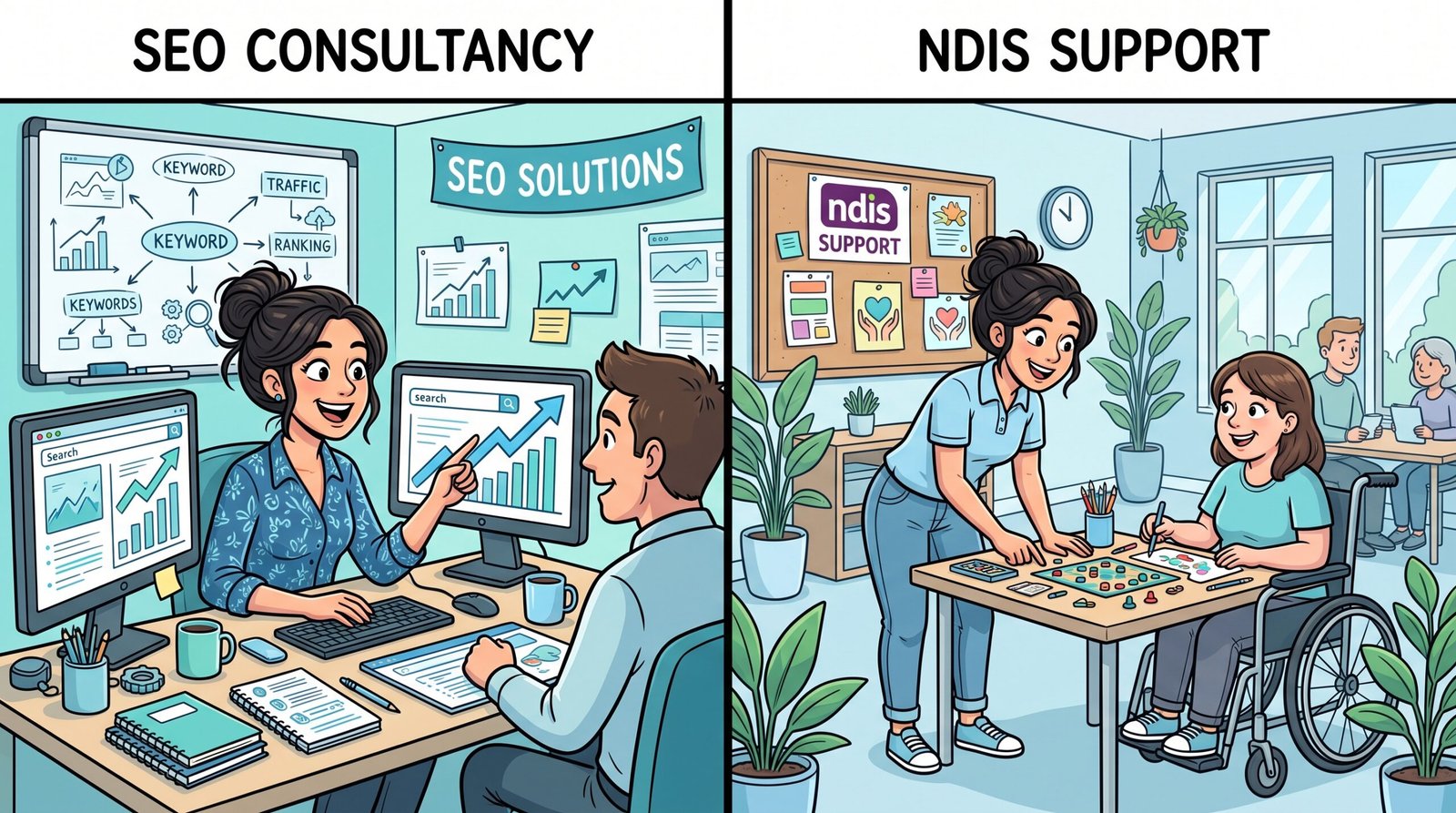
After that corporate role, I moved into independent consulting. I began helping people with their websites and building my own projects, including EarlyChildhoodEdu.net and GriffithProMarketing.
Independent work suits me because it involves practical problem-solving. When a page is not performing, I can investigate why, test an adjustment, and see the result. It is varied and hands-on, and it allows me to arrange my working hours around my focus.
It gave me a genuine degree of flexibility. If my energy flagged on a conceptual task, I could switch to technical maintenance or step away for an hour without running into rigid office rules.
Support Work: Movement and Connection in My Week
Working entirely on a laptop, however, brings its own challenges. Long stretches of solitary screen time left me missing physical movement and face-to-face connection.
To balance this, I completed NDIS training and stepped into disability support work. It provides direct human connection and physical activity, with each day bringing a different routine and set of needs.
Support work balances the quieter, screen-based demands of consulting. It provides a natural rhythm of movement throughout the week that I could not have designed purely sitting at a desk.
Why Flexibility Suits the Way I Work
For me, choosing flexibility has never been about working fewer hours. I often work just as much as I did in a corporate office. It is about variety and independence: having different types of work across the week so that no two days look identical.
Having an adult ADHD diagnosis helps me understand why this structure works better for me. I wrote about that perspective in understanding my busy mind and in A Parent With ADHD. This is not a universal blueprint for neurodivergence, but it is an arrangement that keeps my mind engaged.
Outside of work, sewing and practicing Indonesian traditional dance are essential for how I recharge. Having flexibility in my work week means I can protect time for those practices rather than running on empty.
What Flexible Work Asks of Me in Return
Flexible work is not an effortless alternative. It simply trades one set of challenges for another.
In an office, someone else defines your schedule and task list. When working independently, those decisions rest entirely on you every single day. Managing priorities takes real cognitive effort, and on days when focus is scattered, tasks can easily stall. I wrote about that ongoing struggle in I Have Plenty of Ideas. Why Is Finishing Them So Hard?
It also demands clear boundaries. When work can happen from any location at any time, it has a tendency to creep into every evening and weekend if you do not actively stop it.
Self-management means learning to recognise when you have taken on too much, knowing when to pause, and asking for an outside perspective when a project feels blocked.
What I Am Not Saying About Flexible Work
I am not suggesting that everyone should leave steady employment. Traditional positions offer reliable security, and many people thrive with a clear, predictable structure. For many, family commitments, financial needs, or visas make fixed employment the only practical option.
Flexibility is also not the right answer for every personality. Some people find that fewer external boundaries make focus harder, which is a completely valid insight to have about yourself.
I had the opportunity to build this transition gradually alongside my qualifications, and I know that kind of space is not available to everyone.
Questions to Ask If You Are Considering a Change
If you are wondering whether a different working arrangement might suit you, these questions can help clarify what you need:
| Question to Consider | What It Helps Clarify |
|---|---|
| When do I feel most focused during the day? | Identifies your natural energy rhythms and the environments that support them. |
| What drains my energy that I have been treating as normal? | Highlights specific friction points, such as lighting, noise, or fixed seating. |
| How much external structure do I genuinely need? | Helps you determine whether you rely on deadlines from others or can build your own. |
| Can I trial a smaller version first? | Allows you to test a short course, volunteer role, or side project before making a major transition. |
Where Things Stand Now
My working life was not planned out as a master strategy. I arrived here by paying attention over time to what left me depleted and what gave me energy, gradually moving toward work that offered more variety.
It requires ongoing decision-making and firm boundaries, but it provides the variety and autonomy I need to stay well and engaged.
- Personal reflections: At 47, I’m Starting to Understand My Busy Mind Differently →
- On studying differently: I Did My PhD in Bed: What I Understand Differently After My ADHD Diagnosis →
- On completing projects: I Have Plenty of Ideas. Why Is Finishing Them So Hard? →
- Sensory considerations: Fluorescent Flicker, Lighting, and ADHD Focus →
- Managing capacity: Parent Teacher Burnout Neurodivergent Care: 4 Ways to Lighten the Load →
- Lived experience: A Parent With ADHD: 4 Shifts That Autism Training Brought Home →
This reflection draws entirely on first-person lived experience and observations about daily working arrangements. It makes no clinical, career, or medical claims.
References
- Personal reflections and lived experience. Related internal discussions are linked within the text.