
My Family Calls Me the Forgetful Lady: What I’m Learning About ADHD and Forgetfulness
This reflection shares personal experiences with memory, recognising faces, and losing names. It is written as personal reflection and educational content, not clinical guidance.
My family calls me the forgetful lady. The nickname comes from my mum and my siblings, the people who have known me the longest.
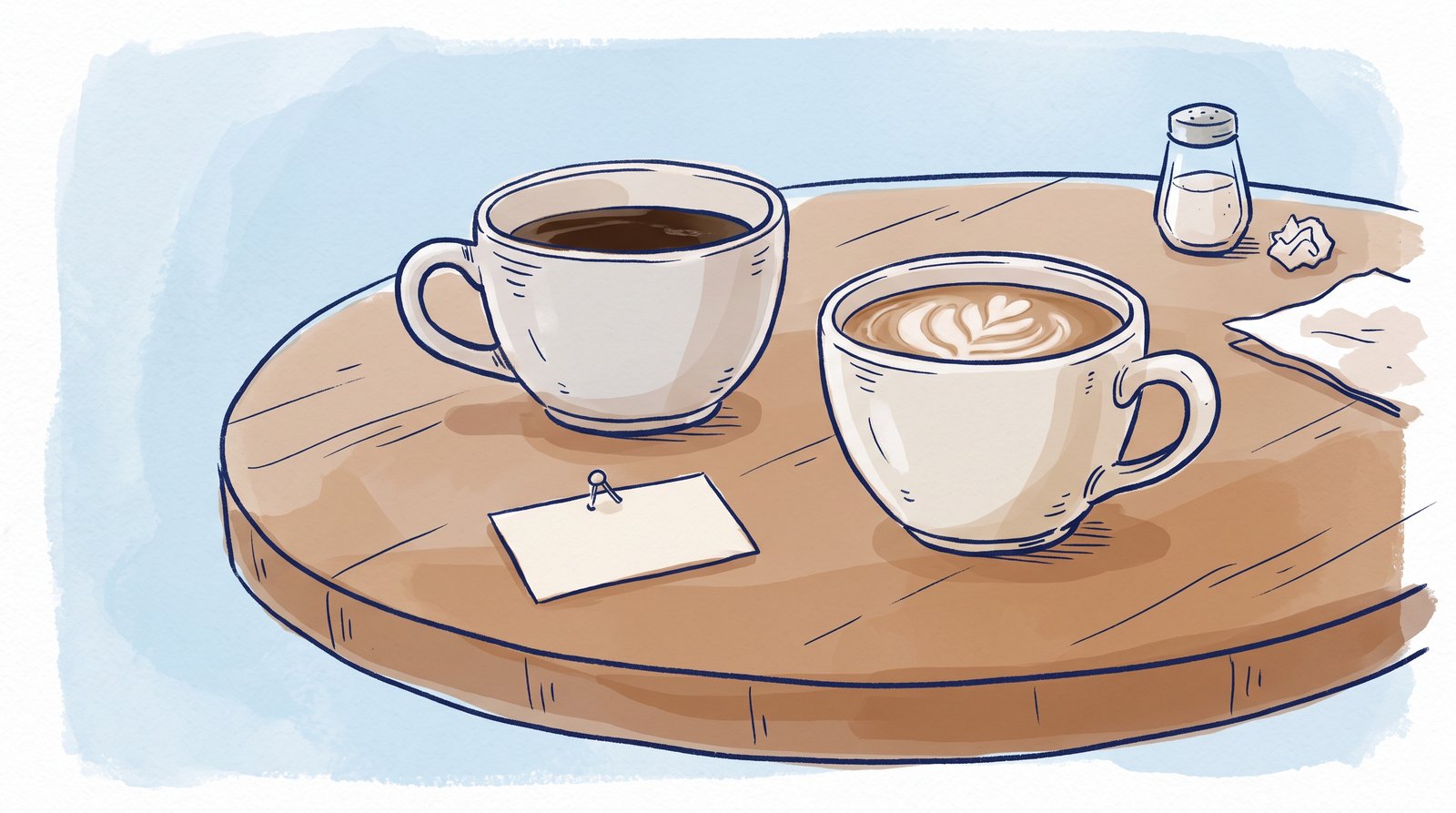
While it has always been a gentle family joke, the moment that stands out most clearly happened during my university years. I had made a wonderful group of new friends. We regularly caught up for coffee, talked through research ideas, and sat together in seminars. They were not passing acquaintances; I had spent genuine time getting to know them.
Then I missed a week of classes.
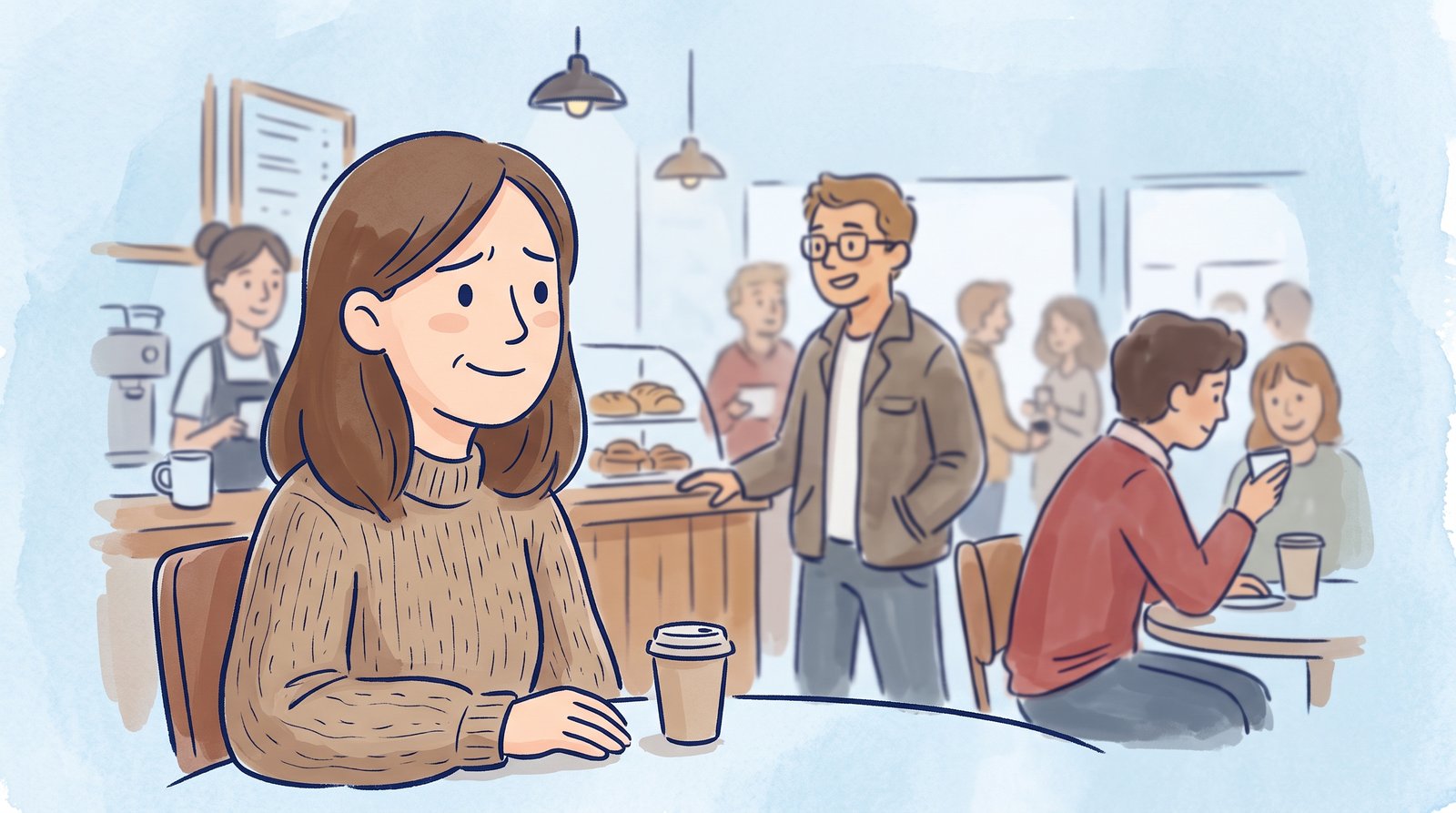
When I returned to campus, one of those friends walked right past me. I will call her Maya. She looked up, smiled warmly, and greeted me straight away by my name.
And her name was completely gone.
I recognised her face instantly. I pictured the seminar room and our regular café table. But the actual word I needed simply was not there. So I did what many of us do when caught off guard: I gave an overly bright smile and said, “How are you?”
It felt terrible. She had my name ready in a second, and I had nothing to give back.
Receiving an ADHD diagnosis in my forties gave me a different way to look at moments like that. It doesn’t explain every single detail I have ever misplaced, and losing someone’s name is an ordinary human experience. But forgetfulness has been a steady undercurrent in my daily life for as long as I can remember. This is an honest look at ADHD and forgetfulness, written by someone who still says “How are you?” a little too enthusiastically when a name refuses to surface.
In this reflection:
Faces Stay, Names Go
It was not just friends at university. During my years lecturing, remembering student names was an ongoing struggle.
Some students took units with me across multiple semesters. I saw them every week. Yet across a whole lecture hall, only one or two names ever seemed to lock in.
One afternoon, long after classes had wrapped up for the year, I bumped into one of those students at a shopping centre. She spotted me first and called out, “Miss Dewi!”
I knew her instantly. Her face was vivid in my memory, and I remembered her assignments and discussions in class. What I could not do was greet her by name.
I felt mortified. I didn’t want to hurt her feelings or admit that after two full years of teaching her, the name had vanished. I managed to chat without letting on, and later spent the evening quietly trying to figure out who she was through faculty lists.
Looking back at both situations, the exact same thing happened. In both cases, the visual recognition was immediate. I knew where I knew them from and the connection we shared. The visual memory was intact; the specific linguistic label was what slipped away.
To an outside observer, it looks straightforward: she forgot my name. But from my side, the connection had not disappeared at all. I had simply lost one specific handle right when I needed to use it.
The Day I Drove Off Without My Girls
Losing a name is an everyday embarrassment. But there is another family story that takes forgetfulness to a whole other level.
When my daughters were five and seven, we took a day trip to the Otway Fly Treetop Walk, about two and a half hours outside Melbourne. Somewhere along the country highway, I pulled into a service station to refuel. While I was at the bowser, the girls hopped out to grab an ice cream.
I paid for the petrol, got back into the front seat, started the car, and drove off down the highway.
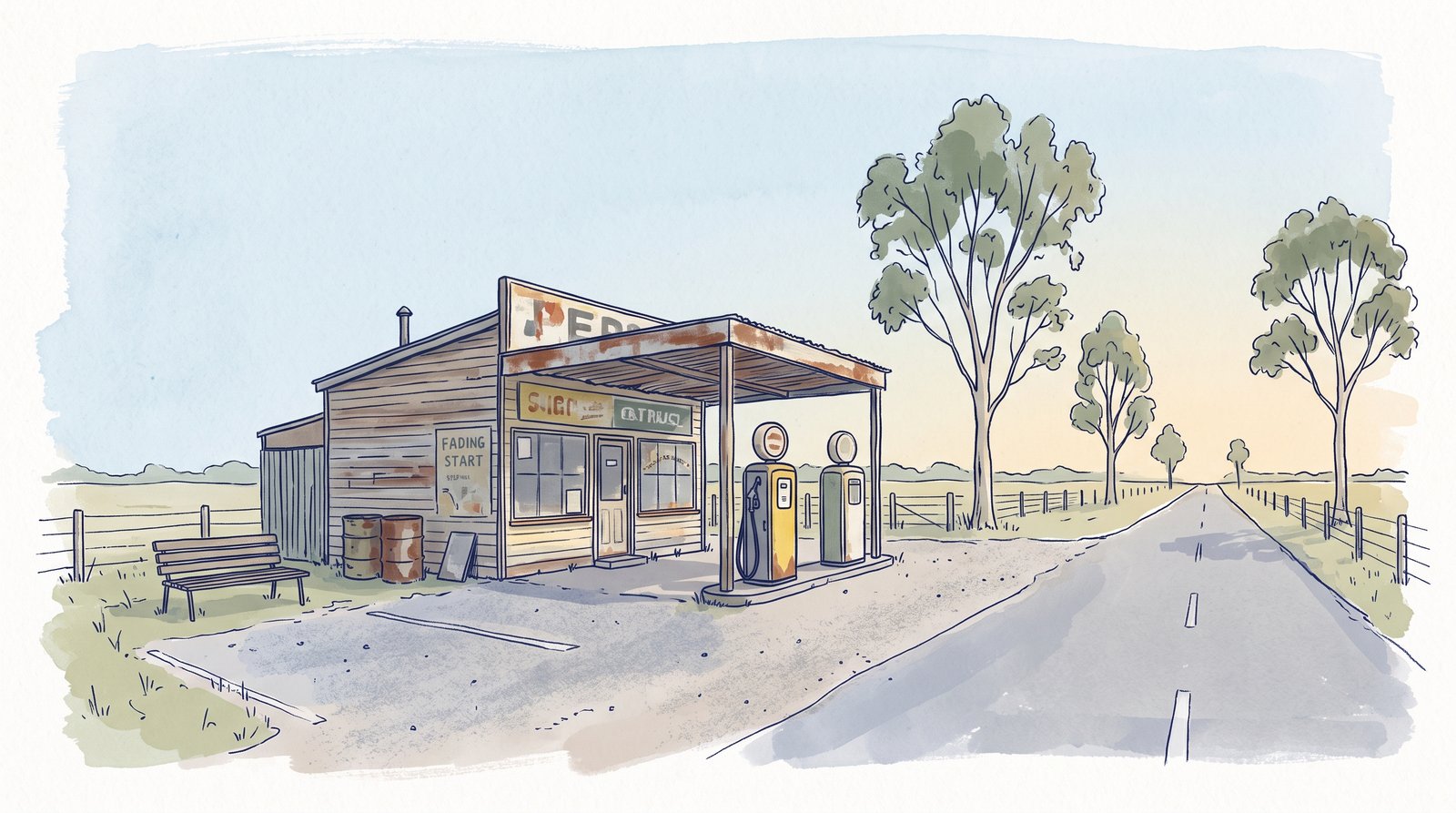
About ten minutes later, my phone started ringing from an unknown landline. I ignored the first couple of calls because I was focused on driving. When it rang a third time, I finally pulled over to answer it.
It was the attendant from the service station, letting me know very calmly that I had left both of my children behind. I had been driving at 80 km/h down a country road for nearly fifteen minutes without them.
Thankfully, I had drilled my mobile number into both girls from an early age. My eldest daughter remembered it, marched up to the counter, and asked the staff to ring me.
When I sped back and sprinted through the doors in a panic, both girls were sitting there with their ice creams, laughing. They weren’t distressed; they already knew their mum had a famously scatterbrained streak.
I didn’t drive off because my daughters didn’t matter to me. When we pulled in, they were in the back seat. While I was occupied with the pump, paying the bill, and checking the route, that reality shifted, and the new information simply never registered. My attention remained locked on the drive itself until that phone call forced a reset.
What saved us wasn’t my memory. It was practical prep work: a phone number repeated until it was second nature, and a seven-year-old who kept a level head.
Forgetting Is Not the Same as Not Caring
When someone blanks on your name, it is easy to take it personally. It feels like a sign that you weren’t interesting enough, or that they weren’t paying attention.
That reaction makes complete sense. Names matter. Hearing your name confirms that someone recognises your presence and values the relationship.
Yet in my own life, forgetting a name has never correlated with how much I care about the person. I enjoyed those coffee chats, and I genuinely cared about my students. The embarrassment I felt came precisely because I did care. If they hadn’t mattered to me, I wouldn’t have spent hours feeling uneasy about it afterwards.
What stays invisible to others is the silent panic inside: the instant warmth of recognition, followed by the frantic search for a word that just isn’t on the shelf.
Being known as “the forgetful lady” captures an obvious habit, but it tends to turn a processing glitch into a personality trait.
I see this regularly when working with neurodivergent children. When a child manages a routine easily on Tuesday and completely falls apart on Wednesday, adults often assume it is stubbornness or lack of effort. In my article on why children can do a task some days and not others, I discuss how fluctuating capacity looks like defiance from the outside. The same misunderstanding often follows forgetful adults.
What Research Says About ADHD, Memory and Names
Looking into the research on working memory and attention helped take the sting out of these experiences.
Healthdirect lists difficulty with memory and everyday organisation among the common inattentive symptoms of ADHD in adults.[1] But how does that actually work in real life?
Taking it in versus losing it
A 2017 meta-analysis on memory performance in adults with ADHD offered a helpful distinction. Across multiple studies, adults with ADHD had more difficulty with verbal memory tasks than visual ones. More importantly, the researchers noted that the issue occurred primarily at the point of encoding, when the information is first introduced. Once information was successfully stored, retrieval rates were comparable to adults without ADHD. The bottleneck was at the front door.[2]
These studies used controlled laboratory word tests rather than casual café conversations or busy service stations, but the distinction makes intuitive sense. When meeting someone, a name is usually stated once, briefly, in the middle of sensory noise: reading facial expressions, shaking hands, tracking the room, and thinking about what to say next. If working memory is already loaded, the name never gets stored in the first place. You can’t retrieve what was never saved.
Names are hard for almost everyone
There is another finding that takes the pressure off. In a classic 1987 psychology study, participants were shown photos of unfamiliar faces paired with a surname and a profession. People were significantly better at remembering that a person worked as a baker than that their last name was Baker, even though the spoken word was identical.[3] Occupations come with rich sensory hooks, mental imagery, and context; arbitrary names rarely do.
Names are notoriously slippery for most human brains. In my case, an ordinary cognitive weak spot simply collides with an ADHD attention filter that is already juggling a dozen other inputs.
Not Every Forgotten Name Is ADHD
It is important not to pathologise every misplaced thought. Everyone forgets names, mislays keys, or loses a thread of conversation when tired.
Everyday factors like chronic sleep deprivation, illness, and high stress significantly impair short-term recall.[1] In my piece on ADHD and Deadlines, I reflected on how sustained pressure clouds working memory. When you are running on empty, taking in new details is nearly impossible.
There is another reason to stay grounded: if you have always been known as the absent-minded one, it is easy to shrug off genuine changes in your health. A published case report highlighted a woman with ADHD whose new, distinct neurological symptoms were initially overlooked because everyone around her was used to her everyday forgetfulness.[4] If memory lapses are sudden, noticeably worsening, or feel different from your normal baseline, checking in with your GP is essential.
Understanding Myself Without Rewriting My Past
When I was teaching university classes and raising two toddlers, I had no ADHD diagnosis. I simply thought I had a terrible memory for names and felt sheepish whenever I got stuck.
It is tempting to look back through hindsight and blame every awkward interaction on neurodiversity. But the reality was that I was also working through a demanding schedule, raising two small children on my own, and managing huge amounts of daily administrative load. Any parent under that kind of load drops things.
What the diagnosis actually provided was relief from self-criticism. Instead of asking what was wrong with me, I started asking what external scaffolding was missing in those situations. That shift makes room for practical solutions.
What I’m Going to Try With Names
Because I know my memory easily drops arbitrary verbal details when distracted, I rely on external systems rather than sheer willpower:
Repeating the name immediately: When introduced to someone new, I make a point of saying the name out loud right away (“Nice to meet you, Maya”). Giving the word an immediate vocal repetition gives it a better chance of registering over background noise.
Attaching context: Because names lack built-in meaning, I anchor them to something visual or descriptive: their role, where we met, or what we talked about.
Writing it down on the day: Leaving a note in my phone with the person’s name and one key detail gives me a quick reference point before I see them again. Early memory research shows that spaced recall significantly strengthens retention.[5] It works on the same principle as the progress notes I leave in unfinished sewing projects in finishing what you start: keep the memory outside your head.
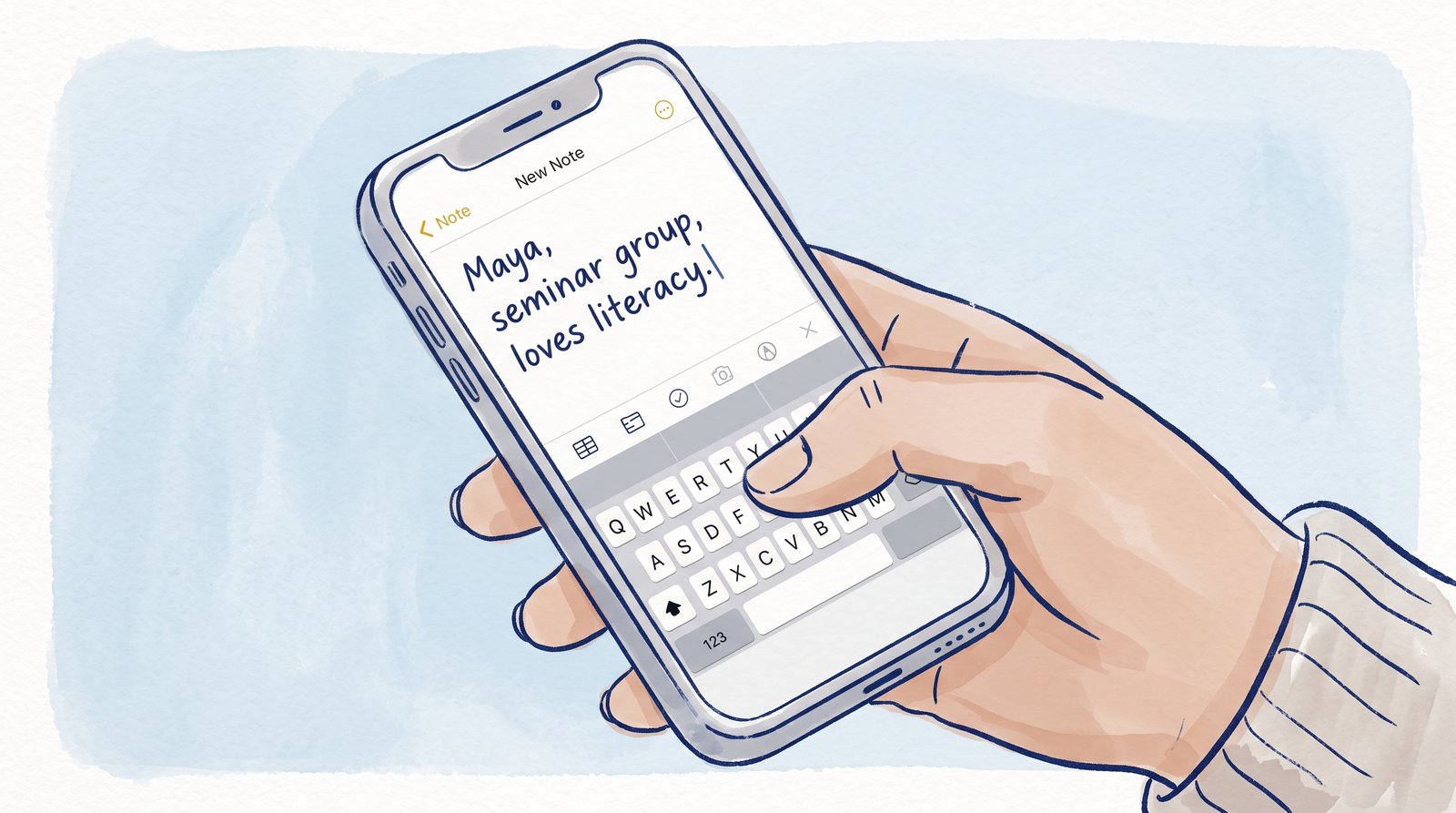
A low-friction honesty script: When my mind still goes blank, I skip the awkward pretence. Instead of waiting in dread, I use an easy line: “I might spell your name wrong in my contacts, could you say it again for me?” It gets the name back without making a production out of it, and gives my ears a second chance to catch it cleanly.
If Someone You Love Is the Forgetful One
There are two sides to every forgotten name: the person struggling to find the word, and the person wondering if they were overlooked.
If you are on the receiving end, it is natural to feel a brief sting. But holding space for the fact that genuine warmth and a dropped name can happen at the very same time makes those moments much easier.
My daughters gave me the best model for this at that service station. They didn’t take it as a lack of love. They used the backup plan, stayed practical, and had a laugh about it when I got back.
A small prompt offered without judgment (“Hi Dewi, it’s Maya from the seminar”) or a shared digital calendar does infinitely more good than frustration. And if someone you care about is noticeably overwhelmed by keeping track of daily life, offering calm, practical support to speak with a healthcare professional is the kindest step forward.
For families supporting young children who struggle with memory and task tracking, my guides on signs of ADHD in girls and visual routine cards for ADHD kids offer practical ways to build external routines at home.
Still the Forgetful Lady, Seen a Little Differently
I will probably always be the forgetful lady in my family, and that is fine.
What has changed is that I no longer view an elusive name as a personal failure. Human memory is complex, attention is finite, and names are naturally difficult to hold onto.
So the next time someone greets me warmly by name and my mind draws an absolute blank, I will skip the polite pretence, take a breath, and simply ask them to help me out.
- Personal reflections: At 47, I’m Starting to Understand My Busy Mind Differently →
- Working rhythms: ADHD and Deadlines: 3 Things I Learned About Working Under Pressure →
- Career and balance: Why I Chose a More Flexible Working Life After My ADHD Diagnosis →
- Finishing projects: I Have Plenty of Ideas. Why Is Finishing Them So Hard? →
- Family and parenting: A Parent With ADHD: 4 Shifts That Autism Training Brought Home →
Research: healthdirect on adult ADHD; a meta-analysis of long-term memory in adults with ADHD; a study of memory for names and occupations; a single case report; and an early study of learning names. Experience: the stories and the strategies are my own reflections. Last reviewed: October 2026.
References
- healthdirect. (2024). Attention deficit hyperactivity disorder (ADHD). Australian Government. https://www.healthdirect.gov.au/adult-adhd
- Skodzik, T., Holling, H., & Pedersen, A. (2017). Long-term memory performance in adult ADHD: A meta-analysis. Journal of Attention Disorders, 21(4), 267–283. https://doi.org/10.1177/1087054713510561
- McWeeny, K. H., Young, A. W., Hay, D. C., & Ellis, A. W. (1987). Putting names to faces. British Journal of Psychology, 78(2), 143–149. https://doi.org/10.1111/j.2044-8295.1987.tb02235.x
- Fukao, T., Fujiwara, M., Yamada, Y., Sakamoto, S., Matsumoto, Y., & Takaki, M. (2024). Forgetfulness in adult attention-deficit/hyperactivity disorder masks transient epileptic amnesia: A case report. PCN Reports, 3(3), e70003. https://doi.org/10.1002/pcn5.70003 [A single case report].
- Landauer, T. K., & Bjork, R. A. (1978). Optimum rehearsal patterns and name learning. In M. M. Gruneberg, P. E. Morris & R. N. Sykes (Eds.), Practical aspects of memory (pp. 625–632). Academic Press. PDF