
How to Inspire Young Minds Without Sacrificing Your Weekends: 4 Brilliant Everyday Habits
Working out how to inspire young minds without sacrificing your weekends came out of sheer maternal exhaustion: I was finishing my PhD, working two jobs, and trying to raise two young daughters in Melbourne on forty minutes of free time a week. Children do not need elaborate three hour craft productions to thrive. Their brains light up when we give them genuine, unhurried attention in sixty second pockets that already happen across an ordinary day.
Discovering practical ways for how to inspire young minds without sacrificing your weekends frees parents from the silent trap of weekend guilt, showing that child led conversations and shared daily tasks build deep cognitive curiosity far better than staged activities.
I had two young daughters while I was finishing my doctoral dissertation and working two separate jobs just to keep our household afloat.
My girls are fully grown adults now, but I still recall Saturday mornings in our Melbourne home with visceral clarity. I remember the heavy weight of physical tiredness behind my eyes, lukewarm instant coffee sitting forgotten on the laminate bench, and a tall stack of university marking and journal papers that I had not even opened.
Standing beside the kitchen sink were two small girls who wanted my real presence, not the distracted version of me whose mind was already racing ahead into Monday morning deadlines.
For a long stretch of those early childhood years, I carried an unspoken, constant hum of guilt. Other parents on social media appeared to be running miniature early learning centres from their living rooms every weekend. They organised themed sensory bins with colour matched dyed rice, planned elaborate museum excursions with educational worksheets attached, and set up complicated craft stations that took three hours to prepare and two hours to mop up.
On most Saturdays, I had perhaps forty minutes of truly uncommitted time. I spent a fair portion of those forty minutes convinced that I was failing my daughters, worrying that forty minutes was completely inadequate to nurture curious, capable minds.
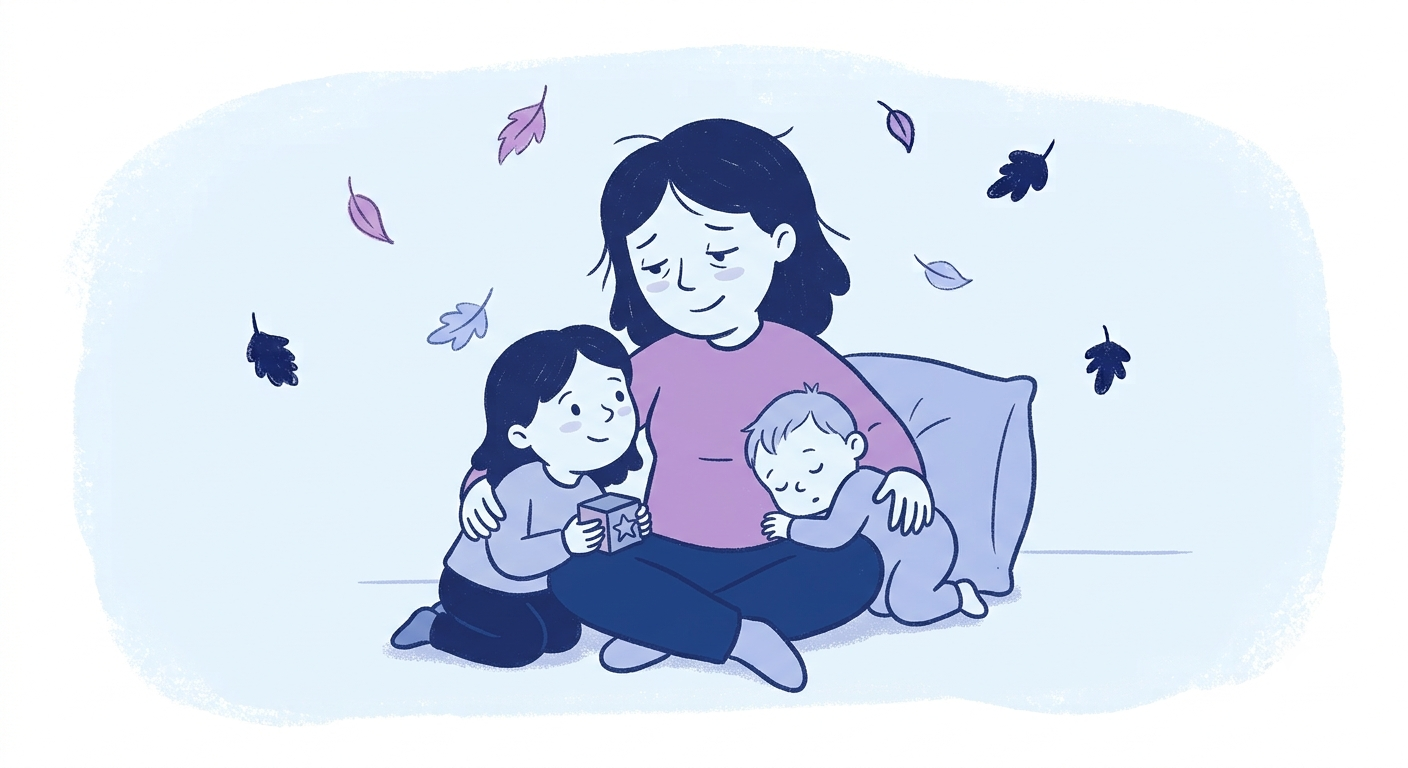
Nobody warns you, when you are knee deep in postgraduate research, casual shifts, and preschool parenting, that the arithmetic of perfection is completely broken. There are only twenty four hours in a day, and most of mine were already locked down by survival.
I treated my exhaustion as a private character flaw rather than an impossible scheduling equation. It took a quiet kitchen stove moment for me to finally understand how to inspire young minds without sacrificing your weekends in a way that protected our family wellbeing.
In this grounded parenting guide:
The Broken Math of Weekend Guilt and Staged Parenting
Parenting culture over the past fifteen years has steadily transformed early childhood into an intensive performance.
Parents are told through advertisements, picture-perfect blogs, and social feeds that every Saturday must be curated into an educational festival. If a child is not baking bread from scratch, conducting kitchen chemistry experiments, or tracing alphabet sheets on a custom light box, the subtle implication is that their potential is being squandered.
That relentless pressure produces acute parental burnout. In our exploration of parent teacher burnout in neurodivergent care, we discuss how emotional depletion destroys the very thing children need most: relaxed relational energy.
When you spend all week working or studying, arriving at Saturday with an ambitious eight step craft itinerary is a recipe for tears. You enter the morning already exhausted. When the preschooler knocks over the glitter jar, refuses to follow the activity instructions, or walks away after ninety seconds to play with a cardboard box, your nervous system snaps.
The guilt you feel while cleaning up wet paint off the linoleum is not about your child’s learning. It is about the painful gap between your lived human energy and an artificial standard of parenting that was never sustainable to begin with.
Understanding how to inspire young minds without sacrificing your weekends requires letting go of that curated ideal. Young children do not judge their childhood by whether an activity had an explicit learning objective; they evaluate their world by whether the adults around them feel calm, approachable, and safe.
Why Big Planned Weekend Projects Fall Flat
Before I discovered the power of small moments, I tried the predictable coping strategy: doing the big weekend project anyway, but attempting to squeeze it into fewer hours.
I would spend Friday night purchasing coloured card, foam brushes, and specialty glue at the supermarket. Saturday morning would arrive, and I would announce with forced enthusiasm that we were going to make paper mache animals.
Almost every one of those planned mornings collapsed into tears.
Because I was running on fumes, my emotional tolerance was razor thin. I wanted the activity to work efficiently so I could clean up and return to my academic marking.
My daughters could sense my underlying tension within thirty seconds. If Bella wanted to squish the paste into a giant grey ball instead of smoothing it over a balloon, I would catch myself correcting her. If Zara dropped glue onto the floorboards, I would sigh with irritation.
By eleven o’clock, both girls were crying, the craft was abandoned, and I was on my knees scrubbing dried paste off the kitchen chairs while feeling far more depleted and disconnected than when the day began.
I am not suggesting that big family outings or creative craft days are inherently bad. Families with surplus energy and time genuinely enjoy them. But pretending I had that capacity when I was working two jobs was dishonest. I needed a completely different way of thinking, not a compressed version of an exhausting routine.
The Ninety Second Stove Revelation: Turning Attention into Connection
The turning point arrived without any warning on an ordinary evening while I was cooking dinner.
I was standing at the stovetop, stirring a pot of pasta sauce with one hand, half listening to my eldest daughter describe a rambling, slightly incoherent dream she had experienced the night before.
Half of my brain was listening; the other half was silently panicking about an academic literature review due at midnight.
For reasons I cannot explain, I suddenly stopped stirring. I put the wooden spoon down on the spoon rest, turned my body completely toward her, knelt down to her eye level, and asked an authentic follow-up question: “Wait, so where did the blue bicycle go when the dog jumped over the fence?”
Her face transformed instantly. Her eyes widened, her posture softened, and she lit up with radiant joy because her mother was genuinely curious about her thoughts.
That conversation lasted ninety seconds.
It cost me nothing. It did not delay dinner, it required zero cleanup, and it did not steal energy from my midnight essay.
Yet those ninety seconds accomplished something that three hours of tense paper mache never could: it told her that her mind was fascinating, that her voice mattered, and that we were connected.
That was the entire secret. I had been treating parental attention like a bank loan that could only be paid out in massive, four hour lump sums on weekends.
In reality, a young child’s nervous system experiences love and cognitive stimulation through micro deposits of genuine presence scattered throughout an ordinary day, a truth we explore in our look at fostering a love of learning without overcomplicating things.
The Science of Serve and Return: What Brain Research Confirms
It was only years later, while studying early childhood neuroscience during my doctoral work, that I discovered researchers already had a formal scientific name for what happened at that stove.
The concept is known as serve and return, established by the Center on the Developing Child at Harvard University.
Harvard’s neuroscientists describe brain architecture as developing through interactive, reciprocal exchanges between a child and an adult, much like a game of tennis:
| Serve and Return Step | What the Child or Adult Does | Neurological Impact on the Young Brain |
|---|---|---|
| 1. Notice the Serve | The child points, looks, asks a question, or makes a sound; the adult notices the cue. | Activates the child’s attentional networks and signals social safety. |
| 2. Return the Serve | The adult responds with words, eye contact, a nod, or an affirming physical gesture. | Releases dopamine and reinforces curiosity, showing communication works. |
| 3. Give It a Name | The adult labels what the child is looking at: “Look at that tall grey heron by the creek.” | Builds neural pathways for vocabulary, conceptual mapping, and language comprehension. |
| 4. Take Turns and Wait | The adult pauses, leaving silence so the child can form a response without rushing. | Strengthens executive function, working memory, and conversational rhythm. |
| 5. Practice Endings | The adult lets the child look away or move on when their curiosity is satisfied. | Supports autonomy, prevents sensory overload, and honors the child’s natural pace. |
Harvard’s clinical data shows that these brief back-and-forth interactions do the heavy lifting of building synaptic connections in the developing prefrontal cortex.
It is the frequency and authenticity of the responsive interaction that builds intelligence, not the scale or expense of the activity.
A child who experiences dozens of two-minute serve and return exchanges while grocery shopping or folding towels builds stronger cognitive architecture than a child who spends five hours at an expensive science museum with a parent glued to a smartphone.
Knowing this research does not change what I did on those Melbourne mornings, but it validates why it worked. Discovering how to inspire young minds without sacrificing your weekends is rooted in developmental biology, not parental shortcuts.
4 Joyful Everyday Habits That Inspire Young Minds
Once you understand that ninety seconds of genuine presence does more than an afternoon of stressed craft, your weekend transforms.
These 4 practical, joyful habits will show you how to inspire young minds without sacrificing your weekends using the ordinary rhythm of your home:
1. Use Supermarket Errands as Functional Number Play
Grocery shopping is an organic numeracy and classification laboratory disguised as a domestic chore.
- What to do: Hand your child a brown paper bag in the produce aisle: “Can you pick out five yellow bananas and help me count them into the bag?” Ask them to spot the heaviest pumpkin or compare which cereal box is taller.
- Why it works: Real-world tasks carry genuine purpose. Children engage with early counting and volume without feeling tested, mirroring the foundational ideas in our guide on counting activities for kids at home and practical number sense activities.
2. Turn Everyday Pavement Walks into Inquiry Journeys
You do not need to drive two hours to a national park to explore natural science.
- What to do: On the walk from your front door to the car or postbox, pause to notice urban nature: “Look at how the moss grows in the cracks of the pavers,” or “Why do you think that eucalyptus tree is dropping its bark today?” Collect three interesting gum leaves to take home.
- Why it works: Pausing to notice small details fosters an observant, scientific mindset, perfectly echoing the low-stress foot adventures in our nature scavenger hunt for kids.
3. Cook Real Food Side by Side
Children love real adult work far more than simulated toy cooking.
- What to do: While preparing scrambled eggs or weekend toast, invite your child to stand on a sturdy stool: let them crack an egg with two hands, tear bread crusts, or stir pancake batter with a wooden spoon.
- Why it works: Stirring thick batter builds the palm strength we detail in hand strength activities for kids, while watching liquid eggs turn solid under heat introduces basic physical science through meaningful practical life activities at home.
4. Protect Ten Minutes of Unhurried Evening Conversation
No matter how chaotic or imperfect the day was, conclude with undivided warmth.
- What to do: Sit on the edge of their mattress in the dim light for ten minutes. Read one storybook together, then ask one open-ended question: “What was the silliest thing that happened today?” or “What made your heart feel big today?” Listen without glancing at your phone.
- Why it works: Unrushed bedtime connection lowers nighttime cortisol, repairs any moments of daytime parental impatience, and builds emotional literacy, linking directly with our principles in emotional regulation in early literacy.
Comparing Staged Learning Projects with Organic Daily Habits
Here is how adult-driven weekend productions compare to responsive everyday interactions:
| Parenting Element | Staged Weekend Productions (The Curated Model) | Organic Everyday Habits (The Responsive Model) |
|---|---|---|
| Parental Energy Required | High exhaustion: hours of buying supplies, setting up, and cleaning up messes. | Sustainable: ninety second micro conversations folded into existing tasks. |
| Emotional Atmosphere | Tense: parents feel an underlying pressure for the child to produce a neat outcome. | Relaxed: no right or wrong answers; the focus rests on curiosity and connection. |
| Cognitive Impact | Narrow: often limited to following rigid, adult-dictated craft instructions. | Expansive: stimulates language, executive function, numeracy, and emotional safety. |
| Child’s Takeaway | “I must perform correctly to keep mum happy.” | “My thoughts are interesting, and my home is an exciting place to explore.” |
When you see this contrast laid out clearly, the pressure lifts. Learning is not something you must manufacture on a Saturday afternoon; it is something that happens naturally whenever an adult responds to a child with genuine warmth.
Tackling Screen Guilt, Co Parenting, and Changing Ages
Adopting this low-pressure approach requires navigating several practical realities that inevitably arise in modern family life:
Screen Time Without the Shame
On the Saturdays when I was most depleted by study and work, the television went on in our living room. Sometimes it stayed on for longer than I would have cared to admit to anyone at the time.
Watching my daughters grow into articulate, creative adults taught me that the occasional television documentary, cartoon, or movie does not destroy a child’s intellect.
The real question is not whether the television was on for an hour on Saturday morning; it is whether the rest of the day included moments of real serve and return conversation.
A home with genuine affection, warm eye contact, and an hour of cartoons provides far greater developmental safety than a screen-free home where exhausted parents are completely emotionally unavailable. Once you stop viewing screens as a moral failure, the chronic parenting guilt begins to quiet down.
Sharing the Conversational Load Across the Family
It is easy for primary caregivers to assume that every single cognitive exchange must originate from them.
My partner, and later a grandparent who helped out as the girls grew older, carried dozens of these small conversations every week. My partner would explain how bike gears worked in the garage, while their grandmother would teach them how to water ferns.
Serve and return does not demand that a single mother or father carry the entire load alone. A child who receives brief, loving conversational returns from multiple family members gains a richer, more diverse linguistic map of the world.
Adapting as Children Grow
The shape of serve and return evolves as children mature:
- Babies and Toddlers: The exchange is almost entirely physical: returning a babble, smiling back, pointing to a dog, or playing peek-a-boo.
- Preschoolers: The back-and-forth expands into language: naming clouds, counting mandarins, and answering endless questions about why the sky is blue.
- Primary Schoolers: The exchanges become genuine philosophical discussions: listening to their opinions on fairness in the schoolyard or talking through an interesting science fact while driving to swimming lessons.
The underlying architecture remains identical across every stage: brief, unhurried, genuine attention that values the child’s mind.
A Walk Through a Realistic, Unplanned Saturday Rhythm
To see how this works in real life, here is roughly how our weekend days unfolded once I stopped trying to manufacture structured learning:
Morning: We woke up, put the kettle on, and turned on the radio. Conversation happened while buttering toast: “Why do you think the crust goes brown when it gets hot?” or “Can you find three things in the kitchen that are the same colour as your pyjamas?” It was not a formal lesson; it was simply talking to them like real people instead of living on mental autopilot.
Mid-Morning Errand: Getting dressed and walking down to the local greengrocer provided ten minutes of sorting, counting, and observing. Picking out apples and chatting about the neighbour’s barking dog took no preparation, but it exercised their working memory and vocabulary the whole time.
Afternoon: The middle of the day belonged to domestic chores and free play. I washed clothes, answered study emails, and prepared food while the girls played with blocks, cardboard boxes, and fabric scraps on the rug. Free play does not require adult direction; it simply needs an emotionally safe space and an adult who glances over with a warm smile.
Late Afternoon: If there was a spare ten minute pocket, we might do one small, low-pressure activity: a single story-based tracing page from our collection, watering the outdoor pots, or drawing with chalk on the garden pavers.
Bedtime: Bedtime was sacred. Even on the hardest, most frustrating days, we read a story together and talked for five minutes in the quiet dark before sleep. That routine anchored our bond, no matter how chaotic the afternoon had been.
How You Know It Is Working Without Any Checklists
Parents often ask how they can be certain their child is learning if they are not using checklists, apps, or formal workbooks.
Here is what authentic cognitive development looks like in an everyday home:
- Your child asks questions about their world and expects that you will give them a thoughtful, honest answer rather than brushing them aside.
- There are ordinary moments in your day—in the car, beside the laundry basket, at the kitchen sink—where you are listening to each other rather than talking past each other.
- Your child feels safe enough to make mistakes, show messy scribbles, or tell you when they feel overwhelmed without fear of harsh criticism.
- Bedtime includes a few minutes of real connection rather than a rushed lights-out battle.
That is the entire foundation. You do not need a developmental checklist beyond that, and you certainly do not need an elaborate, glitter-covered weekend production to know you are getting the important things right.
Australia’s national early childhood learning framework, Belonging, Being and Becoming, overseen by ACECQA, reminds us that children construct knowledge through secure, responsive relationships with their families.
If I could travel back in time to that Melbourne kitchen, stand beside my younger self at that stove, and speak to that exhausted, overwhelmed mother, I would say this:
Stop counting the hours you do not have. Start noticing the two-minute moments you already possess. They were never too small. They were doing the real work the whole time.
Free Printable: The Story-Based Tracing Sampler
A gentle set of pre-writing tracing paths featuring short, engaging story prompts designed for tired parents who have ten minutes of quiet time to share on a Saturday.
Download the Free 3-Page Sampler- Discover joyful low-pressure ideas in How to Foster a Love of Learning Without Overcomplicating Things →
- Protect your emotional capacity in Parent-Teacher Burnout in Neurodivergent Care: Protecting Relational Energy →
- Try foot-based outdoor inquiry with our Nature Scavenger Hunt for Kids: 4 Footpath Adventures →
- Integrate real domestic skills using Practical Life Activities Preschool at Home: Montessori Inspired Ideas →
- Build foundational math without drills in Counting Activities for Kids at Home: Simple Everyday Games →
- Start challenging tasks calmly using the ADHD Start Together Task Trick: 4 Powerful Ways to Help Your Child Begin →
- Support daily predictability with Visual Routine Cards for ADHD Kids: Calming Home Schedules →
- Build hand stamina naturally through Hand Strength Activities for Kids: 4 Practical Ways We Built Grip →
References and Readings That Guided Me
- National Scientific Council on the Developing Child. (2004). Young Children Develop in an Environment of Relationships: Working Paper No. 1. Center on the Developing Child at Harvard University. [Landmark empirical review demonstrating that serve and return interactions form the bedrock of neural architecture and emotional regulation].
- Shonkoff, J. P., & Phillips, D. A. (Eds.). (2000). From Neurons to Neighborhoods: The Science of Early Childhood Development. National Academies Press. [Comprehensive scientific consensus proving that early responsive relationships buffer against chronic stress and foster lifelong cognitive competence].
- Australian Government Department of Education. (2022). Belonging, Being and Becoming: The Early Years Learning Framework for Australia (V2.0). [National curriculum benchmarks highlighting that active learning and emotional wellbeing flourish through secure family partnerships and everyday play].
- Grolnick, W. S., & Seal, K. (2008). Pressured Parents, Stressed Kids: Dealing with Common Traps in Parenting. Prometheus Books. [Research examining the cognitive costs of intensive parenting and the developmental benefits of child autonomy and parental presence].