What Does a Neurodiversity Inclusive Community Look Like? 7 Easy Signs of a Neurodiversity Inclusive Community
A neurodiversity inclusive community is a neighbourhood, club, library, faith group or council where autistic people, people with ADHD and other neurodivergent people can take part, belong and be themselves. It goes beyond awareness. People adjust spaces, plans and words so everyone can join in.
This article looks at what that means in everyday places: libraries and councils, sport and clubs, faith and cultural groups, schools, and neighbours. It includes my own experience in West Sumatra and Melbourne, a free Community Action Card and twelve related free PDFs.
When Bella was small in West Sumatra, people often told her she needed to calm down. Others decided she must have had too much sugar. Nobody knew then that she had ADHD. She wasn’t diagnosed until her twenties.
In October 2010, we moved to Melbourne so I could start my PhD at Deakin. Bella was seven. Zara was nearly five, and she started Prep the following February while she was still learning English. We were a new family in a new country, starting over.
I’m also an adult with ADHD, diagnosed in my forties, and I’ve worked as an NDIS support worker. So I’ve seen community from a few sides: as a mum, as a newcomer, as a neurodivergent adult, and as someone supporting others.
So before you read on, think back to a time in your community when someone didn’t seem to fit. A child who couldn’t sit still at story time. A teenager who left the team after one season. A neighbour who never came to the street party. A parent who stood alone at the school gate.
What did you feel? Maybe curiosity, discomfort, sympathy or frustration.
What did your mind tell you? Perhaps “they’re not interested”, “too much sugar” or “that’s just how they are”.
What did you do? Did you invite them in, leave them be, or not notice at all?
Keep that moment in mind. By the end of this article on what a neurodiversity inclusive community looks like, you might see it differently.
- How This Article Helps
- A Scene at Story Time
- The Five Steps
- Awareness, Acceptance and Inclusion
- What I’ve Seen in Two Places
- What Research Says
- 7 Signs of an Inclusive Community
- Place by Place
- Planning an Inclusive Event
- Words That Include
- Including Neurodivergent Adults
- 6 Easy Ways to Help
- Free Printable: Community Action Card
- More Free PDFs
- Back to Your Moment
- FAQs
How This Neurodiversity Inclusive Community Guide Helps
- Reflect on what you’ve seen in your own community.
- Understand the difference between awareness, acceptance and inclusion.
- See 7 signs of a neurodiversity inclusive community.
- Get ideas for each place: libraries, clubs, faith groups, schools and streets.
- Use a free Community Action Card for your role.
Further down, I’ll share the simplest sign that a community is inclusive. It’s one short question, and anyone can start asking it today.
This is the tenth article in the Everyday Stories. Lived Experiences. Better Understanding. series, part of our Inclusion Beyond the Classroom hub.
A Neurodiversity Inclusive Community Story: A Scene at Story Time
A general illustration of a situation many families describe, not one family’s story.
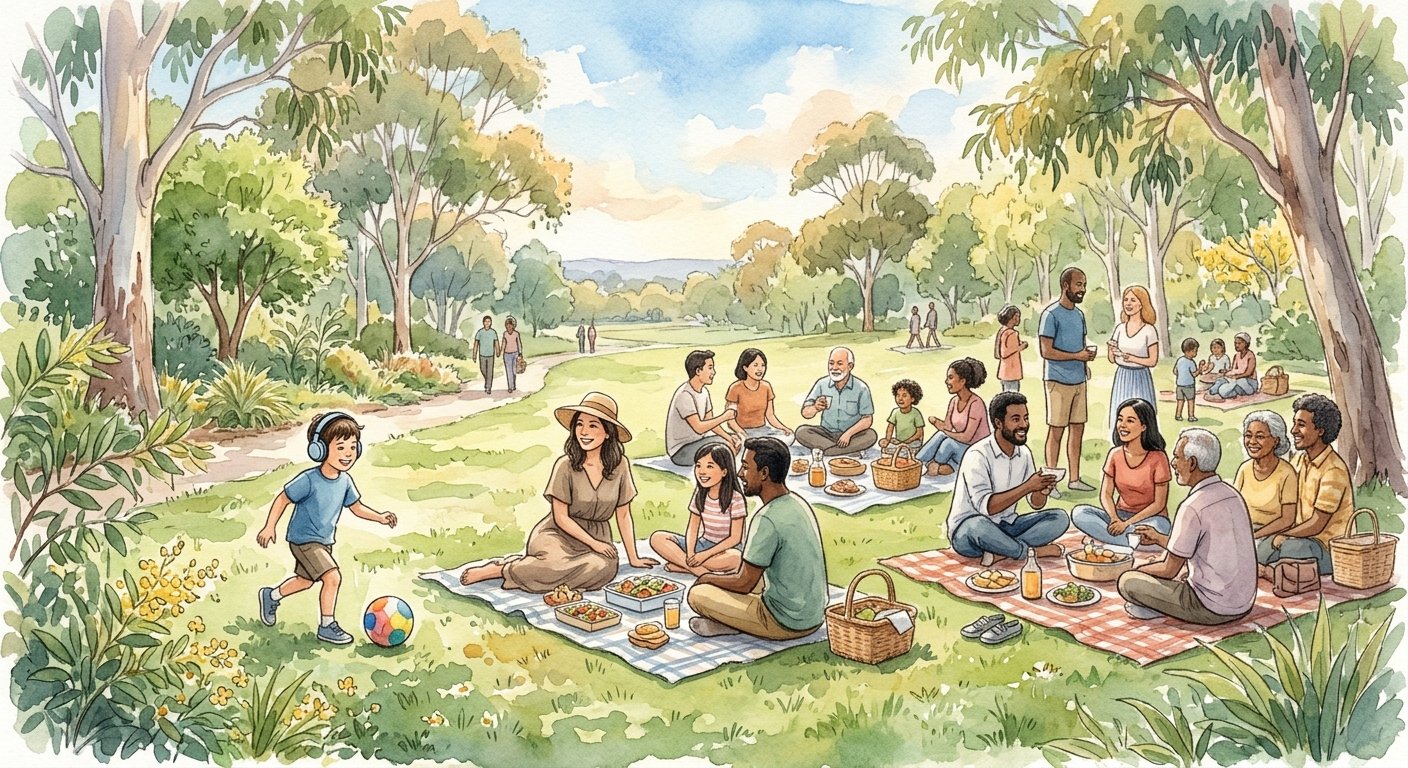
A mother takes her four year old autistic son to library story time. Twenty children sit on the mat. The librarian asks everyone to sit cross legged and listen.
Her son walks around the edge of the room, touching the spines of the books. He hums along when the group sings. Then he lies down under a table near the back.
Another parent whispers, “Some kids just aren’t ready for this.” The mother waits until the end, then quietly decides not to come back.
The Five Steps: Everyday Stories. Lived Experiences. Better Understanding.
What happened
An autistic boy joined story time in his own way, walking, humming and lying under a table. A parent made a comment, and the family stopped coming.
What did people assume
That he wasn’t listening, wasn’t ready, and was disturbing the group.
What might we not understand
He was listening. He was humming along. Moving and finding a quieter spot helped him stay in the room. Sitting still on a crowded mat may have been the hardest part.
What could have helped
A librarian who said “everyone can listen in their own way”, a cushion or wobble space at the edge, and a parent who smiled instead of whispering.
What can we learn
Joining in can look different. A neurodiversity inclusive community makes room for many ways of taking part, so families keep coming back.
Awareness, Acceptance and a Neurodiversity Inclusive Community
Neurodiversity means that human brains work in many different ways. Autism, ADHD, dyslexia and other differences are part of that natural variety.
| Stage | What it sounds like | What it looks like |
|---|---|---|
| Awareness | “I know what autism and ADHD are.” | Posters, awareness days, information |
| Acceptance | “It’s OK to be different.” | Fewer comments, less staring, more patience |
| Inclusion | “How can we make this work for you?” | Changed spaces, plans and words so people can join in |
| Belonging | “We missed you last week.” | People feel wanted and keep coming back |
Awareness is a start, but it isn’t enough on its own. A neurodiversity inclusive community moves through acceptance to inclusion, and then to belonging.
What I’ve Seen in Two Places
West Sumatra: “Too much sugar”
Bella was a busy little girl. She climbed everything, ran off, and found waiting for her turn hard. People around us often told her she needed to calm down. Some said she must have had too much sugar.
Those comments usually came from people trying to help, or trying to make sense of what they saw. You hear the same ones in Melbourne and in many other places. But they put the problem on Bella, or on what she ate.
Nobody, including me, knew then that she had ADHD. It would have helped if more people had asked what might help her, instead of what was wrong with her.
Melbourne: arriving as a new family
When we moved to Melbourne in 2010, everything was new. I was starting a PhD and working casual jobs. Zara had no kinder here and started Prep in February 2011 while she was still learning English.
Arriving as newcomers is a reminder of how much a community’s welcome matters. New families may not know how things work, where to find help, or how to ask. That’s true for many migrant and refugee families with neurodivergent children too.
As an adult with ADHD
Now I see community life through my own ADHD as well. Busy public places drain me. So do long queues, long forms and phone calls. Clear information before I go, quiet times and calm, patient people help me take part.
I’ve never been able to sit still for long. I fold my legs under me, put my feet up, play with my fingers or jiggle my legs. I can’t help it. Like the boy at story time, moving helps me stay in the room.
I always knew people saw it as rude, so I worked very hard to control it. When I worked in a nine to five office job, staying still on a chair all day was exhausting. I was masking the whole time, and it felt suffocating.
That’s a big part of why I studied for my PhD at home, working on my own. There I could move, sit how I liked and stop hiding it. I write more about that in my ADHD work environment.
So when a community says “you can sit, stand, move or fidget here”, it matters to adults as well as children. Nobody should have to spend their energy holding still just to belong.
So when I think about a neurodiversity inclusive community, I think about Bella, about Zara learning English in Prep, and about adults like me too.
What Research Says About a Neurodiversity Inclusive Community
Research with autistic adults and parents shows that the neurodiversity idea can sit alongside recognising genuine challenges and needs. People can value autism as part of who they are and still want support.1
That “too much sugar” comment is worth a closer look. A large review of controlled studies found that sugar did not affect children’s behaviour or thinking in the way many people believe.2 So the comments Bella heard were common, but they weren’t backed by the evidence.
Belonging matters for wellbeing. One study found that autistic adults with more loneliness had lower wellbeing, and that friendships were linked to less loneliness.3 Community is part of health, not an extra.
In Australia, the National Autism Strategy 2025 to 2031 lists social inclusion as one of its key outcome areas.4 The autism inclusive business article in this series also shares the employment numbers for autistic Australians.5
There’s less research on what makes a whole community inclusive. Much of what we know comes from autistic people, ADHD adults and families. I’ve kept that in mind.
7 Signs of a Neurodiversity Inclusive Community
People ask “What helps?”
This is the simplest sign I promised earlier. People ask “What helps?” instead of “What’s wrong?” It moves the focus from fixing a person to changing the situation.
There’s more than one way to join in
Children can stand, move, listen from the edge or take a break. Adults can help behind the scenes, join online or come for part of an event.
Information comes first
Times, places, what will happen and who to contact are shared clearly, ahead of time, in writing and with pictures.
Quiet options are part of the plan
Events have a quiet space or quiet time. Spaces aren’t always loud, bright and crowded.
Neurodivergent people help plan
Autistic and ADHD people, including young people, are asked what works. They help plan, lead and run things.
Every culture and language is welcome
Information comes in community languages. Families from every background feel safe to share their child’s needs.
People are missed when they’re gone
If a family stops coming, someone notices and reaches out kindly. Belonging means being wanted, not just allowed.
A Neurodiversity Inclusive Community, Place by Place
Libraries and councils
- Relaxed story times where moving, humming and leaving early are fine.
- Sensory friendly sessions with lower lights and fewer people.
- Quiet spaces at council events and festivals, marked on the map.
- Clear event information with photos, times and a contact who answers by email.
- Playgrounds and parks planned with neurodivergent children in mind. See what makes a playground inclusive.
Sport and clubs
- Smaller groups or a buddy for new members.
- Clear routines and the same start each session.
- Instructions shown, not just shouted across a field or pool.
- Room for breaks without being benched as punishment.
- A focus on fun and belonging, not just winning.
- Coaches who ask families what helps their child.
Faith and cultural groups
- A welcome for movement and noise during gatherings, where possible.
- A quiet room or a place to step outside.
- Gentle words for families, without blame or advice they didn’t ask for.
- Information in community languages about neurodiversity and support.
- Leaders who speak openly about difference, so families feel less alone.
In many cultures, including some migrant communities in Australia, families may feel shame or fear about a diagnosis. Faith and cultural leaders can make a big difference by talking about neurodiversity with warmth.
Language matters here too. Some languages don’t have everyday words for autism or ADHD, and families may first hear about them in English. Short, friendly information in community languages, shared by trusted people, can help families feel less alone and more ready to ask for support.
Schools and kinders
- Welcoming school gates, where staff greet every family.
- Support for children learning English as well as neurodivergent children, and for children who are both.
- Inclusive events with quiet options at concerts, sports days and fairs.
- Parent groups that welcome new and neurodivergent parents.
See multilingual phonics for ADHD and calm corner design for classroom ideas.
Neighbours and everyday kindness
- Say hello, without expecting eye contact or small talk back.
- Don’t comment on a child’s noise, movement or meltdown.
- Invite, and accept “no thanks”. Keep inviting next time.
- Offer practical help, like bringing in bins or a meal on a hard week.
- Share what you know about local supports with new families.
For busy places in your community, see overwhelming public places and sensory overload in public.
Planning an Event for a Neurodiversity Inclusive Community
Community events are where many families decide whether they belong. A school fair, a council festival, a club breakup or a cultural celebration can be joyful. They can also be loud, crowded and hard to predict.
| When | What helps |
|---|---|
| Weeks before | Ask neurodivergent people and families what would help them come |
| Invitation | Clear times, a map, photos, a quiet option and online RSVP |
| The space | A marked quiet zone, softer sound, shade and clear exits |
| The program | A quieter first hour, a simple schedule and no surprise loud moments |
| Volunteers | Clear roles with written steps, and a briefing on kind words |
| Afterwards | Ask what worked, and thank the families who came |
The Venue Sensory Snapshot helps planners check noise, light and crowds before the day. Families can use the Outing Energy Plan to plan their own breaks and recovery.
If local shops or cafés are part of the event, share the Autism Inclusive Business Checklist with them. For events in parks, the Playground Check Card is a quick guide to getting there, playing and staying.
Coaches, group leaders and volunteers may find the What You Can’t See About Me card useful too. Families can fill it in and share what helps their child.
The free Community Action Card below has a column for leaders and planners. It’s a simple way to choose one change for your next event.
Words That Build a Neurodiversity Inclusive Community
| Instead of | Try |
|---|---|
| “She needs to calm down.” | “Would a break help?” |
| “Too much sugar, I reckon.” | “Busy day? Is there anything that would help?” |
| “Some kids just aren’t ready.” | “Everyone can join in their own way.” |
| “He doesn’t look autistic.” | “Thanks for telling me. What helps him?” |
| “Everyone’s a bit ADHD.” | “That sounds hard. How can I help?” |
| “You should try…” | “I’m here if you want to talk.” |
Words matter because they shape who feels welcome. A comment made in passing can decide whether a family comes back. For more, see invisible disability and autistic masking.
Including Neurodivergent Adults in a Neurodiversity Inclusive Community
Children grow up. A neurodiversity inclusive community includes autistic and ADHD teenagers, parents, workers, volunteers and grandparents too.
- Share clear details early, with reminders before events.
- Offer online or written ways to sign up, not just phone calls.
- Give clear roles to volunteers, with written steps.
- Plan quieter options alongside big gatherings.
- Accept different ways to take part, like coming late, leaving early or helping from home.
Many neurodivergent parents carry their own load while supporting their children. See being a parent with ADHD and parent and teacher burnout. The Capacity Check Card helps adults notice their own battery too.
Nothing about us without us
Many autistic and disability advocates use the phrase “nothing about us without us”. It means neurodivergent people should be part of decisions that affect them. Ask, listen, and share leadership.
6 Easy Ways to Help Build a Neurodiversity Inclusive Community
Ask “What helps?”
Use it with families, coworkers, neighbours and club members. Then listen to the answer.
Notice your first thought
If you think “naughty”, “rude” or “too much sugar”, pause. Ask what else might be going on.
Add one quiet option
At your next event, plan a quiet corner, a quiet time or an online option.
Share information early
Send details in writing, with photos and a clear contact, before people arrive.
Welcome new families
Say hello at the school gate, the club or the library. Newcomers and families learning English may not know how to ask.
Notice who’s missing
If someone stops coming, reach out kindly. “We missed you” can mean a lot.
When to get more support. If your child is left out often, finds groups very distressing, or seems lonely, talk with your GP, Maternal and Child Health nurse or your child’s educators. Many local councils and autism organisations can point you to inclusive groups. If you’re feeling isolated yourself, please reach out to your GP too.
Free Printable: Neurodiversity Inclusive Community Action Card
Three columns for three roles. Pick one action this month as a neighbour, a group member or a leader.
Download the Free PDFCommunity Action Card
Ask “What helps?” Then choose one action.
Say hello, no pressure
No comments on noise
Invite, accept “no”
Offer practical help
Welcome new families
My idea:
Ask “What helps?”
More than one way to join
Room for breaks
Show, don’t just tell
Notice who’s missing
My idea:
Information first
A quiet option
Community languages
Online sign up
Neurodivergent people plan
My idea:
How to Use the Community Action Card
- Print the card and circle your place on the strip.
- Find the column that fits your role, or use more than one.
- Tick what you already do, and circle one new action for this month.
- Ask a neurodivergent person or family what would help most.
- Check back next month, and choose your next action.
Tips for using the card
- Share it at a club committee, a parent group or a staff meeting.
- Start small. One action done well beats five half done.
- Celebrate what’s working, and tell people when you notice it.
More Free PDFs for an Inclusive Community
More free tools are on our printables page.
Back to Your Moment
Think back to the moment you remembered at the start. The child who couldn’t sit still at story time. The teenager who left the team. The neighbour who never came to the party. The parent alone at the gate.
Maybe they were joining in the only way they could. Maybe they’d heard “calm down” or “too much sugar” one too many times. Maybe, like my family in 2010, they were new and didn’t know how to ask.
Next time, you’ll know a little more. And one simple question, “What helps?”, might be the start of them belonging.
- Hub: Inclusion Beyond the Classroom
- Previous: how businesses can be more autism inclusive
- Next in the series (coming soon): Let Neurodivergent Children Tell Their Own Stories
- Play: what makes a playground inclusive
- Busy places: when public places feel overwhelming
- Hidden needs: invisible disability
Neurodiversity Inclusive Community FAQs
What is a neurodiversity inclusive community?
A community where autistic, ADHD and other neurodivergent people can take part, belong and be themselves, because spaces, plans and words are adjusted so everyone can join in.
What’s the difference between awareness and inclusion?
Awareness means knowing about autism and ADHD. Inclusion means changing how things are done, so neurodivergent people can take part and feel they belong.
Does sugar make children hyperactive?
A large review of controlled studies found sugar did not affect children’s behaviour or thinking in the way many people believe. Comments about sugar can hide what a child needs.
How can sports clubs include neurodivergent children?
Smaller groups or buddies, clear routines, instructions that are shown as well as told, room for breaks, and coaches who ask families what helps.
How can I help as a neighbour?
Say hello without pressure, avoid comments on noise or meltdowns, keep inviting, offer practical help, and welcome new families to the area.
Research and guidance: Kapp and colleagues on the neurodiversity idea; Wolraich and colleagues on sugar and behaviour; Mazurek on loneliness and wellbeing in autistic adults; the Australian Government on the National Autism Strategy; and the Australian Bureau of Statistics on employment.
Experience: people telling Bella to calm down or blaming sugar in West Sumatra, our move to Melbourne in 2010, Zara starting Prep while learning English, and my own experience as an adult with ADHD (including fidgeting, masking in a nine to five office job and studying for my PhD at home) and as an NDIS support worker are my own. Bella was diagnosed with ADHD in her twenties. Neither of my girls is autistic. The story time scene is a labelled general illustration.
This is educational content. Last reviewed: 16 November 2026.
References
- Kapp, S. K., Gillespie-Lynch, K., Sherman, L. E., & Hutman, T. (2013). Deficit, difference, or both? Autism and neurodiversity. Developmental Psychology, 49(1), 59-71. https://doi.org/10.1037/a0028353
- Wolraich, M. L., Wilson, D. B., & White, J. W. (1995). The effect of sugar on behavior or cognition in children: A meta-analysis. JAMA, 274(20), 1617-1621. https://doi.org/10.1001/jama.1995.03530200053037
- Mazurek, M. O. (2014). Loneliness, friendship, and well-being in adults with autism spectrum disorders. Autism, 18(3), 223-232. https://doi.org/10.1177/1362361312474121
- Department of Social Services. (2025). National Autism Strategy 2025-2031. Australian Government. https://www.health.gov.au/resources/publications/national-autism-strategy-2025-2031
- Australian Bureau of Statistics. (2024). Autism in Australia, 2022. https://www.abs.gov.au/articles/autism-australia-2022
