
Demand Avoidance in Children: Why Does My Child Say No to Everything? 7 Gentle Ways to Help
Demand avoidance is when a child resists everyday requests, often even things they’d usually enjoy. It can look like defiance, but it is often driven by anxiety, overload or a strong need for control.
This guide explains what demand avoidance is, what we know about PDA, why some children say no to everything, 7 gentle ways to help, and a free Phrase Swaps card.
I had this issue with Bella. A simple request could turn into a firm “no”, and I did not know how to deal with it at first.
Later, working in early childhood rooms, I met it again. One child happily put on their hat alone, but refused the moment an adult asked. That child taught me a lot, and I’ll share the story further down, along with the one sentence that changed things.
If your child says no to almost everything, even things they love, you may feel confused and worn out. Many parents are told to be firmer. For some children, that makes things worse.
This guide brings together what I learned as a mum, as a former early childhood educator with a PhD in early childhood education, and from research.
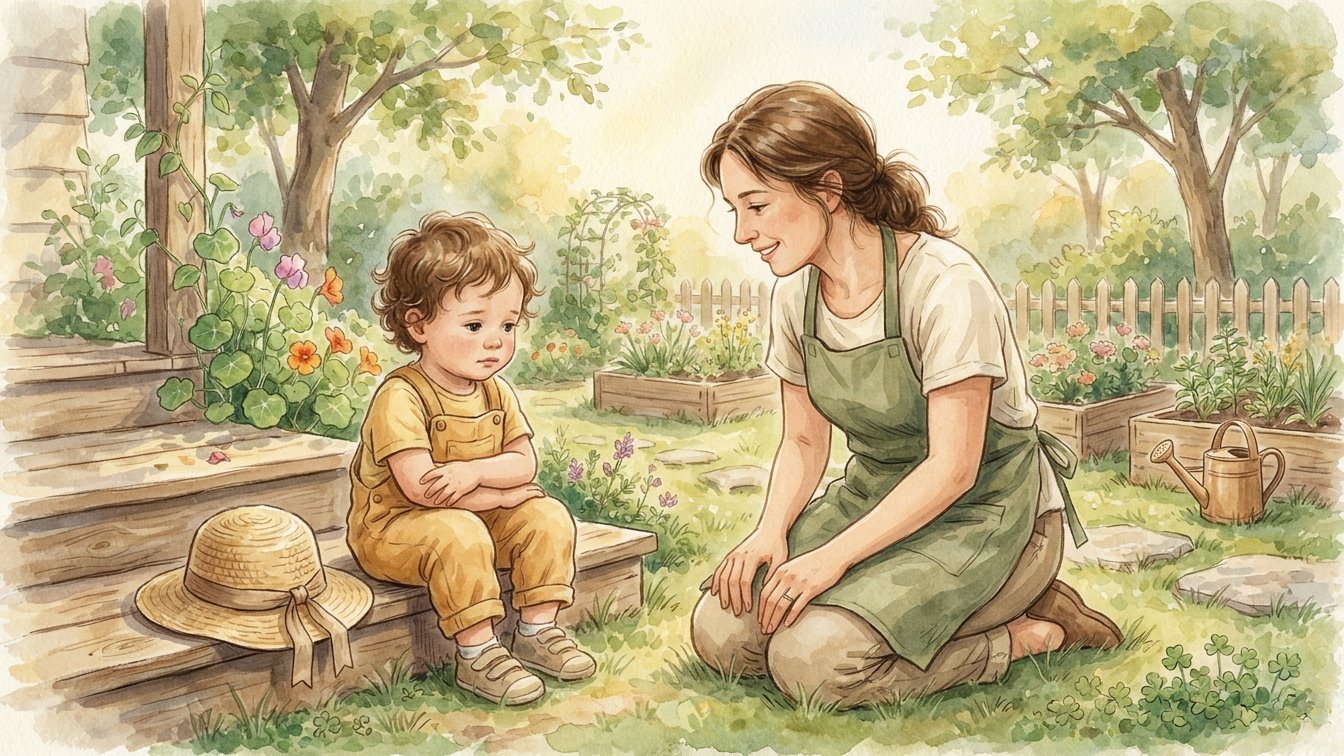
What Is Demand Avoidance?
Demand avoidance means avoiding or resisting the things a child is asked or expected to do. A “demand” isn’t only a big ask. It can be getting dressed, eating dinner, answering a question or even a friendly suggestion.
All children avoid some requests. That’s part of growing up and learning who you are. Demand avoidance becomes a concern when it happens with almost everything, it’s intense, and it makes daily life very hard.
What it can look like
- Saying “no” before you’ve finished asking.
- Changing the subject, joking or distracting you.
- Making excuses: “My legs don’t work.” “I’m too tired.”
- Negotiating, bargaining or arguing every step.
- Refusing things they usually enjoy once someone asks.
- Meltdowns or shutdowns when pushed.
The puzzling part
Many parents notice their child will happily do something on their own, but not when asked. That isn’t always stubbornness. For some children, the request itself is what feels hard.
Everyday No, or Something More?
Toddlers say no. Preschoolers test limits. It’s how they learn they’re separate people with their own wants. A busy, tired or hungry child will push back more.
Signs it may be more than a phase
- The avoidance covers nearly every part of the day, not just a few things.
- It seems driven by worry or panic, not just wanting their way.
- Rewards and consequences don’t help, or make things worse.
- Your child avoids things they want to do, once it feels like a request.
- It’s affecting kinder, school, friendships or family life.
If that sounds familiar, it doesn’t mean something is wrong with your child or your parenting. It means your child may need a different approach.
What About PDA?
If you’ve searched for demand avoidance, you’ve probably seen “PDA”. It stands for pathological demand avoidance. Many people now prefer “persistent drive for autonomy” or “pervasive drive for autonomy”.4
Where the idea came from
PDA was first described by UK psychologist Elizabeth Newson. She saw a group of children who avoided everyday requests to an extreme degree, often using social strategies like distraction or excuses.5
What research says so far
PDA is not a diagnosis in the DSM or ICD, the main diagnostic manuals.4 A 2021 systematic review found only 13 studies, most relying on parent reports. The authors said research is at an early stage, and it’s unclear how PDA relates to autism and other conditions.1
Some researchers argue these are true symptoms but not a separate syndrome.2 Others see PDA as a profile within autism. Clinicians in Australia vary in how they use the term.
What this means for you
You don’t need a label to help your child. Whether or not anyone uses the word PDA, the support ideas in this guide focus on lowering pressure and building trust. Those help many children who say no a lot. They fit with neurodiversity affirming practice.
Why Some Children Say No to Everything
There’s rarely one cause. Usually it’s a mix.
Anxiety and uncertainty
A UK study of 214 families looked at children with diagnosed or suspected PDA. The children scored higher on intolerance of uncertainty, meaning they found not knowing what’s coming very hard.3 The authors suggested anxiety and uncertainty may help explain extreme avoidance.
That makes sense. If a request feels unpredictable or out of your control, saying no is a way to feel safe.
A need for control
Many children who avoid requests seem to need a strong sense of control over their day. Being told what to do, even kindly, can feel like losing that control.
Capacity is already stretched
A tired, hungry, overloaded child has less room to cope with anything extra. Skills can come and go, as in a spiky profile. Every request is one more thing on a full plate. My post on why a child can do it some days and not others explains this capacity idea.
Changes and transitions
Many requests are about changes: stop playing, get in the car, come to dinner. If switching is hard, every request to switch can trigger a no. My guide to difficulty with transitions covers this.
Sensory overload
If your child is already overwhelmed by noise, light or crowds, even a small request can tip them over. See sensory overload in public for more.
Two Stories: Bella and the Hat
Bella’s “no”
As I mentioned at the start, Bella sometimes met a simple request with a firm “no”.
Looking back, those moments usually happened when she was tired, overwhelmed or deeply focused on something else. What looked like defiance was often a sign that her capacity was already stretched.
Bella wasn’t diagnosed with ADHD until her twenties. Back then, I didn’t see it this way. Now I understand her “no” as information, not a challenge.
The hat story
This is the story I mentioned earlier. I once worked with a child who happily put on their hat by themselves during outdoor play.
However, if an adult said, “Put your hat on now,” the child often refused. The hat wasn’t the issue. The direct request seemed to create pressure.
When we changed our language to “I wonder if your hat wants to come outside with us,” the child cooperated much more often.
What the hat taught me
The child could do the task. The child even liked the task. It was being told that made it hard. A playful, indirect invitation took the pressure off, and the hat went on.
Demand Avoidance or Defiance?
From the outside, demand avoidance and defiance can look the same. Underneath, they can be quite different.
| What you may see | What may be underneath |
|---|---|
| “No!” before you finish asking | The request itself feels like pressure |
| Silly voices, jokes or changing the subject | A way to avoid the request without a fight |
| “My legs are broken” | Struggling to say “I can’t cope right now” |
| Refusing a treat they love | The offer felt like one more thing to do |
| Meltdown when pushed | Anxiety rising until it spills over |
| Happily doing it later, alone | The skill was there; the pressure was the problem |
This doesn’t mean children never push limits on purpose. They do. But if you see the pattern above, treating it as defiance often makes things worse.
7 Gentle Ways to Help With Demand Avoidance
These ideas come from families, autistic advocates and my own practice. Start with one or two, and watch what changes.4
Check capacity first
Before you ask, notice: is your child tired, hungry or overloaded? If the battery is low, drop or delay anything that can wait. A snack and some quiet may do more than any request.
Turn requests into invitations
Like the hat story, try “I wonder…” or “I’m going to…” instead of “You need to…”. “I’m going to put my shoes on. I wonder if your shoes want to come too.”
Offer small choices
Choices give back some control. “Blue cup or red cup?” “Bath before or after stories?” Keep them small and easy, and accept whichever they pick.
Let something else do the asking
A picture card, a timer or a written list can make the request feel less personal. Reframing Autism suggests depersonalising requests in this way.4 “The timer says it’s bath time” can be easier than “I said bath time.”
Do it together
“Let’s do it together” turns a request into teamwork. Start the task yourself and let your child join in. My post on the start together task trick explains why this works for many children.
Make playful asks
Humour and play lower pressure. A sock puppet that asks for help, a race to the bath or a pretend game can get a task done without it feeling like a demand. Following your child’s lead in play, as in DIR Floortime, builds the same trust.
Keep the must dos few and calm
Some things can’t be skipped, like car seats and safety. Keep that list short, explain why, and stay calm and steady. Fewer battles overall means more energy for the ones that matter.
Praise lightly
Some children with demand avoidance find direct praise uncomfortable, as if it adds pressure for next time. Reframing Autism suggests indirect praise.4 Try telling someone else, within earshot: “Did you see who helped carry the bags today?”
Repair after a hard moment
Some days will still end in a big “no” and a bigger meltdown. That’s okay. Once everyone is calm, reconnect with a cuddle, a snack or a quiet game. You don’t need a lecture about what went wrong, or a promise to do better tomorrow. A child who feels safe after a hard moment is more likely to trust you next time.
Notice your own tone
When we’re rushed or stressed, our voices get sharper and our requests get shorter. Children who are sensitive to pressure often hear that first. Slowing down, softening your voice and taking a breath before you ask can help as much as changing the words. My co regulation guide explains why.
Expect it to take time
Lowering pressure takes patience. Things may not change in a day. But some families say battles ease over a few weeks, once their child starts to trust that “no” won’t lead to a fight.
Free Tools That Help
A few free printables from the site fit well with these ideas.
For gentler words
The Expectation Swap Cards help adults swap demands for gentler words. They pair well with the new Phrase Swaps card.
For checking capacity
The Capacity Check Card lets your child show how full their battery is, before you ask for anything.
For letting visuals ask
The First Then Starter Tiles and the Transition Cards let a picture or a countdown do the asking.
For big moments
The Storm Plan helps you plan ahead for meltdowns, so you’re not deciding what to do in the middle of one.
Phrase Swaps for Demand Avoidance
Small changes in wording can make a big difference. These swaps keep the same goal but lower the pressure.
| Instead of | Try |
|---|---|
| “Put your shoes on now.” | “I wonder where your shoes are hiding.” |
| “You need to eat your dinner.” | “Dinner’s on the table when you’re ready.” |
| “Tidy up your toys.” | “I’m going to tidy. Want to race me?” |
| “Say thank you.” | “Thank you so much,” said for both of you. |
| “Get in the bath.” | “The bath is ready. Duck or boat today?” |
| “Why won’t you listen?” | “That felt like a lot. Let’s take a minute.” |
These won’t work every time. On a very hard day, even an invitation can feel like too much. That’s when lowering expectations for the day is the kindest choice.
Low Demand Parenting: What It Is and Isn’t
You may have heard of low demand parenting. It’s an approach many families with demand avoidance use. It means cutting back on requests that aren’t essential, so your child has more capacity for the ones that are.
What it is
- Choosing which requests truly matter today.
- Letting go of the rest, at least for now.
- Building trust and calm, so your child feels safe.
What it isn’t
- No rules or no boundaries.
- Ignoring safety.
- Forever. Many families add requests back slowly as things settle.
There isn’t much research on low demand parenting yet. Most of what we know comes from families and autistic adults. Even so, many families say it brings calm back into the house.
Demand Avoidance at Different Ages
Saying no looks different as children grow. Knowing what’s typical helps you decide when to worry and when to wait.
Toddlers
“No” is one of a toddler’s favourite words. They’re discovering they can choose. Most toddler refusals pass quickly with a distraction, a song or a cuddle. Choices and play work wonders at this age.
Preschoolers
Preschoolers can argue, bargain and negotiate. This is healthy practice for thinking and talking. It becomes a concern when almost every request leads to a battle, or when your child seems anxious rather than cheeky.
School age children
Older children can often tell you what feels hard, if you ask at a calm time. They can help make plans, choose their own reminders and agree on the few must dos. Including them builds trust.
What Usually Doesn’t Help
For children whose “no” comes from anxiety or overload, some common approaches can backfire.
- Asking again and again. Each repeat adds pressure. Try once, then pause.
- Raising your voice. A louder request can feel like a threat to an anxious child.
- Big consequences. Taking things away can increase anxiety, so the next request feels even harder.
- Reward charts for everything. For some children, a chart becomes one more demand to meet.
- Public correction. Being told off in front of others can push a child into shutdown or meltdown.
This doesn’t mean anything goes. It means choosing approaches that lower pressure, so your child has more room to say yes.
A Day With Fewer Demands: An Example
This is an illustration, not one family’s day. Imagine a morning where only three things must happen: breakfast, getting dressed and leaving on time.
Breakfast is on the table, and nobody asks the child to sit. Clothes are laid out, with a choice of two tops. A timer on the bench shows when it’s time for shoes. A parent hums while putting on their own shoes, and the child copies. Nobody has asked anything directly, yet everything got done.
It won’t always go this smoothly. But even one calmer morning a week can show you which small changes help most.
Demand Avoidance: For Educators
In early childhood rooms and classrooms, the day is full of requests. Children with demand avoidance can find this exhausting.
- Use invitations and “I wonder” language, like the hat story.
- Offer choices in how a task is done.
- Give children roles and jobs, rather than instructions.
- Avoid public requests that put a child on the spot.
- Work with families to share what helps at home.
- Notice capacity: a child who refuses at 2pm may simply be out of energy.
My guides on circle time and ADHD behaviour strategies have more classroom ideas.
Looking After Yourself
Living with daily refusals is tiring. You may feel judged by family or other parents who think you just need to be firmer. You may feel like you’re walking on eggshells.
It makes sense to feel tired. Find people who understand, look after your own energy, and remember that a calmer approach isn’t giving in. My post on parent and teacher burnout may help.
When to Get More Help
Talk to your GP or Maternal and Child Health nurse if demand avoidance is causing a lot of distress or your child is very anxious. It’s also worth asking if it affects kinder, school or family life. Your GP may refer you to a paediatrician or psychologist.
An assessment for autism, ADHD or anxiety may help you understand what’s going on. See choosing autism and ADHD supports for next steps. If your child is struggling to attend school, see my guide to school refusal.
Please note. This is general information, not medical advice. If your child talks about hurting themselves, or you’re worried about their safety, get help straight away. Call 000 in an emergency, or Kids Helpline on 1800 55 1800.
Free Printable: Phrase Swaps Card
Gentle swaps for everyday requests, plus space to write your own.
Download the Free PDFPhrase Swaps
Same goal, less pressure. Stick it on the fridge.
How to Use the Phrase Swaps Card
- Print it and put it where you need it most, like the fridge or by the door.
- Choose one swap to practise this week, for your hardest moment.
- Say it calmly, then wait. Give your child time to respond.
- Write your own swap in the last box, using words that suit your child.
- Share the card with other carers and educators, so everyone uses similar words.
What’s in the free PDF
The Phrase Swaps PDF has two pages. Page 1 has twelve swaps for home and rooms. Page 2 is a capacity check and a “must do or can wait?” sorter for planning your day.
More Free PDFs for Calmer Days
More free tools are on our printables page.
- Changes: difficulty with transitions
- School: school refusal
- Looking fine: autistic masking
- Energy: why a child can do it some days and not others
- Meltdowns: child meltdown co regulation
- Stress responses: fight, flight, freeze
- Starting tasks: when an ADHD child won’t start tasks
- Hub: regulation and behaviour
Demand Avoidance FAQs
What is demand avoidance in children?
Demand avoidance is when a child resists everyday requests, often even things they’d enjoy. It can look like defiance but is often driven by anxiety, overload or a strong need for control.
Why does my child say no to everything?
Common reasons include tiredness, anxiety, sensory overload, a need for control and difficulty with changes. A request can feel like pressure, even when the task itself is easy.
Is PDA an official diagnosis?
PDA is not in the DSM or ICD. Some clinicians describe it as a profile within autism. Research is still at an early stage, and experts disagree about whether it’s a separate condition.
Is demand avoidance the same as defiance?
Not always. Defiance is usually about testing limits. Demand avoidance is often about anxiety or overload. Firm consequences can make it worse.
What helps a child with demand avoidance?
Checking capacity first, using invitations instead of instructions, offering choices, letting visuals do the asking, doing tasks together and keeping must dos few and calm.
Is low demand parenting the same as no rules?
No. It means cutting back on requests that aren’t essential, while keeping safety and a few clear must dos. Many families add requests back slowly as things settle.
Research: Kildahl and colleagues’ systematic review of PDA, and Green and colleagues on PDA as symptoms rather than a syndrome. It also draws on Stuart and colleagues on uncertainty and anxiety, Newson’s original description, and Reframing Autism’s guide for allies.
Experience: Bella’s story and the hat story are my own memories. The 7 ways and phrase swaps come from my practice and from what families and autistic advocates share. I’m not a psychologist or doctor, and every child is different.
This is general information, not medical advice. Last reviewed: 24 November 2026.
References
- Kildahl, A. N., Helverschou, S. B., Rysstad, A. L., Wigaard, E., Hellerud, J. M. A., Ludvigsen, L. B., & Howlin, P. (2021). Pathological demand avoidance in children and adolescents: A systematic review. Autism, 25(8), 2162-2176. https://doi.org/10.1177/13623613211034382
- Green, J., Absoud, M., Grahame, V., Malik, O., Simonoff, E., Le Couteur, A., & Baird, G. (2018). Pathological demand avoidance: Symptoms but not a syndrome. The Lancet Child & Adolescent Health, 2(6), 455-464. https://doi.org/10.1016/S2352-4642(18)30044-0
- Stuart, L., Grahame, V., Honey, E., & Freeston, M. (2020). Intolerance of uncertainty and anxiety as explanatory frameworks for extreme demand avoidance in children and adolescents. Child and Adolescent Mental Health, 25(2), 59-67. https://doi.org/10.1111/camh.12336
- Reframing Autism. (2024). Pathological demand avoidance (PDA) and autism: A guide for allies. https://reframingautism.org.au/pathological-demand-avoidance-pda
- Newson, E., Le Maréchal, K., & David, C. (2003). Pathological demand avoidance syndrome: A necessary distinction within the pervasive developmental disorders. Archives of Disease in Childhood, 88(7), 595-600. https://doi.org/10.1136/adc.88.7.595
