
School Refusal: 7 Gentle Steps When Your Child Doesn’t Want to Go to School
School refusal is when a child is so distressed that they struggle to go to class, or can’t go at all. It isn’t naughtiness or laziness. Many families now call it “school can’t”.
Neurodivergent children are more likely to experience it. This guide explains the signs, the common reasons, 7 gentle steps, when a new school may be right, and a free School Worry Map.
I had this issue with my own daughter. When Bella was in Year 8, she avoided going to school for almost a week. I did not know how to deal with it at first.
I’m a former early childhood educator with a PhD in early childhood education. None of that told me what to do on those mornings. What helped was sitting down and talking with her, and listening to what she said.
Many families face this. If your child doesn’t want to go to school, it’s common, and it’s especially common for autistic children, children with ADHD and other neurodivergent children.
Below, I share what happened with Bella, what research says and the steps that help. Further down, I’ll also explain when a new school might be the right answer.
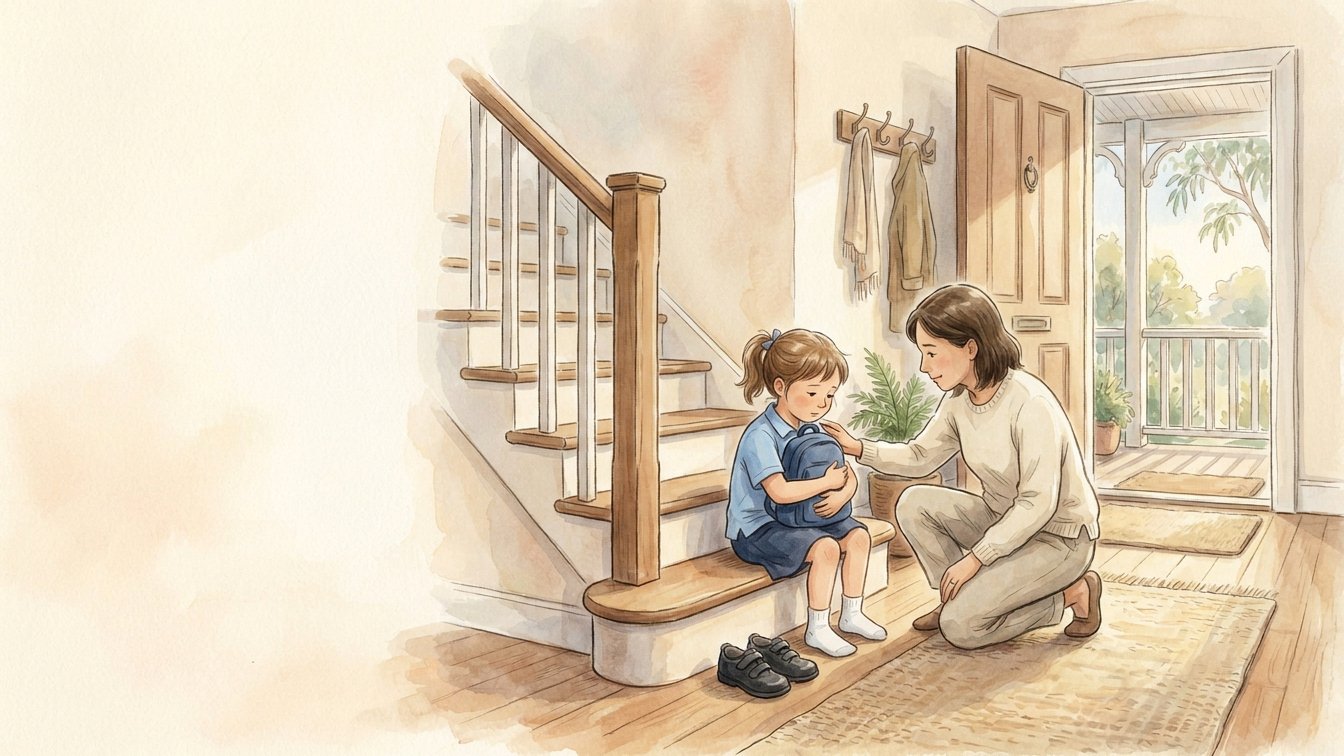
- When Bella Couldn’t Face School
- What It Is
- School Refusal, School Can’t or School Avoidance?
- Signs to Look For
- Why Neurodivergent Children Are More Affected
- In Young Children
- Finding the Why
- 7 Gentle Steps
- Free Tools That Help
- When a New School Is the Right Choice
- For Educators
- Looking After Yourself
- Free Printable: School Worry Map
- FAQs
When Bella Couldn’t Face School
I talked with her. She told me she was avoiding some of the girls, and the place didn’t feel comfortable for her.
I gave her a choice
I gave Bella the option to leave and find a new school. We visited a few together. At one of them, she said she felt okay. She picked it, and within three weeks she was enrolled.
Why I supported her
I supported her decision to leave. For me, it was simple. If she isn’t comfortable and is avoiding it, what is the point of staying?
Bella wasn’t diagnosed with ADHD until her twenties. At the time, we didn’t have that word. What I did know was that she wasn’t comfortable, and that mattered more to me than staying.
Bella was a teenager, and this site is mostly about young children. But the heart of it is the same at any age.
What Is School Refusal?
School refusal is when a child feels so upset that they struggle to attend, or miss some or all of the day. The Raising Children Network describes it as an emotional problem, not a formal diagnosis.2
The parent usually knows
Usually, the child is at home and the parent knows about it. Often the parent has tried very hard to get them there.2 That is one way it differs from truancy.
Not the only kind of missed day
Researchers separate school refusal from other attendance problems.3 Knowing which one you’re facing helps you find the right support.
| Type | What it looks like |
|---|---|
| School refusal | The child is upset and stays home. Parents know and often try hard to help them go. |
| Truancy | The child skips class without the parents knowing, often hiding it. |
| School withdrawal | A parent keeps the child home, or doesn’t try to help them go. |
| School exclusion | The child is stopped from attending, for example with a suspension or a shortened day. |
This guide is about the first one. It’s about distress, not defiance.
School Refusal, School Can’t or School Avoidance?
You’ll see a few names for the same experience. In 2023, an Australian Senate inquiry looked at the national trend of school refusal.1
The inquiry noted that people also call it “school can’t”, “school phobia” and “school avoidance”. The committee used “school refusal” without deciding which term is best.1
Why many families say “school can’t”
“Refusal” can sound like a choice. Many parents and neurodivergent adults prefer “school can’t”, because it says the child is struggling, not refusing. I use school refusal in this guide because it’s the term most people search for. But I agree with the spirit of “school can’t”.
Words shape what we do
If we think a child won’t go, we push harder. If we think a child can’t go yet, we look for what’s in the way. The second path usually helps more.
Signs of School Refusal
It doesn’t always look like a child saying “I’m not going”. It often starts quietly.
Common signs
- Tummy aches, headaches or feeling sick on weekday mornings, which ease once they’re allowed to stay home.2
- Tears, pleading or refusing to get dressed or get in the car.
- Hiding in their room or under the blanket. This can be a freeze response, not stubbornness.
- Trouble sleeping, especially on Sunday nights.
- Big worries about something in class, or leaving you. This kind of worry often builds over weeks.
- Coming home exhausted and falling apart in the afternoon.
When it often starts
The Raising Children Network says it is most common around ages 5 to 6 and 10 to 11.2 Those are times of big change: starting Prep, and the move towards secondary.
It can also start after a holiday, an illness, a move, a new class or a move.2 Bella’s started in the early years of secondary.
Mornings can become a battle
Many families describe mornings that feel like a battle of wills. Nobody wants that. The child feels trapped, and the parent feels helpless and late for work.
Why Neurodivergent Children Are More Affected
The Senate inquiry heard evidence that a significant share of students with school refusal are neurodivergent, including autistic students.1 Studies point the same way.
What the studies found
One study asked parents of 486 autistic students about one month of attendance. Students missed an average of 5 days out of 23. School refusal made up 43% of their absences.4
Another study of 106 parents found school refusal was the most common reason autistic children missed whole days of class. It was linked with child anxiety, which fits what many parents see: school anxiety and missed days tend to go together.5
Both studies relied on parent reports, and neither can say why each child was absent. But they show this is a common struggle, not a parenting failure.
The school day asks a lot
For many neurodivergent children, a day in class is full of things that cost extra energy:
- Sensory load: noise, flickering lights, crowded corridors, smells and scratchy uniforms.
- Social demands: friendships, group work, playground rules and reading other people.
- Constant change: new rooms, new teachers, timetable changes and relief staff. My guide to difficulty with transitions explains why switching is so hard for some children.
- Learning demands: sitting still, writing, and tasks that don’t match how they learn.
- Masking: working hard to look fine all day. Girls often do this, as I explain in autism in girls.
Sensory overload at school
A UK study asked parents and teachers about autistic pupils’ sensory experiences in class. Both mostly described negative experiences, which led to distraction, anxiety and joining in less.6 Predictable sensory input and staff who understood helped.
Looking fine isn’t the same as feeling fine
Some children hold it together all day and then fall apart at home. You can read more about this in after school restraint collapse and autistic masking. Over time, that effort can turn into school can’t.
School Refusal in Young Children
In Prep and the early years, it can look a little different. Young children often can’t explain what is wrong. They show it with their bodies.
What it can look like
- Clinging at drop off, every day, for weeks.
- Tummy aches on weekdays, but not on weekends.
- Saying “I don’t like it there” without being able to say why.
- Big feelings in the car or at the gate.
- Toileting accidents, or not using the toilets there at all.
Common reasons in the early years
When a young child doesn’t want to go to school, they may be worried about leaving you or a loud classroom. Other common worries are the toilets, eating lunch, a hard part of the day or not knowing what comes next.
In childcare settings, I often noticed overwhelm showing up in small ways first. Some children covered their ears during group singing, avoided busy play areas or became irritable after long periods of noise.
If your child is starting Prep soon, my post on visual routine cards can help make the morning predictable. The free Big New Step storybook helps too.
Finding the Why
There is rarely one single cause.2 Usually several things pile up. Finding the main ones matters more than finding a label.
Ask about parts of the day, not the whole day
“Why don’t you want to go?” is a hard question. Even adults struggle to answer it. The Raising Children Network suggests asking a child to rate parts of the school day. Younger children can point to faces.2
That’s what the free School Worry Map does. Your child colours each part of the day: arriving, the classroom, breaks, lunch, the toilets, people and going home.
Questions to think about
- Is it a place? The playground, the canteen, a noisy classroom.
- Is it people? Friendship trouble, a group of children, a teacher.
- Is it a task? Writing, reading aloud, sport, tests.
- Is it leaving home? Worry about you, a sibling, a pet, or something at home.
- Is it energy? Is your child simply running on empty?
- Is it being asked? Some children resist almost every request. See demand avoidance.
For Bella, it was people and place. Once I knew that, the next step was clearer.
Check health first
If your child has tummy aches or headaches, see your GP to rule out a physical cause.2 Sleep problems, illness and pain can all make each day harder.
7 Gentle Steps for School Refusal
These steps come from Australian guidance, research on attendance and my own experience as a parent and educator. Start with the first two, then add the others as you learn more.
Listen before you push
Stay calm, and start with curiosity. “Something about your days feels very hard right now. I want to understand.” A child who feels heard is more likely to tell you what’s wrong.
Map the worry
Use the School Worry Map to find the hardest parts of the day. Look for patterns over a week. Is it Mondays? Sport days? The days after a late night?
Talk to the school early
Start with the classroom teacher. Ask about friendships, bullying, learning support and the school counsellor or psychologist.2 The sooner you start, the smaller the gap your child has to bridge.
Ask for small changes
Ask for adjustments that remove the hard parts: a quiet space at lunch, an early arrival before the rush, a trusted adult to meet them, ear defenders or a buddy. A gradual return or shorter day can help too.2
Make mornings predictable
Keep the same morning steps each day, with pictures if they help. My daily routine guide has sample mornings. Plan a short, kind goodbye. Some families find another adult doing drop off makes it easier.2
Keep home days calm and simple
On days your child stays home, keep it quiet and low key, with some learning tasks during class hours.2 This isn’t a punishment. It keeps the routine and stops home becoming a holiday.
Get support early
If it keeps going, see your GP. They may refer you to a paediatrician, psychologist or psychiatrist, and talk about a Mental Health Treatment Plan.2 Support works better when anxiety or low mood is looked at too.
A note on “when”, not “if”
The Raising Children Network suggests calm, expectant language, such as “when you’re at school tomorrow”.2 This can help some children. But if your child is deeply distressed, listening comes first. Pushing a child who can’t cope often makes things worse.
What to say on a hard morning
When your child is upset, short and calm words work best. Long explanations can add to the overwhelm. Try one of these:
- “I can see this feels very big today.” Then pause, and let them answer, or not.
- “Let’s just do the next step. Shoes first.”
- “You don’t have to feel ready. I’m right here with you.”
- “Which part feels hardest? You can point on the map.”
- “We’ll work this out together, with your teacher.”
Keep your own voice slow and low. Your calm body helps your child’s body settle, even when the words don’t land.
Small wins count
Getting dressed is a win. Getting in the car is a win. One hour in class is a win. Notice every step, and tell your child you noticed.
Free Tools That Help Alongside the Worry Map
You don’t need a new system for every hard morning. A few small printables can take some of the guesswork out of the day, for you and your child.
For the morning
The Visual Routine Cards turn the morning into eight picture steps. When the steps are on the wall, you don’t have to keep saying them, and your child can see the end of the list.
For a new place
The Big New Step Storybook lets your child star in a story about a change. It works for starting Prep, a new class or a new school, like Bella’s move.
For the afternoon
The After School Landing Plan gives your child a soft landing when they get home. A calmer afternoon can make the next morning a little easier.
For checking energy
The Capacity Check Card helps your child show how full their battery is. On a low battery day, you might plan a shorter day or a gentler start.
For the grown ups
The Expectation Swap Cards help adults swap a demand for something easier to say yes to. They’re useful to share with a teacher, too. If you’re seeing a GP, the GP Appointment Planner helps you say everything you meant to say.
When a New School Is the Right Choice
Most guidance focuses on helping a child return to the same place. That is often the right first step. But sometimes the place itself is the problem, and it won’t change.
What I learned with Bella
I mentioned earlier that Bella changed schools. For Bella, the trouble was the girls and the environment. Those were about the place itself. So we looked for a place that felt better, and she had a say in choosing it.
Signs a new school may help
- The problems are about the place or the people, and they can’t or won’t change.
- Your child feels unsafe, or bullying hasn’t stopped after you’ve raised it.
- You’ve tried adjustments, and things are still getting worse.
- Your child can name what feels wrong, and it matches what you see.
How to make the move gentler
- Visit together. Let your child notice how each place feels, like Bella did.
- Let them have a say. A child who chooses is more likely to feel safe.
- Share what helps. Tell the new teachers what was hard before and what helps now.
- Plan the first weeks. A move is a big change too, and it can itself trigger worry.2
A new school isn’t running away. Sometimes it’s finding the right fit.
For Educators: Spotting It Early
Teachers and early childhood educators often see the first signs. A child who arrives late, clings at the door or says they feel sick at the same time each day may be telling you something.
What helps from the classroom side
- A warm, predictable welcome from the same adult each morning.
- A quiet place to start the day before the room fills.
- Visual timetables, and warnings before changes.
- A plan made with the family, not just for them.
- Watching for the quiet child who seems fine but is struggling.
- Helping a child settle before asking them to learn, the idea behind regulation before learning.
My guides on classroom noise and calm corner design have ideas for making the room easier. For working with families, see connecting with parents.
Looking After Yourself
It is hard on parents too. You may be juggling work, worried about missed learning and tired of hard mornings. Many parents also feel judged.
You’re not doing it wrong
Struggling to attend isn’t a sign of bad parenting. The research above shows how common it is, especially for neurodivergent children.45 Your child needs you on their side, and you need support too.
If you’re running low, my post on parent and teacher burnout may help. If you’re looking at supports, see choosing autism and ADHD supports.
Please note. This is general information, not medical advice. If your child talks about hurting themselves, or you’re worried about their safety, get help straight away. Call 000 in an emergency. Kids Helpline is free and confidential on 1800 55 1800, and Lifeline is on 13 11 14.
Free Printable: School Worry Map
Colour each part of the school day to find where the worry sits.
Download the Free PDFMy School Worry Map
Colour each part: green feels okay, yellow is a bit hard, red is very hard.
The hardest part:
What might help:
How to Use the Worry Map
- Choose a calm time, not a weekday morning.
- Let your child colour each part green, yellow or red. Younger children can point while you colour.
- Ask about the red parts gently. You don’t need all the answers in one go.
- Fill in the hardest part and one idea that might help.
- Take it to a meeting with the teacher. It’s much easier than explaining from memory.
What’s in the free PDF
The School Worry Map PDF has two pages. Page 1 is the colouring map for your child. Page 2 is a grown ups’ page for noticing patterns over a week and planning what to ask the school.
More Free PDFs for School Worries
More free tools are on our printables page.
- After school: after school restraint collapse
- Changes: difficulty with transitions
- Saying no: demand avoidance
- Looking fine: autistic masking
- Hidden needs: autism and ADHD aren’t always visible
- Energy: why a child can do it some days and not others
- Sensory: sensory overload in public
- Girls: signs of ADHD in girls
- Support: the Thriving Kids program
- Hub: regulation and behaviour
School Refusal FAQs
What is school refusal?
School refusal is when a child is so upset about school that they struggle to go or miss some or all of the day. It is an emotional problem, not naughtiness, and parents usually know about it.
What is the difference between school refusal and school can’t?
They describe the same experience. Many families prefer “school can’t” because it shows the child is struggling, not choosing. The first is the more common search term.
Are autistic children and children with ADHD more likely to have school refusal?
Evidence suggests neurodivergent children are more affected. An Australian Senate inquiry heard that a significant share of students who struggle to attend are neurodivergent, and studies of autistic students show high rates.
Should I make my child go to school?
Forcing a deeply distressed child often makes things worse. Listen first, find out what’s hard, work with teachers on changes and get support early. A gradual return often works better.
Is changing schools a good idea?
Sometimes. If the problem is the place or the people, and it can’t change, a new school can help. Visit together, let your child have a say and plan the first weeks carefully.
When should I get help for school refusal?
Talk to your child’s teacher early, and see your GP if it lasts more than a few days or your child has physical symptoms. Get urgent help if your child talks about hurting themselves.
Research: the 2023 Australian Senate inquiry, the Raising Children Network, and Heyne and colleagues on types of attendance problems. It also draws on studies of autistic students by Totsika and colleagues and by Adams, and Jones and colleagues on sensory experiences in class.
Experience: Bella’s story is my own family’s experience, shared with care. I’m a former early childhood educator with a PhD in early childhood education, not a psychologist or doctor. Every child is different.
This is general information, not medical advice. Last reviewed: 23 November 2026.
References
- Education and Employment References Committee. (2023). The national trend of school refusal and related matters. The Senate, Commonwealth of Australia. https://www.aph.gov.au/Parliamentary_Business/Committees/Senate/Education_and_Employment/SchoolRefusal
- Raising Children Network. (n.d.). School refusal. https://raisingchildren.net.au/school-age/school-learning/school-refusal/school-refusal
- Heyne, D., Gren-Landell, M., Melvin, G., & Gentle-Genitty, C. (2019). Differentiation between school attendance problems: Why and how? Cognitive and Behavioral Practice, 26(1), 8-34. https://doi.org/10.1016/j.cbpra.2018.03.006
- Totsika, V., Hastings, R. P., Dutton, Y., Worsley, A., Melvin, G., Gray, K., Tonge, B., & Heyne, D. (2020). Types and correlates of school non-attendance in students with autism spectrum disorders. Autism, 24(7), 1639-1649. https://doi.org/10.1177/1362361320916967
- Adams, D. (2022). Child and parental mental health as correlates of school non-attendance and school refusal in children on the autism spectrum. Journal of Autism and Developmental Disorders, 52(8), 3353-3365. https://doi.org/10.1007/s10803-021-05211-5
- Jones, E. K., Hanley, M., & Riby, D. M. (2020). Distraction, distress and diversity: Exploring the impact of sensory processing differences on learning and school life for pupils with autism spectrum disorders. Research in Autism Spectrum Disorders, 72, 101515. https://doi.org/10.1016/j.rasd.2020.101515
