
Difficulty With Transitions: Why Stopping, Leaving and Switching Is So Hard, and 8 Easy Ways to Help
Difficulty with transitions means a child finds it very hard to stop one thing and start another. Leaving the park, turning off a screen, getting dressed or coming to dinner can end in tears, refusal or a meltdown.
It is common in autistic children and children with ADHD, and many other children too. This guide explains why it happens, what research says about warnings, 8 easy ways to help at home, and free Transition Cards.
I had this issue with Bella when she was little. Leaving a familiar place often ended in tears, and I did not know how to deal with it at first.
We were living in Indonesia then. If we visited relatives and she was deep in play with her cousins, “time to go” could turn a happy visit into a hard goodbye.
Over time, I found one small change that usually helped. Further down, I’ll share it, along with what I later saw in preschool rooms as an educator, and what research says.
If your child melts down when it’s time to leave the park, stop playing or get in the bath, you’re not doing anything wrong. And your child isn’t being naughty. Moving from one thing to the next is hard work for some brains.
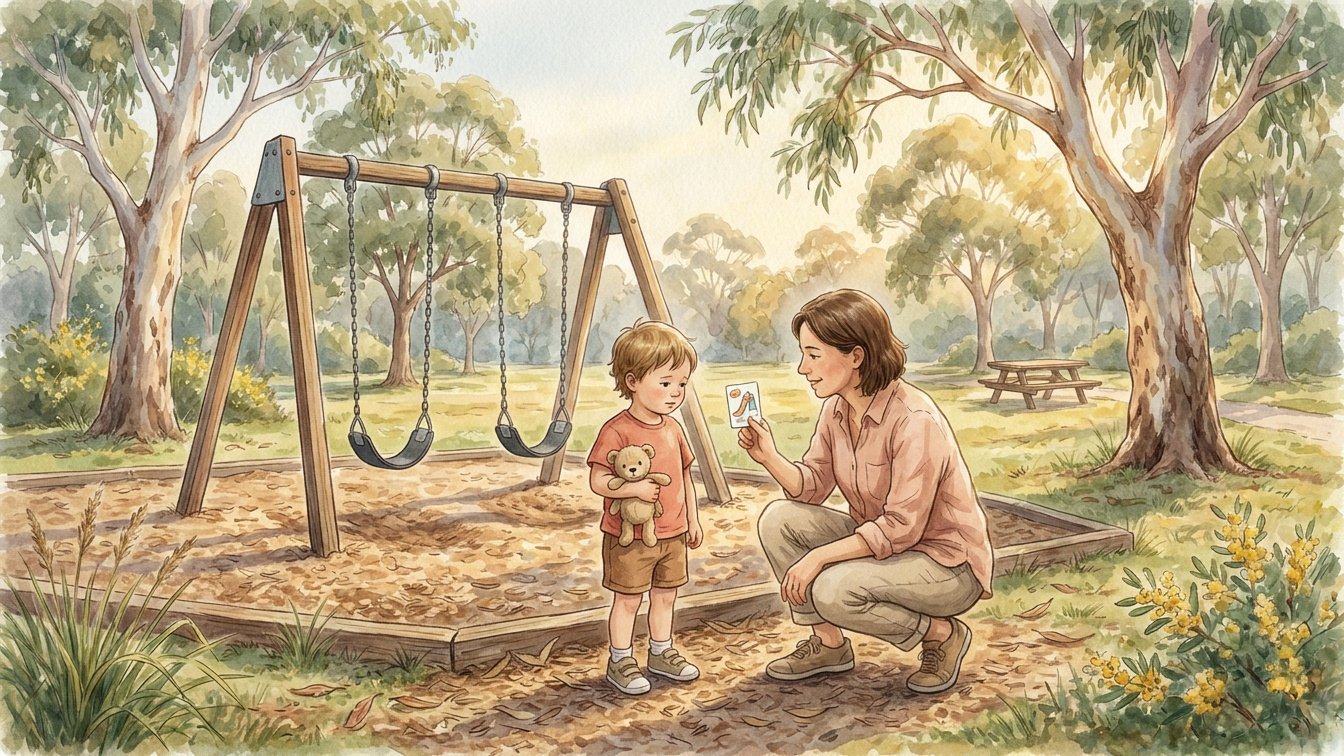
What Is Difficulty With Transitions?
A transition is any moment when a child has to stop one thing and start another. Most days are full of them. Getting up, getting dressed, breakfast, leaving the house, arriving somewhere, packing up, bath, bed.
Most young children find some changes hard. That’s a normal part of growing up. Difficulty with transitions is when it happens often, feels very big, and gets in the way of family life.
What it can look like
- Crying, shouting or melting down when it’s time to stop.
- Saying “no”, bargaining or ignoring you.
- Running away, hiding or going floppy.
- Freezing, going quiet or seeming not to hear.
- Asking “what’s next?” again and again.
- Being fine with some changes but not others.
Common in neurodivergent children
The diagnostic manual for autism lists distress at small changes and trouble with transitions among its examples of autistic traits.1 Many children with ADHD find switching hard too, especially when they have to stop something they love.
But you don’t need a diagnosis for these ideas to help. If your child struggles with transitions, this guide is for you.
The Hardest Everyday Moments
Difficulty with transitions often shows up at the same few times each day. Knowing yours is the first step.
| Moment | Why it can be hard |
|---|---|
| Leaving the park or a friend’s house | Ending something fun, with no say in when |
| Turning off a screen | A sudden stop in the middle of something absorbing |
| Getting dressed and out the door | Many steps, a clock ticking, and adults in a hurry |
| Pack up time | Losing what they built, and not knowing what comes next |
| Coming to dinner or the bath | Moving from play to something less fun |
| Arriving somewhere new | New sounds, people and rules all at once |
| Bedtime | The end of the day, tiredness and saying goodbye to play |
Notice how many of these are about stopping, not starting. Bedtime has its own challenges, covered in toddler sleep resistance and ADHD. For many children, ending something loved is the hardest part.
Why Switching Is So Hard for Some Children
There isn’t one reason. Usually a few things add up.
Deep focus takes time to leave
Some children don’t just play. They dive in. One theory of autistic attention, called monotropism, suggests attention can be drawn deeply into a few interests at a time.2 Pulling out of that focus suddenly can feel jarring, a bit like being woken from a dream.
Many children with ADHD describe something similar. A study of adults found those with more ADHD symptoms reported more hyperfocus, where they got so absorbed they lost track of time.3
Shifting is a skill that’s still growing
Switching from one thing to another uses a brain skill called cognitive flexibility. It’s part of executive function, which develops slowly through childhood. The Center on the Developing Child explains that stress makes these skills harder to use.4 A tired or worried child has even less to work with. My post on spiky profiles explains why skills come and go.
Not knowing what’s next
“Time to go” doesn’t say where, why or for how long. For a child who likes to know what’s coming, that uncertainty can feel worse than the change itself.
Losing something
Stopping can feel like a loss: the tower they built, the game they were winning, time with cousins. It makes sense that a child grieves a little, even over small things.
Sensory load
A new place may be louder, brighter or busier. If your child is already overloaded, the change can tip them over. My post on sensory overload in public explains this side of it.
Autistic children and change
Many autistic children find comfort in sameness: the same route, the same cup, the same order of steps. That isn’t rigidity for its own sake. Predictable patterns make a busy world easier to manage. When the pattern breaks without warning, the distress can be very big for the child, even over something small to adults.
ADHD and stopping
For many children with ADHD, the hardest part is stopping something interesting. Their attention follows interest, so a fun game holds them tightly. Ending it to do something boring, like brushing teeth, takes a lot of effort. A job, a choice or something to look forward to can help them make the switch.
What Helped Bella
As I said, leaving a familiar place wasn’t always easy for Bella.
If we visited relatives and she was deeply engaged in playing with her cousins, a sudden “time to go” often led to tears or resistance.
Looking back
Looking back, it wasn’t about being naughty. She seemed to need more time to shift from one activity to another.
What usually helped
Giving a five minute warning and explaining what would happen next usually helped. This is the change I mentioned earlier.
Bella wasn’t diagnosed with ADHD until her twenties. Back then, I didn’t have the words for her difficulty with transitions. I just knew that a warning, and knowing what came next, made leaving gentler for her.
The same pattern in a preschool room
Later, in one preschool room, I supported a child who became distressed every day at pack up time. The change itself was fine. The sudden end of something the child loved was the hard part.
When educators introduced visual reminders and countdowns, the child moved between activities much more comfortably.
Do Warnings Work? What Research Says
Warnings are the most common advice for difficulty with transitions. Research suggests they help some children, but not all, and not on their own.
When warnings help most
A review of studies on advance notice found mixed results.5 Warnings seemed to work best when the hard part was not knowing what would happen or when. They were less reliable when the hard part was leaving something loved for something less fun.
That matches what I’ve seen. A warning tells a child the change is coming. It doesn’t make the change feel better. Children who are losing something they love often need more than a countdown.
Make warnings visible
The same review noted that a warning only helps if the child understands it.5 “Five minutes” means little to a three year old. A sand timer, a picture card or a countdown they can see works better for many young children.
Visual supports have good evidence
A large review of research on autism practice listed visual supports among 28 evidence based practices.6 Visual supports include picture schedules, first and then boards and countdown cards. They help a child see what’s happening without relying on spoken words.
So the best approach usually combines a few things: a warning the child can see, a clear next step, and a way to soften the loss.
8 Easy Ways to Help With Difficulty With Transitions
You don’t need all eight. Pick the two or three that fit your child’s hardest moments and try them for a couple of weeks.
Give a warning they can see
Pair your words with something visual: a sand timer, a phone timer they can watch, or countdown cards from 5 to 1. Hand over a card each minute. When the last card goes, it’s time.
Say what comes next
Like with Bella, tell your child where you’re going and what will happen. “First park, then home for a bath, then stories.” A First Then card shows it in two pictures.
Save it for later
Soften the loss. Take a photo of the tower. Put the puzzle on a shelf with a “saved” card. Pause the show instead of turning it off. Knowing they can come back makes stopping easier.
Give a goodbye ritual
“Wave goodbye to the swings.” “One last slide.” A small ending ritual tells a child’s body the activity is finished, in a way they can see and do.
Give a job for the walk
“Can you carry the keys?” “Can you push the button for the lift?” A job gives the in between moment a purpose. Animal walks work well too. My post on sensory micro transitions has movement ideas for this.
Bring something along
A small toy, a favourite book or a comfort object can travel from one place to the next. It carries a little of the old activity into the new one.
Offer a small choice
“Do you want to walk or hop to the car?” “Two more slides or three?” A choice inside the change gives a child some control. That can lower the urge to push back.
Cut the number of changes
Look at your day. Can you drop one outing, or join two steps together? Fewer changes means fewer chances for the day to fall apart, especially on tired days. For busy outings, my guide to overwhelming public places has a place by place plan.
Plan for the hardest moment first
If leaving the park is the worst, start there. Use the same warning, the same words and the same ritual every time. Predictable steps help most when they’re repeated.
Allow extra time
Rushing makes difficulty with transitions worse. If you can, start getting ready ten minutes earlier than you think you need. The calmer you are, the calmer your child can be.
Free Tools That Help With Changes
You don’t have to make your own visuals. These free printables from the site work well alongside the new Transition Cards.
For showing what comes next
The First Then Starter Tiles include countdown cards and simple choices. The First Then Reset Mats show one small step, then the next.
For the whole day
The Visual Routine Cards turn mornings and bedtimes into eight picture steps. Seeing the whole morning laid out can make each change less of a surprise.
For movement between places
The Pocket Heavy Work Cards give quick movement ideas, like carrying a bag or pushing a wall, for the moment between one place and the next.
For new places
The Big New Step Storybook helps a child prepare for a bigger change, like a new kinder room or starting Prep.
What to Say, and What to Skip
Words matter during a hard change. Short, calm and specific usually works better than long explanations.
| Instead of | Try |
|---|---|
| “We’re leaving now!” | “Two more slides, then we wave goodbye.” |
| “Stop playing.” | “Let’s save your tower. We’ll take a photo.” |
| “Hurry up!” | “Shoes next. I’ll help with the first one.” |
| “Don’t be silly, it’s only the park.” | “It’s hard to leave somewhere fun. I know.” |
| “If you don’t come, no more park.” | “We’ll come back on Saturday. Let’s put it on the calendar.” |
Name the feeling
“You’re sad to leave” is not giving in. It tells your child you understand, which often helps them settle faster.
Use the same words every time
Pick one short phrase for each hard change and stick with it. “Two more slides, then goodbye” said the same way every visit becomes a signal your child knows. Over time, the words themselves start to help.
Keep threats out of it
Threats can make a child more anxious about the next change, and the next. If a change goes badly, try again next time with a bit more warning or a smaller step.
Difficulty With Transitions at Different Ages
Difficulty with transitions looks a little different as children grow. Knowing what’s typical for each age helps you set fair expectations.
Toddlers
Toddlers live in the moment. They don’t yet understand time, so “in five minutes” means nothing. Short, simple words, a song for each change and lots of physical help work best. Carrying them through a change is fine at this age.
Preschoolers
Preschoolers can start to use countdowns and First Then cards. They like knowing what comes next, and they love jobs. This is a great age to set up routines and goodbye rituals that will last for years.
School age children
Older children can join in planning. Ask them which changes feel hardest and what would help. A child who helps make the plan is more likely to use it. They can also learn to set their own timers and warnings.
When it doesn’t fade
If difficulty with transitions stays strong as your child gets older, or grows worse, that’s worth noticing. It may mean your child needs more support, not that they’re being stubborn.
Looking After Yourself in Hard Moments
A meltdown at the park gate is stressful for parents too. You may feel people watching, or worry about being late. That’s a lot to carry while staying calm.
A few things can help. Plan your exit before you arrive. Leave extra time. Remind yourself that your child is having a hard time, not giving you a hard time. And when a change goes badly, let it go. Tomorrow is another try.
If you’re a parent with ADHD, like me, you may find changes hard yourself. My post on living as a parent with ADHD talks about that side of things.
Difficulty With Transitions: For Educators
In early childhood rooms, the day is full of changes: arrival, pack up, group time, handwashing, meals, rest and home time. A few small changes can make a big difference.
- Use a visual timetable, and point to where you’re up to.
- Give a visible warning before pack up, like a sand timer or a song.
- Let children save work in progress on a “keep” shelf.
- Give individual warnings to children who find changes hard.
- Reduce waiting between activities where you can.
My guides on sensory micro transitions, First Then mats and circle time have more ideas for the room.
Bigger Changes: Starting School and Moving House
Everyday transitions are small. Some changes are much bigger: starting kinder, starting Prep, a new baby, a move or a new school. The same ideas help, just stretched over days or weeks.
Visit ahead, use photos and stories, and keep home routines steady while the big thing changes. For holidays, see travelling with an autistic child. If your child is finding school very hard, my guide to school refusal has more support. For the end of the school day, see after school restraint collapse.
And if your child seems to say “no” to almost every request, not just changes, my guide to demand avoidance may help you see it differently.
When to Get More Help
Many children grow more flexible with time and support. But sometimes difficulty with transitions is part of something bigger.
It’s worth talking to your GP or Maternal and Child Health nurse if changes often lead to long meltdowns or anyone is getting hurt. It’s also worth asking if family life feels very restricted. A paediatrician or occupational therapist can help, and an assessment for autism or ADHD may be worth considering.
You can read more about early signs in early signs of autism in toddlers and signs of ADHD in girls.
Please note. This is general information, not medical advice. If your child is at risk of harm, for example running towards a road during a hard change, keep them safe first and call 000 in an emergency.
Free Printable: Transition Cards
Countdown cards, a Now and Next strip and a Save It card for the hardest changes of the day.
Download the Free PDFTransition Cards
Cut out the cards. Hand over one countdown card each minute, then show what comes next.
How to Use the Transition Cards
- Print, cut out the cards and keep them on a ring or in your bag.
- Practise at a calm time, so your child knows how they work.
- Before a change, hand your child one countdown card each minute, from 5 down to 1.
- Draw or write what’s happening now and next in the two boxes.
- Use the Saved card for unfinished play, so your child knows it’s waiting for them.
What’s in the free PDF
The Transition Cards PDF has two pages. Page 1 has countdown cards from 5 to 1, a Finished card and a Now and Next strip. Page 2 has Saved for Later cards, goodbye ritual cards and a planner for your family’s three hardest moments.
More Free PDFs for Everyday Changes
More free tools are on our printables page.
- School: school refusal
- Saying no: demand avoidance
- Movement bridges: sensory micro transitions
- Daily rhythm: daily routine for neurodivergent children
- Picture steps: visual routine cards
- Meltdowns: child meltdown co regulation
- Starting tasks: when an ADHD child won’t start tasks
- Hub: regulation and behaviour
Difficulty With Transitions FAQs
Why does my child melt down when it’s time to leave?
Leaving often means stopping something loved, without knowing what comes next. Deep focus, tiredness and sensory load can make it harder. It usually isn’t naughtiness.
Is difficulty with transitions a sign of autism or ADHD?
It’s common in autistic children and children with ADHD, and the autism criteria mention it. But many children find changes hard. On its own, it isn’t enough to suggest a diagnosis.
Do five minute warnings work?
Sometimes. Research suggests warnings help most when the hard part is not knowing what’s coming. They work better when the child can see them, like a timer or countdown cards.
How do I help my child stop screen time without a meltdown?
Give a visible warning, pause instead of turning off, say what comes next, and offer a job or choice. Keeping the same routine each day helps.
How can educators help children with transitions?
Use visual timetables, visible warnings, a keep shelf for unfinished work and individual warnings for children who need them. Cutting waiting time helps too.
When should I worry about difficulty with transitions?
Talk to your GP or Maternal and Child Health nurse if changes often lead to long meltdowns, your child gets hurt or hurts others, or family life is very limited.
Research: the current diagnostic manual’s criteria for autism, Murray and colleagues on monotropism, and Hupfeld and colleagues on hyperfocus. It also draws on the Center on the Developing Child on executive function, Brewer and colleagues’ review of advance notice, and a 2020 review of evidence based practices for autism.
Experience: Bella’s story and the pack up story are my own memories. The 8 ways and the phrases come from my practice as an early childhood educator. I’m not a psychologist or doctor, and every child is different.
This is general information, not medical advice. Last reviewed: 24 November 2026.
References
- American Psychiatric Association. (2022). Diagnostic and statistical manual of mental disorders (5th ed., text rev.). https://doi.org/10.1176/appi.books.9780890425787
- Murray, D., Lesser, M., & Lawson, W. (2005). Attention, monotropism and the diagnostic criteria for autism. Autism, 9(2), 139-156. https://doi.org/10.1177/1362361305051398
- Hupfeld, K. E., Abagis, T. R., & Shah, P. (2019). Living “in the zone”: Hyperfocus in adult ADHD. ADHD Attention Deficit and Hyperactivity Disorders, 11(2), 191-208. https://doi.org/10.1007/s12402-018-0272-y
- National Scientific Council on the Developing Child. (2011). Building the brain’s “air traffic control” system: How early experiences shape the development of executive function (Working Paper No. 11). Center on the Developing Child at Harvard University. https://developingchild.harvard.edu/resources/building-the-brains-air-traffic-control-system/
- Brewer, A. T., Strickland-Cohen, K., Dotson, W., & Williams, D. C. (2014). Advance notice for transition-related problem behavior: Practice guidelines. Behavior Analysis in Practice, 7(2), 117-125. https://doi.org/10.1007/s40617-014-0014-3
- Steinbrenner, J. R., Hume, K., Odom, S. L., Morin, K. L., Nowell, S. W., Tomaszewski, B., Szendrey, S., McIntyre, N. S., Yücesoy-Özkan, S., & Savage, M. N. (2020). Evidence-based practices for children, youth, and young adults with autism. The University of North Carolina at Chapel Hill, Frank Porter Graham Child Development Institute, National Clearinghouse on Autism Evidence and Practice Review Team. https://ncaep.fpg.unc.edu/wp-content/uploads/EBP-Report-2020.pdf
