
When a Child Won’t Sit for Circle Time: What to Notice, What to Try, and When to Let It Be
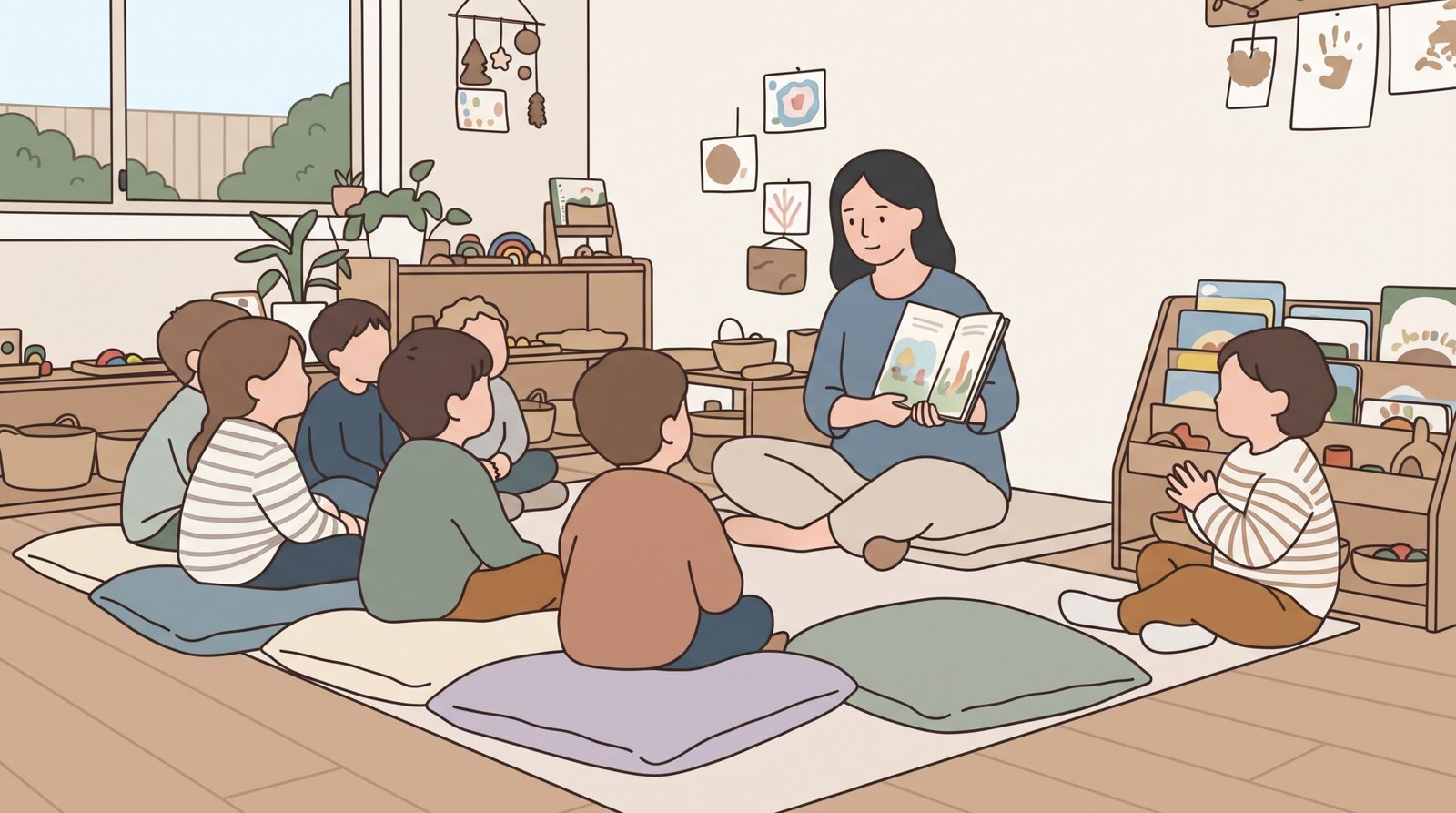
If you have a child who won’t sit for circle time, you’re in very good company. It’s one of the most common questions educators ask each other and one of the most common worries parents bring home from childcare: “They say he won’t sit at group time. Is something wrong?”
Most of the time, nothing is wrong. Group time asks a lot of young children all at once: sitting close to others, staying still, listening, waiting and joining in on cue. When a child slips away, the most useful question isn’t “How do I make them sit?” but “What is this part of the day asking of them, and does anything actually need to change?”
This guide walks through exactly that. You’ll find what’s typical by age, how to notice what’s really happening, nine common reasons a child won’t sit for circle time with two practical ideas for each, how to test one change, and when it’s worth getting more support. It’s written for educators, and there’s a section for parents too.
What’s in this guide
- Is it normal for a child not to sit for circle time?
- Step 1: Notice what’s really happening
- Step 2: Does anything need to change?
- Step 3: 9 reasons a child won’t sit for circle time, and what to try
- Step 4: Try one change and look again
- ADHD, autism and sensory differences
- What usually makes it harder
- For parents: when childcare says your child won’t sit
- When to get more support
- Free planner sample
- FAQs
- References
Is It Normal When a Child Won’t Sit for Circle Time?
Very often, yes. A few things are worth knowing before you change anything.
Circle time is usually short for a reason. Penn State’s Better Kid Care program suggests that five to ten minutes is usually a good length for circle time, that a twenty minute circle time will rarely be successful, and that it can grow longer as a group shows it’s ready [1]. If your group time runs much longer than that, the length itself may be the first thing to look at.
Watching is a real way of taking part. As far back as 1932, Mildred Parten described “onlooker” play in preschoolers: a child watches others closely, sometimes talks about what they’re doing, but doesn’t join in [2]. A child standing by the bookshelf, eyes on the story, may be learning a lot.
Group time doesn’t have to be compulsory. The same Better Kid Care guidance notes that circle time isn’t mandatory, and that small group activities like shared book reading can build readiness before trying a larger group again [1].
| Age (roughly) | What’s common at group time | What tends to help |
|---|---|---|
| Under 2 | Joins for a song or two, wanders, comes back. Sitting still for long is rare. | One or two action songs, then move on. Joining is a bonus. |
| 2 to 3 years | Joins for a few minutes, likes movement and props, may watch from nearby. | Short, active groups (around 5 minutes), lots of doing, freedom to come and go. |
| 3 to 4 years | Can manage longer when it’s active and interesting. Long talking parts are hard. | Around 5 to 10 minutes, mix of moving and listening, jobs and props. |
| 4 to 5 years | Many manage 10 minutes or more of varied group time. Still very individual. | Predictable structure, real roles, a clear end. |
These are general patterns from practice, not milestones. Every child, and every group, is different. If you’d like more on why milestone charts can mislead, especially for neurodivergent children, see why milestones don’t fit neurodivergent children.
Step 1: Notice What’s Really Happening When a Child Won’t Sit for Circle Time
Before deciding what to do, get a clear picture. Write down what someone standing next to you would also have seen and heard. Leave the “why” for later. It’s surprisingly easy for a first impression to become the story everyone tells about a child.
| A story we might tell | What was actually seen |
|---|---|
| “He hates group time.” | On 3 of 4 days he left the mat during the second song. |
| “She’s being defiant.” | When asked to sit, she said “no” and walked to the block corner. |
| “He can’t concentrate.” | He lay on the floor at the edge and watched the whole story. |
| “She’s just shy.” | She sat by the door and mouthed the words to the hello song. |
Useful things to jot down: when it happened and what came just before; how long group time ran, and when things changed for the child; what the child did, looked at and seemed drawn to; what the child said or showed you about it; what adults did; and what happened next. If you can, notice the same moment on two or three days. One morning can be a one-off.
And talk to the family. They know the child in places you don’t see, and they’re partners in anything you decide to try.
Step 2: Does Anything Need to Change?
This is the step most advice skips. Not every child who stays out of the circle needs fixing. Taking part in group time can look like:
- watching from nearby, or listening from the edge
- joining the songs but not the story, or the reverse
- moving, rocking or lying down while listening
- holding a favourite object
- being the helper, or joining for one part
- replaying the story or song later in play
It may be fine for now if everyone is safe, the child seems calm or content, and they’re connected in some way. Keep inviting warmly, make it easy to come closer, and look again in a week or two. “No change for now” is a real decision, not giving up.
It’s worth exploring further if the child seems distressed or overwhelmed, is missing something that matters to them (like time with friends or a favourite story), or the group can’t continue.
Get more support straight away if anyone is unsafe, or the distress is intense, frequent or spreading across the day. There’s more on this below.
Step 3: 9 Reasons a Child Won’t Sit for Circle Time, and What to Try
Group time is one activity built from many parts, and each part is something you can change. Read through these with your notes in mind. Pick your two best guesses, then choose one idea to try first. They’re guesses to test, not conclusions about the child.
1. Timing: When in the Day Is Group Time?
Straight after arrival, just before food, after an energetic outdoor session or near rest time are all hard moments to sit still. A child who copes well at 10am may fall apart at 11:45.
- Move group time to a calmer point in the day, or offer a snack beforehand.
- Let the child come in from outdoors a little later, through a quiet activity first.
2. Length: Is Group Time Simply Too Long?
Look at when the child leaves. If it’s always around the same minute, length is a strong guess. Remember the five to ten minute guide [1].
- Shorten group time for everyone, or for this child only.
- Invite the child for the part they enjoy most, with a clear place to go afterwards.
3. Space and Closeness: Where Are They Sitting?
Squashed in the middle, behind a taller child, far from the leader or right next to a busy friend can all make sitting hard. Sitting cross-legged isn’t comfortable for every child either; early childhood writers have questioned whether “criss cross applesauce” is needed at all and suggest offering a range of seating [3].
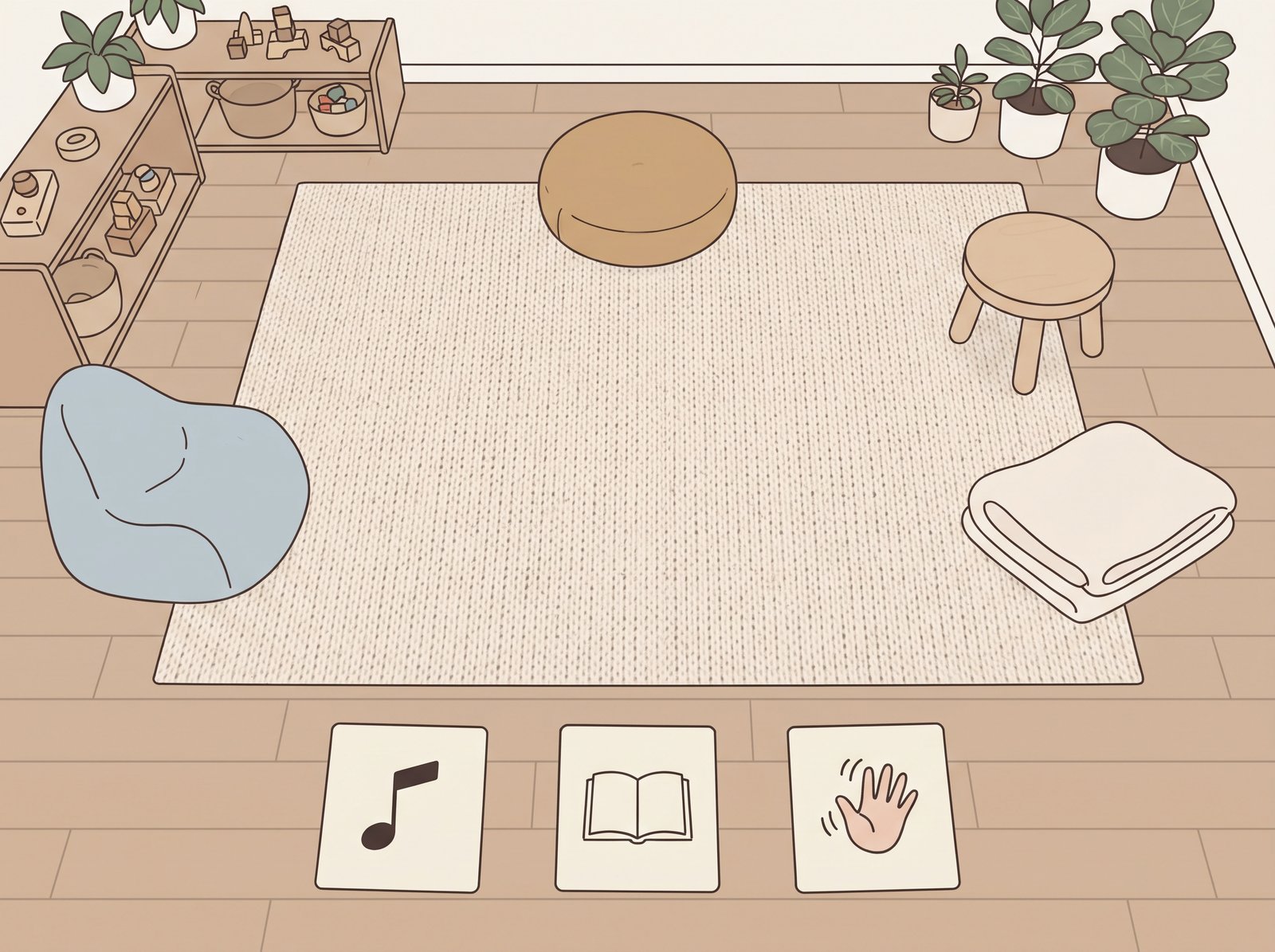
- Offer a marked spot (cushion, mat, low chair or beanbag) at the edge or near the exit.
- Leave more space between children, or seat the child near a trusted adult.
4. Sound, Light and Busyness
Loud clapping songs, echoing rooms, bright lights and lots of bodies close together can be a lot for some children. If a child covers their ears or leaves at the same noisy moment, this lens is worth a look. My posts on classroom noise and sensory overload and softening harsh lighting go deeper.
- Lower the volume of voices and music; swap clapping for knee pats.
- Hold group time in a smaller or quieter space, or soften glare and wall clutter.
5. Body and Movement
Some children need to move to listen. Others are tired, hungry, unwell or need the toilet. Check the basics first, because no strategy beats a child who’s simply hungry.
- Start with a movement song; allow standing, kneeling or lying at the edge.
- Offer something to hold, or a wobble cushion. For more movement ideas, see sensory micro transitions and my pocket heavy work cards.
6. Language Load
Calendar talk, weather discussions and long instructions are mostly listening. For a child who is still learning English, or who processes spoken language slowly, a talking-heavy group can feel like sitting through a lecture in another language.
- Use fewer words, plus pictures, props or gestures. Show, then tell.
- Learn and use a key word or song line in the child’s home language. My post on how a multilingual child processes their world explains why this matters.
7. Interest and Meaning
Children pay attention to what matters to them. A child who can’t sit through a song about the days of the week might listen for ages to a story about trucks.
- Link a song, book or prop to the child’s current interest.
- Let the child choose between two songs, or bring an object from their play to group time.
8. Predictability: Do They Know What’s Coming?
Not knowing what will happen, or when it will end, makes waiting much harder. So can a sudden transition: being called away from a game you were deep in.
- Show the order of group time with simple pictures, including how it ends. My visual routine cards and first-then mats can help.
- Give a gentle warning before group starts, and use the same start and end song each day.
9. Role and Connection
Some children drift away because there’s nothing for them to do except sit and wait. Others are looking for connection, with friends or with you.
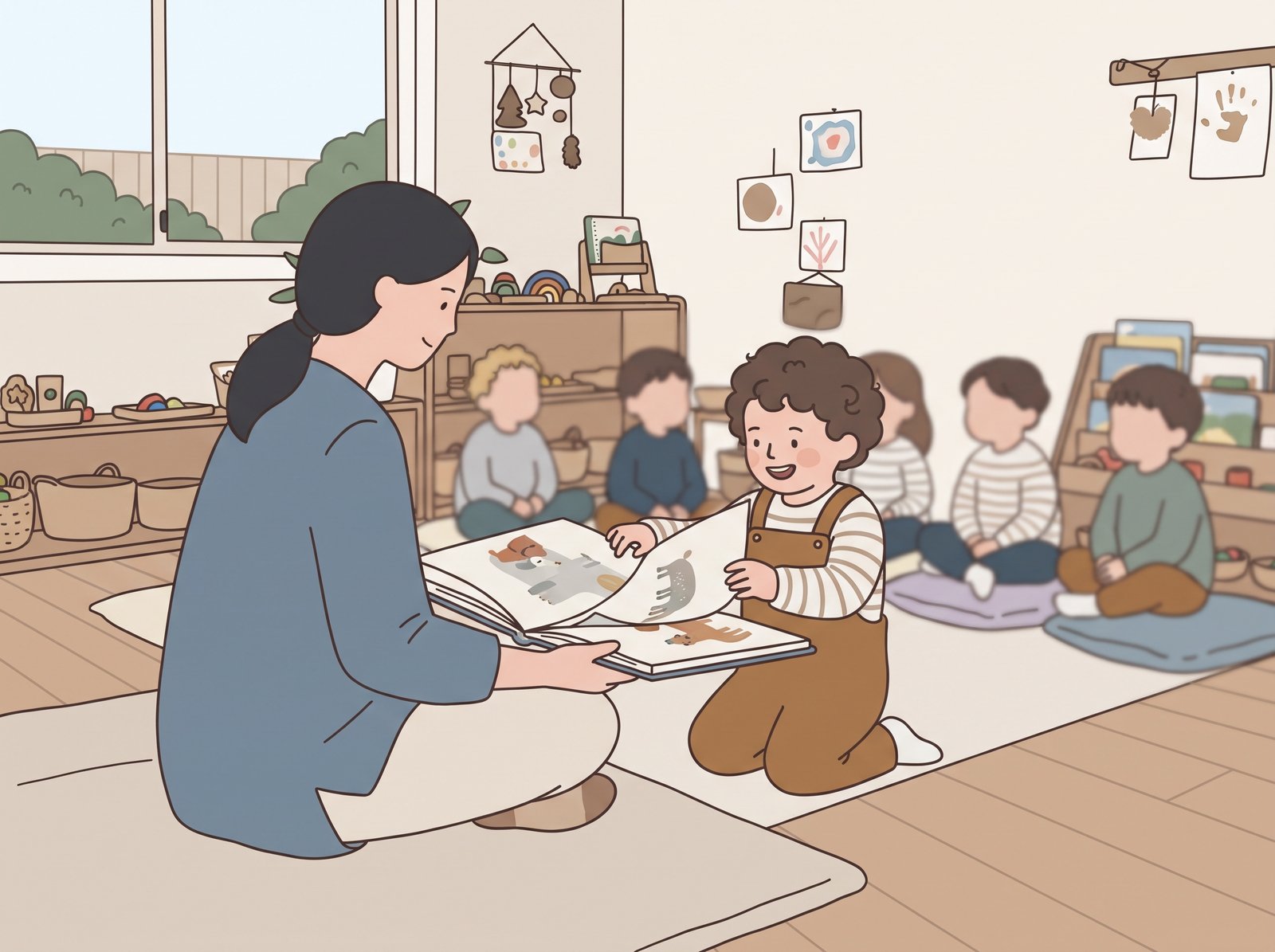
- Offer a job: page turner, puppet holder, bell ringer or song chooser.
- Sit a friendly peer beside them, or let watching from nearby count, with a warm invitation to come closer.
Step 4: Try One Change and Look Again
Choose one change to start with. One change at a time makes it much easier to see what helped. Pick something small, kind and easy to keep doing, and tell the rest of the team so everyone does it the same way.
Try it for three to five group times, jotting down a line each day: how did the child take part, for how long, and did they seem comfortable or worried? Note anything else that was different that week, such as illness, a new educator, visitors or a change in routine. Then decide:
- Keep it, and look again in two weeks.
- Tweak it: a bit more, a bit less, a different time.
- Try a different change from your other best guess.
- Talk with the family or get more support.
Be honest about what you can and can’t conclude. If a child stays longer after you moved their cushion, the cushion may have helped, or they may simply be settling in. Small shifts still count: staying one song longer, choosing to sit nearby, or coming back on their own.
When a Child Won’t Sit for Circle Time: ADHD, Autism and Sensory Differences
Everything above applies to neurodivergent children too, often more so. A few extra thoughts from my own family and practice:
Movement can help, not hinder. Many children with ADHD traits listen better when they can move a little. A child rocking at the edge of the mat may be taking in more than one sitting perfectly still and working hard just to stay put.
Predictability and sensory comfort matter. Many autistic children find group time easier when the order is the same each day, they can see what’s coming, and the noise and closeness are manageable. A consistent spot at the edge can be a big help.
Capacity changes from day to day. A child who managed the whole of group time on Tuesday may not manage it on Thursday, and that’s not a choice. I explain why in why your child can do it some days and not others.
Calm comes before learning. If a child is already overwhelmed, the priority is helping them feel safe again, not getting them back on the mat. My post on regulation before learning covers this in detail, and coregulation strategies shows how to stay alongside a child while they settle.
What Usually Makes It Harder
Holding a child in place. Keeping a child on the mat with your hands or your lap might keep them physically there, but it rarely helps them take part, and it can make group time feel unsafe.
Using group time as a reward or its absence as a punishment. Sending a child away “because you can’t sit nicely” teaches that group time is a test. Offering a quiet alternative because they need one is different.
Sticker charts for sitting. If a child can’t sit because the room is too loud or they’re overwhelmed, a sticker doesn’t change that. My post on ADHD behaviour strategies looks at why charts often backfire.
Changing five things at once. It might feel efficient, but you won’t know what helped, and the child has to cope with lots of change at once.
For Parents: When Childcare Says Your Child Won’t Sit for Circle Time
Hearing “she won’t sit at group time” at pick-up can be worrying, especially if you’re already wondering about ADHD or autism. A few gentle suggestions:
- Ask what they’ve noticed, specifically. When does it happen, for how long, and what does your child do instead? The facts are much more useful than a label.
- Share what you see at home. Does your child sit for stories at home? What helps them settle? That information is gold for educators.
- Ask what they’re trying, and whether you can help, for example by practising a group time song at home or sharing a favourite book.
- Remember that many toddlers and preschoolers find sitting in a group hard, and that watching is a common way to take part.
If you have wider concerns about your child’s development, talk to your GP or maternal and child health nurse. One group time habit on its own isn’t a diagnosis of anything.
When to Get More Support
Talk with your leader and the child’s family, and follow your service’s processes, if:
- the child’s distress is intense, frequent or getting worse;
- it’s happening across the day, not just at group time;
- anyone is unsafe;
- you’ve tried several small changes over a few weeks and nothing has helped.
In Australia, services can contact their Inclusion Agency through the Inclusion Support Program for free support. Be You’s free BETLS observation tool is also a helpful way to gather wider information about a child’s wellbeing [5].
Free Sample: Joining In at Group Time Planner
A calm, one-page planner that takes you through these steps: notice, check whether anything needs to change, wonder about the activity, then try one change and look again. The free sample includes the planner, the “does anything need to change?” guide and a worked example.
Free Sample (A4 PDF) Free Sample (US Letter PDF)A4 suits Australia, the UK and most countries. US Letter suits the US and Canada.
Child Won’t Sit for Circle Time: FAQs
How long should a toddler or preschooler sit for circle time?
Shorter than many of us expect. Penn State’s Better Kid Care program suggests five to ten minutes is usually a good length and that twenty minutes is rarely successful. For toddlers, one or two active songs may be plenty.
Is it okay if a child watches circle time instead of joining in?
Often, yes. Watching others play has been described as a common kind of play since the 1930s. If the child is safe, calm and connected in some way, keep inviting warmly and look again in a week or two.
Does a child who won’t sit for circle time have ADHD?
Not necessarily. Many young children find sitting in a group hard. Not sitting at group time on its own isn’t a sign of any condition. If you have wider concerns about development, talk to your GP or child health nurse.
What can I give a child to help them sit at circle time?
A marked spot such as a cushion or low chair, something to hold, permission to stand or kneel at the edge, a job like turning the pages, and a picture sequence showing what’s coming. Try one at a time.
Should circle time be compulsory?
It doesn’t have to be. Many educators offer a quiet alternative nearby for children who aren’t ready, and build readiness through small group times and shared reading.
References
- Penn State Extension, Better Kid Care. Successful circle times. extension.psu.edu
- Parten, M. B. (1932). Social participation among pre-school children. Journal of Abnormal and Social Psychology, 27(3), 243–269. https://doi.org/10.1037/h0074524
- Philson, B. Criss cross applesauce: Is it necessary? Is it helpful? Pennsylvania Key. pakeys.org
- Sandall, S. R., Schwartz, I. S., Joseph, G. E., & Gauvreau, A. N. 8 types of curriculum modifications for inclusive preschool classrooms. Brookes Publishing. brookespublishing.com
- Be You. BETLS observation tool. Beyond Blue. beyou.edu.au