
The Reggio Emilia Approach at Home: Bringing the Third Teacher to Everyday Spaces
The first time I heard the phrase “the environment is the third teacher,” it sounded like the sort of glossy educational idea that only works in sunlit Italian classrooms with beautiful timber furniture. It took me a while to see how practical it really is.
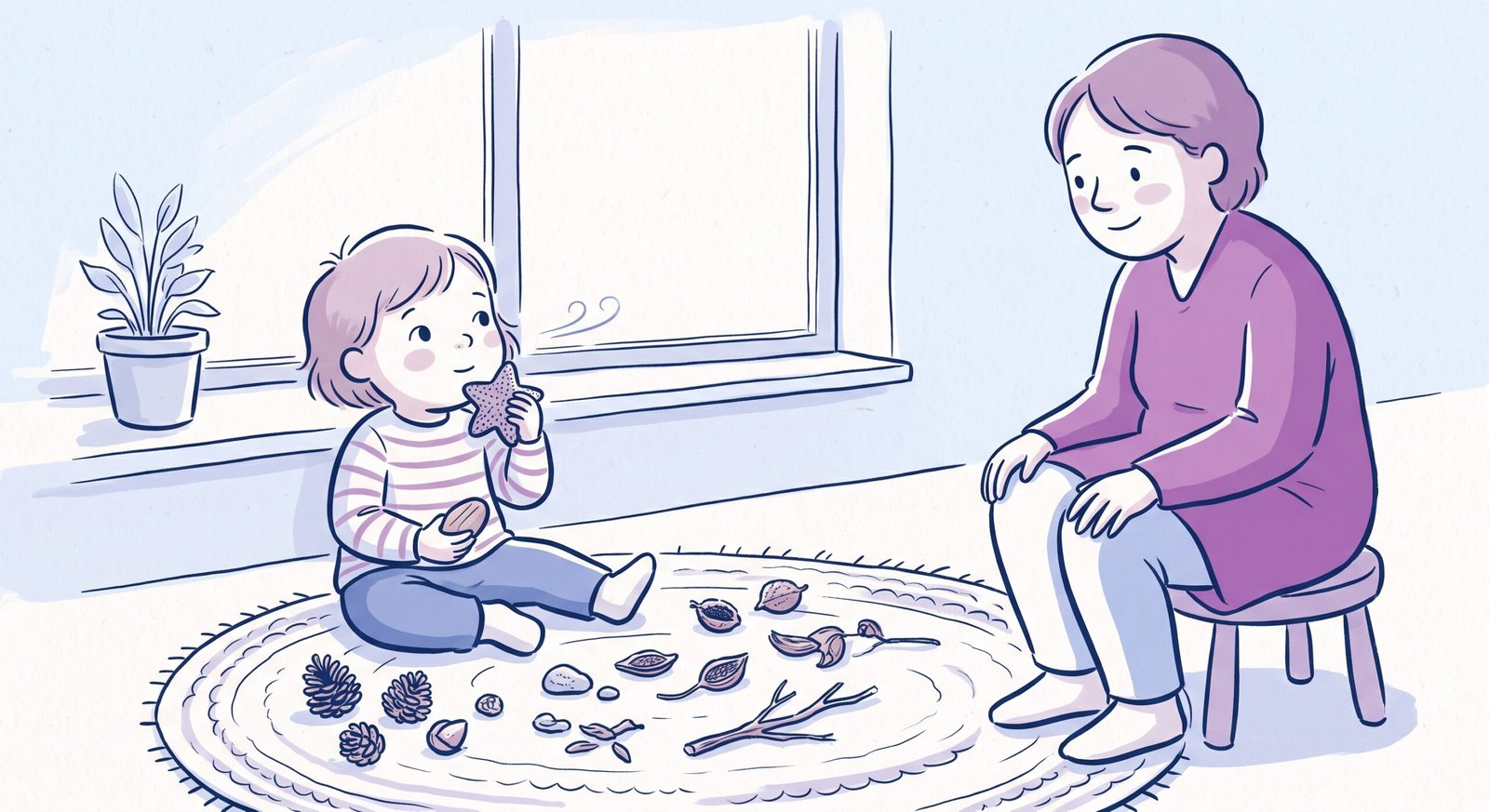
Picture a deep plastic toy box at home. Most of the time, a child tips it out, picks through thirty bits of plastic and wanders off. Now picture the same corner with three low, shallow baskets holding pine cones, cardboard rolls and smooth river stones. The materials are fewer, and you can see every one of them. That small change often leads to a very different kind of play, slower, more focused and full of questions like “will this stone balance on that tube?”
That shift sits right at the heart of the Reggio Emilia approach. Developed in post-war northern Italy by educator Loris Malaguzzi and local families, it rests on a simple belief: children are capable, curious researchers from birth, and the spaces around them can either support that curiosity or quietly get in its way.[1]
Bringing the Reggio Emilia approach home doesn’t mean turning your lounge into a private preschool. It takes a few small, intentional changes to how materials are stored, shown and explored.
Why the Reggio Emilia approach matters to me
Reggio Emilia wasn’t where my own research began. My first draft was built on the ideas of Lev Vygotsky, who believed children learn best just beyond what they can do alone, with someone there to help them reach. Later the project moved towards Reggio Emilia, and for a while I thought of the two as pulling in different directions, one about adult guidance and one about child-led discovery.
Living with both for years taught me they fit together beautifully. Reggio is full of quiet structure, it just lives in the room, the materials and the questions rather than in worksheets. And Vygotsky never pictured an adult standing over a child giving orders.
I wrote about why I still love his ideas in Vygotsky’s play theory in real life, and about how the two meet in bringing play-based learning in without losing structure.
What the Reggio Emilia approach at home actually means in practice
At its core, the Reggio Emilia approach at home is less about a checklist of toys and more about how we see young children. Malaguzzi wrote about “the hundred languages of children,” the idea that children think, test ideas and communicate through many different forms: drawing, clay, light, shadow, movement, building and pretend play.[2][5] Traditional schooling often narrows that down to a couple of languages, mainly talking and writing, and overlooks the rest.
When you bring this approach into family life, your role changes too. Instead of directing every step or constantly thinking up new crafts, you become a co-researcher. You notice what your child is trying to work out, ask questions that keep their curiosity moving, and let the space do much of the inviting.[3]
- The Hundred Languages: recognising that building, mark-making, sculpting and shadow play are all forms of serious thinking
- The Third Teacher: setting up spaces with low shelves, natural light and visible choices so children can work independently
- The Parent as Co-Researcher: listening and wondering alongside your child rather than jumping straight to the right answer
Why the environment is called the third teacher
In Reggio Emilia, children are said to have three teachers: the adults around them, the other children, and the environment itself. Researchers who have written about Reggio describe how carefully the spaces are designed, with light, materials, order and beauty all chosen to invite children to explore.[6]
At home, that simply means asking a different question. Instead of “what activity should I plan today?”, ask “what does this corner invite my child to do?” A cluttered shelf invites tipping out. A tidy tray with a few interesting objects invites looking closely. A low table near a window invites drawing what you see. The room starts doing some of the teaching for you.
This idea matters even more for children who are easily overwhelmed. A calmer, less crowded space can make it easier for some neurodivergent children to settle and focus. If that’s relevant in your home, my posts on the sensory environment in early childhood and calm corner design go into more detail.
7 simple Reggio Emilia ideas to try at home
None of this needs special equipment or expensive purchases. The first Reggio schools were built after the war with salvaged materials and community effort, as recorded by Reggio Children, so your recycling bin and garden cuttings are genuinely enough to begin.[1]
1. Low, open shelves with shallow baskets
Keep materials visible and within reach, so children can choose and return things themselves. Fewer items, clearly displayed, usually lead to longer and calmer play than a big box of everything. Rotate what’s out every week or two.
2. A basket of loose parts
Loose parts are open-ended objects that can become anything: river stones, cardboard tubes, metal jar lids, timber offcuts, shells and pine cones. A cardboard tube can be a telescope, a tunnel or a tower. If you’re short of ideas, our cardboard box activities at home are a free and easy place to start.
3. A mirror at floor level
An unbreakable acrylic mirror next to the building blocks invites children to explore angles, reflections and their own faces. It’s a simple way to make an ordinary block corner feel new.
4. An invitation to play
Educators call this a provocation. Before your child wakes up, set out a few things on a low table, such as three pine cones, a pencil and clean paper, or a torch beside a basket of see-through scarves and blocks. There are no instructions. The materials themselves ask the question.
For colour and light invitations, our colour mixing chart shows how a little visual structure can guide exploration.
5. Real tasks in the kitchen
Invite children into real work with measuring cups, child-safe whisks and cloth napkins. Reggio and Montessori both value this kind of meaningful, everyday involvement. Our practical life activities at home and preschool kitchen science experiments have plenty of ideas.
6. Slow walks with a collecting basket
Take unhurried walks and let your child stop to study a single trail of ants for as long as they like. Bring a basket for treasures, which can become tomorrow’s loose parts. A nature scavenger hunt or a mud kitchen brings the same spirit into the garden.
7. A space for a long project
Reggio classrooms are known for projects that grow over days or weeks from a child’s question. At home, that might be a corner of a table where a cardboard city can stay up for a week, rather than being packed away every night. Letting work stay out tells a child that their ideas are worth coming back to.
How to start the Reggio Emilia approach at home, step by step
It’s easy to read about Reggio and feel you need to redo the whole house. You don’t. Here’s a gentle way to begin.
- Day one: watch your child play for ten minutes without joining in. What do they keep coming back to?
- Day two: clear one shelf or corner and put out just a few things linked to that interest.
- Day three: add one basket of loose parts.
- Day four: set out a simple invitation to play before breakfast.
- Day five: take a photo or write down one thing your child said while playing.
- Weekend: notice what was used and what wasn’t, then swap a few things.
That’s really it. The heart of the approach is noticing and following, not buying and setting up. Leaving plenty of unstructured time matters too, which I wrote about in how to encourage independent play in preschoolers.
The Reggio Emilia approach at home by age
Toddlers (around one to three)
Keep it simple, safe and sensory. Large, chunky loose parts, sturdy baskets, a floor mirror and water or sand play under close supervision work well. Toddlers explore with their mouths, so check every item for size (see the safety section below). Our low-mess sensory bins can be adapted with larger items for younger children.
Preschoolers (around three to five)
This is where invitations to play, longer projects and documentation really come alive. Preschoolers love to explain their ideas, so writing down their words and displaying them with their drawings means a lot. Smaller loose parts can come in once children have moved past putting things in their mouths.
Early school years (around five to eight)
Older children can take the lead on projects, plan what materials they need and document their own work with drawings, labels and photos. A question like “how do bridges stay up?” can turn into a week of building, drawing and testing. That’s Reggio’s emergent curriculum in action.
Following a child’s interest: a real example
One of the clearest examples of Reggio thinking I’ve seen lately comes from my own family. My five-year-old nephew Zeki, who lives in Indonesia, became fascinated by chemistry and the elements. His parents didn’t sign him up for lessons. They followed his questions, kept the big science books coming, and let him build molecules in Minecraft and draw his own “theories” on paper.
They also document his learning, filming him as he explains his ideas. That’s documentation in a very modern form, and it shows everything Reggio values: a child’s own question, many “languages” for exploring it, and adults who treat that thinking as worth recording. I wrote his story in a child learning English as a second language through science.
Documenting learning in the Reggio Emilia approach at home
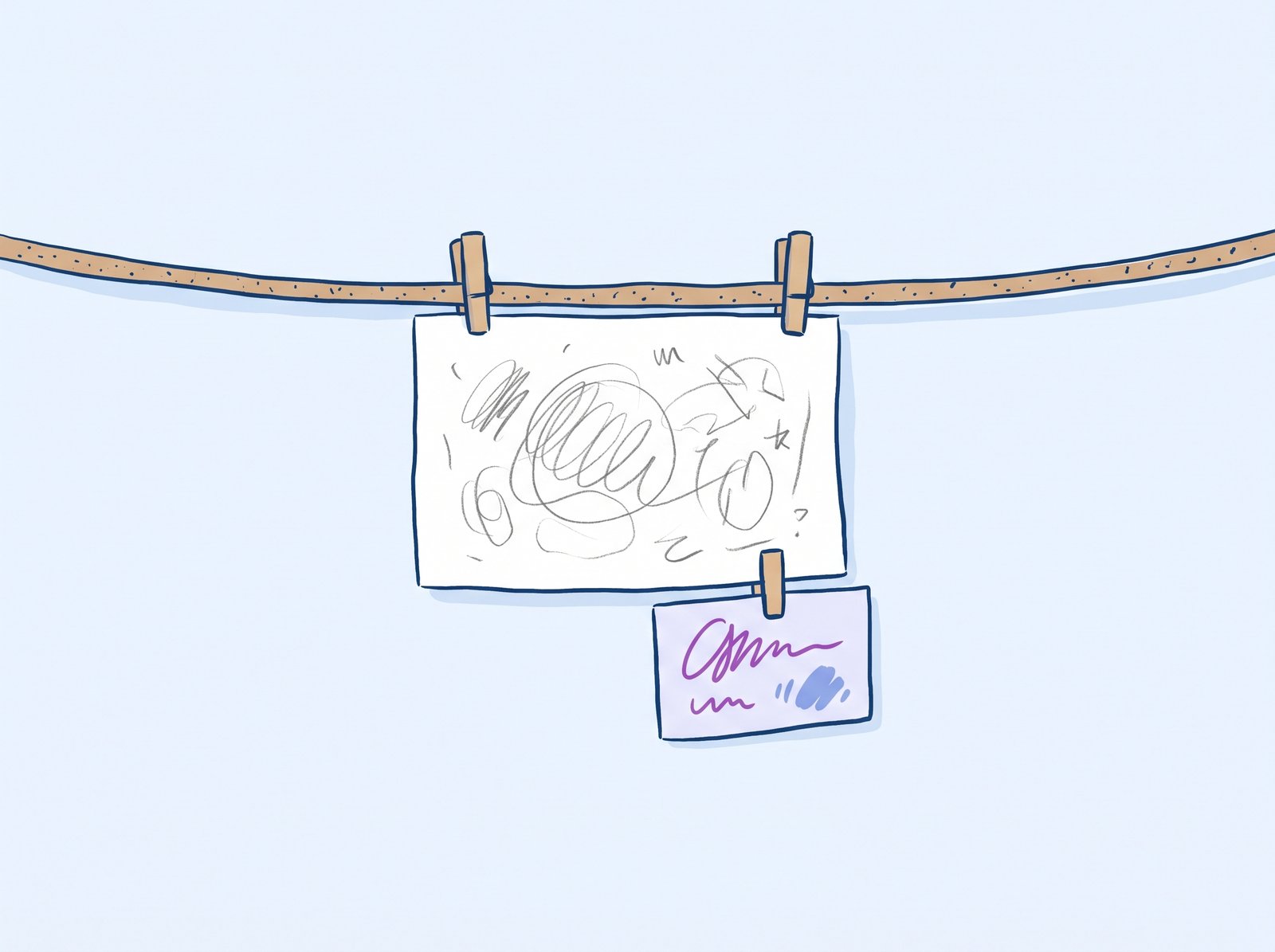
One of the most practical Reggio habits for parents is documentation. As described in the work of Project Zero at Harvard Graduate School of Education, documentation means recording the process of learning as it happens, rather than only displaying finished art on the fridge.[4]
At home, take a quick photo while your child is absorbed in balancing a tower. When they tell you an elaborate story about why the puddle on the path disappeared in the afternoon sun, write down their exact words on a small card and pin it beside their drawing. It shows your child that their thoughts and efforts matter, and it gives you an honest record of how their thinking grows.
Documentation also connects naturally with storytelling and early literacy. When children see their own words written down, they start to understand that print carries meaning. Our storytelling wheel and visual storytelling posts are lovely companions to this habit.
Educators who want to connect documentation with formal observation might also find our post on assessment strategies in early childhood education useful.
Comparing Montessori and the Reggio Emilia approach at home
Parents looking into child-centred approaches often weigh Reggio against Montessori. Both began in Italy, both reject rigid rows of desks, and both value independence, but they feel quite different at home.
- Curriculum style: Montessori follows a sequence of specific tasks, while Reggio follows projects that grow from what the child asks about
- Play materials: Montessori uses carefully designed materials, many with one intended use, whereas Reggio leans on open-ended loose parts with endless possibilities
- The adult role: a Montessori guide shows children how to use materials, then steps back, while a Reggio parent investigates alongside the child as a partner
- The home setting: Montessori emphasises child-sized practical life tools for everyday tasks, while Reggio often looks like an open studio filled with light, natural items and works in progress
Neither is better than the other, and many families borrow from both, using a Montessori-style child-height kitchen setup for snacks and Reggio’s loose parts and documentation in the play space.
Some families also draw on other child-led approaches, such as DIR Floortime, which shares Reggio’s respect for following the child’s lead.
Reggio Emilia at home and fine motor skills
Loose parts also feed straight into fine motor development. Pinching small river stones and sorting seeds builds on the grips explored in our guide to pincer grasp activities, which in turn supports the control covered in hand strength activities for kids.
Once hands are steady and fingers are strong, that coordination carries into how to hold a pencil correctly and the drawing practice in pencil control activities.
Ready for Calm, Intentional Mark-Making?
When open-ended building and finger play are thriving, our story-based tracing workbooks give young children a meaningful, child-led way to bring those fine motor skills onto paper.
Explore the Printable Tracing PacksSafety notes when using loose parts
Loose parts offer wonderful opportunities for open-ended play, but size really matters, especially for babies and toddlers. In Australia, toys for children up to and including 36 months must not contain small parts that could be a choking hazard, and safety regulators test this using a small parts cylinder roughly the width of an old film canister.[7] Your loose parts at home aren’t toys bought from a shop, so no one will test them for you.
A simple home check many families use is the toilet roll test: if an object fits through a cardboard toilet roll, it’s too small for children under three or for any child who still puts things in their mouth. Keep beads, dried pulses, small buttons and button batteries well out of reach, and choose large pine cones, thick timber offcuts and broad fabric scraps instead. Always supervise loose parts play with young children.
Reggio Emilia approach at home: common questions
Do I need special toys for the Reggio Emilia approach at home?
No. Natural materials, recycled items and a few well-chosen open-ended toys are plenty. What matters most is how materials are displayed and how you respond to your child’s play.
What age is the Reggio Emilia approach best for?
The approach began in infant-toddler centres and preschools, so it suits children from babyhood to around six. The ideas, especially following a child’s interests and documenting their thinking, work well with older children too.
Can I combine Reggio Emilia and Montessori at home?
Yes. Many families do. Montessori-style practical life tools and Reggio-style loose parts and documentation sit comfortably side by side.
What is a provocation in Reggio Emilia?
A provocation, or invitation to play, is a small, thoughtful arrangement of materials designed to spark a child’s curiosity, without instructions. For example, a torch, some see-through scarves and a few blocks set out on a low table.
How does the Reggio Emilia approach connect to Australia’s Early Years Learning Framework?
Many Australian early childhood services draw on Reggio-inspired ideas. The EYLF’s emphasis on play-based learning, children as capable learners and learning through relationships sits comfortably alongside Reggio principles, although the EYLF itself is not a Reggio curriculum.
References
- Barazzoni, R. (2000). Brick by brick: The history of the “XXV Aprile” People’s School of Villa Cella. Reggio Children.
- Malaguzzi, L. (1993). For an education based on relationships. Young Children, 49(1), 9-12.
- Rinaldi, C. (2006). In dialogue with Reggio Emilia: Listening, researching and learning. Routledge.
- Krechevsky, M., Mardell, B., Rivard, M., & Wilson, D. (2013). Visible learners: Promoting Reggio-inspired approaches in all schools. Jossey-Bass.
- Edwards, C., Gandini, L., & Forman, G. (Eds.). (2012). The hundred languages of children: The Reggio Emilia experience in transformation (3rd ed.). Praeger.
- Strong-Wilson, T., & Ellis, J. (2007). Children and place: Reggio Emilia’s environment as third teacher. Theory Into Practice, 46(1), 40-47. https://doi.org/10.1080/00405840709336547
- Product Safety Australia. (n.d.). Toys for children up to and including 36 months. Australian Competition and Consumer Commission. https://www.productsafety.gov.au/
Related topics for parents
- Vygotsky’s play theory in real life
- How to bring play-based learning in without losing structure
- How to encourage independent play in preschoolers
- Cardboard box activities at home
- Practical life activities at home
- Pincer grasp activities for toddlers and preschoolers
- Scissor skills by age
- Letter formation for preschoolers
- Story-based tracing printable bundle